

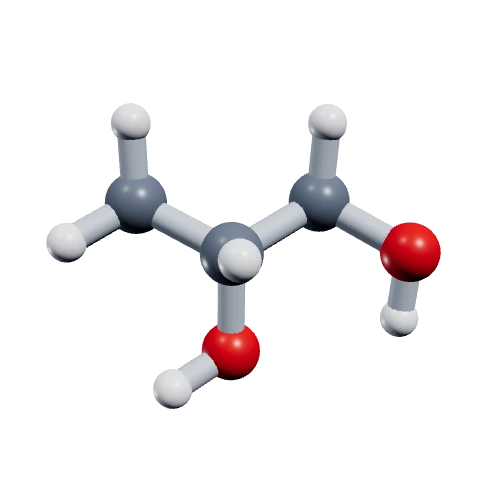


Every winter the same thing happens to a boat engine in a driveway, a travel trailer parked behind a barn, a pressure washer left on a truck, and the water line in a cabin nobody visited since October. The water inside them does what water always does when it gets cold enough: it grows. Two hundred and forty years ago a bored artillery officer in Quebec measured exactly how much that growth can do, using the strongest containers he had on hand. His results are the reason this article exists, and the reason a jug of propylene glycol is the cheapest insurance in the building.

What happened when a British major filled cannon shells with water in 1784?
The ice pushed the plugs out, threw them hundreds of feet across the snow, and eventually split the shells. That is the short version of a set of experiments that Major Edward Williams of the Royal Artillery ran at the Quebec citadel between 21 December 1784 and 9 January 1785, and which Dr Charles Hutton read to the Royal Society of Edinburgh from Williams's letter.
The citadel was equipped with mortars, and mortars fire hollow iron shells. Williams took 13-inch shells, filled the cavity with water, drove an iron plug into the tapered fuze hole with a sledgehammer, and set the shells out on the ramparts in weather that his thermometer recorded between −3 °F and −19 °F. Then he waited to see whether "the force of congelation," as the eighteenth century called freezing, could beat cannon iron.
It could. On 22 December, with the thermometer at −3 °F, Williams watched a shell for an hour hoping to see the plug fly. He had, in the language of the letter, his "business" to attend to, so he left. In his absence the plug flew out and was lost in the three and a half feet of snow on the ground. For the next attempt he added a mixture of common salt and sal ammoniac to the water to hasten the effect, and "tied a long pack-thread, with a piece of red rag at its end, to the fuze, in order to find where it fell in the snow." When the snow went in spring he found the plugs and sent Hutton a table.
| Date | Thermometer | Plug weight | Distance thrown |
|---|---|---|---|
| 21 Dec 1784 | −10 °F | 35 oz | unknown (lost in snow) |
| 22 Dec 1784 | −3 °F | 37.25 oz | 22 feet |
| 24 Dec 1784 | −6 °F | 39.25 oz | 62 feet |
| 31 Dec 1784 | −18 °F | 39.25 oz | 387 feet |
| 2 Jan 1785 | −19 °F | 41.75 oz | 415 feet |
| 4 Jan 1785 | −12 °F | 42 oz | shell burst |
| 9 Jan 1785 | −4 °F | 40.5 oz | 325 feet |
Read the table from the top and you can watch the cold do its work: at −3 °F the plug travelled 22 feet, at −19 °F it travelled 415. When Williams finally fixed a plug in place with an arrangement of springs so that it could not escape, the shell had nowhere to send the force but into its own walls, and on 4 January the iron split. When a plug did go, cylinders of ice "immediately shot up from the holes," as if the shell were extruding it.
Hutton's arithmetic was low, and the reason is instructive. From the shells he calculated that water "expanded in freezing, by a quantity which is between the 17th and 18th part of itself," about 5.7%. The modern figure is closer to 9% (the U.S. Geological Survey puts the density drop on freezing at "about 9 percent"). The difference is the leak: every shell that threw its plug had already extruded a column of ice before the measurement, so Hutton was measuring what was left. In a sealed system there is no leak, and the full 9% has to go somewhere.
Williams used the strongest pressure vessel available to an eighteenth-century army and lost. The pipe under a kitchen sink, the cast-iron block of an outboard, the brass body of a pressure-washer pump and the copper coil in a hydronic loop are all weaker than a mortar shell.
Why do pipes burst when water freezes?
Pipes burst because ice occupies about 9% more volume than the water it came from, and a closed system has nowhere to put the extra volume. Ice is one of the few solids that is less dense than its own liquid: the hydrogen bonds that hold water molecules together lock into an open hexagonal lattice on freezing, and that lattice takes up more room than the loosely packed liquid did. This is why ice floats, why a full bottle splits in the freezer, and why Williams's plugs flew.
First, the burst rarely happens where the ice is. When a section of pipe freezes solid, it forms a plug. Water trapped between that plug and a closed valve or fixture has no relief, and as more ice grows behind it the pressure in the trapped water climbs until the weakest point fails. That weakest point can be a foot away or a room away from the frozen section, which is why a burst is so often found at a fitting, a valve body or a thin-walled elbow rather than in the middle of the frozen run.
Second, the last water to freeze is the water that does the damage. Dead legs, instrument lines, drain stubs, pump housings, filter bowls and the low point of a loop hold water that does not move, does not get any glycol that was added later, and freezes first. During Winter Storm Uri in February 2021 the Federal Reserve Bank of Dallas reported that as much as 80% of U.S. basic organic chemicals capacity was offline afterwards, and that the unexpected, long-duration cold "precluded a normal, orderly shutdown," which caused more damage that took longer to identify. The Texas Department of Insurance logged more than 500,000 claims from that one storm, most of them property, and burst pipes were the dominant cause.
How does propylene glycol stop a system from freezing?
Propylene glycol protects a water system by lowering the temperature at which ice can form and, below that temperature, by making what freezes a loose slush rather than a solid plug. Dissolve enough glycol in water and the water molecules can no longer organise into the ice lattice at 32 °F; the mixture has to get much colder before crystals appear at all. This is freezing-point depression, the same effect that keeps salted roads wet below 32 °F, but with a molecule that is far kinder to metal than salt.
Pure propylene glycol freezes at about −60 °C (−76 °F; the CRC Handbook gives −60 °C, the ILO–WHO safety card −59 °C). That number is less useful than it looks, for a reason covered below.
The behaviour that actually saves equipment happens below the freeze point of the mixture. When a glycol–water solution does start to freeze, the ice that forms is nearly pure water, which leaves the remaining liquid richer in glycol and harder to freeze. The result is not a solid block but a slush: ice crystals suspended in liquid that still flows. Slush can expand into the liquid around it. A solid plug cannot. That distinction is the whole basis of the two specifications every glycol supplier publishes.
Freeze protection is the temperature down to which the fluid stays fully liquid and pumpable. Burst protection is the lower temperature down to which slush may form but the system will not rupture, because the expansion is accommodated by the liquid fraction. A system that only needs to survive the winter, not run through it, can use far less glycol than a system that has to keep flowing.
Freeze protection vs burst protection: which one do you actually need?
You need freeze protection for anything that must keep working at the lowest temperature it will see, and burst protection for anything that only has to survive until spring. The two numbers can be twenty percentage points of glycol apart, and choosing the wrong one costs either money or equipment.
A hydronic heating loop, a brewery glycol chiller, a data-center coolant loop, a solar-thermal collector or a process line that runs through the winter needs freeze protection: if slush forms in the pump, the pump stops, and if it forms in a heat exchanger the exchanger stops exchanging. Dow's guidance for its propylene-glycol heat-transfer fluid is to pick a freeze point at least 5 °F below the lowest ambient temperature the system will see, which builds in a margin for the cold night the forecast missed.
A boat engine on the hard, a travel trailer's fresh-water lines, a pressure washer in a truck bed, a cabin's plumbing, a hot-tub circuit that could not be fully drained, or a wash-bay line that will not run again until March only needs burst protection. Nothing has to flow. The fluid can turn to slush at 0 °F as long as the copper, brass, cast iron and plastic around it are still intact when the thaw comes.
| Lowest expected temperature | Freeze protection (stays liquid) | Burst protection (slush, no rupture) |
|---|---|---|
| 20 °F (−7 °C) | 18% by volume | 12% by volume |
| 10 °F (−12 °C) | 29% | 20% |
| 0 °F (−18 °C) | 36% | 24% |
| −10 °F (−23 °C) | 42% | 28% |
| −20 °F (−29 °C) | 46% | 30% |
| −30 °F (−34 °C) | 50% | 33% |
| −40 °F (−40 °C) | 54% | 35% |
| −60 °F (−51 °C) | 60% | 35% |
Required propylene glycol, percent by volume, from the Dow DOWFROST engineering guide. Values for inhibited industrial fluid; uninhibited USP premixes of the same concentration have the same freeze and burst points because the inhibitor package does not change the thermodynamics.
At 0 °F a loop that must keep circulating needs 36% glycol; a boat that just has to survive needs 24%. Filling a stored system to the freeze-protection number because it sounds safer is a common mistake: it is not safer, it is more glycol, more viscosity in the cold, and past a point it is worse.
How much propylene glycol do you need, and why is more not better?
You need the concentration from the table above for your lowest expected temperature, plus a 5 °F margin, and you should stop there, because above roughly 60% glycol the freeze point of the mixture starts to rise again. The freeze curve of a glycol–water solution is a U, not a slope. Pure propylene glycol freezes at about −60 °C, but a 60% solution reaches about −60 °F and then adding more glycol makes the mixture freeze at a warmer temperature, not a colder one. The same U exists for ethylene glycol, where pure glycol freezes at about 9 °F while a 50/50 mix freezes near −34 °F. The bottom of the U is the target; the pure liquid is not.
For a premix, the volume of the system is the volume you buy. For concentrate, multiply the system volume by the target fraction to get gallons of glycol and make up the rest with water, and in a closed loop use deionized or distilled water so the inhibitor package keeps working.
Then verify. The concentration in the drum is not the concentration in the system if the system held water when you filled it, and it almost always did. A refractometer or a glycol hydrometer reads the actual mixture in a minute. Make sure the instrument is on the propylene-glycol scale, not the ethylene-glycol scale; the two molecules bend light differently and the wrong scale reads several points off.

What is RV antifreeze made of, and why is it pink?
RV antifreeze is propylene glycol diluted in water, usually with a dye and a small inhibitor package; the pink colour is a convention that tells you it is not automotive antifreeze, not a different chemistry. Published safety data sheets for the common "−50 °F burst" products list propylene glycol at anywhere from a few percent to about 40% by weight depending on the brand, with water making up the balance. Look at the Dow table again and you can see what that rating means: the −50 °F number is a burst rating, not a freeze rating. The fluid will slush well above that temperature; the promise is only that the lines survive.
This is why the question people ask at the counter, "can I just use propylene glycol instead of RV antifreeze?", has a straightforward answer. RV antifreeze is propylene glycol and water. A 30% USP-grade propylene glycol premix gives burst protection to about −20 °F and freeze protection to roughly 10 °F; a 50% premix takes the burst point past −60 °F. The only things you are choosing when you buy the branded jug are the dye and the price per gallon of water.
Never put automotive antifreeze in a fresh-water system. Automotive and heavy-duty engine coolants are usually ethylene glycol, which is toxic if swallowed, plus an inhibitor package designed for an engine, not a drinking-water line. Propylene glycol is the glycol with a USP monograph, used in food and pharmaceutical manufacturing, which is why it is the one that goes into RV, boat and cabin plumbing. Even so, flush the fresh-water system thoroughly before you use it in spring.
Grade matters here. A fresh-water system should be winterized with USP-grade propylene glycol, not an inhibited industrial fluid. The inhibited grades carry corrosion inhibitors that are meant for closed heating and cooling loops and are not intended for a fresh-water system. Alliance Chemical sells both, and the product names say which is which: 30% Propylene Glycol USP Grade and Propylene Glycol 50% – USP Grade are the premixes for plumbing; 50% Propylene Glycol Inhibited and Arctic Assist Technical Grade are for equipment loops.
Which systems need winterizing with glycol? RVs, boats, trucks, cabins and loops
Anything that holds water and will see temperatures below 32 °F needs draining, blowing out with air, or glycol, and most systems need two of the three: draining removes most of the water, air clears the low points and traps, glycol protects what neither could reach.
Travel trailers, campers and motorhomes
Drain the fresh tank and water heater, bypass the heater so you are not filling six or ten gallons of tank with glycol, blow the lines out with low-pressure air, then pump a 30% or 50% USP premix through every faucet, shower, toilet valve and exterior spray port until it runs pink, or in the case of an undyed USP premix until you have pushed a measured volume through each fixture. Pour a cup into each P-trap and the toilet bowl. The water heater and the fresh tank are drained, not filled; the lines and traps are where the glycol goes.
Boats, outboards and personal watercraft
Raw-water cooling circuits on inboards and stern drives are the classic burst victim, because they hold lake water in a cast-iron block. After draining, run the engine on a glycol premix drawn from a bucket through the intake until it discharges at the exhaust, so the block, manifolds and heat exchanger are full of protected fluid rather than empty and damp. Fresh-water systems, heads, livewells and washdown pumps on the boat get the same treatment as an RV. Outboards that self-drain when tilted down need no glycol in the powerhead but their fresh-water fittings still do.
Trucks, fleets and wet equipment
The engine cooling system of a truck runs on an engine-specification coolant and is not what this article is about. The wet systems bolted to and around the truck are: pressure-washer pumps, water tanks on service and water trucks, sprayer tanks and lines, wash-bay plumbing, concrete-truck water systems, and the yard hydrant everybody forgets. A pressure-washer pump is a small brass vessel full of trapped water and it fails exactly like Williams's shell. Pull a glycol premix through the inlet until it comes out the wand, and leave it there.
Cabins, vacant buildings and seasonal properties
Shut the supply, open every tap to drain, blow the lines, then pour a glycol premix into every trap, toilet bowl and tank, and any line that cannot be drained. Hydronic baseboard or radiant systems in a building that will be unheated need freeze protection, not just burst protection, if the boiler will be cycling; if the system is being shut down completely, burst protection is enough.
Hydronic heating, chillers and process loops
This is the one category that runs through the winter, so it needs freeze protection with margin and an inhibited grade. Fill with inhibited propylene glycol at the concentration the table gives for your lowest ambient, using deionized water for the balance, verify by refractometer, and re-test the inhibitor reserve on a schedule. Dow's guidance is that below 30% glycol the inhibitor concentration needs adjusting, because there is not enough inhibitor package in the dilute mix to protect the metal. Our glycol-loop failure modes guide goes deeper on loop chemistry.
Two systems where glycol from a jug is the wrong answer. Lawn irrigation is winterized by blowing the zones out with compressed air; glycol is not used and would only end up in the soil. Fire sprinkler systems are regulated: since the 2022 editions of NFPA 13, 13R and 13D, antifreeze in a new sprinkler system must be a listed, factory-premixed solution certified by a laboratory such as UL or FM, and traditional field-mixed propylene glycol is not permitted in new systems. Existing legacy systems are governed by NFPA 25 and still require factory-premixed solutions. Do not winterize a sprinkler system from this article.
USP, Technical or Inhibited: which propylene glycol grade for which job?
The grade you need is decided by what the system does after the winter, not by the cold. All three grades freeze at the same temperature at the same concentration; they differ in what else is in the drum.
| Grade (as named on our product pages) | What is in it | Use it for | Do not use it for |
|---|---|---|---|
| USP Grade (20–100%) | Propylene glycol meeting the USP monograph, diluted with purified water; no inhibitors, no dye | RV, boat and cabin fresh-water plumbing; food and beverage equipment; any fresh-water line | Long-running closed metal loops that need corrosion protection |
| Technical Grade (20–100%) | Industrial propylene glycol and water, no inhibitors | Burst protection of stored equipment, wash-bay and sprayer lines, tanks; general industrial use | Fresh-water plumbing; loops that run all winter |
| Inhibited (20–100%, plus Arctic Assist) | Propylene glycol with a corrosion-inhibitor package, dyed | Hydronic heating, chillers, process and coolant loops that circulate through the winter | Any fresh-water system |
For most readers the decision comes down to two products: a USP premix for fresh-water plumbing, an inhibited grade for a closed metal loop that keeps running. The concentration is the same question for both, answered by the freeze-versus-burst table.
What are the most common winterizing mistakes?
The mistakes we hear about in March are rarely about the glycol. They are about the water that was still in the system when the glycol went in.
- Trusting the drum concentration. A 50% premix poured into lines that were still half full of water is a 25% solution. Verify with a refractometer on the propylene-glycol scale.
- Forgetting the dead legs. Hose bibs, filter housings, pump bowls, low elbows, instrument lines and the drain stub behind the water heater hold water that never met the glycol. These freeze first and burst first.
- Filling to the freeze-protection number when only burst protection was needed. More glycol, more viscosity, more cost, no more safety.
- Going past the bottom of the U. Above about 60% glycol the freeze point rises. Pure glycol is not the strongest antifreeze; a 60% mix is.
- Automotive antifreeze in a fresh-water system. Ethylene glycol is toxic if swallowed and does not belong in fresh-water plumbing.
- Inhibited fluid in a fresh-water system. The inhibitor package is for metal loops. Use USP grade for plumbing.
- Skipping the traps. A P-trap is a U-shaped pipe full of water sitting in a cold wall. Pour glycol into every one.
Common questions
Can I use propylene glycol instead of RV antifreeze?
Yes. RV antifreeze is propylene glycol diluted in water with a pink dye, and published safety data sheets show glycol contents from a few percent to about 40% by weight depending on the brand. A 30% USP-grade propylene glycol premix gives burst protection to about −20 °F and a 50% premix to below −60 °F. Use a USP grade for any fresh-water line, not an inhibited industrial fluid.
What is the difference between freeze protection and burst protection?
Freeze protection is the temperature down to which a glycol solution stays fully liquid and pumpable. Burst protection is the lower temperature down to which slush may form but the system will not rupture, because the ice crystals can expand into the surrounding liquid. At 0 °F a propylene glycol system needs about 36% by volume for freeze protection but only about 24% for burst protection.
How much does water expand when it freezes?
By about 9%. The U.S. Geological Survey states that the density of ice is about 9% lower than that of liquid water, because the hydrogen-bonded ice lattice is more open than the liquid. In a sealed pipe or vessel that 9% has nowhere to go, which is what split Major Williams's cast-iron shells at Quebec in January 1785.
What temperature does propylene glycol freeze at?
Pure propylene glycol freezes at about −60 °C (−76 °F). Mixed with water the freeze point depends on concentration: roughly 10 °F at 30% by volume, 0 °F at 36%, −20 °F at 46% and about −60 °F at 60%. Above about 60% the freeze point rises again, so a 60% solution protects to a lower temperature than the pure liquid.
Which propylene glycol grade should I use to winterize?
USP Grade for any fresh-water plumbing (RVs, boats, cabins, food equipment). Inhibited grade for closed heating, chiller and process loops that run through the winter and need corrosion protection. Technical Grade for stored industrial equipment, tanks and lines that will be flushed before use. All three freeze at the same temperature at the same concentration.
Can I winterize a fire sprinkler system with propylene glycol?
Not from a jug. Since the 2022 editions of NFPA 13, 13R and 13D, antifreeze in a new sprinkler system must be a listed, factory-premixed solution certified by a laboratory such as UL or FM Approvals, and field-mixed propylene glycol is not permitted in new systems. Existing systems fall under NFPA 25 and still require factory-premixed solutions. Have a licensed sprinkler contractor handle it.
References & Authoritative Sources
The 1784–85 experiments are taken from the published letter of Major Edward Williams as read by Charles Hutton to the Royal Society of Edinburgh and reprinted in the Journal of Glaciology. Chemical identity and physical data are drawn from the U.S. Geological Survey, the National Institutes of Health PubChem database and the Dow engineering literature.
- Legget, R. F., "Early Discoverers X: Early Canadian Experiments on Ice (1784–1785)", Journal of Glaciology, Cambridge University Press. Reprints Williams's table of dates, temperatures, plug weights and distances, and Hutton's commentary.
- Williams, E., "Experiments on the Expansive Force of Freezing Water, made at Quebec in Canada, in the years 1784 and 1785", Transactions of the Royal Society of Edinburgh, vol. 2 (communicated by Charles Hutton); also reprinted in the Annual Register for 1790, pp. 71–74.
- U.S. Geological Survey, Water Science School: Water Density. "Upon freezing, the density of ice decreases by about 9 percent."
- PubChem CID 1030: Propylene Glycol (propane-1,2-diol), National Center for Biotechnology Information. CAS 57-55-6, C3H8O2, 76.09 g/mol; melting point −60 °C (CRC Handbook, 88th ed.), −59 °C (ILO–WHO ICSC).
- Dow, DOWFROST and DOWFROST HD inhibited propylene glycol-based heat transfer fluids: engineering and operating guide. Freeze and burst protection table by volume percent; 5 °F margin guidance; inhibitor adjustment below 30% glycol.
- National Fire Sprinkler Association, "Listed Antifreeze for Fire Protection and the Sunset Date", 28 September 2022. NFPA 13, 13R, 13D and 25 requirements for listed, factory-premixed antifreeze solutions.
- Federal Reserve Bank of Dallas, Southwest Economy Q2 2021: Winter Storm Uri and the Texas chemicals industry. Capacity offline after the storm; disorderly shutdown and damage.
- Texas Department of Insurance figures via Spectrum News, January 2022: 500,196 claims from the February 2021 storm, estimated losses $10.3 billion.
Winterizing this season? Pick the grade, then the concentration.
Fresh-water plumbing takes a USP premix; closed loops take an inhibited grade. If you are not sure which, tell us the system and the lowest temperature it will see and we will spec the concentration from the same table above, so you are not buying glycol you do not need or under-protecting a line that matters.
Key numbers and sources
| Fact | Value | Source |
|---|---|---|
| Expansion of water on freezing | about 9% | usgs.gov |
| Longest plug throw, Quebec experiments | 415 feet, 2 Jan 1785, −19 °F, 41.75 oz plug | cambridge.org |
| Shell burst | 4 Jan 1785, −12 °F, 13-inch iron shell | cambridge.org |
| Propylene glycol CAS / formula | 57-55-6 / C3H8O2, 76.09 g/mol | pubchem.ncbi.nlm.nih.gov |
| Freezing point, pure propylene glycol | −60 °C (−76 °F) | pubchem.ncbi.nlm.nih.gov |
| Freeze / burst protection at 0 °F | 36% / 24% propylene glycol by volume | Dow DOWFROST guide |
| Freeze / burst protection at −20 °F | 46% / 30% by volume | Dow DOWFROST guide |
| New fire-sprinkler antifreeze | listed, factory-premixed only (NFPA 13/13R/13D, 2022) | nfsa.org |
Frequently asked questions
Can I use propylene glycol instead of RV antifreeze?
Yes. RV antifreeze is propylene glycol diluted in water with a pink dye, and published safety data sheets show glycol contents from a few percent to about 40% by weight depending on the brand. A 30% USP-grade propylene glycol premix gives burst protection to about −20 °F and a 50% premix to below −60 °F. Use a USP grade for any fresh-water line, not an inhibited industrial fluid.
What is the difference between freeze protection and burst protection?
Freeze protection is the temperature down to which a glycol solution stays fully liquid and pumpable. Burst protection is the lower temperature down to which slush may form but the system will not rupture, because the ice crystals can expand into the surrounding liquid. At 0 °F a propylene glycol system needs about 36% by volume for freeze protection but only about 24% for burst protection.
How much does water expand when it freezes?
By about 9%. The U.S. Geological Survey states that the density of ice is about 9% lower than that of liquid water, because the hydrogen-bonded ice lattice is more open than the liquid. In a sealed pipe or vessel that 9% has nowhere to go, which is what split Major Williams's cast-iron shells at Quebec in January 1785.
What temperature does propylene glycol freeze at?
Pure propylene glycol freezes at about −60 °C (−76 °F). Mixed with water the freeze point depends on concentration: roughly 10 °F at 30% by volume, 0 °F at 36%, −20 °F at 46% and about −60 °F at 60%. Above about 60% the freeze point rises again, so a 60% solution protects to a lower temperature than the pure liquid.
Which propylene glycol grade should I use to winterize?
USP Grade for any fresh-water plumbing (RVs, boats, cabins, food equipment). Inhibited grade for closed heating, chiller and process loops that run through the winter and need corrosion protection. Technical Grade for stored industrial equipment, tanks and lines that will be flushed before use. All three freeze at the same temperature at the same concentration.
Can I winterize a fire sprinkler system with propylene glycol?
Not from a jug. Since the 2022 editions of NFPA 13, 13R and 13D, antifreeze in a new sprinkler system must be a listed, factory-premixed solution certified by a laboratory such as UL or FM Approvals, and field-mixed propylene glycol is not permitted in new systems. Existing systems fall under NFPA 25 and still require factory-premixed solutions. Have a licensed sprinkler contractor handle it.
Related Chemical Collections
About the author
Andre Taki
This article is for informational purposes only.


