What Water & Wastewater Treatment Buyers Need

Facilities managing water and wastewater treatment prioritize process stability and strict regulatory adherence above all else. Whether managing industrial effluent or process water, operators operate under tight permits (such as NPDES) that mandate specific limits on pH, turbidity, and chemical residuals. Consequently, procurement teams require chemicals with consistent concentration levels to maintain accurate dosing; variations in active percentages can disrupt automated feed systems and lead to compliance violations. Documentation is critical. Buyers rely on Lot-specific Certificates of Analysis (COA) to verify specific gravity and assay values before offloading into bulk storage. Auditors and safety officers further demand immediate access to Safety Data Sheets (SDS) to ensure compatibility with on-site containment and personal protective equipment protocols. Reliability of supply is also paramount, as treatment plants cannot pause operations; they require partners who understand the urgency of continuous treatment processes.

Key Specifications

Specification Why It Matters
Concentration (%) Feed rate and dilution calculations
Feed rate (mg/L) Dosing accuracy for your flow
NSF/ANSI 60 status Drinking water treatment approval
pH range (effective) Process compatibility
Shelf life Inventory planning and storage

Recommended Products

Ferric Chloride 40%

Ferric Chloride 40%

Coagulation, phosphorus removal

From $15.50

View Product
Sulfuric Acid 93% Technical Grade

Sulfuric Acid 93% Technical Grade

pH reduction (concentrated)

From $25.00

View Product
Sodium Hydroxide 50% Membrane Grade (Caustic Soda, Lye)

Sodium Hydroxide 50% Membrane Grade (Caustic Soda, Lye)

pH increase, alkalinity adjustment

From $23.00

View Product
Sodium Hydroxide 25%

Sodium Hydroxide 25%

pH increase (dilute)

From $13.32

View Product
Sodium Hypochlorite 12.5%

Sodium Hypochlorite 12.5%

Water treatment oxidation

From $15.00

View Product
Calcium Chloride

Calcium Chloride

Water hardness adjustment

From $9.75

View Product
Sodium Bisulfite 40%

Sodium Bisulfite 40%

Dechlorination (concentrated)

From $19.05

View Product
Hydrochloric Acid 31% Technical Grade

Hydrochloric Acid 31% Technical Grade

pH reduction, scale removal

From $13.63

View Product
Citric Acid 50% Solution

Citric Acid 50% Solution

Membrane cleaning

From $17.00

View Product
Sodium Metabisulfite - ACS Grade

Sodium Metabisulfite - ACS Grade

Dechlorination, reducing agent

From $27.00

View Product
Aluminum Sulfate 50%

Aluminum Sulfate 50%

Coagulation

From $19.50

View Product

Packaging & Logistics

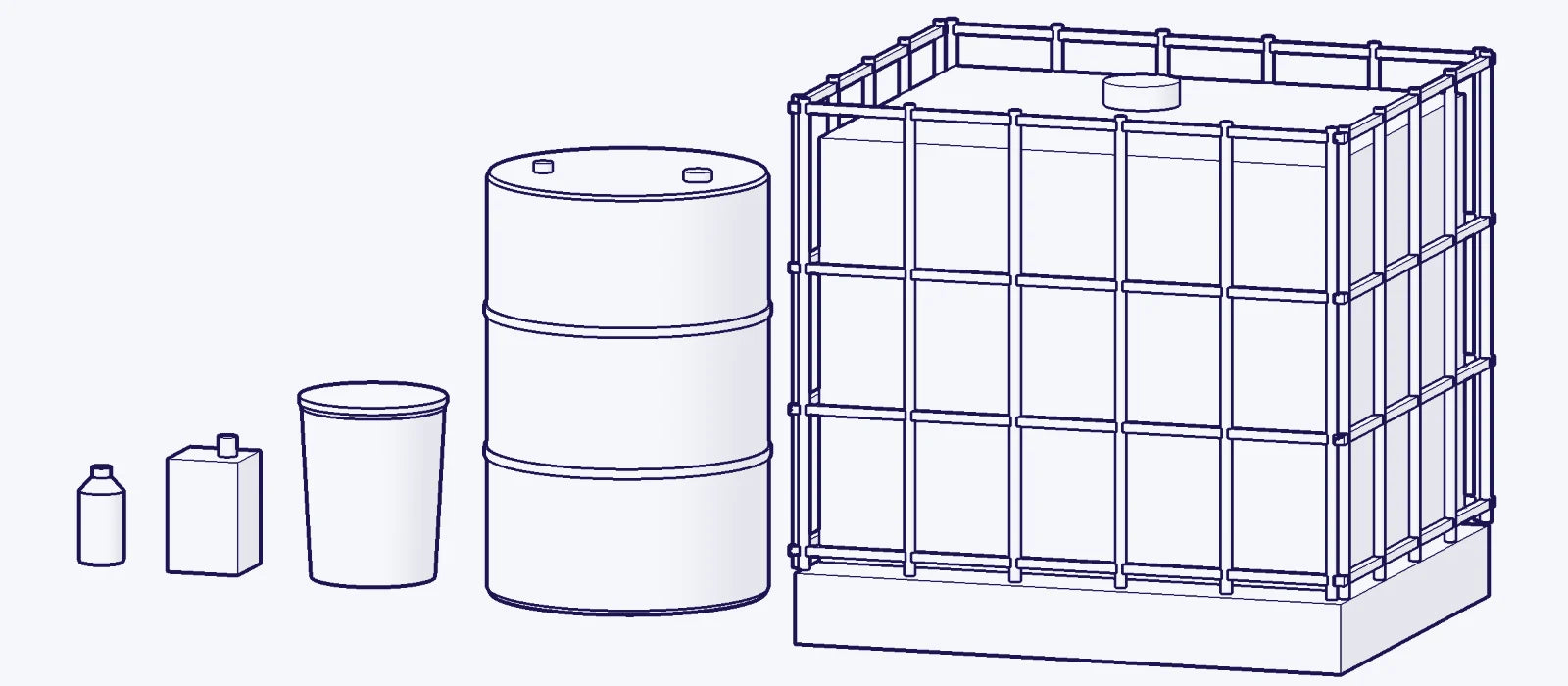
Purchasing in this sector typically involves high-volume, recurring orders designed to minimize handling while maximizing storage efficiency. Small to mid-sized facilities often utilize 275-gallon intermediate bulk containers (totes) or 55-gallon drums, which integrate easily with standard containment pallets and chemical metering pumps. Large-scale industrial operations may require bulk tanker arrangements. Due to the corrosive nature of primary treatments like Sulfuric Acid and Ferric Chloride, packaging must be UN-rated and compliant with DOT hazardous materials regulations. Buyers must also account for temperature sensitivity during logistics; for example, Sodium Hydroxide 50% has a high freezing point, requiring temperature-controlled transport or lower concentrations (25%) during winter months to prevent crystallization in feed lines.

Common Mistakes to Avoid

A frequent purchasing error in water treatment is overlooking the relationship between concentration and specific gravity when calibrating feed pumps. Substituting a different concentration of Sodium Hydroxide or Sulfuric Acid without recalculating the volumetric flow rate can lead to rapid pH swings and permit exceedances. Additionally, buyers often mishandle the shelf life of oxidizers. Sodium Hypochlorite degrades over time, losing strength; purchasing excessive bulk quantities to secure a lower price can result in degraded product that fails to meet oxidation requirements, forcing operators to drastically increase feed rates. Another common oversight involves grade selection. Industrial wastewater permits and municipal drinking water standards have vastly different certification requirements. Procurement teams must verify that the Technical grade chemicals specified match the regulatory framework of their specific application, rather than assuming all grades are interchangeable.

Why Alliance Chemical

COA Per Lot

Every lot ships with a Certificate of Analysis. Full traceability for your quality system.

SDS Included

Safety Data Sheets included with every order. Available on demand for any product.

Same-Day Shipping

Order by 2 PM CT and it ships today. DOT-certified hazmat packaging.

Real People

Call us and a person answers. No phone trees, no ticket queues. Taylor, Texas.

Made in the USAOwned and operated since 1998Certificate of Analysis (COA) available per lotSafety Data Sheet (SDS) provided with every orderTrusted by DOD, DLA, NASA, SOCOM, and Space ForceCAGE Code 1LT50Bulk pricing and purchase orders acceptedTechnical support availableContact: sales@alliancechemical.com

Frequently Asked Questions

How does temperature affect the selection of Sodium Hydroxide concentration?
Sodium Hydroxide 50% begins to crystallize at approximately 54°F (12°C), which can clog feed lines and pumps in unheated storage. For facilities in colder climates without heated storage or heat-traced lines, Sodium Hydroxide 25% is often preferred as it has a significantly lower freezing point.
What is the difference between utilizing Sodium Bisulfite and Sodium Metabisulfite for dechlorination?
Sodium Bisulfite is typically supplied as a liquid solution ready for metering, while Sodium Metabisulfite is a solid powder that must be dissolved into solution before use. Both effectively remove chlorine residuals, so the choice depends on your facility's ability to handle solids versus liquids and your available mixing equipment.
Why is the specific gravity listed on the COA critical for my process engineers?
Most chemical metering pumps dose by volume (gallons/hour), but chemical usage is often tracked by weight or mass. Accurate specific gravity data allows your engineering team to convert volume to mass, ensuring the feed rate delivers the exact amount of active chemical required for the treatment process.
Can Ferric Chloride be used as a substitute for Aluminum Sulfate?
While both are coagulants used for turbidity removal and phosphorous reduction, they operate effectively in different pH ranges and have different impacts on alkalinity. Process engineers should evaluate jar tests to determine which coagulant provides the best floc formation for your specific water chemistry.

Ready to Order?

Get the chemicals your Water & Wastewater Treatment operation needs — with documentation, fast shipping, and real support.

Or call: (512) 894-2194