Sulfuric

H2SO4 30% to 96% — battery, technical & ACS grade

7 Products
Sort by:: Best Selling
Sort by: Best Selling

FILTERS

Chemical name
  • (7)
Grade
  • (1)
  • (1)
  • (5)
Percentage
  • (1)
  • (1)
  • (1)
  • (1)
  • (1)
  • (1)
  • (1)
Form
  • (7)
Industry
  • (5)
  • (1)
  • (7)
  • (2)
  • (7)

About Sulfuric

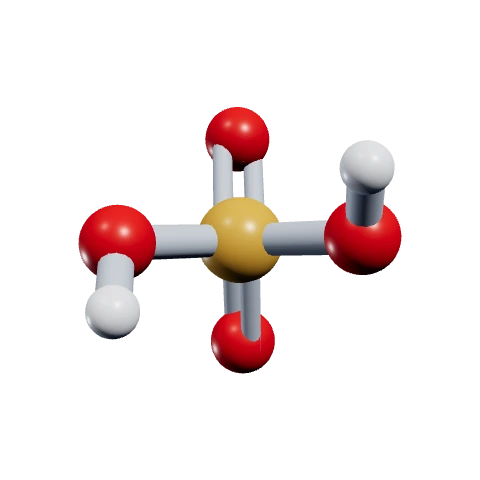
Buy sulfuric acid (H2SO4, CAS 7664-93-9) in concentrations from 37% to 96% from Alliance Chemical. Available in ACS Reagent Grade, Technical Grade, Battery Grade, and Electrolyte Grade, with sizes from quarts to 330-gallon IBC totes.

Products In This Collection

This collection includes sulfuric acid 96% ACS Grade (96–99.5 wt%, specific gravity ~1.84), sulfuric acid 93% Technical Grade, sulfuric acid 50% Electrolyte Grade (specific gravity 1.086), and sulfuric acid 37% Battery Acid (specific gravity 1.29). The 96% ACS grade features heavy metals ≤0.2 ppm and chloride ≤0.5 ppm.

Common Applications

Sulfuric acid 96% ACS Grade is used for chemical synthesis, laboratory analysis, sample digestion, and as a drying agent. The 93% Technical Grade serves industrial metal surface treatment, wastewater pH adjustment, ore processing, and manufacturing. Sulfuric acid 50% Electrolyte Grade is formulated for electrochemical cells, battery manufacturing, electroplating baths, and electrolysis systems. Battery acid at 37% is the standard for lead-acid battery maintenance.

Why Buy From Alliance Chemical

All sulfuric acid products ship with Safety Data Sheets (SDS) and Certificates of Analysis (COA). Alliance Chemical provides same-day shipping on in-stock items with DOT-compliant hazmat packaging. No minimum order.

Related: See the Acids and Mineral Acids collections. Blog: “Understanding Sulfuric Acid Concentrations.”

Frequently Asked Questions

What concentration of sulfuric acid is used for battery acid?
The standard concentration for lead-acid battery electrolyte is 37% sulfuric acid, which corresponds to a specific gravity of approximately 1.280 at 25°C. High-performance or deep-cycle batteries may occasionally use concentrations closer to 50% for initial charging protocols. Using higher concentrations than 37% in a standard automotive battery can cause rapid grid corrosion and permanent plate damage.
How do you neutralize a sulfuric acid spill in an industrial setting?
According to industrial safety protocols and OSHA guidance, sulfuric acid spills should be neutralized using a weak base such as sodium bicarbonate (baking soda) or soda ash. Avoid using strong bases like sodium hydroxide, as the resulting exothermic reaction can generate intense heat and dangerous splatter. Always apply the neutralizing agent from the perimeter of the spill inward to contain the acid.
What is the boiling point of 96% sulfuric acid?
Concentrated 96% sulfuric acid (ACS Reagent Grade) has a boiling point of approximately 337°C (639°F). This high boiling point makes it useful in laboratory processes requiring high-temperature reactions where other solvents would evaporate. However, caution must be exercised as the acid becomes significantly more reactive and hazardous as it approaches these temperatures.
Is sulfuric acid regulated as a hazardous waste by the EPA?
Yes, spent or discarded sulfuric acid is typically classified as a hazardous waste under EPA RCRA (Resource Conservation and Recovery Act) regulations, specifically carrying the D002 waste code for corrosivity. Any aqueous solution with a pH less than or equal to 2.0 must be managed, transported, and disposed of according to strict EPA guidelines. Facilities must maintain proper manifests and disposal records to ensure compliance with federal law.
What are the OSHA PEL limits for sulfuric acid mist?
OSHA 29 CFR 1910.1000 Table Z-1 establishes a Permissible Exposure Limit (PEL) for sulfuric acid mist at 1 mg/m³ as an 8-hour Time Weighted Average (TWA). Exposure to concentrations above this limit can cause severe respiratory irritation and pulmonary edema. Facilities must ensure adequate local exhaust ventilation and utilize NIOSH-approved respirators if engineering controls cannot maintain levels below the PEL.
Can 93% sulfuric acid be used to clean concrete?
Sulfuric acid at 93% Technical Grade is an extremely aggressive cleaner and should only be used on concrete for heavy-duty stain removal or etching by professionals. It must be significantly diluted before application to prevent dissolving the cementitious binder too deeply. Always add acid to water (never water to acid) to prevent a violent steam explosion and ensure the surface is neutralized with an alkaline solution after treatment.
What is the proper way to store sulfuric acid in hot environments?
Sulfuric acid should be stored in a cool, dry, well-ventilated area, protected from direct sunlight which can cause pressure build-up in sealed containers. In high-temperature regions like Texas, containers should be kept in secondary containment made of acid-resistant materials like HDPE. According to NFPA 704, sulfuric acid is rated as a 3 for health, 0 for flammability, and 2 for reactivity, with a 'W' (Water Reactive) designation in high concentrations.
What is the difference between Technical Grade and ACS Grade sulfuric acid?
The primary difference lies in the impurity profile and documentation; 96% ACS Reagent Grade meets or exceeds purity standards set by the American Chemical Society, making it suitable for high-precision laboratory analysis. 93% Technical Grade is intended for industrial applications where minor metallic impurities do not interfere with the process, such as metal pickling or pH adjustment. Alliance Chemical provides a Certificate of Analysis (COA) for both grades to verify specific purity levels.
How do you safely dilute concentrated sulfuric acid?
The golden rule of acid safety is to always add the concentrated sulfuric acid to the water, never the reverse. Adding water to concentrated H₂SO₄ triggers a violent exothermic reaction where the water can flash to steam instantly, splashing concentrated acid onto the operator. Use a slow, controlled pour while stirring in a heat-resistant vessel to dissipate the heat generated by the enthalpy of solution.