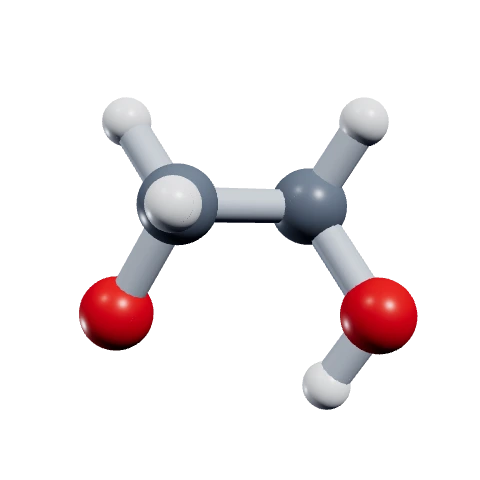
Ethylene Glycol

Sort by:: Best Selling
Sort by: Best Selling

About Ethylene Glycol

Ethylene glycol is a versatile dihydric alcohol that serves as the backbone of modern cooling and heat transfer systems. This colorless, odorless liquid provides exceptional freeze protection and heat transfer properties, making it indispensable across industries from automotive manufacturing to semiconductor fabrication. Understanding proper ethylene glycol selection is crucial for optimal system performance and longevity.

Common Applications

  • Automotive Antifreeze: Engine coolant formulations and radiator protection systems
  • HVAC Chiller Systems: Commercial and industrial cooling applications requiring precise temperature control
  • Polyester Manufacturing: Raw material for PET plastic and synthetic fiber production
  • Semiconductor Processing: Ultra-pure cooling for electronics manufacturing and testing
  • Data Center Cooling: High-performance liquid cooling systems for servers and mining operations
  • Airport Deicing: Aircraft and runway deicing fluid formulations

Available Grades and Forms

Our ethylene glycol collection spans multiple purity levels to match your specific requirements. We stock ACS reagent grade for analytical work, semiconductor grade for electronics applications, and inhibited formulations with corrosion protection additives. Pre-mixed solutions are available in popular 50/50 and 60/40 concentrations, eliminating the need for on-site blending and ensuring consistent performance.

Pack sizes range from 1-gallon containers for laboratory use to 55-gallon drums and 275-gallon totes for industrial operations. Our chemical grades guide provides detailed specifications to help you select the appropriate purity level for your application.

Every shipment includes comprehensive Safety Data Sheets (SDS) and Certificates of Analysis (COA) for quality assurance and regulatory compliance. With same-day shipping available and no minimum order requirements, Alliance Chemical makes it easy to source the exact ethylene glycol grade and quantity your operation demands.

SDS Included COA Available Same-Day Shipping No Minimum Order

Frequently Asked Questions

What is ethylene glycol and what is it used for?
Ethylene glycol is an organic compound primarily used as an antifreeze and coolant in automotive and HVAC systems due to its ability to lower the freezing point of water and raise its boiling point. It's also a key ingredient in the production of polyester fibers, PET plastics, and is used in some de-icing applications. Alliance Chemical supplies ethylene glycol in various grades to suit diverse industrial needs.
What are the different grades of ethylene glycol available?
Ethylene glycol is available in several grades, including industrial grade, automotive grade, and semiconductor grade. The semiconductor grade is the purest, essential for applications where impurities can interfere with performance. Alliance Chemical provides different grades to match your specific purity and application requirements, complete with Certificates of Analysis.
How should ethylene glycol be stored safely?
Ethylene glycol should be stored in tightly closed, properly labeled containers in a cool, dry, and well-ventilated area, away from incompatible materials like strong oxidizers and acids. Keep it out of direct sunlight and away from sources of ignition. Always refer to the Safety Data Sheet (SDS) provided by Alliance Chemical for detailed storage and handling information.
Is ethylene glycol toxic?
Yes, ethylene glycol is toxic if ingested, inhaled, or absorbed through the skin. Exposure can cause serious health problems, including kidney damage and even death. When handling ethylene glycol, always wear appropriate personal protective equipment (PPE), such as gloves, eye protection, and a respirator if ventilation is inadequate. Refer to the SDS from Alliance Chemical for comprehensive safety precautions.
How do I dilute ethylene glycol for antifreeze applications?
The proper dilution of ethylene glycol for antifreeze depends on the desired freeze protection level. Typically, a 50/50 mixture of ethylene glycol and water provides protection down to -34°F (-36.7°C). Use distilled or deionized water to prevent mineral buildup. Alliance Chemical offers premixed 50/50 ethylene glycol solutions for your convenience.
What is the difference between ethylene glycol and propylene glycol?
While both ethylene glycol and propylene glycol are used as antifreeze and coolants, propylene glycol is considered less toxic than ethylene glycol. Propylene glycol is often preferred in applications where incidental human or animal contact is possible, such as in food processing or residential HVAC systems. Ethylene glycol is typically used in applications that prioritize performance and efficiency over toxicity.
What are the common concentrations of ethylene glycol products?
Ethylene glycol products are available in various concentrations, including pure (100%) and premixed solutions (e.g., 50/50). Pure ethylene glycol allows for custom dilution based on specific needs, while premixed solutions offer convenience and consistent performance. Alliance Chemical offers a range of ethylene glycol concentrations to suit different applications.
How can ethylene glycol be used in data center cooling?
In data centers, ethylene glycol is used in closed-loop cooling systems to remove heat from servers and other equipment. Its high heat capacity and ability to lower the freezing point of water make it an effective coolant, preventing equipment overheating and ensuring optimal performance. Alliance Chemical provides high-purity ethylene glycol suitable for the demanding cooling requirements of data centers. Inhibitors are often added to the glycol to protect metals in the system from corrosion.
What safety measures should I take when handling ethylene glycol?
Always wear appropriate personal protective equipment (PPE), including gloves, safety glasses, and a respirator if necessary. Work in a well-ventilated area and avoid contact with skin, eyes, and clothing. In case of contact, immediately flush the affected area with plenty of water and seek medical attention. Refer to the SDS from Alliance Chemical for complete safety guidelines.
Does Alliance Chemical provide a Certificate of Analysis (COA) for ethylene glycol?
Yes, Alliance Chemical provides a Certificate of Analysis (COA) with each ethylene glycol product, detailing the chemical's purity, composition, and compliance with industry standards. This COA ensures that you receive a high-quality product that meets your specific application requirements, providing transparency and confidence in your purchase.