



The only glycol guide you need
PG vs EG. Inhibited vs technical vs USP. Every concentration, every grade, every application — decoded for chemical buyers and facility engineers.
Glycols are the workhorses of heat transfer, freeze protection, and process cooling. But choosing the wrong type, grade, or concentration can mean equipment corrosion, regulatory violations, or thousands of dollars in wasted product. This guide breaks down everything a chemical buyer needs to know.
Propylene Glycol vs Ethylene Glycol: The Core Decision
Every glycol selection starts here. Both transfer heat. Both protect against freezing. But they serve fundamentally different markets.
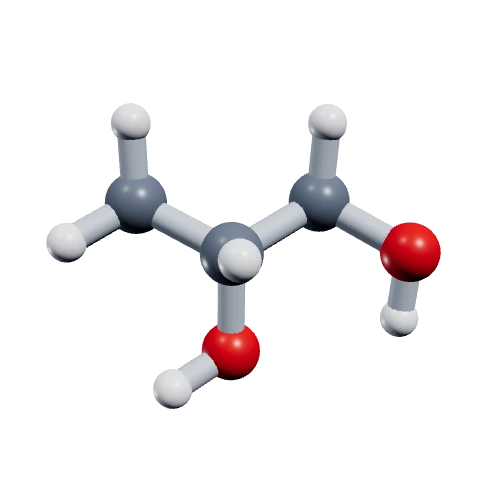
Propylene Glycol (PG)
- Low toxicity — GRAS-listed (Generally Recognized as Safe) by the FDA
- Food/beverage safe — Used in food processing lines, breweries, wineries
- Specified for HVAC loops in occupied buildings, where a leak could reach people
- Slightly lower heat transfer efficiency than EG
- Higher viscosity — needs slightly more pump energy
Ethylene Glycol (EG)
- Superior heat transfer — more efficient at every concentration
- Lower viscosity — less pumping energy required
- Better freeze protection per volume of glycol
- Toxic if ingested — not suitable for food contact systems
- Automotive/industrial standard for closed-loop systems
Use PG when the system is in a food facility, an occupied building, or anywhere a leak could contact people or products. Use EG for automotive, industrial chillers, ground-source heat pumps, and closed systems where human contact is not a concern.
Propylene glycol vs ethylene glycol at a glance
Figures are for the neat chemical.
| Property | Propylene glycol (PG) | Ethylene glycol (EG) |
|---|---|---|
| Formula | C3H8O2 (CH3CHOHCH2OH) | C2H6O2 (HOCH2CH2OH) |
| CAS number | 57-55-6 | 107-21-1 |
| Molar mass | 76.09 g/mol | 62.07 g/mol |
| Boiling point | 187.6 °C (370 °F) | 197.3 °C (387 °F) |
| Melting point, neat | -60 °C (-76 °F) | -12.7 °C (9 °F) |
| Density at 20 °C | 1.036 g/cm³ | 1.114 g/cm³ |
| Viscosity at 20 °C, neat | 56 mPa·s | 21 mPa·s |
| Flash point, closed cup | 99 °C (210 °F) | 111 °C (232 °F) |
| GHS oral hazard | Not classified in 98% of ECHA notifications | H302, harmful if swallowed |
| FDA food status | GRAS, 21 CFR 184.1666 | Not in the GRAS lists (21 CFR 182, 184) |
| Typical use | Freeze protection where a leak could reach food, beverages or people; food, cosmetic and drug ingredient | Automotive antifreeze, closed industrial loops, polyester (PET) feedstock |
Which is better, propylene glycol or ethylene glycol?
Ethylene glycol is the better heat-transfer fluid and propylene glycol is the safer one, so the right choice depends on what a leak would touch. At the same weight percent the two give almost the same freeze point (50%: about -29 °F for ethylene glycol and -28 °F for propylene glycol, per Dow), and neat ethylene glycol is well under half as viscous (21 vs 56 mPa·s at 20 °C).
Choose ethylene glycol for sealed loops nobody can drink from or touch, such as vehicle cooling systems and process chillers. Choose propylene glycol for food and beverage plants, loops inside occupied buildings, and any system where a failed heat exchanger could put glycol into something people consume. The ethylene glycol advantage in a pumped loop tracks its lower viscosity, which means less pump energy for the same flow.
Is ethylene glycol toxic, and is propylene glycol safe?
Yes, ethylene glycol is poisonous if swallowed. It carries GHS hazard statement H302 (harmful if swallowed), some ECHA notifications add H373 (organ damage through prolonged or repeated exposure), and the Hazardous Substances Data Bank puts the human oral lethal dose at about 1.4 mL/kg. Propylene glycol has far lower acute toxicity: the same database lists its probable human oral lethal dose as above 15 g/kg.
Regulators draw the same line. FDA affirms propylene glycol as generally recognized as safe (GRAS) for direct addition to food under 21 CFR 184.1666, with use ceilings from 2.0% in most foods to 97% in seasonings and flavorings. The same section requires food-use propylene glycol to meet Food Chemicals Codex specifications.
On workplace air, neither glycol has a limit in OSHA Table Z-1. HSDB notes that the vacated 1989 OSHA ceiling of 50 ppm for ethylene glycol is still enforced in some states. Some people avoid propylene glycol in skin products because it can irritate skin; Haz-Map notes its irritant effects complicate patch testing. For any specific product, read its SDS before handling, store glycol only in labeled containers, and never decant it into drink bottles: ethylene glycol is odorless and tastes sweet.
Is ethylene glycol banned in the US?
No. Ethylene glycol is legal to buy, sell and use in the United States. It is regulated rather than banned: EPA lists it as a hazardous air pollutant under the Clean Air Act, and a release of 5,000 lb or more is reportable to the National Response Center under CERCLA.
What it cannot be is a food ingredient. It does not appear in FDA's GRAS lists (21 CFR parts 182 and 184), and in medicines FDA handles it as a contaminant. FDA's May 2023 guidance says the USP-NF monographs for propylene glycol and glycerin limit diethylene glycol and ethylene glycol to not more than 0.10%, and that drug makers must test representative samples of each lot against that limit before use.
Freeze Point by Concentration
The concentration you need depends entirely on the minimum ambient temperature your system will face. Under-dosing means frozen pipes. Over-dosing wastes money and reduces heat transfer efficiency.
| Glycol, % by weight | PG Freeze Point | EG Freeze Point | Best For |
|---|---|---|---|
| 30% | +9 °F (-12.7 °C) | +7 °F (-14.1 °C) | Mild climates, seasonal protection |
| 40% | -6 °F (-21.1 °C) | -8 °F (-22.3 °C) | Most HVAC/chiller systems |
| 50% | -28 °F (-33.5 °C) | -29 °F (-33.8 °C) | Cold climates, outdoor equipment |
| 60% | -60 °F (-51.1 °C) | -55 °F (-48.3 °C) | Extreme cold, Arctic conditions |
| 100% (neat) | No sharp freeze; melting point -76 °F (-60 °C) | Solid below +9 °F (-13 °C) | Dilute on-site for custom concentration |
Values are Dow's typical freezing points by weight, from the DOWFROST (propylene glycol) and DOWTHERM SR-1 (ethylene glycol) data sheets. By volume, ethylene glycol pulls slightly ahead because it is denser. Dow advises a mix rated at least 5 °F (3 °C) below your coldest expected temperature.
Neat ethylene glycol solidifies at about +9 °F (-13 °C), a higher temperature than its 50% solution, so the water is part of the antifreeze. Neat propylene glycol does not crystallize that way (PubChem lists its melting point at -76 °F), but at 56 mPa·s at 68 °F and far thicker when cold it pumps poorly, so it is diluted too. A 60/40 glycol-to-water ratio gives maximum freeze protection. Going above 60% glycol provides diminishing returns and reduces heat transfer.
Understanding Glycol Grades
Not all glycol is the same purity, and the grade you need depends on your application and regulatory requirements.
| Grade | Purity | What It Means | Use Cases |
|---|---|---|---|
| Inhibited | 99%+ | Contains corrosion inhibitors to protect metals in closed-loop systems | HVAC, chillers, boilers, automotive |
| Technical | 99%+ | Industrial purity, no inhibitor package — pure glycol | Manufacturing, deicing, non-metal systems |
| USP | 99.5%+ | Meets United States Pharmacopeia standards for pharmaceutical/food use | Food processing, cosmetics, pharma |
| ACS | 99.5%+ | Meets American Chemical Society reagent grade specifications | Laboratory, analytical, research |
| Semiconductor | 99.99%+ | Ultra-pure for electronic-grade applications | Semiconductor fabrication, cleanrooms |
If your glycol runs through any metal piping, heat exchangers, or pumps, you almost certainly want inhibited glycol. Uninhibited (technical grade) glycol becomes acidic over time and will corrode copper, steel, and aluminum. Corrosion inhibitors extend fluid life from 2-3 years to 5-10+ years.
Application Guide: Which Glycol for What
HVAC and Chillers

Photo by noe fornells on Unsplash
Most commercial HVAC systems in occupied buildings are specified with propylene glycol (inhibited) at 30-50% concentration. The inhibitor package protects the copper and steel components in the loop. For systems that never contact people or food — like ground-source heat pump loops — ethylene glycol 50/50 offers better thermal performance.
Automotive and Fleet

Photo by Mathias Reding on Unsplash
Automotive coolant is almost always ethylene glycol-based. 100% ethylene glycol inhibited can be diluted to the concentration your climate requires. For pre-mixed convenience, Arctic Assist 50/50 is ready to pour.
Food and Beverage Processing

Photo by Luo Jin Hong on Unsplash
Any glycol in a system that could contact food should be propylene glycol. Ethylene glycol is not a permitted food ingredient; FDA lists it only for indirect food-contact uses such as adhesives and PET packaging (21 CFR 175.105, 177.1630). The FDA rule for food-use propylene glycol, 21 CFR 184.1666, requires it to meet Food Chemicals Codex specifications. For loops that could leak into product we stock propylene glycol USP grade, whose monograph also limits diethylene glycol and ethylene glycol to 0.10%; if your food-safety plan requires FCC, confirm it on the lot's Certificate of Analysis before use. Breweries, wineries, dairy plants, and food manufacturers use PG in jacketed tanks, glycol chillers, and process cooling lines. Available in 30%, 40%, and 50% USP pre-mixed concentrations.
Laboratory and Research
Lab applications demand traceable purity. Ethylene glycol ACS grade and propylene glycol inhibited ACS grade meet American Chemical Society reagent specifications for analytical work, calibration baths, and reaction media.
Semiconductor and Cleanroom
Ethylene glycol semiconductor grade is ultra-purified for applications where trace metals and particulates must be at parts-per-billion levels. Used in wafer fabrication cooling loops and cleanroom environmental controls.
Deicing and Winterization
For winterizing pipes, RVs, sprinkler systems, and outdoor equipment, 50% PG technical grade provides freeze protection to -28 °F without the cost of inhibitors or USP certification. Arctic Assist is formulated specifically for freeze protection applications.
Specialty Solvents (Glycol Ethers)
Glycol Ether EE and Glycol Ether EE ACS are not heat-transfer fluids — they are solvents derived from glycols. Used in coatings, inks, cleaning formulations, and as coupling agents in water-based systems. PEG 200 serves as a lubricant, humectant, and carrier in pharmaceutical and personal care formulations.
How to Choose the Right Concentration
Selecting the right glycol concentration involves balancing three factors:
- Freeze protection — What is the lowest temperature your system will experience?
- Heat transfer efficiency — Higher glycol concentrations reduce thermal conductivity
- Viscosity and pump load — More glycol means thicker fluid and more pump energy
The sweet spot for most systems is 30-50%. Beyond 60%, you get minimal additional freeze protection but significantly worse heat transfer and higher viscosity.
Do not use 100% glycol undiluted as antifreeze. Pure ethylene glycol freezes at about +9 °F, a higher temperature than a 50/50 or 60/40 mix, and pure propylene glycol is too viscous to move heat well. Water is essential to the freeze-depression mechanism. Buy 100% concentrate only if you plan to dilute it on-site to your target ratio.
Can you mix propylene glycol and ethylene glycol?
They will mix: both are fully miscible with water, and PubChem lists ethylene glycol as miscible with lower alcohols and glycerol, so a loop topped up with the other glycol becomes one blended fluid. Do not do it on purpose. Any ethylene glycol in the blend removes the reason for choosing propylene glycol, and the freeze-point reading you take afterward is off, because glycol hydrometers and refractometer scales are calibrated for one glycol.
The two products may also carry different inhibitor packages, so check with the supplier of each before any top-up. If the loop is already mixed, handle it as ethylene glycol for exposure and disposal, have a lab measure what is in it, and correct from that number, or drain, flush and refill with one fluid.
How can you tell ethylene glycol from propylene glycol?
On neat product, check the density. Ethylene glycol is 1.1135 g/cm³ at 20 °C and propylene glycol is 1.0361 g/cm³, so 100 mL weighs about 111 g versus about 104 g. In a diluted loop the gap shrinks, so the reliable answers are the label and SDS, or a lab test by gas chromatography.
Color tells you nothing: NIOSH describes ethylene glycol as colorless and notes it is often dyed fluorescent yellow-green for automotive antifreeze, and a dye identifies the blender, not the glycol. Never taste-test.
Shop All Alliance Chemical Glycols
Propylene Glycol (13 Products)
Low toxicity. Food-safe grades available. HVAC, food processing, pharma.
Ethylene Glycol (7 Products)
Superior heat transfer. Automotive, industrial, semiconductor.
Glycol Ethers & Specialty (5 Products)
Solvents, freeze protection blends, and PEG for formulation.
Need help choosing?
Our team can recommend the right glycol type, grade, and concentration for your system. SDS for each product is on its product page. Need the Certificate of Analysis? Just ask, we send it at no charge.
Contact SalesSourcing for this job? See our propylene glycol supplier page — every grade and strength we stock, with live pricing from quarts through drums and totes.
Related: Polyethylene Glycol (PEG 200) vs Propylene Glycol: Uses, Grades & the Difference — the polymer glycol most often confused with propylene glycol, explained in full.
Related: Ethylene Glycol: The Complete Guide to Antifreeze, Coolant Blends, Grades & Safety — the dedicated ethylene glycol pillar: blend freeze-point tables, inhibited vs uninhibited, grades, and buying guidance.
Related: Elixir Sulfanilamide: The 1937 Poisoning That Created the FDA — the 1937 diethylene glycol disaster that made propylene glycol the standard safe glycol, and created the modern FDA.
References & Authoritative Sources
Primary sources consulted for this article. Regulatory and physical-property figures above are drawn from these references.
- Propylene glycol (CAS 57-55-6) — compound summary — PubChem, National Center for Biotechnology Information. Accessed 2026-09-02.
- Ethylene glycol (CAS 107-21-1) — compound summary — PubChem, National Center for Biotechnology Information. Accessed 2026-09-02.
- Propylene glycol — thermochemical and phase data — NIST Chemistry WebBook, SRD 69. Accessed 2026-09-02.
- Ethylene glycol — thermochemical and phase data — NIST Chemistry WebBook, SRD 69. Accessed 2026-09-02.
- 21 CFR 184.1666 — Propylene glycol (direct food substances affirmed as generally recognized as safe) — Electronic Code of Federal Regulations, U.S. Food and Drug Administration. Accessed 2026-09-02.
- Testing of Glycerin, Propylene Glycol, Maltitol Solution, Hydrogenated Starch Hydrolysate, Sorbitol Solution, and other High-Risk Drug Components for Diethylene Glycol and Ethylene Glycol (Guidance for Industry, May 2023), U.S. Food and Drug Administration. Accessed 2026-09-28.
- Initial List of Hazardous Air Pollutants with Modifications, U.S. Environmental Protection Agency. Accessed 2026-09-28.
- DOWFROST Heat Transfer Fluid, Technical Data Sheet, Form No. 180-01314-1019, The Dow Chemical Company (distributor-hosted copy). Accessed 2026-09-28.
- DOWTHERM SR-1 Fluid, Technical Data Sheet, Form 180-01312-0417, The Dow Chemical Company (distributor-hosted copy). Accessed 2026-09-28.
Key numbers and sources
| Fact | Value | Source |
|---|---|---|
| Propylene glycol CAS number | 57-55-6 | pubchem.ncbi.nlm.nih.gov |
| Ethylene glycol CAS number | 107-21-1 | pubchem.ncbi.nlm.nih.gov |
| Propylene glycol is GRAS-listed by the FDA | GRAS-listed (Generally Recognized as Safe) by the FDA | ecfr.gov |
| USP grade propylene glycol purity | 99.5%+ | See article text |
| Inhibited glycol purity | 99%+ | See article text |
| Freeze point of 50% (by weight) propylene glycol solution | -28 °F (-33.5 °C) | Dow DOWFROST TDS |
| Freeze point of 50% (by weight) ethylene glycol solution | -29 °F (-33.8 °C) | Dow DOWTHERM SR-1 TDS |
| Estimated human oral lethal dose of ethylene glycol | About 1.4 mL/kg | pubchem.ncbi.nlm.nih.gov |
| Melting point of neat propylene glycol | -60 °C (-76 °F) | pubchem.ncbi.nlm.nih.gov |
| USP-NF limit for diethylene glycol and ethylene glycol in propylene glycol | Not more than 0.10% | fda.gov |
Related: Why Water Splits Iron: The 1784 Quebec Shell Experiments and How Propylene Glycol Keeps Boats, RVs, Cabins and Loops Alive Through Winter — which glycol goes in a fresh-water line, and the freeze-versus-burst concentrations for each.
Related: Two Solids Make a Liquid. Why Deep Eutectic Solvents Are Still Waiting — ethylene glycol and propylene glycol as deep eutectic solvent donors, and why inhibited glycols and premixed coolants do not belong in one.
Frequently asked questions
What is the difference between propylene glycol and ethylene glycol?
Both are water-miscible diols used for freeze protection and heat transfer. Propylene glycol (C3H8O2, CAS 57-55-6) is affirmed GRAS by FDA under 21 CFR 184.1666 and has low acute toxicity. Ethylene glycol (C2H6O2, CAS 107-21-1) is harmful if swallowed, with an estimated human lethal dose near 1.4 mL/kg, but it is less viscous and, being denser, gives slightly better freeze protection per gallon of glycol. Use PG where a leak could reach food or people; use EG in closed industrial and automotive loops.
Which is better, propylene glycol or ethylene glycol?
Ethylene glycol is the better heat-transfer fluid and propylene glycol is the safer one. By weight they give almost the same freeze point (50%: about -29 °F EG, -28 °F PG, per Dow), but neat ethylene glycol is well under half as viscous (21 vs 56 mPa·s at 20 °C), so it pumps and transfers heat more easily. Choose EG for closed loops nobody can drink from or touch, and PG for food plants, occupied buildings and any system that could leak into something people consume.
What concentration of glycol should I use for freeze protection?
It depends on your minimum temperature. By weight, Dow's data give 30% glycol protection to about +9 °F (PG) or +7 °F (EG), 40% to -6 °F or -8 °F, 50% to -28 °F or -29 °F, and 60% to -60 °F or -55 °F. Pick a mix rated at least 5 °F below your coldest expected temperature. Do not run 100% glycol undiluted: neat ethylene glycol solidifies near +9 °F, and neat propylene glycol is too viscous to move heat well.
What does inhibited glycol mean?
Inhibited glycol contains a corrosion inhibitor package that protects metals (copper, steel, aluminum) in closed-loop systems. Uninhibited glycol becomes acidic over time and corrodes metal components. Use inhibited glycol in any system with metal piping, pumps or heat exchangers, and do not top up one inhibited product with another without checking that the packages are compatible.
What is USP grade propylene glycol?
USP grade propylene glycol meets the United States Pharmacopeia (USP-NF) monograph. One of its tests limits diethylene glycol and ethylene glycol to not more than 0.10%, and FDA's May 2023 guidance says drug makers must test each lot against that limit before use. For food use, FDA's rule (21 CFR 184.1666) requires propylene glycol to meet Food Chemicals Codex specifications. Industrial loops without food or drug exposure can use inhibited or technical grade.
Can I use ethylene glycol in a food processing facility?
Not in any system that could contact food or beverages. Ethylene glycol is harmful if swallowed (GHS H302) and is not a permitted food ingredient; it does not appear in FDA's GRAS lists (21 CFR parts 182 and 184). Food plants use propylene glycol, which FDA affirms as GRAS under 21 CFR 184.1666, in jacketed tanks, glycol chillers and process cooling lines. Food-use propylene glycol must meet Food Chemicals Codex specifications, so confirm the grade with your supplier.
Is ethylene glycol banned in the US?
No. Ethylene glycol is legal to buy, sell and use in the United States and is the base of most automotive antifreeze. It is regulated rather than banned: EPA lists it as a hazardous air pollutant under the Clean Air Act, and a release of 5,000 lb or more is reportable under CERCLA. It is not a permitted food ingredient, and USP limits it to 0.10% in propylene glycol and glycerin.
Is propylene glycol safe?
Propylene glycol has low acute toxicity: HSDB lists its probable human oral lethal dose as above 15 g/kg, and FDA affirms it as GRAS for food at set maximum levels, such as 2.0% in most foods and 5% in alcoholic beverages (21 CFR 184.1666). It is not classified as hazardous in 98% of ECHA notifications. It can irritate skin in some people. Industrial grades are not food ingredients, so read the SDS for the product you handle.
What happens if you mix ethylene glycol and propylene glycol?
They blend into one fluid: both mix freely with water, and ethylene glycol is miscible with lower alcohols and glycerol. The mix loses the safety reason for choosing propylene glycol, freeze-point readings from a hydrometer or refractometer become unreliable because those scales assume one glycol, and the two inhibitor packages may not be compatible. If a loop is already mixed, handle it as ethylene glycol, have a lab measure the contents by gas chromatography, or drain, flush and refill with one fluid.
How can you tell if glycol is ethylene or propylene?
On neat product, check density: ethylene glycol is 1.1135 g/cm³ at 20 °C and propylene glycol is 1.0361 g/cm³, so 100 mL weighs about 111 g versus about 104 g. Color and smell do not help, because both are colorless and nearly odorless and antifreeze dyes are added by the blender. In a diluted loop, rely on the label and SDS, or a lab test by gas chromatography. Never taste-test.
Related Chemical Collections
About the author
Andre Taki
This article is for informational purposes only.


