



The Complete Guide to Glycerin
From soap making to pharma, food to industrial — everything you need to know about glycerin grades, applications, and sourcing.
What Is Glycerin?
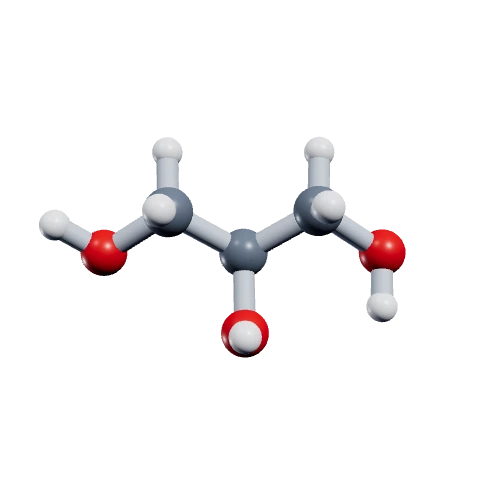
Glycerin (also called glycerol or glycerine) is a simple polyol compound with the molecular formula C₃H₈O₃. It is a colorless, odorless, viscous liquid that is sweet-tasting, non-toxic, and completely water-soluble. These properties make it one of the most versatile and widely used chemicals in the world, appearing in thousands of consumer and industrial products.
At the molecular level, glycerin is a trihydric alcohol — meaning it has three hydroxyl (-OH) groups attached to a three-carbon backbone. These hydroxyl groups are responsible for its hygroscopic nature (it actively attracts and holds water from the surrounding environment), its miscibility with water and alcohols, and its ability to act as a humectant, solvent, sweetener, and lubricant simultaneously.
How Glycerin Is Produced
Commercial glycerin comes from three primary sources:
- Transesterification (biodiesel production): The dominant global source. When vegetable oils or animal fats are converted to biodiesel with sodium hydroxide or potassium hydroxide as catalyst, crude glycerin is produced as a byproduct (roughly 10% by weight of the oil feedstock)
- Saponification (soap making): The traditional source. When fats react with lye (NaOH), the result is soap + glycerin. In commercial soap manufacturing, the glycerin is often separated and sold as a higher-value byproduct
- Synthetic production: Glycerin can be synthesized from propylene (a petroleum derivative) via epichlorohydrin. This route is less common today due to the abundance of bio-derived glycerin from biodiesel
Key Physical Properties
- Boiling point: 290°C (554°F) — much higher than water
- Freezing point: 17.8°C (64°F) for pure glycerin; glycerin-water mixtures freeze much lower
- Density: 1.261 g/mL (heavier than water)
- Viscosity: 1,412 cP at 20°C — roughly 1,000x the viscosity of water
- Flash point: 160°C (320°F) — not readily flammable under normal conditions
- Solubility: Fully miscible with water and ethanol; insoluble in oils and hydrocarbons
What is the difference between technical grade and USP grade glycerin?
Not all glycerin is created equal. The two grades most commonly available — Technical Grade and USP Grade — differ significantly in purity, certifications, and intended applications. Choosing the wrong grade can mean wasted money (using USP where technical suffices) or regulatory violations (using technical where USP is required).
| Specification | Technical Grade | USP Grade |
|---|---|---|
| Purity | 95-99% | ≥99.5% |
| Color | Light yellow to colorless | Water-white (colorless) |
| Certifications | General industrial specs | USP, NF, FCC, Kosher |
| Heavy metals | Not specified | <5 ppm |
| Residue on ignition | Not specified | <0.01% |
| Chlorinated compounds | Not specified | Passes USP test |
| Food contact | No | Yes (FCC compliant) |
| Pharma use | No | Yes (USP/NF compliant) |
| Cosmetic use | External only | Yes — full skin/oral |
| Industrial use | Yes — all industrial | Yes (but overkill/costly) |
| Price (typical) | $ (lower) | $$ (20-40% premium) |
USP Grade glycerin meets the stringent requirements of the United States Pharmacopeia (USP) and National Formulary (NF) — the official compendia for drug, food, and dietary supplement quality. It also meets Food Chemicals Codex (FCC) standards for food-grade purity. The additional testing, purification, and documentation required to meet these certifications is what drives the price premium. For a deeper look at how chemical grades affect real-world applications, see our article on food-grade vs. technical-grade d-Limonene.

Glycerin Technical Grade
High-purity technical glycerin for industrial, lubricant, antifreeze, and manufacturing applications. Available from quarts to totes.

Glycerin USP Grade
Pharmaceutical and food-grade glycerin meeting USP/NF/FCC standards. For cosmetics, soap making, food, pharma, and personal care.
How is glycerin used in soap making?
Glycerin and soap have been inseparable since the dawn of soap making. When fats and oils react with sodium hydroxide (lye) in the process called saponification, two products are formed: soap and glycerin. In fact, roughly 10% of the weight of all soap produced is glycerin. Commercial soap makers often extract and sell this glycerin separately — which is why mass-produced bar soaps can feel drying compared to handmade soaps that retain their natural glycerin.
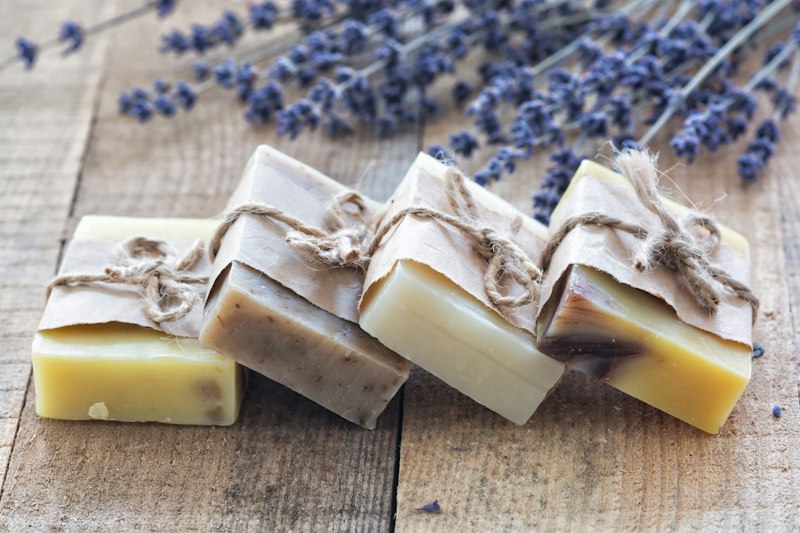
Handmade glycerin soaps retain natural moisturizing properties
The Saponification Reaction
The basic chemistry is elegant:
Fat/Oil + NaOH → Soap + Glycerin
In cold-process soap making, the glycerin remains in the finished bar, acting as a humectant that draws moisture to the skin. In melt-and-pour soap making, commercially prepared glycerin soap bases (which are pre-saponified and enriched with extra glycerin) are melted, customized with fragrances and colors, and poured into molds.
Glycerin Soap Formulation Ratios
| Method | Glycerin Role | Typical % | Notes |
|---|---|---|---|
| Cold process | Natural byproduct | 8-12% of bar | Retained automatically; adds moisturizing |
| Hot process | Natural byproduct | 8-12% of bar | Faster cure; glycerin distribution less uniform |
| Melt & pour | Base ingredient | 15-25% of base | Pre-made bases from suppliers; easy customization |
| Liquid soap | Humectant additive | 2-5% of formula | Added post-saponification for skin feel |
| Glycerin rivers (additive) | Decorative agent | 1-3% additional | Creates translucent channels in cold process |
| Superfatted soap | Moisture booster | 5-8% superfat + glycerin | Excess oils + natural glycerin = ultra-moisturizing |
Sodium Hydroxide Flakes (Lye)
Essential for cold-process and hot-process soap making. High-purity NaOH flakes dissolve cleanly for consistent saponification results.
For the complete chemistry of soap making with sodium hydroxide, see our dedicated guide: The Crucial Role of Sodium Hydroxide in Soap Creation. Industrial soap manufacturers should also review our article on NaOH in modern industry.
Food & Beverage Applications
Glycerin is one of the most widely used food additives in the world, classified by the FDA as Generally Recognized as Safe (GRAS) and assigned E-number E422 in Europe. Its unique combination of sweetness (~60% as sweet as sucrose), humectancy, and solvent properties makes it indispensable across the food and beverage industry.
Key Food Applications
- Humectant / moisture retention: Added to baked goods, energy bars, dried fruits, and confections to prevent drying out and extend shelf life. Glycerin binds water molecules, keeping products soft and chewy
- Sweetener: Used as a low-glycemic sweetener in sugar-free and diabetic-friendly products. Glycerin provides fewer calories per gram than sugar (4.32 vs. 4.0 kcal/g) and does not promote tooth decay
- Solvent for flavors and colors: Many natural and artificial flavor extracts use glycerin as a carrier solvent instead of alcohol — especially important for products marketed as alcohol-free (vanilla extract, herbal tinctures)
- Thickener and body agent: Adds viscosity and mouthfeel to liqueurs, cream-based beverages, and sauces
- Vaping and e-liquid base: Vegetable glycerin (VG) is one of the two primary base liquids in e-cigarettes and vape liquids, prized for producing thick, dense vapor clouds
- Preservation: At concentrations above 50%, glycerin acts as a preservative by reducing water activity below the threshold for microbial growth
Glycerin's role in food is similar to the humectant properties of propylene glycol in food manufacturing — both serve as moisture-retention agents, flavor solvents, and texture enhancers. For a broader comparison of glycols and polyols used in food, see our introduction to propylene glycol.
Cosmetics & Personal Care
Walk into any drugstore and pick up a bottle of lotion, shampoo, or toothpaste — odds are glycerin is listed in the top 5 ingredients. It is the most widely used humectant in the global cosmetics industry, appearing in over 80% of personal care formulations. The reason is simple: glycerin attracts water from the environment and from deeper skin layers, creating a moisture-rich film on the skin surface that improves hydration, barrier function, and tactile softness.
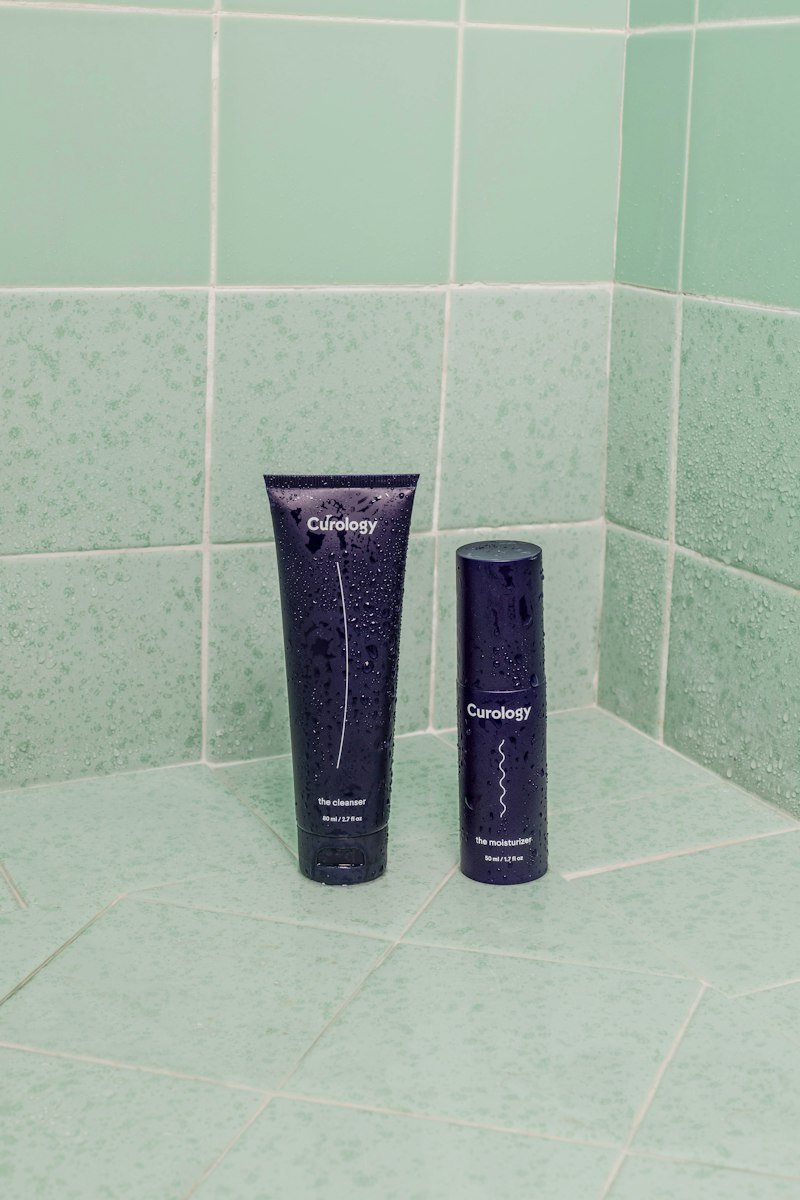
Glycerin is the most common humectant in modern skincare
Personal Care Applications
Skin Moisturizers
Glycerin at 2-10% concentration in lotions and creams draws moisture into the stratum corneum, reducing transepidermal water loss (TEWL). Clinical studies show glycerin outperforms many synthetic humectants for long-term hydration.
Hair Conditioners
Glycerin at 1-5% in conditioners and leave-in treatments smooths the cuticle layer, reduces frizz, and improves elasticity. Especially effective for curly and textured hair types.
Toothpaste
Glycerin serves as a humectant and sweetener in toothpaste, preventing the paste from drying out in the tube and providing a smooth, sweet mouthfeel without promoting cavities.
Deodorants
Natural glycerin-based deodorants use glycerin's hygroscopic properties to create a moisture-managing barrier. Compatible with sensitive skin and aluminum-free formulations.
Lip Balms & Glosses
Glycerin provides the glossy, emollient feel in lip products while actively drawing moisture to prevent chapping. Often combined with castor oil for added viscosity.
Bath & Body
Glycerin-enriched bath bombs, body washes, and shower gels provide moisturizing benefits during cleansing. The glycerin counteracts the drying effect of surfactants on skin.
For detailed formulation guidance on glycerin in cosmetics and pharmaceuticals, see our dedicated article: Glycerin in Pharmaceutical & Cosmetic Formulation. For natural product formulators, our DIY castor oil guide covers complementary natural ingredients.
Pharmaceutical & Laboratory Applications
In pharmaceutical manufacturing, glycerin is classified as an excipient — a pharmacologically inactive substance used as a carrier, filler, or vehicle for the active drug ingredient. Its safety profile (non-toxic, non-irritating, GRAS status), solvent properties, and viscosity make it one of the most trusted excipients in modern drug formulation.
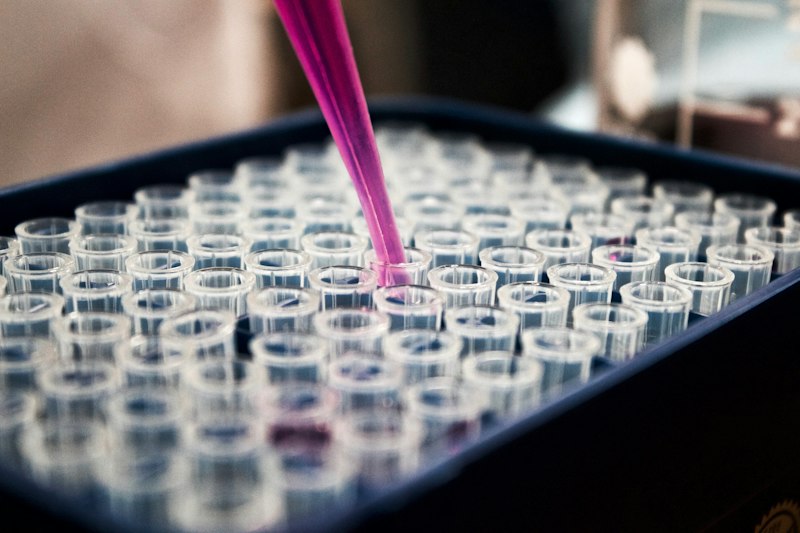
USP grade glycerin is essential for pharmaceutical and laboratory applications
Pharmaceutical Uses
- Cough syrups and elixirs: Glycerin provides the viscous, sweet, soothing base for liquid oral medications. It also acts as a co-solvent for poorly water-soluble active ingredients
- Suppositories: Glycerin suppositories are a standard over-the-counter laxative. The glycerin draws water into the intestine by osmosis, softening stool and stimulating peristalsis
- Topical medications: Glycerin-based gels and ointments serve as vehicles for dermatological drugs — the glycerin improves drug penetration while simultaneously moisturizing the skin
- IV preparations: Glycerin is used in certain intravenous solutions, particularly for its osmotic properties in managing cerebral edema and elevated intracranial pressure
- Wound care: Glycerin-based wound dressings maintain a moist wound environment that promotes healing while preventing bacterial contamination
Laboratory Applications
- Cryoprotectant: Glycerin (10-20% concentration) is used as a cryoprotectant to preserve biological samples, cell cultures, and bacterial stocks during freezing. It prevents ice crystal formation that damages cell membranes
- Mounting medium: Glycerin-based mounting media are used in microscopy to preserve histological and botanical specimens on slides
- Reagent and solvent: Used in various analytical chemistry procedures as a solvent, standard, and reaction medium
- Gel electrophoresis: Glycerin is added to loading buffers in DNA/RNA gel electrophoresis to increase sample density so it sinks into the wells
Understanding chemical labels and GHS symbols is essential when sourcing chemicals for pharmaceutical applications. For broader lab chemical procurement, see our hydrogen peroxide guide — another chemical with overlapping cosmetic and lab uses.
What are industrial applications for glycerin?
Beyond consumer products, glycerin serves critical functions across a surprisingly wide range of industrial sectors. Technical grade glycerin is typically used for these applications, where the lower price point and sufficient purity make it the economical choice.
| Industry | Application | Function | Typical Conc. |
|---|---|---|---|
| Plastics | Plasticizer in polymers | Increases flexibility, reduces brittleness | 5-15% |
| HVAC / Automotive | Antifreeze additive | Depresses freezing point of water-based fluids | 30-60% |
| Textiles | Fiber conditioning agent | Humectant that prevents static and breakage | 2-8% |
| Paper & Printing | Ink and paper softener | Prevents paper from becoming brittle; improves ink flow | 1-5% |
| Explosives | Nitroglycerin production | Nitrated to form NG — used in dynamite and propellants | Precursor |
| Metalworking | Lubricant and coolant | Water-soluble lubricant for machining and grinding | 5-20% |
| Agriculture | Pesticide adjuvant | Helps herbicides and fungicides adhere to leaf surfaces | 1-3% |
| Hydraulics | Non-toxic hydraulic fluid | Bio-based alternative to petroleum hydraulic oils | Neat or blended |
| Cleaning | Solvent and surfactant aid | Dissolves greases; softens cleaning residues | 2-10% |
For broader context on how glycerin fits into the industrial chemical landscape, see our ultimate guide to industrial solvents and our articles on acetone and eco-friendly chemical solutions.
How to Choose & Buy Glycerin
Selecting the right glycerin comes down to three decisions: grade (Technical vs. USP), quantity (quarts to totes), and storage (how to keep it stable long-term). Here is a practical decision framework:
Identify Use Case
Food, cosmetic, pharma = USP. Industrial, lubricant, antifreeze = Technical.
Choose Grade
When in doubt, USP is always safe. Technical saves 20-40% for non-contact applications.
Select Quantity
Quarts for R&D. Gallons for small batch. Drums and totes for production runs.
Store Properly
Sealed container, room temp, away from heat sources. Glycerin is hygroscopic — absorbs moisture if left open.
Safety, Handling & Storage Quick Reference
| Property | Details |
|---|---|
| GHS Classification | Not classified as hazardous (non-toxic, non-flammable under normal conditions) |
| Flash Point | 160°C (320°F) — closed cup. Not a fire hazard at room temperature |
| PPE Required | Safety glasses recommended. Gloves optional (non-irritating to skin) |
| Spill Cleanup | Absorb with inert material. Slippery when wet — use caution on floors |
| Storage Temperature | 15-30°C (59-86°F). Keep sealed to prevent moisture absorption |
| Shelf Life | 2+ years if sealed. USP grade: check COA expiration for pharma compliance |
| Incompatibilities | Strong oxidizers (KMnO4, chromic acid). Avoid mixing with concentrated acids |
| Disposal | Biodegradable. Can be disposed via normal wastewater (check local regulations) |
For a comprehensive overview of chemical storage best practices, see our Professional's Guide to Chemical Storage. Understanding proper GHS labels and packing groups is also essential when receiving and storing bulk chemicals.
Ready to Order Glycerin?
Alliance Chemical stocks both Technical and USP Grade glycerin in every size — from quarts to totes. COA on request, no charge. Ships in days from Taylor, Texas.
Shop Glycerin Shop Soap Making SuppliesThis article is for informational and educational purposes only. Always consult product-specific Safety Data Sheets (SDS) before handling chemicals. Formulation advice is general guidance — verify ratios and compatibility for your specific application. Alliance Chemical provides chemical products; for detailed pharmaceutical or cosmetic formulation consulting, engage a qualified formulation chemist.
References & Authoritative Sources
Chemical identity, properties, and safety data sourced from the U.S. National Library of Medicine's PubChem database — the authoritative open-chemistry data resource maintained by the National Institutes of Health.
- PubChem CID 14797: Potassium Hydroxide Flakes ACS Grade — National Center for Biotechnology Information, U.S. National Library of Medicine. CAS 1310-58-3.
- PubChem CID 14798: Sodium Hydroxide 50% Membrane Grade (Caustic Soda, Lye) — National Center for Biotechnology Information, U.S. National Library of Medicine. CAS 1310-73-2.
- Sodium Hydroxide — thermophysical data — NIST Chemistry WebBook, SRD 69, National Institute of Standards and Technology. Accessed 2026-09-04.
- Potassium Hydroxide — thermophysical data — NIST Chemistry WebBook, SRD 69, National Institute of Standards and Technology. Accessed 2026-09-04.
Related: Castor Oil: The Complete Guide to Grades, Chemistry, Uses & Buying — the full chemistry, grade decision (USP vs. ACS vs. Technical), and buying guide.
Key numbers and sources
| Fact | Value | Source |
|---|---|---|
| Molecular formula | C₃H₈O₃ | See article text |
| Boiling point | 290°C | See article text |
| Freezing point | 17.8°C | See article text |
| Density | 1.261 g/mL | See article text |
| Viscosity at 20°C | 1,412 cP | See article text |
| Flash point | 160°C (320°F) | See article text |
| Sweetness relative to sucrose | ~60% as sweet as sucrose | See article text |
Related: Methanol Is Being Squeezed From Both Ends — where the 2026 biodiesel surge leaves the glycerin coproduct.
Related: Two Solids Make a Liquid. Why Deep Eutectic Solvents Are Still Waiting — glycerol as the donor in glyceline, the third most-published deep eutectic solvent, and why a diluted glycerin is the wrong grade for it.
Frequently asked questions
What is the difference between glycerin and glycerol?
Glycerin and glycerol refer to the same chemical compound (propane-1,2,3-triol, C3H8O3). Technically, glycerol is the IUPAC chemical name for the pure compound, while glycerin or glycerine is the commercial name used in industry and trade. In practice, the terms are used interchangeably. Commercial glycerin products typically contain 95-99.7% glycerol depending on grade.
Is glycerin safe to eat?
Yes, USP/FCC grade glycerin is safe to eat and is classified as Generally Recognized as Safe (GRAS) by the FDA. It is widely used as a food additive (E422) in baked goods, candy, beverages, and other products. Glycerin provides about 4.32 calories per gram, is approximately 60% as sweet as sucrose, and does not promote tooth decay. Only USP or food-grade glycerin should be ingested — never use technical grade for food applications.
What is USP grade glycerin?
USP grade glycerin meets the purity standards set by the United States Pharmacopeia (USP) and National Formulary (NF). It has a minimum purity of 99.5%, is tested for heavy metals (less than 5 ppm), residue on ignition, chlorinated compounds, and other impurities. USP grade is required for pharmaceutical formulations, cosmetics, food products, and any application involving human contact or ingestion. It also meets Food Chemicals Codex (FCC) standards.
How is glycerin used in soap making?
Glycerin is a natural byproduct of saponification — the chemical reaction between fats/oils and sodium hydroxide (lye) that produces soap. In cold-process and hot-process soap making, glycerin (about 8-12% of the bar weight) remains in the finished soap and acts as a humectant, drawing moisture to the skin. In melt-and-pour soap making, pre-made glycerin-enriched soap bases (15-25% glycerin) are melted, customized, and poured into molds.
Can glycerin be used as a food additive?
Yes, glycerin is one of the most widely used food additives globally, designated E422 in Europe and GRAS by the FDA. It serves as a humectant (prevents food from drying out), sweetener (low-glycemic, does not promote tooth decay), solvent for flavors and food colors, thickener for beverages and sauces, and preservative at high concentrations. Only USP/FCC grade glycerin may be used in food — never technical grade.
What temperature does glycerin freeze at?
Pure glycerin (100%) freezes at 17.8 degrees Celsius (64 degrees Fahrenheit). However, glycerin-water mixtures have significantly lower freezing points. A 60/40 glycerin-water mixture freezes at approximately -46 degrees Celsius (-51 degrees Fahrenheit), which is why glycerin is used as a non-toxic antifreeze alternative in food processing equipment, solar thermal systems, and other applications where glycol-based antifreezes pose toxicity concerns.
Is glycerin flammable?
Glycerin is not readily flammable under normal conditions. It has a flash point of 160 degrees Celsius (320 degrees Fahrenheit), which is well above typical ambient temperatures. It is not classified as a flammable liquid by GHS standards. However, glycerin can burn if heated above its flash point and exposed to an ignition source. It should be kept away from strong oxidizers such as potassium permanganate and chromic acid, which can cause violent reactions.
How do you dilute glycerin with water?
Glycerin is fully miscible with water, meaning it dissolves in water at any ratio. To dilute, simply add the desired amount of distilled or deionized water to glycerin and stir thoroughly. For cosmetic applications, a typical dilution is 1 part glycerin to 2-3 parts water (25-33% glycerin solution). Using undiluted glycerin on skin can actually draw moisture out of the skin in low-humidity environments, so dilution is recommended for topical use.
What is the shelf life of glycerin?
Properly stored glycerin has a shelf life of 2 or more years. It should be kept in a sealed container at room temperature (15-30 degrees Celsius) away from heat sources and direct sunlight. Because glycerin is highly hygroscopic (it absorbs moisture from the air), containers should be resealed immediately after use to prevent dilution and contamination. For USP grade used in pharmaceutical applications, always check the Certificate of Analysis (COA) expiration date.
Can glycerin be used as antifreeze?
Yes, glycerin-water mixtures serve as effective non-toxic antifreeze solutions. A 60/40 glycerin-to-water ratio depresses the freezing point to approximately -46 degrees Celsius (-51 degrees Fahrenheit). Glycerin antifreeze is preferred over ethylene glycol or propylene glycol in applications where toxicity is a concern, such as food processing equipment, potable water system heat exchangers, and solar thermal collectors. The main trade-off is higher viscosity, which may require larger pumps and piping.
Related Chemical Collections
About the author
Andre Taki
This article is for informational purposes only.


