

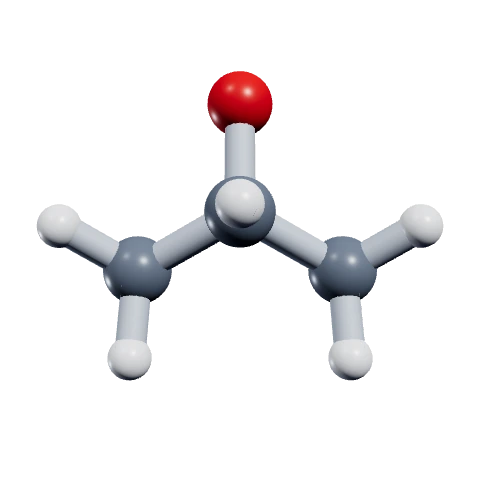


Wondering where the isopropyl alcohol itself comes from? It is made from propylene, a byproduct of cracking petroleum — and it was the first commercial petrochemical ever sold. How Isopropyl Alcohol Is Made →
Buying isopropyl alcohol?
If straight isopropyl alcohol is what your job needs, it is in stock: Alliance Chemical carries IPA from 50% to 99.9% in Technical, USP, and ACS Reagent grades, from single quarts to 55-gallon drums and 275-gallon IBC totes, with drum and tote prices printed on the page. Ships from Taylor, TX in 1–2 business days — no hazmat fee.
Shop isopropyl alcohol — Technical, USP & ACS Reagent grades🔧 Cleaning electronics? See Isopropyl Alcohol for Electronics — the right concentration for PCBs, flux, and thermal paste (and why 70% is the wrong call).
Using isopropyl alcohol for semiconductors, MEMS, or precision optics?
See Isopropyl Alcohol in Semiconductor Manufacturing — how IPA cleans + Marangoni-dries silicon wafers, and which grade (99% Technical vs 99.9% ACS) fits the job.
Is Rubbing Alcohol the Same as Isopropyl Alcohol? A Chemical Supplier Explains
Understand the critical chemical, regulatory, and practical differences between consumer rubbing alcohol and industrial-grade isopropyl alcohol.
Is Isopropyl Alcohol the Same as Rubbing Alcohol?
The most frequent question our technical team receives from new purchasing agents is: is isopropyl alcohol the same as rubbing alcohol? The short answer is no. While they are closely related and often confused, they are not identical products. Isopropyl alcohol is a pure chemical compound, whereas rubbing alcohol is a specific, regulated consumer formulation.
Isopropyl alcohol, identified by CAS number 67-63-0, is a clear, colorless liquid with the chemical formula C3H8O. It possesses a molecular weight of 60.10 and serves as a foundational solvent in countless industrial applications. When a facility orders isopropyl alcohol from a chemical distributor, they are purchasing this raw chemical, either in its pure anhydrous form or diluted with precise amounts of deionized water.
Rubbing alcohol, conversely, is a product defined by regulatory bodies like the United States Pharmacopeia (USP) and the Food and Drug Administration (FDA). By legal definition in the United States, “rubbing alcohol” is not a single formula but a USP product category with a permitted range. Isopropyl Rubbing Alcohol contains between 68.0% and 72.0% isopropyl alcohol by volume, the remainder being water “with or without suitable stabilizers, perfume oils, and color additives certified by the FDA for use in drugs.” A second and entirely separate monograph, Rubbing Alcohol, is built on denatured ethanol and contains no isopropyl alcohol at all. Both are covered in detail below.
For plant operators and formulators, this distinction dictates purchasing decisions. Using consumer rubbing alcohol in an industrial process will introduce unwanted contaminants, perfumes, and stabilizers into your workflow. Alliance Chemical supplies pure Isopropyl Alcohol 70% USP Grade, which is blended to the USP concentration specification using purified water and nothing else — none of the stabilizers, perfume oils, or color additives that the retail monograph permits.
Understanding this difference prevents costly contamination in sensitive manufacturing environments. Whether you are operating a botanical extraction facility, a semiconductor cleanroom, or a commercial printing press, specifying the pure chemical rather than the consumer formulation ensures predictable, repeatable results.
Two different chemicals are legally sold as “rubbing alcohol”
The United States Pharmacopeia publishes two separate monographs that both carry the name rubbing alcohol, and only one of them contains isopropyl alcohol. This is the single most common source of confusion behind the question, and it is why the answer cannot be settled by concentration alone.

| Isopropyl Rubbing Alcohol | Rubbing Alcohol | |
|---|---|---|
| Active alcohol | Isopropyl alcohol | Ethanol — no isopropyl alcohol |
| Permitted range | 68.0–72.0% by volume | 68.5–71.5% by volume |
| Denaturant | None required | ATF Formula 23-H — acetone + methyl isobutyl ketone |
| Bitterant | None required | Required: sucrose octaacetate or denatonium benzoate |
| Perfume oils / colorants | Permitted | Permitted |
| Non-volatile residue limit | 5 mg per 50 mL (0.01%) | Governed by ATF formulation |
Isopropyl Rubbing Alcohol — the one people mean
The monograph text is specific about both the range and what else is allowed in the bottle:
“Isopropyl Rubbing Alcohol contains not less than 68.0 percent and not more than 72.0 percent of isopropyl alcohol, by volume, the remainder consisting of water, with or without suitable stabilizers, perfume oils, and color additives certified by the FDA for use in drugs.”
Source: USP Monographs, Isopropyl Rubbing Alcohol.
Two things follow from that sentence. The label figure of 70% is the centre of a permitted band, not an exact specification — a compliant bottle may be 68% or 72%. And the balance is not required to be water alone. The same monograph sets a limit of non-volatile residue at 5 mg per 50 mL, which is a meaningful allowance when the surface being cleaned is an optical element or a populated circuit board.
Rubbing Alcohol — the one that contains no isopropyl alcohol
The second monograph is built on denatured ethanol and is manufactured to a US Treasury formulation rather than a purity grade:
“Rubbing Alcohol and all preparations under the classification of Rubbing Alcohols are manufactured in accordance with the requirements of the U.S. Treasury Department, Bureau of Alcohol, Tobacco, and Firearms, Formula 23-H (8 parts by volume of acetone, 1.5 parts by volume of methyl isobutyl ketone, and 100 parts by volume of ethyl alcohol) being used. It contains not less than 68.5 percent and not more than 71.5 percent by volume of dehydrated alcohol…”
Source: USP Monographs, Rubbing Alcohol.
A product made to this monograph is ethanol carrying acetone and methyl isobutyl ketone as denaturants. It is also required to be unpalatable by design: the monograph specifies not less than 355 mg of sucrose octaacetate or not less than 1.40 mg of denatonium benzoate in each 100 mL. Anyone reaching for “rubbing alcohol” as a solvent on the assumption that it is dilute isopropyl alcohol may be working with neither the alcohol nor the residue profile they expected.
Is isopropyl alcohol the same as surgical spirit?
No. Surgical spirit is the British equivalent term, and the British Pharmacopoeia formulation contains no isopropyl alcohol either: it is approximately 95% industrial methylated spirit (ethanol) with 2.5% castor oil, 2% diethyl phthalate, and 0.5% methyl salicylate. The castor oil is there to keep skin from drying, and the methyl salicylate supplies the characteristic smell. It is a third distinct formulation sharing the same everyday name.
What this means when you are actually buying
Consumer product names do not survive a purchase order. A facility that specifies “rubbing alcohol” has specified a category that spans at least three different formulations across two pharmacopeias, any of which may legally carry perfume oils and colorants. A facility that specifies isopropyl alcohol, CAS 67-63-0, at a stated concentration and grade has specified exactly one thing.
That is the discipline worth carrying into international sourcing as well. The same category problem appears in every market — local equivalents of the term may be built on ethanol, on isopropyl alcohol, or on a denatured blend, depending on the jurisdiction. Specify the compound, the CAS number, the concentration, and the grade, and the ambiguity disappears regardless of which language the purchase order is written in.
Is isopropyl alcohol the same as ethanol?
No. Isopropyl alcohol and ethanol are different molecules with different toxicology, and the distinction decides which one is legal for a given job. Both are volatile flammable solvents, but their structures dictate entirely different industrial applications.
Isopropyl alcohol (isopropanol) is a secondary alcohol with a three-carbon chain (C3H8O). Standard alcohol (ethanol) is a primary alcohol with a two-carbon chain (C2H6O). This structural difference affects how each chemical interacts with other substances. Isopropyl alcohol has a boiling point of 82°C (179.6°F) and a melting point of -89°C (-128.2°F). It is generally a more aggressive solvent for non-polar compounds, making it superior for dissolving oils, greases, and certain resins.
Toxicity and metabolic pathways also differ significantly. Ethanol is the type of alcohol found in alcoholic beverages and is metabolized by the human body into acetaldehyde. Isopropyl alcohol is strictly for external use; if ingested, the body metabolizes it into acetone, which is highly toxic and can cause severe central nervous system depression. This is why isopropyl alcohol is never used in food or beverage manufacturing, whereas food-grade ethanol is common.
In industrial settings, the choice between the two depends on the target residue. Isopropyl alcohol evaporates rapidly and, in its pure forms, leaves no measurable residue, making it the industry standard for electronics manufacturing and optical cleaning. Ethanol is often heavily regulated and taxed unless it is denatured (mixed with toxic additives to prevent consumption). Because pure ethanol is difficult to procure without extensive licensing, isopropyl alcohol serves as the more accessible and effective solvent for most heavy-duty degreasing and cleaning tasks.
Understanding these chemical differences ensures that plant operators select the correct solvent for their specific extraction, cleaning, or manufacturing process, avoiding both regulatory complications and suboptimal performance.
Which concentration should you buy: 50%, 70%, 91%, 99%, or 99.9%?

Alliance Chemical stocks isopropyl alcohol in several precise concentrations to meet diverse industrial requirements. Selecting the correct grade is just as important as distinguishing it from consumer rubbing alcohol. Each concentration offers specific physical properties tailored to different applications.
Our Isopropyl Alcohol 70% USP Grade is blended to the concentration band the USP monograph specifies. The 30% purified water is not filler — and it is not a catalyst either, despite how often it is described that way. It is a co-solvent that changes how the liquid behaves. Water evaporates far more slowly than isopropyl alcohol, so a 70% mixture stays wet on a surface appreciably longer than anhydrous alcohol, which flashes off almost immediately. That dwell time is why the pharmacopeia settled on a diluted band rather than the purest material available.

For applications requiring less water, we supply Isopropyl Alcohol 91% USP Grade. This concentration evaporates faster and is frequently used in environments where excess moisture could cause damage, but where a completely anhydrous solvent is not strictly necessary. It strikes a balance between aggressive solvency and moderate evaporation.
Industrial manufacturing relies heavily on Isopropyl Alcohol 99% Technical Grade. This nearly pure solvent is ideal for heavy-duty degreasing, botanical extraction, and washing 3D printed resin parts. It contains minimal water, ensuring it aggressively dissolves oils and fluxes without introducing moisture into sensitive mechanical systems.
Finally, for the most demanding applications, we offer Isopropyl Alcohol 99.9% ACS Reagent Grade. This grade meets the strict purity standards set by the American Chemical Society. It is utilized in analytical laboratories, semiconductor manufacturing, and aerospace applications where even microscopic impurities or water content could cause catastrophic failure. This grade guarantees near-absolute purity and zero non-volatile residue.
Can you use isopropyl alcohol instead of rubbing alcohol?
The intended application dictates whether a facility requires pure isopropyl alcohol or a formulated rubbing alcohol. Consumer rubbing alcohol is designed exclusively for topical medical use. Its primary functions include skin preparation prior to injections, minor first aid, and general household disinfection. The additives in rubbing alcohol make it gentler on the skin but entirely unsuitable for industrial use.
In contrast, pure isopropyl alcohol drives major industrial sectors. In electronics manufacturing, printed circuit boards (PCBs) must be cleaned of flux residue after soldering. Using rubbing alcohol for this task would leave behind a conductive film of stabilizers and perfumes, potentially causing short circuits. Pure 99.9% ACS Reagent Grade IPA evaporates completely, leaving the PCB pristine and ready for conformal coating.
The botanical extraction industry also relies exclusively on pure isopropyl alcohol. When extracting essential oils or active compounds from plant material, the solvent must be aggressive enough to strip the desired compounds and pure enough to evaporate without leaving toxic denaturants behind. Technical Grade 99% IPA is the standard solvent for these closed-loop extraction systems.
Additive manufacturing (3D printing) is another major consumer of pure IPA. SLA and DLP resin printers require a solvent wash to remove uncured liquid resin from the final printed part. A 99% concentration provides the aggressive solvency needed to clean the intricate details of the print before final UV curing. Any water or additives present in consumer rubbing alcohol would cause the resin to cure improperly, leaving a tacky, cloudy finish on the final product.
By understanding the strict divide between medical topical use and industrial solvent applications, purchasing managers can ensure they are sourcing the correct chemical profile for their facility's specific operational demands.
Is 70% isopropyl alcohol just rubbing alcohol?

The most significant physical difference between rubbing alcohol and pure isopropyl alcohol lies in the concept of non-volatile residue (NVR). When a liquid evaporates, any substance that does not transition into a gas remains on the surface. In industrial cleaning, minimizing NVR is the primary goal.
Rubbing alcohol inherently contains high levels of NVR due to its formulation. The perfumes, colorants, and stabilizers required by consumer regulations do not evaporate. When you wipe a glass surface with rubbing alcohol, you will often notice a faint streak or film left behind. In a consumer setting, this is harmless. In a high-tech manufacturing environment, this residue is a critical defect.
Pure isopropyl alcohol, particularly our ACS Reagent Grade, is manufactured and packaged under strict quality controls to ensure near-zero NVR. When 99.9% IPA evaporates, it leaves the surface completely bare. This characteristic is mandatory when cleaning optical lenses, laser equipment, fiber optic cables, and semiconductor wafers. Even a microscopic layer of residue can distort a laser beam or ruin a microchip.
The purity standards for these chemicals are rigorously maintained. Technical Grade products are suitable for general manufacturing and degreasing, where minor impurities (in the parts-per-million range) will not impact the final product. ACS Reagent Grade products undergo extensive testing to certify that they meet or exceed the purity specifications required for sensitive analytical testing and high-tech manufacturing.
When a facility attempts to cut costs by substituting consumer-grade rubbing alcohol for industrial-grade pure IPA, the resulting residue often causes equipment downtime and product rejection that far exceeds the initial savings. Specifying the correct purity standard is an investment in operational reliability.
Where should you not use isopropyl alcohol?
Regardless of the concentration, isopropyl alcohol requires strict safety protocols. It is a highly flammable liquid and must be handled with respect for its physical properties. The flash point of pure isopropyl alcohol is 12°C (53.6°F), meaning it can release enough vapor to form an ignitable mixture in air at standard room temperatures.
Due to this flammability, isopropyl alcohol is designated as a Hazard Class 3 material for transportation and storage. Facilities storing bulk quantities must utilize approved flammable liquid storage cabinets and ensure proper ventilation to prevent vapor accumulation. When transferring the liquid between containers, operators must use proper grounding and bonding techniques to prevent static discharge, which can easily ignite the vapors.
Personal protective equipment (PPE) is mandatory when handling industrial volumes. Operators should wear chemical-resistant nitrile gloves and splash goggles. While consumer rubbing alcohol is designed for skin contact, prolonged exposure to pure 99% or 99.9% isopropyl alcohol will aggressively strip the skin of its natural oils, leading to severe dermatitis and cracking.
Always consult the specific Safety Data Sheet (SDS) for the exact grade you are handling. The SDS provides critical information regarding specific UN numbers, packing groups, and emergency response procedures. Because the water content varies between 70%, 91%, and 99% grades, the specific gravity and exact vapor pressure will differ slightly, which can impact calibration in automated dosing systems.
By treating isopropyl alcohol as a serious industrial chemical rather than a household commodity, facilities can maintain a safe working environment while leveraging its powerful solvent capabilities.
| Property | Consumer Rubbing Alcohol | Pure Isopropyl Alcohol (Industrial) |
|---|---|---|
| Active Ingredient | Isopropyl Alcohol (usually 70%) | Isopropyl Alcohol (70%, 91%, 99%, 99.9%) |
| Additives | Perfumes, colorants, stabilizers | None (Pure chemical + Deionized Water) |
| Regulatory Status | FDA OTC Drug / USP Monograph | Industrial Chemical / Solvent |
| Residue (NVR) | Leaves film/streaks upon evaporation | Evaporates completely (Zero residue in high grades) |
| Primary Use | Topical first aid, household cleaning | Electronics, extraction, manufacturing, lab use |
Frequently Asked Questions
Is isopropyl alcohol the exact same thing as rubbing alcohol?
No. Rubbing alcohol is a regulated consumer product that contains 70% isopropyl alcohol mixed with water, stabilizers, and sometimes perfumes or colorants. Pure isopropyl alcohol is the raw chemical compound without these consumer additives.
What does 'alkohol gosok itu apa' mean?
This is an Indonesian search query translating to 'what is rubbing alcohol.' Globally, rubbing alcohol refers to a topical antiseptic solution for consumer use, which differs significantly from the pure industrial isopropyl alcohol used in manufacturing.
What is the difference between isopropyl alcohol and regular alcohol (ethanol)?
Isopropyl alcohol (isopropanol) is a secondary alcohol with a three-carbon chain, while regular alcohol (ethanol) is a primary alcohol with a two-carbon chain. Isopropyl alcohol is strictly for external/industrial use and is highly toxic if ingested, whereas ethanol is the type of alcohol found in beverages.
Can I use rubbing alcohol to clean electronics or 3D prints?
It is highly discouraged. Consumer rubbing alcohol contains stabilizers and perfumes that do not evaporate, leaving a residue that can cause short circuits in electronics or ruin the finish on 3D printed resin parts. Use pure 99% or 99.9% isopropyl alcohol instead.
Why does the USP monograph specify around 70% instead of 99%?
Because water changes how the liquid behaves on a surface. Water evaporates much more slowly than isopropyl alcohol, so a diluted mixture stays wet far longer than anhydrous alcohol, which flashes off almost immediately. The monograph band of 68.0–72.0% reflects that. It is a deliberate specification rather than a purity compromise — and it is equally the reason 99% and 99.9% are the correct choice when what you need is fast, residue-free evaporation instead of dwell time.
Is isopropyl alcohol flammable?
Yes, isopropyl alcohol is highly flammable. It has a flash point of 12°C (53.6°F) and is classified as a Hazard Class 3 flammable liquid. It must be stored away from heat sources and handled with proper grounding to prevent static discharge.
Ensure your facility is using the correct solvent for the job. Alliance Chemical stocks isopropyl alcohol by specified grade — 50% and 60% in both Technical Grade and USP Grade, 70% and 91% USP Grade, 99% Technical Grade, and 99.9% ACS Reagent Grade — with the lot Certificate of Analysis on request at no charge. Tell us the application and we will spec the grade, so you are neither overpaying for purity you will never use nor under-spec’ing a step that matters. Contact our technical team today to secure reliable, bulk supply for your manufacturing or laboratory needs.
Isopropyl Alcohol 50% Technical GradeIsopropyl Alcohol 50% USP GradeIsopropyl Alcohol 60% Technical GradeIsopropyl Alcohol 60% USP GradeIsopropyl Alcohol 70% USP GradeIsopropyl Alcohol 91% USP GradeIsopropyl Alcohol 99% Technical GradeIsopropyl Alcohol 99.9% ACS Reagent GradeReferences & Authoritative Sources
Chemical identity, properties, and safety data sourced from the U.S. National Library of Medicine's PubChem database — the authoritative open-chemistry data resource maintained by the National Institutes of Health.
- PubChem CID 3776: Isopropyl Alcohol 91%- USP Grade — National Center for Biotechnology Information, U.S. National Library of Medicine. CAS 67-63-0.
- Isopropanol — thermophysical data — NIST Chemistry WebBook, SRD 69, National Institute of Standards and Technology. Accessed 2026-09-04.
- PubChem Compound Summary: Acetone (CID 180) — National Center for Biotechnology Information, U.S. National Library of Medicine. Accessed 2026-09-04.
- Acetone — thermophysical data — NIST Chemistry WebBook, SRD 69, National Institute of Standards and Technology. Accessed 2026-09-04.
Sourcing for this job? See our rubbing alcohol supplier page — every grade and strength we stock, with live pricing from quarts through drums and totes.
Key numbers and sources
| Fact | Value | Source |
|---|---|---|
| CAS number of isopropyl alcohol | 67-63-0 | pubchem.ncbi.nlm.nih.gov |
| Molecular weight of isopropyl alcohol | 60.10 | pubchem.ncbi.nlm.nih.gov |
| Boiling point of isopropyl alcohol | 82°C (179.6°F) | pubchem.ncbi.nlm.nih.gov |
| Flash point of isopropyl alcohol | 12°C (53.6°F) | See article text |
| Isopropyl Rubbing Alcohol permitted range (USP) | 68.0–72.0% by volume | usp.org |
| Rubbing Alcohol (ethanol-based) permitted range (USP) | 68.5–71.5% by volume | usp.org |
| Non-volatile residue limit for Isopropyl Rubbing Alcohol (USP) | 5 mg per 50 mL (0.01%) | usp.org |
| Denaturants in Rubbing Alcohol (ethanol-based, ATF Formula 23-H) | 8 parts by volume of acetone, 1.5 parts by volume of methyl isobutyl ketone, and 100 parts by volume of ethyl alcohol | ttb.gov |
Frequently asked questions
Is isopropyl alcohol the exact same thing as rubbing alcohol?
No. Isopropyl alcohol is a single pure compound, CAS 67-63-0. “Rubbing alcohol” is a regulated product category, and the United States Pharmacopeia defines two separate monographs under that name. Isopropyl Rubbing Alcohol is 68.0–72.0% isopropyl alcohol by volume. Rubbing Alcohol is 68.5–71.5% denatured ethanol and contains no isopropyl alcohol at all. Both monographs permit perfume oils and FDA-certified color additives in the remainder.
Can a bottle labelled rubbing alcohol contain no isopropyl alcohol?
Yes. The USP Rubbing Alcohol monograph is built on denatured ethanol made to Bureau of Alcohol, Tobacco and Firearms Formula 23-H — 8 parts by volume of acetone and 1.5 parts of methyl isobutyl ketone per 100 parts of ethyl alcohol — and it is required to contain a bittering agent, either not less than 355 mg of sucrose octaacetate or not less than 1.40 mg of denatonium benzoate per 100 mL. Read the active-ingredient line on the label rather than the product name.
Is isopropyl alcohol the same as surgical spirit?
No. Surgical spirit is the British equivalent term and the British Pharmacopoeia formulation contains no isopropyl alcohol: approximately 95% industrial methylated spirit (ethanol) with 2.5% castor oil, 2% diethyl phthalate and 0.5% methyl salicylate.
What is the difference between isopropyl alcohol and regular alcohol (ethanol)?
Isopropyl alcohol (isopropanol) is a secondary alcohol with a three-carbon chain, while regular alcohol (ethanol) is a primary alcohol with a two-carbon chain. Isopropyl alcohol is strictly for external and industrial use and is highly toxic if ingested, whereas ethanol is the type of alcohol found in beverages.
Can I use rubbing alcohol to clean electronics or 3D prints?
It is highly discouraged. Consumer rubbing alcohol may contain stabilizers, perfume oils and colorants that do not evaporate, leaving a residue that can cause short circuits in electronics or ruin the finish on 3D printed resin parts. The monograph itself allows up to 5 mg of non-volatile residue per 50 mL. Use pure 99% Technical Grade or 99.9% ACS Reagent Grade isopropyl alcohol instead.
Why does the USP monograph specify around 70% instead of 99%?
Because water changes how the liquid behaves on a surface. Water evaporates much more slowly than isopropyl alcohol, so a diluted mixture stays wet far longer than anhydrous alcohol, which flashes off almost immediately. The monograph band of 68.0–72.0% reflects that dwell time. It is a deliberate specification rather than a purity compromise, and it is equally the reason 99% and 99.9% are the correct choice when what you need is fast, residue-free evaporation.
Which isopropyl alcohol grade should I order?
Match the grade to how much residue the job tolerates. USP Grade at 50%, 60%, 70% or 91% suits general and topical-adjacent use. 99% Technical Grade suits degreasing, parts cleaning and most electronics work. 99.9% ACS Reagent Grade is for analytical work, optics and semiconductor processing where non-volatile residue is the controlling specification. Alliance Chemical supplies the Certificate of Analysis on request at no charge, on any drum or tote.
Is isopropyl alcohol flammable?
Yes, isopropyl alcohol is highly flammable. It has a flash point of 12°C (53.6°F) and is classified as a Hazard Class 3 flammable liquid. It must be stored away from heat sources and handled with proper grounding to prevent static discharge.
Related Chemical Collections
About the author
Andre Taki
This article is for informational purposes only.


