

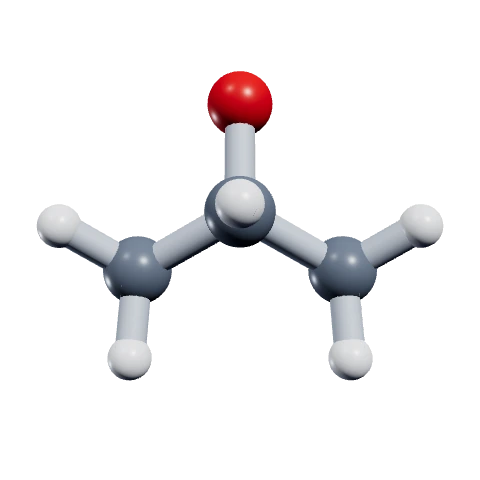


Rubbing alcohol looks exactly like water, and the word “alcohol” is right there on the label. That is the whole problem. The alcohol in it is not the one in a beer. It is isopropyl alcohol, a solvent, and the body handles it in a way that makes it hit harder and stay longer.
This guide explains what actually happens after someone swallows rubbing alcohol, why the chemistry makes it different from drinking alcohol, why it is unusual even among the poisonous alcohols, and what poison centers tell you to do. We sell isopropyl alcohol in bulk as a cleaning and industrial solvent, so we read its safety data closely; everything medical here is relayed from poison centers and the clinical literature, with sources at the end.
Last reviewed 10 November 2026 against the sources cited below. This is a chemistry and safety explainer, not medical, legal or regulatory advice. If someone has swallowed rubbing alcohol, do not wait for symptoms: contact Poison Help at 1-800-222-1222 (free, 24 hours a day in the United States) or use the webPOISONCONTROL online tool.
What happens if you drink rubbing alcohol?
Drinking rubbing alcohol makes a person drunk quickly, irritates the stomach and gut, and in larger amounts can depress breathing and blood pressure to dangerous levels. Poison Control describes the first stage plainly: “Someone who has intentionally swallowed rubbing alcohol can become drunk.” It goes on: “Symptoms might include sedation, slurred speech, unsteadiness, and vomiting.” MedlinePlus, the National Library of Medicine’s encyclopedia, agrees: “Drinking isopropanol will most likely make you very drunk.”
The gut takes a beating at the same time. Poison Control calls isopropyl alcohol extremely irritating to the digestive tract, where it can cause vomiting, diarrhea, pain and bleeding in the stomach and intestines, and warns: “This can lead to dehydration, low blood pressure, shock, and coma.” MedlinePlus lists what drinking large amounts can lead to: coma and possibly brain damage, internal bleeding, breathing difficulty and kidney failure.
It also gets to work fast. The 2014 review by the New Zealand National Poisons Centre, which screened 232 published papers, found that “Isopropanol is rapidly absorbed following ingestion with peak plasma concentrations occurring within 30 min.” The breath often takes on a sweet, fruity smell. That smell is acetone, and it is the clue to the rest of the story.
The honest outlook. Most people recover. The same review concludes: “Patients usually make a full recovery provided they receive prompt supportive care.” MedlinePlus says: “Recovery is very likely if a person does not swallow a large amount.” The key words in both are prompt and amount, which is why the call to Poison Help comes first, not after symptoms.
Why does rubbing alcohol hit harder than drinking alcohol?
Isopropyl alcohol is a stronger depressant of the brain and nervous system than ethanol, the alcohol in drinks, and the body clears it more slowly. The Missouri Poison Center puts the reason in one line: “This is because it is much more potent than ethanol.” The two molecules are close cousins. Ethanol has two carbon atoms; isopropyl alcohol has three, with the alcohol group sitting on the middle one. That small change in shape is enough to change both how strongly it acts on the brain and what the liver can do with it.
There is also the concentration. A typical beer is around 5% ethanol. Typical rubbing alcohol is 70% isopropyl alcohol, and MedlinePlus notes that some products run “up to 99%”. A mouthful of rubbing alcohol therefore carries many times more alcohol than a mouthful of beer, of a type the body handles worse. And because it is clear, the Missouri Poison Center points out, “It is clear, like water, which leads to accidental ingestion”.
The short version: rubbing alcohol is not a strong drink. It is a solvent that happens to be an alcohol, and it is more potent, more irritating and longer-lasting in the body than ethanol.
What does your body turn rubbing alcohol into?
The liver turns isopropyl alcohol into acetone, the same solvent sold for nail polish removal and industrial cleaning. The enzyme that does it is alcohol dehydrogenase, the same one that starts breaking down a glass of wine. The 2014 review states that “Isopropanol is metabolized by alcohol dehydrogenase to acetone”, along with smaller amounts of other products.
isopropyl alcohol → acetone (alcohol dehydrogenase, in the liver)
Here is the chemistry that makes isopropyl alcohol different. Its alcohol group sits on a middle carbon, which makes it a secondary alcohol. When a secondary alcohol is oxidized, it becomes a ketone, and acetone is the simplest ketone there is. A ketone is a chemical dead end for this pathway: the liver cannot easily oxidize it further into an acid. Methanol and ethylene glycol are different. Their alcohol groups sit at the end of the carbon chain, and the same enzyme oxidizes them step by step into acids.
Acetone also leaves slowly. Per the 2014 review: “The elimination half-life of isopropanol is between 2.5 and 8.0 h, whereas elimination of acetone is slower with a half-life following isopropanol ingestion of between 7.7 and 27 h.” Some of it is breathed out, which is the fruity breath, and the rest leaves in urine.
How long it stays: elimination half-life after swallowing isopropyl alcohol
Bars scaled to the top of each range. Source: Slaughter et al., Clinical Toxicology 52 (2014) 470–478. A half-life is the time for the blood level to fall by half; several half-lives pass before it is gone.
If the body makes acetone, is acetone what makes you sick?
Mostly not. Most of the harm comes from the isopropyl alcohol itself, not from the acetone it becomes. That surprises people, because acetone sounds worse. The 2014 review is careful: “While the clinical effects are thought to be mostly due to isopropanol, acetone may also contribute.” The acetone is real and lingers, and it is what shows up on the breath and in blood tests, but the deep sedation, low blood pressure and slowed breathing track the parent alcohol.
This makes isopropyl alcohol the odd one out among the poisonous alcohols. A 2008 review in the Clinical Journal of the American Society of Nephrology sums up the group (methanol, ethylene glycol, diethylene glycol and propylene glycol) this way: “The effects of these substances, except for isopropanol and possibly alcoholic ketoacidosis, are due to their metabolites”. In other words, methanol and antifreeze become far more dangerous after the liver works on them. Isopropyl alcohol is most dangerous before.
That has a practical consequence. For methanol and ethylene glycol, hospitals can give a drug called fomepizole that blocks alcohol dehydrogenase, so the liver stops making the toxic acids. For isopropyl alcohol, the clinician reference WikEM says there is “No role for fomepizole or ethanol”, and explains why: “Blockade of alcohol dehydrogenase (ADH) will prolong intoxication”. Blocking the enzyme would keep the isopropyl alcohol, the harmful part, in the body longer. Care is supportive instead: breathing, blood pressure, fluids and monitoring, with dialysis kept for rare, severe cases.
“Less deadly than methanol” does not mean harmless. A StatPearls chapter notes that “Unlike the other toxic alcohols, isopropanol rarely causes death”, but severe poisoning still causes coma, breathing failure and shock. Rarely is not never, and the outcome depends on the amount and how fast help arrives.
How is it different from methanol or antifreeze poisoning?
All three are alcohols the liver attacks with the same enzyme, but only isopropyl alcohol stops at a ketone; methanol and ethylene glycol go on to acids that do the real damage. That is why their blood tests look different, too. The 2008 review notes that the other toxic alcohols cause a high anion gap metabolic acidosis, while “isopropanol intoxication presents with hyperosmolality alone”: the alcohol itself shows up in the blood, but without the acid.
| Alcohol | Where you find it | What the liver makes | Where most harm comes from | Fomepizole? |
|---|---|---|---|---|
| Ethanol | Drinks | Acetaldehyde, then acetate | The alcohol (intoxication) | No |
| Isopropyl alcohol | Rubbing alcohol, cleaners, solvents | Acetone (a ketone) | The alcohol itself | No: it would prolong intoxication |
| Methanol | Windshield washer fluid, fuel, solvents | Formaldehyde, then formic acid | Formic acid (eyes, acidosis) | Yes |
| Ethylene glycol | Antifreeze, coolants | Glycolic acid, then oxalic acid | The acids (kidneys, acidosis) | Yes |
Sources: Kraut and Kurtz (2008); Slaughter et al. (2014); WikEM toxic alcohol entries, which list calcium oxalate crystals in urine for ethylene glycol. Ethanol row is standard metabolism, included for comparison.
The two can even interfere with each other. A 2017 case report in Clinical Nephrology described a patient who drank an alcohol-based hand rub containing both isopropyl alcohol and methanol, and found no acidosis “presumably because formic acid production is blocked by isopropanol, which inhibits alcohol dehydrogenase.” The isopropyl alcohol hid the methanol, which is exactly why poison centers want to know every product involved.
What should you do if someone drank rubbing alcohol?
Call Poison Help at 1-800-222-1222 right away, or call 911 if the person has collapsed, is having a seizure, is struggling to breathe or cannot be woken. Do not make them vomit. Poison Control’s advice for anyone unsure is short: “Don’t guess what you should do.”
If someone swallowed rubbing alcohol
- Check for an emergency first. Poison Control’s rule: “If the individual collapses, has a seizure, has trouble breathing or can’t be awakened: Call 911 now!”
- Otherwise, call Poison Help: 1-800-222-1222, or use the webPOISONCONTROL online tool. It is free and confidential, and the specialists will tell you whether the amount needs a hospital visit.
- Do not make them throw up. MedlinePlus: “Do not make the person throw up unless poison control or your health care provider tells you to.” The Missouri Poison Center adds: do not induce vomiting, and do not panic.
- Have the bottle ready. The label tells the specialist the percentage and whether there is anything else in it, such as wintergreen oil. MedlinePlus says: “Take the container to the hospital with you, if possible.”
- Do not wait it out. Peak blood levels arrive within about 30 minutes, and the person can get sleepier after they seem fine.
Outside the United States, call your local poison center or emergency number.
NIOSH, the federal workplace safety agency, gives the same instruction in its pocket guide for isopropyl alcohol, which lists “Rubbing alcohol” among its synonyms. Under swallowing, it says: “Medical attention immediately”.
How much rubbing alcohol is dangerous?
There is no amount we will call safe, and you will not find a “safe dose” here. Poison centers judge each case on the amount, the percentage, the person’s size and how long ago it happened. MedlinePlus puts it this way: how well someone does depends on the amount swallowed and how quickly they get help.
Here is what the sources do say. Poison Control notes that “In general, swallowing a sip of rubbing alcohol leads to few symptoms.” Children are the most common cases, but usually swallow little: Poison Control says they don’t drink much because of its strong, unpleasant taste. The 2014 review found that “The majority of isopropanol exposures are unintentional and occur in children less than 6 years of age.” Deliberate drinking, including on a dare or a livestream, is a different situation, because the amounts are larger. Call either way; the specialists would rather hear about a sip than miss a swallow.
Can you get poisoned by rubbing alcohol without drinking it?
Yes. It can be breathed in and absorbed through the skin, which is why soaking a child in it to bring down a fever is dangerous. Poison Control describes people using towels or blankets soaked in rubbing alcohol to reduce fever and warns: “This does not reduce fever and can easily lead to rubbing alcohol poisoning.” It explains that for years these cases were blamed on fumes, but “recent evidence shows that rubbing alcohol can also be absorbed through the skin.” MedlinePlus says: “It is dangerous to give a child a sponge bath with isopropanol to reduce a fever.”
The vapor matters at work, too. NIOSH sets a recommended exposure limit of 400 ppm averaged over a workday and lists irritation of the eyes, nose and throat, drowsiness, dizziness and headache as symptoms. Use it with ventilation, and remember it burns: NIOSH lists a flash point of 53 °F, and Poison Control warns that rubbing alcohol “will burn if ignited and can reach temperatures above 1000 F.”
Is drinking hand sanitizer the same as drinking rubbing alcohol?
It can be worse, because you often cannot tell which alcohol is in it. Many hand sanitizers are made with ethanol, some with isopropyl alcohol, and the FDA has warned about products that are “contaminated with potentially toxic types of alcohol.” The FDA’s consumer guidance is blunt: “Do not drink hand sanitizer.” It adds: “Drinking even a small amount of hand sanitizer can cause alcohol poisoning in children.” The 2017 hand-rub case above is the reason the label matters: a product with methanol in it needs a very different hospital response than one with isopropyl alcohol alone. If someone swallowed one, have the bottle in hand when you call Poison Help.
How we sell isopropyl alcohol
We sell isopropyl alcohol as a chemical, for cleaning, electronics, lab and industrial work: Isopropyl Alcohol 70% USP Grade, Isopropyl Alcohol 91% USP Grade and Isopropyl Alcohol 99% Technical Grade. “USP Grade” describes the purity specification the material meets. We do not sell any of them as a drink, a drug or a first-aid product. Every container carries its hazard label, and each product page links its safety data sheet, which is where the first-aid and storage instructions for that exact product live.
Two habits prevent most of the accidents in this article. Keep isopropyl alcohol in the labeled container it came in, never in a water bottle, cup or unmarked jug, because it looks exactly like water. And store it up high, away from children, pets and anything that sparks. If you are deciding which strength you need, our 70% vs 91% vs 99% comparison covers it.
How we researched this
We read the sources below on 10 November 2026. Symptoms and first-aid steps are relayed from Poison Control (National Capital Poison Center), MedlinePlus and the Missouri Poison Center, without adding advice of our own. Absorption, half-lives, metabolism and outcomes come from the 2014 systematic review in Clinical Toxicology and the 2008 review in the Clinical Journal of the American Society of Nephrology; the role of fomepizole comes from WikEM, a clinician reference. Exposure limits and flash point are from the NIOSH Pocket Guide. We deliberately do not print a lethal or “safe” dose. The hero image is an illustration, and illustrations are not test results. Written by Alliance Chemical, a chemical supplier; we are not a poison center, and this is not medical, legal or regulatory advice.
Sources
- No, you can’t drink rubbing alcohol, Poison Control (National Capital Poison Center), S. Mekonnen and W. G. Troutman
- webPOISONCONTROL, Poison Control (National Capital Poison Center)
- Isopropanol alcohol poisoning, MedlinePlus Medical Encyclopedia, U.S. National Library of Medicine (reviewed 2025)
- Rubbing alcohol, Missouri Poison Center
- Slaughter, Mason, Beasley, Vale and Schep, Isopropanol poisoning, Clinical Toxicology 52, 470–478 (2014)
- Kraut and Kurtz, Toxic alcohol ingestions: clinical features, diagnosis, and management, Clinical Journal of the American Society of Nephrology 3, 208–225 (2008)
- Ashurst and Nappe, Isopropanol Toxicity, StatPearls (2023)
- Isopropyl alcohol toxicity, WikEM
- Chan, Chan, Szeto and Chow, Mixed isopropanol-methanol intoxication following ingestion of alcohol-based hand rub solution, Clinical Nephrology 88, 218–220 (2017)
- Safely Using Hand Sanitizer, U.S. Food and Drug Administration (2023)
- Isopropyl alcohol, NIOSH Pocket Guide to Chemical Hazards, CDC / NIOSH (CAS 67-63-0)
Frequently asked questions
Can drinking rubbing alcohol kill you?
It can in severe cases, through coma, breathing failure and shock, although death is rare and most people recover with prompt care. That is why the first step is always the same: call Poison Help at 1-800-222-1222, or 911 if the person collapses or cannot be woken.
What happens if you drink a whole bottle of rubbing alcohol?
A large amount can cause deep sedation, vomiting with bleeding in the stomach, low blood pressure, slowed breathing and coma. It is a medical emergency. Call 911 if the person is hard to wake or struggling to breathe, and Poison Help at 1-800-222-1222 otherwise.
Is rubbing alcohol the same as drinking alcohol?
No. Drinking alcohol is ethanol. Rubbing alcohol is usually 70% isopropyl alcohol, a different molecule that the Missouri Poison Center calls much more potent than ethanol, and that the liver turns into acetone instead of acetate.
Why does someone who drank rubbing alcohol smell like nail polish remover?
The liver converts isopropyl alcohol into acetone, the solvent in many nail polish removers, and some of that acetone is breathed out. The acetone can stay in the body for a day or more, with a half-life of roughly 8 to 27 hours.
Is acetone what makes rubbing alcohol poisonous?
Mostly not. A 2014 systematic review says the effects are thought to be mostly due to the isopropyl alcohol itself, with acetone possibly contributing. That is the opposite of methanol and antifreeze, where the acids the liver makes do the main damage.
Should you make someone throw up after drinking rubbing alcohol?
No. MedlinePlus and the Missouri Poison Center both say not to induce vomiting unless poison control or a health care provider tells you to. Call Poison Help at 1-800-222-1222 and follow their instructions.
Is 99% isopropyl alcohol more dangerous to swallow than 70%?
Yes, swallow for swallow it carries more isopropyl alcohol and less water, so the same mouthful delivers a larger dose. Rubbing alcohol is typically 70%, but MedlinePlus notes some products reach 99%. Tell Poison Help the percentage on the label.
Can you get sick from rubbing alcohol on your skin?
Small amounts on the skin usually cause only dryness or irritation, but soaking the skin, as in an old fever remedy, can poison a child. Poison Control and MedlinePlus both warn that isopropyl alcohol is absorbed through the skin and that alcohol sponge baths do not reduce fever.
Related Chemical Collections
About the author
Andre Taki
This article is for informational purposes only.


