Product Overview
Isopropyl Alcohol 99.9% ACS Reagent Grade (CAS 67-63-0) is a volatile, colorless liquid solvent sold at 99.9% concentration for buyers who need the ACS Reagent designation on their purchase order: analytical labs running HPLC or UV-Vis work, pharmaceutical manufacturers using IPA as an extraction medium, and QC departments that specify reagent-grade solvents by name. Also listed under its synonyms isopropanol and 2-propanol, it carries a sharp, musty odor like rubbing alcohol and a flash point of 53 °F. We offer it in sixteen pack options from 1 quart bottles to 330 gallon totes, packed and shipped as Class 3 flammable liquid from our Taylor, Texas warehouse.
Why This Concentration
At 99.9%, water content is minimal. That matters in three situations. First, analytical work: a mobile phase or spectroscopy solvent with variable water content shifts retention times and baselines, so labs specify the highest concentration available and verify each lot against its certificate of analysis. Second, moisture-sensitive chemistry: when IPA is the reaction solvent, water is a contaminant, not a diluent. Third, fast-flash cleaning: 99.9% IPA evaporates without leaving a water film, which is why electronics and precision-manufacturing buyers avoid 70% aqueous solutions sold as rubbing alcohol.
The trade-off is handling. The same low water content that makes it dry fast also keeps the flash point at 53 °F, so this product demands flammable-liquids storage and grounding discipline that a dilute solution does not. If your process tolerates water — general surface wipe-down, non-critical degreasing — a lower concentration may be the cheaper and easier-to-handle choice. The ACS Reagent grade descriptor is a procurement distinction: it tells your purchasing and QC teams which tier of product they are ordering. Confirm lot-specific values on the COA before releasing it into an analytical workflow.
Chemical Profile
Isopropyl alcohol has the formula C3H8O and a molecular weight of 60.10 (CAS 67-63-0). It is a clear, colorless liquid with a density of 0.785 at 68 °F — roughly 6.5 lb per gallon, so it is lighter than water and will float on it. Vapor pressure runs 33 mmHg at 68 °F and 40 mmHg at 74.8 °F, which is why an open container loses product quickly and why vapor control matters at the dispensing station. Vapors are heavier than air and mildly irritating to the eyes, nose, and throat. Solubility in water is 100 mg/mL or greater at 72 °F. The flash point of 53 °F puts routine warehouse and shop temperatures above the flash point — treat every transfer as an ignition risk.
Industrial Applications
-
HPLC mobile phase. IPA serves as a mobile-phase component in reversed-phase chromatography, where it adjusts eluent strength for separating organic compounds. Labs doing this work order the highest available concentration and hold lots against the COA.
-
Spectroscopy solvent. Its low UV cutoff makes IPA a working baseline solvent in UV-Vis methods where the solvent must stay out of the analyte's absorbance window.
-
Cleaning and degreasing. IPA dissolves light oils, flux residues, and polar soils, then flashes off without a water film — the standard wipe solvent in electronics assembly and precision manufacturing.
-
Extraction medium. Pharmaceutical manufacturers use IPA in liquid-liquid extraction to isolate intermediates. As a polar solvent, it suits polar target compounds; non-polar extractions call for a different solvent.
-
Reaction solvent. In chemical synthesis, IPA dissolves reactants and carries reactions where a polar protic solvent is required and water must be excluded.
Handling & Storage
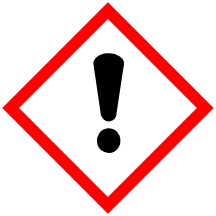
The signal word is Danger (per the product's GHS classification). Hazard statements H225 (highly flammable liquid and vapor), H319 (causes serious eye irritation), and H336 (may cause drowsiness or dizziness) apply (per the product's GHS classification). Ground and bond containers during transfer, keep ignition sources out of the dispensing area, and remember that the heavier-than-air vapors travel along the floor toward pilot lights and sparks. Wear chemical-resistant gloves and safety goggles; work with ventilation adequate to keep vapor below irritating levels.
Store in a cool, dry, well-ventilated area away from heat, in tightly closed HDPE or glass containers — closed lids also limit evaporation losses, which are real at this vapor pressure. Keep it away from strong oxidizing agents and open flames. This guidance reflects review by Andre Taki, DOT Hazmat Specialist.
Hazmat & Shipping
This product ships as a regulated hazardous material: UN1219 (per 49 CFR 172.101), Hazard Class 3 flammable liquid (per 49 CFR 172.101), Packing Group II (per 49 CFR 172.101), under the proper shipping name ISOPROPANOL (per 49 CFR 172.101). Every container leaves our dock labeled and documented to that classification. Build the Class 3 designation into your receiving plan — carrier hazmat fees, routing, and delivery services vary by carrier and destination, so confirm specifics with your freight contact before the order ships. Our team packs UN1219 shipments daily, from single quarts up to 330 gallon totes moving as bulk freight.
Documentation
An SDS ships with every order and is available in English, Spanish, French, and Japanese. A lot-specific certificate of analysis (COA) is available for this product, and a technical data sheet (TDS) is on file — the docs your QC and EHS teams need to receive, store, and release the material. Request any of them with your order or ahead of purchase.
Why Buy from Alliance Chemical
You can order this ACS Reagent Grade IPA in the container your process actually consumes — 1 quart bottles for the bench, 1 and 5 gallon containers for pilot work, 15 and 55 gallon drums for production, and 275–330 gallon totes for bulk users — with SDS, COA, and TDS documentation on every pack size. Alliance Chemical has distributed industrial chemicals since 1998 and served more than 55,000 customers. Most in-stock orders ship in 1–2 business days from our Taylor, Texas warehouse, and every UN1219 shipment goes out under the review of Andre Taki, DOT Hazmat Specialist.