Research & Development

ACS Reagent acids, solvents & bases for R&D

51 Products
Sort by:: Best Selling
Sort by: Best Selling

FILTERS

Chemical name
  • (1)
  • (1)
  • (1)
  • (1)
  • (1)
  • (1)
  • (1)
  • (1)
  • (1)
  • (1)
  • (2)
  • (1)
  • (1)
  • (1)
  • (1)
  • (7)
  • (1)
  • (1)
  • (1)
  • (1)
  • (1)
  • (1)
  • (1)
  • (1)
  • (1)
  • (1)
  • (1)
  • (1)
  • (3)
  • (1)
  • (1)
  • (1)
  • (2)
  • (1)
  • (1)
  • (1)
  • (2)
  • (2)
  • (1)
Grade
  • (1)
  • (49)
  • (1)
Percentage
  • (1)
  • (1)
  • (1)
  • (1)
  • (1)
  • (1)
  • (2)
  • (1)
  • (1)
  • (1)
  • (1)
  • (1)
  • (1)
  • (1)
  • (1)
  • (1)
  • (2)
  • (2)
  • (1)
  • (1)
  • (2)
  • (1)
  • (1)
  • (1)
  • (1)
  • (1)
  • (4)
Form
  • (2)
  • (41)
  • (5)
Industry
  • (15)
  • (1)
  • (7)
  • (1)
  • (12)
  • (43)
  • (17)
  • (25)

About Research & Development

Buy ACS Reagent Grade and high-purity chemicals for research and development from Alliance Chemical.

Products In This Collection

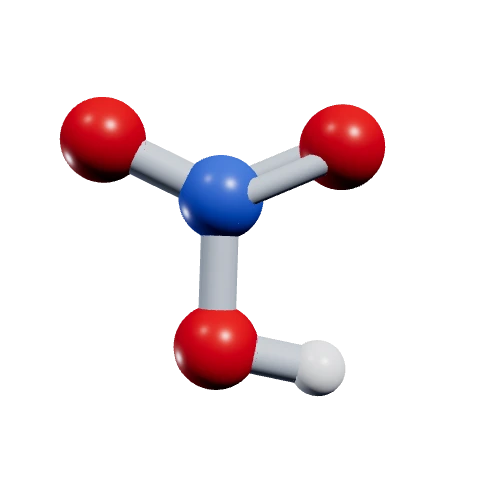
This collection includes isopropyl alcohol 99.9% ACS (CAS 67-63-0), nitric acid 70% ACS Low Particle (CAS 7697-37-2), ammonium hydroxide 29% ACS (CAS 1336-21-6), nitric acid 65% ACS, and acetone ACS Grade (CAS 67-64-1). All products meet or exceed ACS reagent-grade specifications.

Common Applications

R&D-grade chemicals support academic and corporate research in analytical method development, new product formulation, quality control testing, process development and scale-up, materials science research, and environmental analysis. ACS-grade designations ensure lot-to-lot consistency for reproducible results.

Why Buy From Alliance Chemical

Every product ships with a lot-specific Certificate of Analysis (COA) and Safety Data Sheet (SDS). Alliance Chemical has no minimum order, making it practical for research groups to order bench-scale quantities.

Related: See the Lab Chemicals and Education collections.

Frequently Asked Questions

What are the differences between ACS-grade and HPLC-grade chemicals?
ACS-grade chemicals meet the purity standards set by the American Chemical Society and are suitable for general lab use, while HPLC-grade chemicals are of higher purity, specifically refined for high-performance liquid chromatography. Alliance Chemical provides both grades to ensure you have the right options for your research and development requirements.
How should high-purity reagents be stored?
High-purity reagents should be stored in a cool, dry place away from direct sunlight and incompatible substances. Alliance Chemical advises using tightly sealed containers to prevent contamination and degradation, ensuring long-term usability and reliability in experimental applications.
Is it safe to use ACS-grade chemicals in environmental research?
Yes, ACS-grade chemicals are considered safe for use in environmental research as they meet the necessary purity standards for analytical applications. Alliance Chemical emphasizes the availability of safety data sheets to guide proper handling and safety measures.
What concentrations are common for analytical-grade solvents?
Analytical-grade solvents are typically available in high concentrations to ensure minimal impurities. Common concentrations include 99.9% for solvents like acetone and methanol. Alliance Chemical offers a range of these high-purity solvents for precise experimental applications.
Which grade is suitable for quality control in chemical synthesis?
For quality control in chemical synthesis, both ACS-grade and HPLC-grade chemicals can be suitable depending on the purity required. Alliance Chemical recommends HPLC-grade for projects demanding ultra-high purity and precision.
How do I choose the right reagent for material science R&D?
Choosing the right reagent involves considering the purity grade, chemical compatibility, and specific requirements of your material science project. Alliance Chemical provides expert guidance and a diverse selection of reagents to match your R&D needs.
Are high-purity reagents necessary for clinical method research?
High-purity reagents are essential for clinical method research as they ensure accurate and reliable outcomes. Alliance Chemical supplies a variety of high-purity options to meet stringent clinical research standards.
Can I use Alliance Chemical products for chemical synthesis research?
Yes, Alliance Chemical provides a comprehensive catalog of reagents and solvents that are ideal for chemical synthesis research. Their high-purity grades ensure reproducibility and precision in your experiments.