Methanol ACS Reagent Grade

$24.20
Size:
Pack & price:
  • $24.20
    Delivery every
    $22.99
  • $28.60
    Delivery every
    $27.17
  • $34.93
    Delivery every
    $33.18
  • $46.20
    Delivery every
    $43.89
  • $34.93
    Delivery every
    $33.18
  • $46.20
    Delivery every
    $43.89
  • $81.15
    Delivery every
    $77.09
  • $2,138.40
    Delivery every
    $2,031.48
  • $100.42
    Delivery every
    $95.40
  • $369.55
    Delivery every
    $351.07
  • $2,646.27
    Delivery every
    $2,513.96
  • $275.63
    Delivery every
    $261.85
  • $825.00
    Delivery every
    $783.75
  • $2,904.00
    Delivery every
    $2,758.80
  • $3,461.61
    Delivery every
    $3,288.53
  • $4,102.15
    Delivery every
    $3,897.04
Ships UPS Ground
Quantity
In Stock — ready to ship from our Taylor, TX warehouse Order by Mon-Thu 1 PM CT / Fri 12 PM CT — ships in 1–2 business days If it’s listed, it’s on our shelf. No backorders, no 4-week lead times. Why
Temporarily unavailable This item isn’t ready to ship right now. Call 512-365-6838 for restock timing.
  • No hazmat fees from us — you pay the carrier’s shipping rate, at cost
  • Gallon+ sizes ship as DOT-regulated hazmat, so carrier freight runs higher — how shipping works
  • Drums, totes & pails ship LTL freight — liftgate delivery available
  • PO / Net 30 for approved businesses · tax-exempt ordering supported
Request COA TDS ↗
Customers Also Use

Customers who purchased Methanol ACS Reagent Grade also bought:

Popular Combo
Monoethanolamine (MEA)
From $21.36
CAS: 141-43-5 C2H7NO
Popular Combo
Denatured Alcohol 200 Proof 3A
From $19.80
CAS: 64-17-5 C2H6O
Popular Combo
Isobutyl Alcohol 99% ACS Grade
From $21.90
CAS: 78-83-1 C4H10O
Popular Combo
CAS: 67-63-0 C3H8O
Your selection

1 Quart

SKU IHBM-XUEM-BAEX

$24.20
Quantity
In Stock — ready to ship from our Taylor, TX warehouse Order by Mon-Thu 1 PM CT / Fri 12 PM CT — ships in 1–2 business days If it’s listed, it’s on our shelf. No backorders, no 4-week lead times. Why
Temporarily unavailable This item isn’t ready to ship right now. Call 512-365-6838 for restock timing.
  • No hazmat fees from us — you pay the carrier’s shipping rate, at cost
Customers Also Use

Customers who purchased Methanol ACS Reagent Grade also bought:

Popular Combo
Monoethanolamine (MEA)
From $21.36
CAS: 141-43-5 C2H7NO
Popular Combo
Denatured Alcohol 200 Proof 3A
From $19.80
CAS: 64-17-5 C2H6O
Popular Combo
Isobutyl Alcohol 99% ACS Grade
From $21.90
CAS: 78-83-1 C4H10O
Popular Combo
CAS: 67-63-0 C3H8O

Methanol ACS Reagent Grade

$24.20

Product quick facts

CAS 67-56-1CH4OUN1230

Methanol ACS Reagent Grade (CAS 67-56-1) is a 99.8% ACS reagent-grade liquid with molecular formula CH4O and a molecular weight of 32.042 g/mol, meeting American Chemical Society specifications for analytical use. It has a flash point of 52 °F (NTP, 1992), classifying it as a NFPA Class I flammable liquid, and it ships as DOT Hazard Class 3. Alliance Chemical supplies this product in 7 container sizes from 1 Quart to 330 Gallon (16 pack options) with 1-2 business day shipping from Taylor, TX on in-stock orders, plus SDS and lot-specific Certificate of Analysis.

  • Pack sizes 7 container sizes (1 Quart to 330 Gallon) · 16 pack options
  • Purity / spec 99.8% ACS Reagent Grade
  • Lead time In-stock orders placed by Mon-Thu 1 PM CT / Fri 12 PM CT typically ship within 1-2 business days.
  • Regional availability View state-by-state shipping pages (Top lanes: Texas, California).

Quick Answer

What is Methanol ACS Reagent Grade used for, and what should buyers verify before ordering?

Methanol ACS Reagent Grade is supplied at 99.8% in ACS Reagent Grade with UN1230, DOT Class 3 . Buyers should confirm pack size, grade, SDS, COA needs, and freight requirements before purchase.

  • Assay: 99.8%
  • Grade: ACS Reagent Grade
  • UN number: UN1230
  • DOT class: 3

Technical Documents

Live, always-current docs · lot-specific COA issued per shipment batch.

Who Buys This
Analytical laboratories running HPLC and UV-Vis spectroscopy, pharmaceutical synthesis operations, QC departments that specify ACS Reagent Grade solvents in their SOPs, and industrial buyers using methanol for extraction or fuel blending.
Purity / Grade Guide
ACS Reagent Grade is the purity tier that analytical methods and laboratory SOPs typically call out when solvent background must be controlled — if your chromatography or spectroscopy procedure names ACS-grade methanol, this is the designation to match.
Pack Sizes
Quart and gallon sizes fit bench-scale lab work and low-volume testing; 5-gallon pails and 15-gallon containers serve mid-scale operations; 55-gallon drums and 275- to 330-gallon totes are built for production-volume synthesis, extraction, and fuel-blending runs.
Small Packs: UPS Ground nationwide for pints, quarts, and gallons.
LTL / FTL: ABF, SEFL, Saia, XPO, and partner carriers for pails, drums, totes, and full truckloads.
Support: Email or call for freight options, hazardous-material routing, and lead-time confirmation.

Product Overview

Methanol ACS Reagent Grade is a colorless, volatile liquid solvent carried under CAS 67-56-1. Also called methyl alcohol or carbinol, it is one of the most widely used solvents in analytical and industrial chemistry — valued for its polarity, low molecular weight (32.042 g/mol), and complete miscibility with water.

This product is designated ACS Reagent Grade, which means it is procured to the purity tier that analytical labs, instrument operators, and QC departments typically specify for work where solvent background interference matters — chromatography runs, spectroscopic baselines, and quantitative reactions. Alliance Chemical offers it in pack sizes from 1 quart bottles through 330-gallon totes, covering bench-scale research through full production volumes.

Why This Grade

Grade selection drives your downstream data. ACS Reagent Grade methanol is the designation that analytical buyers write into SOPs when their methods call for a controlled-purity solvent. If your HPLC or UV-Vis procedure specifies ACS-grade methanol, substituting a technical or denatured alcohol introduces unknowns — trace absorbers, water content variation, or residue — that can shift baselines and compromise quantitation.

For cost-sensitive processes that don't touch an instrument — fuel blending, bulk extraction, or general cleaning — a technical-grade methanol may be sufficient and more economical. The decision is straightforward: if your SOP or method reference names ACS Reagent Grade, that is what the work requires. If it does not, evaluate whether the lower grade meets your process tolerances before paying the reagent-grade premium.

Chemical Profile

Methanol (CH₄O, molecular weight 32.042 g/mol, CAS 67-56-1) is a colorless liquid with a faintly sweet, pungent odor similar to ethyl alcohol — crude grades carry a sharper, more repulsive note. It has a density of 0.792 at 68 °F, making it less dense than water, and it is fully miscible with water at all proportions. Vapor pressure is notable: 100 mmHg at 70.2 °F, rising to roughly 238 mmHg at 100 °F, which means it evaporates quickly in open containers and generates flammable vapor even at room temperature. Solubility in water is effectively unlimited (≥100 mg/mL at 70 °F). These properties — high volatility, low viscosity, complete water miscibility — are exactly what make methanol effective as a mobile-phase solvent and extraction medium, and exactly what make vapor management critical during handling.

Industrial Applications

Methanol ACS Reagent Grade serves a range of analytical, chemical, and industrial workflows:

  • HPLC mobile phase. Methanol is a standard mobile-phase component in reversed-phase chromatography. Its polarity, UV transparency at analytical wavelengths, and miscibility with aqueous buffers make it one of two go-to organic modifiers (alongside acetonitrile) for separating organic compounds. ACS Reagent Grade minimizes spectral interference and ghost peaks.
  • Spectroscopy solvent. In UV-Vis work, methanol's low UV cutoff wavelength allows reliable baseline measurements without solvent absorbance competing with analyte signal. Laboratories routinely use it as a blank or reference solvent.
  • Chemical synthesis. Methanol participates as both solvent and reactant in organic synthesis — esterifications, methylations, and recrystallizations. Its volatility simplifies solvent removal under reduced pressure after a reaction is complete.
  • Extraction medium. Because methanol is polar and fully miscible with water, it pulls polar and moderately polar compounds from natural matrices. Food-science and fragrance laboratories use it to isolate flavor and aroma compounds from plant material.
  • Fuel additive. In energy applications, methanol is blended into fuels to displace water and modify combustion characteristics. Bulk buyers in this sector typically order drum or tote quantities.

Handling & Storage

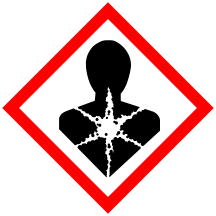
Methanol carries a Danger signal word (per the product's GHS classification). The hazard statements tell you exactly what you are managing:

  • H225 — Highly flammable liquid and vapor (per the product's GHS classification)
  • H301 — Toxic if swallowed (per the product's GHS classification)
  • H311 — Toxic in contact with skin (per the product's GHS classification)
  • H331 — Toxic if inhaled (per the product's GHS classification)
  • H370 — Causes damage to organs (per the product's GHS classification)

Those aren't boilerplate warnings. Methanol is acutely toxic through every route of exposure — ingestion, skin absorption, and inhalation — and targets the optic nerve and central nervous system. Treat it accordingly.

PPE: Chemical-resistant gloves (butyl rubber or laminate film — not latex), indirect-vented splash goggles, and a lab coat at minimum. Use a fume hood or local exhaust ventilation whenever transferring or dispensing; remember that vapor pressure at room temperature is 100 mmHg, so headspace builds fast in enclosed or poorly ventilated spaces.

Storage: Keep containers in a cool, well-ventilated area, away from heat sources, open flames, and strong oxidizers or acids. HDPE or glass containers are appropriate. Ground and bond metal containers during transfer to prevent static discharge. Vapors are slightly heavier than air and can travel along floors to remote ignition sources — do not allow accumulation in confined spaces such as buildings, pits, or sewers.

Hazmat & Shipping

Methanol is a regulated hazardous material for transport. Every shipment from Alliance Chemical is classified, packaged, marked, and documented per DOT requirements:

  • UN Number: UN1230 (per 49 CFR 172.101)
  • Proper Shipping Name: Methanol (per 49 CFR 172.101)
  • Hazard Class: 3 (Flammable Liquid) with subsidiary hazard 6.1 (Toxic) (per 49 CFR 172.101)
  • Packing Group: II (per 49 CFR 172.101)

Class 3 / PG II with a 6.1 subsidiary means this product requires full hazmat shipping papers, placards on bulk shipments, and packaging that meets performance-oriented standards. Our warehouse team in Taylor, TX handles DOT-regulated shipments daily — proper documentation, labeling, and carrier coordination are built into every order. Shipping guidance on this page has been reviewed by Andre Taki, DOT Hazmat Specialist.

Documentation

Every order of Methanol ACS Reagent Grade ships with a Safety Data Sheet (SDS), available in English, Spanish, French, and Japanese. A Technical Data Sheet (TDS) is also available for buyers who need the full product specification on file.

Lot-specific Certificates of Analysis (COA) are available on request, documenting the actual analytical results for the batch you receive. If your quality system requires incoming material verification or vendor qualification records, contact us and reference your order or lot number.

Why Buy from Alliance Chemical

Methanol ACS Reagent Grade is available to order from quart bottles for bench work through 330-gallon totes for production-scale use — with SDS documentation in four languages and lot-specific COA available for every shipment. Alliance Chemical has distributed industrial and laboratory chemicals since 1998, serving over 50,000 customers from our Taylor, Texas warehouse. Our team handles DOT-regulated hazmat shipments daily under USDOT registration #2188383 — methanol's Class 3 / 6.1 classification is routine for us, not an exception.

Frequently Asked Questions About Methanol ACS Reagent Grade

What is Methanol ACS Reagent Grade and what is its chemical formula?
Methanol ACS Reagent Grade is a chemical compound with the molecular formula CH4O, registered under CAS Number 67-56-1 by the Chemical Abstracts Service (PubChem), with a molecular weight of 32.042 g/mol. Alliance Chemical supplies Methanol ACS Reagent Grade in ACS reagent grade for laboratory, industrial, and commercial applications.
What are the physical properties of Methanol ACS Reagent Grade?
As supplied by Alliance Chemical, Methanol ACS Reagent Grade is supplied as a volatile clear liquid, transparent. It has a melting point of -144 °F (NTP, 1992), a boiling point of 148.3 °F at 760 mmHg (NTP, 1992), a flash point of 52 °F (NTP, 1992). Solubility: Fully miscible with water and organic solvents.
What grade and purity of Methanol ACS Reagent Grade does Alliance Chemical offer?
Alliance Chemical offers Methanol ACS Reagent Grade in ACS reagent grade with a purity assay of 99.8%. A lot-specific Certificate of Analysis (COA) is available for every shipment, and each product ships with a Safety Data Sheet (SDS) prepared in accordance with OSHA Hazard Communication Standard 29 CFR 1910.1200 and GHS Revision 7. Download SDS.
What are common industrial applications of Methanol ACS Reagent Grade?
Methanol ACS Reagent Grade serves a wide range of sectors, including Chemical Processing, and Lab & Research.Alliance Chemical provides the documentation and quality certifications required for use in regulated environments.
What are the hazards of Methanol ACS Reagent Grade and where do I find handling guidance?
Per its GHS classification (SDS Section 2), Methanol ACS Reagent Grade carries the signal word Danger and the following hazard statements: H225 (Highly flammable liquid and vapour); H301 (Toxic if swallowed); H311 (Toxic in contact with skin); H331 (Toxic if inhaled); H370 (Causes damage to organs). Product-specific first aid, fire-fighting, spill response, handling, storage, exposure controls/PPE, and disposal guidance are in SDS Sections 4-8 and 13 — always consult the SDS before use. Download the SDS.
What is the DOT shipping classification for Methanol ACS Reagent Grade?
DOT Classification per 49 CFR 172.101:UN1230, Hazard Class 3, Packing Group II. Regulated shipments include hazmat shipping papers (49 CFR 172.200), UN specification packaging (49 CFR 173), and hazmat labels (172.400). Alliance Chemical ships all orders in DOT-compliant packaging with proper documentation.
How must Methanol ACS Reagent Grade waste be disposed?
Disposal per RCRA (40 CFR 261-265): the waste characterization under 40 CFR 261 is the generator's responsibility — see SDS Section 13 for product-specific guidance. Generator requirements: EPA ID number required if >100 kg/month (40 CFR 262.12). Use an EPA-permitted Treatment, Storage, Disposal Facility (TSDF). Never discharge to sewer without POTW written approval (40 CFR 403). Container disposal: triple rinse (40 CFR 261.7), offer for reconditioning/recycling. State regulations may be more stringent — check with your local environmental agency.
Does Alliance Chemical provide an SDS and COA for Methanol ACS Reagent Grade?
Yes. Alliance Chemical provides a Safety Data Sheet (SDS) and Certificate of Analysis (COA) for every lot of Methanol ACS Reagent Grade. The SDS is prepared in accordance with OSHA Hazard Communication Standard 29 CFR 1910.1200 and the Globally Harmonized System (GHS) Revision 7, covering all 16 required sections including hazard identification, first aid measures, firefighting measures, handling and storage, exposure controls, and regulatory information. The SDS is available for download directly from this product page. COAs are available upon request by contacting Alliance Chemical at 512-365-6838.