Product Overview
Boric acid powder (BH₃O₃) at 99% purity, offered in the ACS Grade designation. It is a white, odorless solid — a mild inorganic acid valued across industries for its pH buffering behavior and its role as a soluble boron source. This product serves labs running analytical work, agricultural operations supplementing micronutrient boron, and manufacturers formulating glass, ceramics, or flame-retardant materials. Available to order in packages from 2 lbs up to 50 lbs.
Why This Concentration
At 99% purity with the ACS Grade label, this boric acid is procured to a tighter specification than technical or industrial grades. Buyers in analytical and laboratory settings typically request the ACS Grade designation because their procedures call for it by name — whether for buffer preparation, titration work, or quality-control benchmarks. If your SOP or method specifies ACS Grade boric acid, this is the line item.
For purely industrial consumption — bulk glass batching, agricultural soil amendment, or flame-retardant treatment — a technical grade may suffice and cost less per pound. The 99% purity here reflects a product selected for work where the grade designation matters to the buyer's process or documentation trail.
Chemical Profile
Boric acid (CAS 10043-35-3) has the molecular formula BH₃O₃ and a molecular weight of 61.84 g/mol. It presents as an odorless white solid with a melting point of 171 °C. Density is 1.435 at 68 °F — denser than water, so it sinks readily when added to aqueous systems. Solubility falls in the range of 10 to 50 mg/mL at 66 °F, meaning it is moderately soluble; dissolution improves significantly with heating. Vapor pressure is extremely low at 1.6 × 10⁻⁶ mm Hg at 25 °C, so there is virtually no evaporative loss under normal storage conditions. The powder form handles easily for weigh-and-dispense operations common in labs and batching facilities.
Industrial Applications
-
pH Buffering and Control — Boric acid's mild acidity and natural buffering capacity make it a standard reagent for maintaining stable pH in electroplating baths, cooling-water loops, and chemical process streams. It resists pH drift without the aggressive behavior of strong mineral acids.
-
Glass and Ceramics Manufacturing — Added to glass batch formulations, boric acid lowers the melt temperature and contributes to the thermal and chemical resistance of the finished product. Borosilicate glass — laboratory glassware, sight glasses, cookware — depends on a controlled boron oxide content derived from boric acid during the making process.
-
Agricultural Boron Supplementation — Boron is an essential plant micronutrient. Boric acid serves as a soluble boron source in foliar sprays and soil amendments, correcting boron deficiency in crops such as alfalfa, sugar beets, and cotton.
-
Flame Retardant Treatment — Boric acid is incorporated into cellulose insulation, wood treatments, and textile finishes to reduce flammability. It works by releasing water of hydration and forming a glassy char layer that insulates the substrate from heat.
-
Pharmaceutical Preservative — In certain formulations, boric acid functions as a buffering or preservative agent. Buyers sourcing for this application typically specify the ACS Grade designation to match their formulation requirements.
Handling & Storage
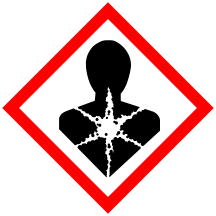
Boric acid carries a GHS signal word of Danger and the hazard statement H360FD — "May damage fertility; may damage the unborn child" (per the product's GHS classification). This is a reproductive hazard, and operators must take it seriously regardless of the powder's otherwise mild chemical behavior.
Wear chemical-splash goggles, nitrile or rubber gloves, and a dust mask or respirator when handling the powder to prevent inhalation and skin contact. Work in well-ventilated areas or use local exhaust ventilation to control airborne dust. Store in sealed HDPE or glass containers in a cool, dry location away from moisture. Keep away from strong acids and strong bases. Shelf life is excellent when kept dry — the extremely low vapor pressure and solid form mean minimal degradation under proper storage conditions.
Hazmat & Shipping
Boric acid powder is not assigned a UN number, hazard class, or packing group under DOT regulations (per 49 CFR 172.101). It is not regulated as a hazardous material for ground transport. This simplifies logistics planning compared to regulated chemicals, though individual carriers may still apply their own handling policies at their discretion. Every shipment from Alliance Chemical is reviewed under our DOT-compliant shipping procedures to confirm correct classification and documentation.
Documentation
A Safety Data Sheet (SDS) ships with every order, available in English, Spanish, French, and Japanese. A lot-specific Certificate of Analysis (COA) is available on request, documenting the assay and impurity profile of your specific shipment. A Technical Data Sheet (TDS) is also available for buyers who need the full specification summary for incoming QC or procurement review.
Why Buy from Alliance Chemical
This boric acid is available to order in packages from 2 lbs for bench-scale lab work up to 50 lbs for production quantities — with SDS documentation in four languages and lot-specific COAs on request. Alliance Chemical has served over 55,000 customers since 1998, shipping from our warehouse at 204 S Edmond St, Taylor, Texas. All shipments — including non-regulated materials like boric acid — are processed under our DOT-compliant procedures. Content on this page has been reviewed by Andre Taki, DOT Hazmat Specialist.