

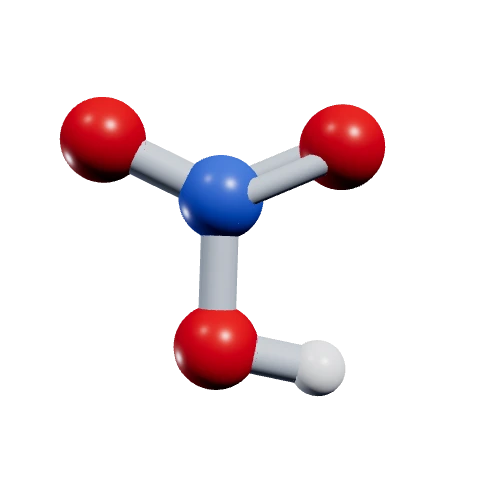


Precision fermentation has a cleaning problem that traditional chemical manufacturing does not. A stainless fermenter that has just finished a 14-day run holds a film of protein, lipid and mineral residue that is, biologically speaking, an excellent growth medium. The next batch is a living culture worth six figures. Everything between those two facts is CIP chemistry — and the chemicals doing that work are ordinary industrial commodities being asked to perform to an extraordinary standard.
This guide covers what actually goes into a bioreactor CIP cycle, at what concentration, at what temperature, and — the question that causes the most expensive mistakes — at what grade. It is written for process engineers, plant managers and procurement teams specifying chemicals for fermentation, alternative-protein, biologics and industrial-enzyme facilities.
What chemicals does a precision-fermentation CIP cycle actually use?
A standard bioreactor CIP cycle uses four chemical inputs: sodium hydroxide for the alkaline wash, nitric or phosphoric acid for the acid wash, high-purity water for rinses, and a final bioburden-control step (commonly peracetic acid or clean steam) before the next batch. Everything else is temperature, turbulence and time.
The sequence matters as much as the chemistry. Running acid before caustic wastes both, because the alkaline step is what removes the organic film that would otherwise shield mineral deposits from the acid.
| Stage | Chemistry | Typical conditions | What it removes |
|---|---|---|---|
| 1. Pre-rinse | Ambient or warm water | Ambient–40 °C | Gross soil, residual broth — keeps it out of the caustic tank |
| 2. Caustic wash | Sodium hydroxide, 1–4% | 60–80 °C, 15–30 min | Protein, lipid, biofilm matrix |
| 3. Intermediate rinse | Water | Ambient | Carryover alkali before acid contact |
| 4. Acid wash | Nitric acid 0.5–2%, or phosphoric acid | 50–70 °C, 10–20 min | Mineral scale, caustic residue; restores passive layer |
| 5. Final rinse | High-purity water | Ambient–80 °C | All chemical residue — verified by conductivity |
Why the order is fixed: alkali hydrolyzes the protein film first. Acid applied to an un-degreased surface simply sits on top of the organic layer and removes very little scale — you spend the acid and keep the soil.
What concentration of caustic soda do you need for bioreactor CIP?
Most bioprocess CIP caustic washes run between 1% and 4% sodium hydroxide by weight at 60–80 °C, which is why 50% liquid caustic is the standard purchase form — it dilutes cleanly to working strength without handling solid flake.
Sodium hydroxide cleans a fermenter through two reactions. It saponifies lipids, converting fats into water-soluble soaps, and it hydrolyzes proteins, breaking long chains into soluble peptides and amino acids. Both reactions accelerate sharply with temperature, which is why heat is not optional: the same 2% solution that struggles at 40 °C is highly effective at 75 °C.
The carbonation problem nobody budgets for
Dilute caustic absorbs carbon dioxide from the air and converts to sodium carbonate. A CIP tank left open, or one recirculated repeatedly without titration, quietly loses cleaning strength and starts depositing carbonate scale — the exact deposit the acid step is supposed to remove. Titrate the recirculated caustic on a schedule rather than assuming label strength.
Never combine caustic and acid in the same tank or the same step. The neutralization is strongly exothermic. Always run the intermediate rinse between them — it exists for safety as much as for cleaning performance.

Membrane, ACS, or technical caustic — which grade belongs in a bioprocess plant?
For stainless steel bioprocess equipment, the specification that matters most is chloride content, and that is decided by how the caustic was manufactured, not by how it is labeled for purity.
Chlor-alkali producers make caustic soda by two routes still in common supply. Membrane-cell caustic is produced with an ion-exchange membrane separating the electrodes, yielding a product with very low residual sodium chloride. Older diaphragm-cell or general commercial caustic can carry roughly an order of magnitude more chloride. For most industrial cleaning that difference is irrelevant. For 316L stainless held at 70 °C in a recirculating loop, it is not.
Why chloride is the enemy of 316L
Chloride ions attack the passive chromium-oxide film on austenitic stainless steel locally rather than uniformly, initiating pitting corrosion and, under tensile stress and elevated temperature, chloride stress-corrosion cracking. The damage concentrates exactly where a bioreactor is least forgiving: weld heat-affected zones, crevices at gaskets, and dead legs. A pit in a fermenter wall is not a cleaning problem, it is a sterility problem and eventually a vessel-integrity problem.
| Caustic option | Live product | Best fit |
|---|---|---|
| Membrane grade, 50% | Sodium Hydroxide 50% Membrane Grade (Caustic Soda, Lye) | Recirculating CIP on stainless bioreactors, membrane systems, chloride-sensitive loops |
| ACS grade, 50% solution | Sodium Hydroxide 50% Solution ACS Grade | Analytical work, titration standards, QC lab support where a documented reagent specification is required |
| Technical flake | Sodium Hydroxide Flakes | Utility duty — waste neutralization, drain and general plant cleaning away from product contact |
The practical rule: ACS grade certifies analytical purity against a reagent specification. Membrane grade certifies the manufacturing route that keeps chloride low. For CIP on stainless, the manufacturing route is the property you are actually buying — a higher-purity label on a high-chloride product does not help you.

Why does the acid wash use nitric acid — and when is phosphoric the better call?
Nitric acid is standard in the CIP acid step because it does two jobs at once: it dissolves mineral scale, and as an oxidizing acid it actively restores the passive layer on stainless steel. Phosphoric acid does the first job and not the second.
Fermentation broth deposits calcium and magnesium salts, phosphates and protein–mineral complexes that alkaline cleaning cannot touch. A dilute acid wash converts those to soluble salts and simultaneously neutralizes any residual alkalinity left in the loop.
| Nitric acid | Phosphoric acid | |
|---|---|---|
| Acid character | Strong, oxidizing | Moderate, non-oxidizing |
| Restores passive layer | Yes — this is the differentiator | No |
| Mineral scale removal | Excellent | Very good, gentler on soft metals |
| Watch out for | Nitrogen-oxide fumes; aggressive to some elastomers and soft metals | Can leave phosphate film; less effective on heavy protein-mineral scale |
| Choose it when | All-stainless bioprocess trains where passivity is the goal | Mixed metallurgy, food-contact lines, or where nitric fume handling is impractical |
Plants running food-contact or alternative-protein lines frequently prefer phosphoric acid for the routine acid wash and reserve nitric for periodic passivation. That is a defensible design — provided the passivation interval is actually scheduled and not merely intended.
What does nitric acid passivation actually do to a stainless bioreactor?
Passivation removes free iron from the surface of stainless steel so that a continuous, self-repairing chromium-oxide film can form over the whole area. It is a chemical surface treatment, not a cleaning step.
Stainless steel resists corrosion because chromium at the surface oxidizes into a dense, adherent film only nanometers thick. Fabrication undoes this locally: welding, grinding, cutting and tooling smear free iron across the surface and deplete chromium in heat-affected zones. Those iron-rich sites rust, and each one is a nucleation point for the pitting that chloride will later exploit. Nitric acid dissolves the free iron preferentially while leaving the chromium-rich matrix intact, letting the passive film re-form uniformly.
An important distinction that is often blurred: the 0.5–2% nitric acid in a routine CIP acid wash maintains passivity. It is not the same as a formal passivation treatment, which uses substantially more concentrated nitric acid under controlled time and temperature per a recognized specification such as ASTM A967. If your quality system requires passivation after a weld repair or a new installation, a CIP cycle does not satisfy it.
Our complete guide to nitric acid passivation of stainless steel covers concentrations, contact times and verification testing in detail.
Why "Low Particle" appears on the nitric acid label
Particulate matter in an acid destined for a final-stage rinse or a filtration train is a defect, not a cosmetic issue. Particles foul filters, score seal faces, and can deposit on product-contact surfaces after the very step meant to leave them clean. A low-particle specification is worth paying for when the acid touches anything downstream of final filtration.
Do you need USP grade, or is technical grade enough?
Grade selection should follow contact risk, not instinct. Chemicals with a credible path to the product stream justify a compendial grade; chemicals confined to utility loops usually do not, and paying for purity you will never use is a real and recurring cost.
| Duty | Sensible grade | Reasoning |
|---|---|---|
| CIP caustic wash, stainless loops | Membrane grade 50% | Low chloride protects 316L; analytical purity is not the constraint |
| CIP acid wash and passivation | ACS Grade nitric, low particle | Documented specification plus particle control near final rinse |
| pH adjustment, food or supplement lines | USP Food Grade phosphoric | Compendial grade where the acid can reach product |
| Fermenter jacket cooling | USP Grade propylene glycol | Incidental-contact tolerance in a food or pharma plant |
| Waste neutralization, utility cleaning | Technical grade | No product contact — compendial grade is wasted spend |
If you are unsure where a given line falls, our primer on understanding chemical grades — Technical, ACS, USP and FCC explains what each designation certifies and, just as usefully, what it does not.
Can you make peracetic acid on site, or do you have to buy it?
You should buy it. In the United States, peracetic acid sold for bioburden control is regulated as a pesticide under FIFRA and must carry a federal registration number, so blending your own for that duty is both a regulatory problem and a genuine safety hazard.
Peracetic acid forms in an equilibrium between acetic acid and hydrogen peroxide. That equilibrium is the difficulty: commercial products are stabilized, assayed and federally registered, whereas an on-site blend has an uncertain active concentration that drifts with time and temperature. Concentrated peracetic mixtures are also strong oxidizers with real decomposition and pressure hazards. Established suppliers of registered peracetic acid include Hydrite, Solvay and Enviro Tech.
Where we fit, plainly stated: Alliance Chemical does not sell peracetic acid. We supply the two precursor chemicals — Hydrogen Peroxide 30% ACS Grade and acetic acid — for oxidation, bleaching, pH and general process duties. We are not recommending that you combine them to produce a registered product, and we make no efficacy claims for either chemical. For that step, buy a federally registered peracetic formulation and follow its label. If you want the underlying chemistry, we wrote about what actually happens when peroxide and vinegar are mixed.
What should a Certificate of Analysis show before an audit accepts it?
A Certificate of Analysis is only useful if it is lot-specific and reports the impurities that matter for your application — a generic specification sheet reprinted for every shipment tells an auditor nothing about the drum in front of them.
For CIP and bioprocess support chemicals, look for:
- Lot or batch number that traces to the container you received — not a product-line document
- Assay with the analytical method identified
- Chloride content on caustic soda — the single most decision-relevant impurity for stainless service
- Trace metals where the chemical contacts product or catalysis is a concern
- Date of manufacture and retest or expiry, since hydrogen peroxide and dilute caustic both change with age
- Authorized signature or QC release
Scope, honestly: Alliance Chemical is an industrial chemical supplier providing Safety Data Sheets with every shipment, and lot-specific Certificates of Analysis on request at no charge. We are not a cGMP or IPEC-certified pharmaceutical manufacturer. If your quality system requires IPEC-GMP excipient documentation, specify a supplier certified to that standard for those particular materials — and use us for the CIP, utility and process chemicals where ACS, USP and membrane grades with lot documentation are the correct answer.
What goes in the fermenter cooling jacket — and why USP?
Fermentation is exothermic, so the jacket loop is doing continuous work, and in a food or pharmaceutical plant that loop should carry propylene glycol, not ethylene glycol. The reason is toxicity: a jacket leak or heat-exchanger pinhole puts the heat transfer fluid on the wrong side of a product-contact boundary.
Propylene glycol is materially less toxic than ethylene glycol and is accepted in food-adjacent service, which is why USP Grade is the sensible default even though the fluid is not intended to contact product. Working concentrations for chiller loops commonly land in the 30–40% range, balancing freeze protection against the reality that glycol carries heat less efficiently than water — over-concentrating the loop quietly costs you cooling capacity and pump energy.
Background reading: an introduction to propylene glycol properties and applications.
How pure does the final rinse water need to be?
The final rinse has to leave no chemical residue, and the standard way to prove that is conductivity — rinse until the outlet conductivity approaches the inlet water. Residual caustic or acid is highly conductive, so the measurement is a direct and continuous check on rinse completeness.
Deionized water is the workhorse here because dissolved ions are exactly what you are trying to detect and remove. Rinsing with hard water re-deposits the calcium and magnesium the acid step just removed, which is a genuinely common and self-defeating error.
A necessary caveat on compendial water: if you operate under pharmacopeial requirements, final rinse water for product-contact equipment typically must be Purified Water or Water for Injection generated and controlled on site under a validated system. Purchased deionized water does not substitute for that. Our Deionized Water is a Technical grade product suited to makeup, dilution, rinsing and general high-purity duty — not a replacement for a compendial water system.
See also: distilled versus deionized water — which high-purity water fits your application, and mastering pH balance and chemical adjustment.
What are the most common CIP chemistry mistakes?
Most CIP failures are not exotic. They cluster into a handful of errors that are easy to make, slow to show up, and expensive by the time they do.
Running caustic cold
Saponification and protein hydrolysis are strongly temperature-dependent. A 2% caustic solution at 40 °C is doing a fraction of the work the same solution does at 75 °C. Plants that dial back temperature to save energy frequently compensate by raising concentration, which costs more chemical, loads the rinse step, and still cleans less effectively than heat would have.
Trusting label strength on recirculated caustic
Recirculated caustic absorbs carbon dioxide and converts to sodium carbonate. Because the solution still looks and feels the same, cleaning strength can drift well below specification with no visible signal. Titration on a defined schedule is the only reliable control.
Buying purity instead of buying the right impurity profile
This is the costliest specification error in bioprocess procurement. A high-purity analytical grade with unremarkable chloride content is worse for a stainless CIP loop than a membrane-grade product carrying a lower purity label but far less chloride. Purity grades and impurity profiles answer different questions — decide which question your application is actually asking.
Skipping the intermediate rinse to shorten cycle time
Compressing the cycle by pushing acid onto a caustic-wet surface creates an exothermic neutralization inside the loop, wastes acid neutralizing alkali rather than dissolving scale, and removes a safety control. The minutes saved are not worth any of that.
Rinsing with hard water
A final rinse with untreated hard water re-deposits calcium and magnesium onto surfaces the acid step just cleaned. The cycle reports as complete while quietly rebuilding the scale it was run to remove.
Assuming the acid wash counts as passivation
Covered above, and worth repeating because it appears in audit findings regularly: routine CIP acid maintains an existing passive layer. It does not substitute for a formal passivation after welding, modification or new installation.
Key numbers and sources
Atomic reference values for the chemicals discussed above, with primary sources.
| Fact | Value | Source |
|---|---|---|
| Sodium hydroxide, CAS | 1310-73-2 | PubChem CID 14798 |
| Nitric acid, CAS | 7697-37-2 | PubChem CID 944 |
| Phosphoric acid, CAS | 7664-38-2 | PubChem CID 1004 |
| Propylene glycol, CAS | 57-55-6 | PubChem CID 1030 |
| Sodium hydroxide, OSHA PEL | 2 mg/m³ ceiling | OSHA Occupational Chemical Database |
| Nitric acid, NIOSH IDLH | 25 ppm | NIOSH IDLH documentation |
| Passivation of stainless steel parts | Standard practice | ASTM A967 / A967M |
| Cleaning and descaling of stainless | Standard practice | ASTM A380 / A380M |
Specifying CIP chemicals for a fermentation plant?
Every shipment ships with an SDS, in packaging from quarts to 275-gallon totes, typically moving in 1–2 business days. Need the lot-specific Certificate of Analysis? Just ask — we send it at no charge. Tell us the duty — recirculating CIP, passivation, pH control, jacket cooling — and we will help you match the grade so you are not overpaying for purity you will never use, or under-specifying a step that matters.
Related reading
- The definitive guide to nitric acid passivation of stainless steel
- Understanding chemical grades: Technical, ACS, USP, FCC
- The power of phosphoric acid: industrial and food-grade applications
- Sodium hydroxide: saponification and cleaning chemistry
- Nitric acid uses: 5% to 70% applications
- An introduction to propylene glycol
- Distilled vs. deionized water
- Mastering pH balance and chemical adjustment
Related: Where to Buy Nitric Acid: Grades, Concentrations, Licensing and Shipping — for picking the right nitric acid concentration for a CIP acid wash.
Related: Potassium Hydroxide (KOH): Uses, Grades & Safety Guide — choosing between caustic soda and caustic potash, and which grade each application needs.
Frequently asked questions
What concentration of caustic soda is used for bioreactor CIP?
Bioprocess CIP caustic washes typically run 1-4% sodium hydroxide by weight at 60-80 degrees Celsius for 15-30 minutes. Fifty percent liquid caustic is the standard purchase form because it dilutes cleanly to working strength without handling solid flake.
Why does membrane grade caustic soda matter for stainless bioreactors?
Membrane-cell caustic contains far less residual sodium chloride than diaphragm-cell or general commercial caustic. Chloride initiates pitting corrosion and chloride stress-corrosion cracking in 316L stainless steel, concentrating at welds, crevices and dead legs. For recirculating CIP on stainless, the low-chloride manufacturing route matters more than an analytical purity label.
Should the CIP acid wash use nitric or phosphoric acid?
Nitric acid is standard for all-stainless bioprocess trains because it removes mineral scale and, as an oxidizing acid, restores the chromium-oxide passive layer. Phosphoric acid removes scale but does not passivate; it is preferred for mixed metallurgy, food-contact lines, or where nitrogen-oxide fume handling is impractical.
Is a CIP acid wash the same as passivation?
No. The 0.5-2% nitric acid in a routine CIP acid wash maintains passivity. A formal passivation treatment uses substantially more concentrated nitric acid under controlled time and temperature per a recognized specification such as ASTM A967. A CIP cycle does not satisfy a quality-system requirement for passivation after welding or new installation.
Why must caustic and acid steps be separated by a rinse?
Neutralization between concentrated caustic and acid is strongly exothermic and hazardous. The intermediate rinse removes carryover alkali before acid contact, so it serves a safety function as well as improving cleaning performance.
Can you make peracetic acid on site for bioburden control?
You should buy it. In the United States peracetic acid sold for bioburden control is regulated as a pesticide under FIFRA and must carry a federal registration number. On-site blends also have an uncertain active concentration that drifts with time and temperature, plus real oxidizer decomposition hazards. Purchase a federally registered formulation and follow its label.
Why is propylene glycol rather than ethylene glycol used in fermenter cooling jackets?
Propylene glycol is materially less toxic than ethylene glycol, which matters because a jacket leak or heat-exchanger pinhole can put heat transfer fluid on the wrong side of a product-contact boundary in a food or pharmaceutical plant. USP Grade propylene glycol at roughly 30-40% is a common chiller loop specification.
What should a Certificate of Analysis show for CIP chemicals?
A useful CoA is lot-specific rather than a reprinted product specification. It should show the lot or batch number traceable to the container received, assay with the analytical method identified, chloride content on caustic soda, trace metals where relevant, date of manufacture with retest or expiry, and an authorized QC release signature.
Sources
- PubChem Compound Summary: Sodium Hydroxide (CID 14798) · PubChem (NIH National Library of Medicine)
- PubChem Compound Summary: Nitric Acid (CID 944) · PubChem (NIH National Library of Medicine)
- PubChem Compound Summary: Phosphoric Acid (CID 1004) · PubChem (NIH National Library of Medicine)
- PubChem Compound Summary: Propylene Glycol (CID 1030) · PubChem (NIH National Library of Medicine)
- OSHA Occupational Chemical Database · OSHA
- NIOSH IDLH documentation · CDC
- ASTM A967 / A967M · ASTM International
- ASTM A380 / A380M · ASTM International
Related Chemical Collections
About the author
Andre Taki
This article is for informational purposes only.


