



Market data current as of July 2026. Chemistry and grade guidance are evergreen.
Caustic soda is one of the few industrial chemicals whose price is set almost entirely by demand for something else. If you buy it, that single fact explains more about your invoice than any caustic soda forecast will.
Short answer: Caustic soda is sodium hydroxide (NaOH), a strong alkali produced by passing electricity through salt water. It is never made on its own — every tonne of caustic soda arrives with roughly 1.1 tonnes of chlorine as a locked co-product. That fixed ratio, not caustic demand, drives its price.
What caustic soda actually is
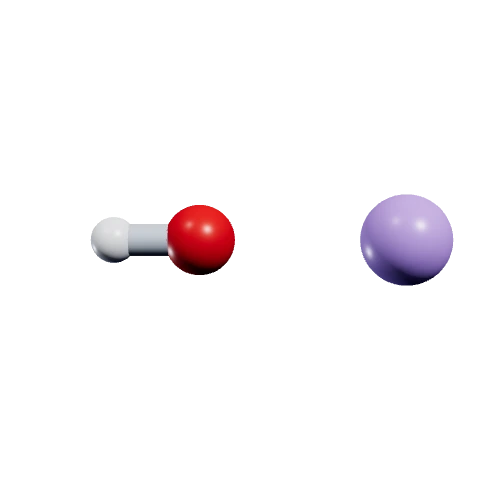
Caustic soda and sodium hydroxide are the same compound: NaOH. "Caustic soda" is the industrial and commercial name and "sodium hydroxide" the chemical one. "Lye" commonly refers to NaOH too, but the word is not a unique chemical identity: it can also refer to potassium hydroxide (KOH), especially in soapmaking. Check the formula as well as the concentration and grade on any specification.
It is supplied two ways: as a solid (flakes, beads, or prills, typically 98–99% NaOH) or as an aqueous solution, most commonly at 50% or diluted to lower strengths. Solid is cheaper to ship per unit of NaOH because you are not paying freight on water; solution is easier to meter, dissolve, and handle without generating dust.
How it is made — and why that matters to your price
Caustic soda comes from the chlor-alkali process: electrolysis of brine (sodium chloride in water). Passing direct current through the cell splits the salt and water into three products at once.
Read that equation as a commercial constraint, not just a chemical one. Chlorine, hydrogen, and sodium hydroxide are produced in a ratio fixed by atomic mass. You cannot dial it. You cannot make caustic soda without simultaneously making chlorine.
The arithmetic is exact. One mole of Cl2 weighs 70.90 g; the two moles of NaOH produced alongside it weigh 80.00 g. So:
This is the single most useful thing a caustic soda buyer can understand. A chlor-alkali plant does not decide how much caustic soda to make. It decides how hard to run its cells — and that decision is usually driven by chlorine, because chlorine is the harder product to place.
Why caustic soda pricing follows chlorine, not caustic soda
Chlorine is difficult and expensive to store at scale. Caustic soda solution can sit in a tank; chlorine largely has to be consumed as it is produced, and its dominant outlet is vinyls — ethylene dichloride (EDC) and then PVC. That makes ethylene availability the effective throttle on the entire chlor-alkali system.
When ethylene gets scarce, vinyls producers cut rates. Chlorine has nowhere to go. Chlor-alkali plants throttle back. And caustic soda — which nobody's demand changed — gets tight anyway.
That is precisely what played out across global markets in the first half of 2026. Disruption to Middle East supply reduced naphtha availability in Asia, and Asian cracker utilization fell from roughly 83% in February to 57% in May. Ethylene output dropped, vinyls producers curtailed, and an estimated 6–9% of global vinyls capacity was disrupted. Caustic soda tightened as a downstream consequence.
Note what is absent from that explanation: any change in how much caustic soda the world wanted. The tightness was transmitted entirely through the chlorine side of the equation.
The 2026 picture: tight globally, soft domestically
Here is where buyers most often misread the market. Global caustic soda tightness and US caustic soda pricing have been pointing in opposite directions through 2026, and headlines about one are routinely mistaken for signals about the other.
| Signal | Global / Asia | United States |
|---|---|---|
| Direction | Tightened on supply disruption | Under downward pressure |
| Primary driver | Ethylene → vinyls → chlor-alkali rate cuts | Weak domestic end-use demand |
| Weak sectors | — | Pulp & paper, textiles, soaps, water treatment |
| Operating rates | China ~83–84%; Japan, South Korea, Taiwan ~60–70% | Supply improving into Q3 |
The practical takeaway for a US buyer: a headline about Asian force majeure is not automatically a reason to pre-buy domestically. Through mid-2026, US fundamentals were driven by soft consumption in pulp and paper, textiles, soaps, and water treatment, with availability improving into the third quarter as maintenance turnarounds completed. Those are different markets with different clocks.
Concentrations: choosing the right strength
Concentration is a handling and logistics decision at least as much as a chemical one. Buying 50% and diluting on site means paying freight on less water, but it requires dilution capability and a heated or trace-heated environment in cold weather — 50% NaOH solution begins to crystallize near 12 °C (about 54 °F). Buying pre-diluted removes that step entirely.
| Strength | Typical use | Practical notes |
|---|---|---|
| 5% – 10% | pH adjustment, mild cleaning, lab neutralization | Ready to use; lowest handling burden |
| 15% – 20% | CIP cleaning, wastewater pH control | Common working strength for process lines |
| 25% – 30% | Parts cleaning, process dosing, scrubbers | Balance of concentration and pumpability |
| 50% | Bulk feedstock, on-site dilution | Standard commercial strength; crystallizes near 12 °C |
| Flakes (98–99%) | Batch makeup, soapmaking, remote sites | Lowest freight per unit NaOH; dissolution is strongly exothermic |
Grades: Technical, ACS, and Membrane
Grade describes purity and the documentation behind it. Paying for a tighter grade than your process needs is one of the most common avoidable costs in chemical procurement — and buying below what your process needs is one of the most expensive.
| Grade | What you are buying | Choose it when |
|---|---|---|
| Technical | Industrial-purity NaOH meeting commercial specification | Cleaning, pH control, wastewater, degreasing, general processing |
| ACS Reagent | Purity meeting American Chemical Society specification, with defined impurity limits | Analytical work, QC labs, R&D, any method that cites ACS reagents |
| Membrane | Low-chloride, low-impurity caustic from membrane-cell production | Processes sensitive to chloride or metals contamination |
A practical rule: if your specification, SOP, or test method names a grade, match it exactly. If it does not, technical grade is usually correct and materially cheaper. If you are unsure which your process requires, ask us for the specification sheet and compare it against your method before ordering — that comparison takes minutes and routinely saves four figures on a drum-scale purchase.
Diluting 50% caustic soda: the arithmetic
Most buyers purchasing at volume buy 50% solution and dilute on site, because at 50% you are not paying freight on water you already have. The dilution math is a straight mass balance — no correction factors, no chemistry beyond bookkeeping.
To make a target concentration C from 50% stock, every 100 kg of finished solution needs:
| Target | 50% stock per 100 kg | Water per 100 kg |
|---|---|---|
| 25% | 50.0 kg | 50.0 kg |
| 20% | 40.0 kg | 60.0 kg |
| 15% | 30.0 kg | 70.0 kg |
| 10% | 20.0 kg | 80.0 kg |
| 5% | 10.0 kg | 90.0 kg |
Two things the table does not tell you. First, dilution is exothermic: adding 50% caustic to water releases heat, and doing it quickly in an unvented or undersized vessel can drive the temperature up fast. Add caustic to water, never the reverse, and control the rate. Second, these are mass ratios, not volume. Caustic solutions are considerably denser than water, so measuring by volume without correcting for density will give you the wrong strength.
Approximate densities at 20 °C
| Concentration | Approx. density (g/mL) | Approx. lb per US gal |
|---|---|---|
| 10% | 1.11 | 9.3 |
| 20% | 1.22 | 10.2 |
| 25% | 1.27 | 10.6 |
| 30% | 1.33 | 11.1 |
| 50% | 1.52 | 12.7 |
Treat these as planning figures for sizing tanks and estimating freight. For anything that has to hit a specification, work from the density stated on the lot Certificate of Analysis rather than a table — just ask and we will send it at no charge.
Cold weather: why 50% sets up in the tank
Caustic soda solutions crystallize at temperatures that depend sharply on concentration, and 50% is close to the worst case. Published crystallization points for 50% material vary between roughly 4 °C and 12 °C (about 40–54 °F) depending on the exact assay and the source consulted, which is precisely why unheated outdoor storage of 50% is a recurring winter problem: the material can begin dropping solids well before anything freezes in the ordinary sense.
You have two practical options. Trace-heat and insulate the tank and lines, or buy a lower concentration that stays liquid at your ambient temperature. A 25% or 30% solution is far more forgiving in an unheated space, and for many cleaning and pH-adjustment duties it is what the process wanted anyway. If you are in a cold climate and have been fighting crystallization in a 50% tank every January, the cheaper fix is usually the lower concentration, not the heat tracing.
Materials: what caustic soda attacks
| Material | With NaOH solution |
|---|---|
| Carbon steel | Generally suitable for storage at ambient temperature |
| 304 / 316 stainless | Generally suitable; 316 preferred at higher temperature |
| HDPE, polypropylene | Generally suitable for solutions; check rating at temperature |
| Aluminium | Attacked — generates hydrogen gas. Do not use. |
| Zinc, galvanized steel | Attacked — generates hydrogen gas. Do not use. |
| Tin, brass, bronze | Attacked. Avoid. |
| Glass | Slowly etched; unsuitable for long-term storage |
The aluminium interaction is the one that causes real incidents. Caustic reacts with aluminium to liberate hydrogen, which is flammable and which accumulates in the headspace of a closed container. An aluminium tote, funnel, or scoop is not a minor material substitution here. Confirm compatibility against your Safety Data Sheet and your own engineering standards before selecting anything for storage or transfer.
What “lye” means on a chemical label
"Lye" is a common name, not a formula. It often means sodium hydroxide, including many products sold for soapmaking, food processing, and drain maintenance. But it may also mean potassium hydroxide in soapmaking. A product identified as NaOH is the same compound whether it is marketed as caustic soda or sodium-hydroxide lye; after confirming the formula, compare grade, concentration, assay, and documentation.
Two points regularly cause confusion:
- Sodium hydroxide makes bar soap; potassium hydroxide makes liquid soap. The saponification reaction is the same in kind, but NaOH yields hard sodium soaps and KOH yields softer potassium soaps. Substituting one for the other without recalculating will not produce the product you intended, because the two have different molar masses.
- Concentration and grade are separate questions from intended use. If your application has a documentation requirement, buy against that requirement and keep the paperwork. We supply a GHS-aligned Safety Data Sheet with every order and a lot-specific Certificate of Analysis on request at no charge, which is usually what the requirement actually is.
Sodium hydroxide vs potassium hydroxide
| Sodium hydroxide (NaOH) | Potassium hydroxide (KOH) | |
|---|---|---|
| Molar mass | 40.00 g/mol | 56.11 g/mol |
| Relative cost | Lower | Higher |
| Soap produced | Hard / bar | Soft / liquid |
| Typical duty | General alkali, pH control, cleaning | Liquid soaps, biodiesel, electrolytes |
On a pure-material basis, KOH is heavier per mole, so equivalent alkalinity needs about 1.40 times the mass of KOH that it would of NaOH (56.11 ÷ 40.00). Real formulations must also account for the stated assay or purity of each product. That ratio, plus the price difference, is why NaOH is the default wherever the potassium ion is not specifically wanted. We stock potassium hydroxide flakes where it is.
Handling and storage
Sodium hydroxide is corrosive to skin, eyes, and many metals. A few properties drive most real-world handling decisions:
- Dissolution releases significant heat. Adding flakes to water is strongly exothermic and can raise solution temperature rapidly. Always add caustic to water, never water to caustic, and control the addition rate.
- It attacks aluminium, zinc, and tin, generating hydrogen gas. Use compatible materials — carbon steel, stainless, or appropriate plastics — for storage and transfer.
- 50% solution crystallizes near 12 °C. Unheated outdoor storage in cold climates will cause it to set up in tanks and lines.
- It absorbs carbon dioxide from air, gradually forming sodium carbonate. Keep containers closed to preserve titre in analytical applications.
For airborne exposure, OSHA's permissible exposure limit for sodium hydroxide is 2 mg/m³, and NIOSH sets the concentration immediately dangerous to life or health at 10 mg/m³. Those numbers matter most where dust is generated — handling flakes, charging a makeup tank — rather than where a solution sits closed in a drum.
Consult the Safety Data Sheet for the specific product and concentration before handling, and follow your site's engineering controls and PPE requirements. We provide a current SDS with every product, and the lot-specific Certificate of Analysis on request at no charge.
What we actually see across caustic orders
Alliance Chemical has supplied industrial chemicals since 1998, to more than 55,000 customers across 340+ products. Three patterns show up on caustic soda specifically, often enough to be worth writing down:
- Over-specified grade is the most common avoidable cost. Buyers routinely order ACS reagent grade for wastewater pH adjustment or parts cleaning, where technical grade meets the requirement at materially lower cost. The tell is a purchase order that names a grade no written specification asked for.
- Under-specified grade is the more expensive error. The reverse also happens: technical grade bought for an analytical method that cites ACS reagents, discovered at audit rather than at receipt. If a method names a grade, match it exactly.
- Concentration is chosen by habit, not by process. Sites buy 50% because they always have, then spend the winter managing crystallization in an unheated tank. If you are diluting to 25% on arrival anyway, buying 25% removes a process step and a cold-weather failure mode.
None of this is exotic. It is simply what a distributor sees that a specification sheet does not show.
Caustic soda from Alliance Chemical
We stock the full concentration and grade ladder from our Texas facility, from 5% dilutions through 50% solution and dry flakes, in container sizes from bottles to totes.
Sodium Hydroxide 50% Membrane Grade
Caustic soda, lye. Low-chloride membrane-cell material.
View productTechnical and ACS grades are also stocked at 5%, 10%, 15%, 20%, and 30%. If you need a strength between these, tell us the target and we will quote the nearest stocked dilution.
Related guides
- Sodium Hydroxide for Precision Optical Cleaning — concentration and contact-time selection for high-purity cleaning.
- Neutralizing Spent Sodium Hydroxide Baths — what to do with caustic after the process is finished with it.
Sources
- ICIS — "Caustic soda supplies tighten on Asian ethylene curtailments", 8 May 2026 (Olin CEO commentary, cracker utilization and vinyls disruption figures).
- ChemAnalyst — "Weak Industrial Demand Keeps US Caustic Soda Prices Under Pressure", 3 June 2026 (US demand conditions, regional operating rates).
- NIOSH Pocket Guide to Chemical Hazards — Sodium hydroxide (CAS number, exposure limits).
- OSHA Occupational Chemical Database — Sodium hydroxide (permissible exposure limit).
- NIOSH Immediately Dangerous to Life or Health — Sodium hydroxide (IDLH value).
- Euro Chlor — The European Chlor-Alkali Industry (electrochemical unit definition and fixed co-product ratio).
About Alliance Chemical. Alliance Chemical (Alliance Solvents & Chemicals, Inc.) has supplied industrial chemicals, chlorinated solvents, and laboratory reagents to U.S. industrial, defense, aerospace, and research customers since 1998 — 55,000+ customers across 340+ products. We are woman-owned, a DLA supplier (CAGE 1LT50), a NASA Supplier, a U.S. Space Force Supplier, a DoD Bronze Medal recipient, and BBB-accredited with an A+ rating.
204 S Edmond St, Taylor, TX 76574 · 512-365-6838 · sales@alliancechemical.com
DOT 2188383 · DUNS 012941063 · UEI DCTCZDY3BLD3
Related: What Bleach Actually Is: Sodium Hypochlorite From 1% to 12.5% — caustic soda and bleach are both chlor-alkali products; this covers the hypochlorite side, including the 1%–12.5% concentration ladder.
Last reviewed: 30 July 2026 by the Alliance Chemical product team.
Alliance Chemical is a chemical distributor; this guide is general technical information, not a substitute for the Safety Data Sheet or your site's engineering controls.
Related: Potassium Hydroxide (KOH): Uses, Grades & Safety Guide — the potassium side of the same family, and why KOH and NaOH are not interchangeable by weight.
Related: Two Rivers Hit Bottom: Record-Low Rhine and Mississippi Levels — liquid caustic soda is one of the highest-volume barge commodities on US inland waterways, so a river gauge sits inside its delivered cost.
Related: Who Discovered Chlorine? The 1774 Green Gas That Became Sodium Hypochlorite — chlorine and caustic soda are co-products; here is where chlorine came from.
Related: Who Discovered Ammonia? The Salt of Ammon and a 1,900-Year-Old Naming Mistake — why ammonia is used instead when a residual sodium ion cannot be tolerated.
Related reading
Potash: The Chemical Behind America’s First Patent — and What It Became — the potassium side of the caustic story — potash, caustic potash, and when KOH is the right choice instead of NaOH.
Key numbers and sources
| Fact | Value | Source |
|---|---|---|
| Chemical formula | NaOH | See article text |
| CAS number | 1310-73-2 | See article text |
| Molar mass | 40.00 g/mol | See article text |
| OSHA PEL | 2 mg/m³ | osha.gov |
| UN number (solid) | UN1823 | See article text |
| UN number (solution) | UN1824 | See article text |
| Hazard class | Class 8, PG II | See article text |
| Crystallization point for 50% solution | near 12 °C (about 54 °F) | See article text |
Related: Chlorine, Caustic Soda and Hydrochloric Acid Come Out of One Cell — the September 2026 Westlake and Century Lithium announcements, and membrane versus diaphragm caustic on a certificate.
Related: Prosecutors Say Korea’s Chlor-Alkali Makers Took Turns Sending Price Notices — how a price-fixing case can reach caustic soda, chlorine and hydrochloric acid at once, and how to compare quotes per kilogram.
Related: The Real Giant Squid Floats on Ammonia. Netflix's Below Left Out the Chemistry — the 1979 squid test: strong sodium hydroxide releases ammonia from ammonium-rich tissue.
Related: EPA Moved the Chemical Spill-Plan Deadline to 2030. The Threshold Math Did Not Move — caustic soda at 1,000 times its Reportable Quantity: the 2030 hazardous substance spill-plan threshold in gallons.
Frequently asked questions
Is caustic soda the same as sodium hydroxide?
Yes. Caustic soda and sodium hydroxide are two names for NaOH. “Lye” commonly means NaOH too, but it can also refer to potassium hydroxide (KOH), especially in soapmaking, so verify the formula as well as the concentration and grade.
Why does caustic soda price move when nothing changed in caustic soda demand?
Because it is a co-product. Electrolysis of brine yields chlorine and caustic soda in a fixed ratio of roughly 1 to 1.1 by mass, so producers set output based on chlorine economics, primarily vinyls and PVC demand. When chlorine outlets weaken, plants cut rates and caustic soda tightens even though caustic demand is unchanged.
What is an ECU in the chlor-alkali industry?
An electrochemical unit: the fixed bundle of products from one pass of the chlor-alkali process, conventionally 1 tonne of chlorine, about 1.1 tonnes of caustic soda, and 0.03 tonnes of hydrogen. Producers assess margins on the whole bundle because the products cannot be made separately.
Should I buy 50% caustic soda solution or flakes?
Flakes carry the least freight per unit of NaOH and store indefinitely when kept dry and sealed, but dissolving them releases substantial heat and requires makeup equipment. 50% solution is ready to dilute and meter but is mostly water by weight and needs temperature-managed storage in cold climates.
What grade of caustic soda do I need?
Match your written specification if you have one. Absent a specification, technical grade covers most cleaning, pH-adjustment, and wastewater applications. Choose ACS reagent grade for analytical and QC work, and membrane grade where chloride or metals contamination would affect your process.
Why does 50% caustic soda solidify in my tank?
The crystallization temperature of NaOH solution changes sharply with exact concentration, and commercial 50% material can crystallize in cool storage. Use the supplier’s concentration curve and SDS/TDS for the delivered product, then trace-heat and insulate the system or choose a concentration compatible with the site’s minimum ambient temperature.
Sources
Related Chemical Collections
About the author
Andre Taki
This article is for informational purposes only.


