

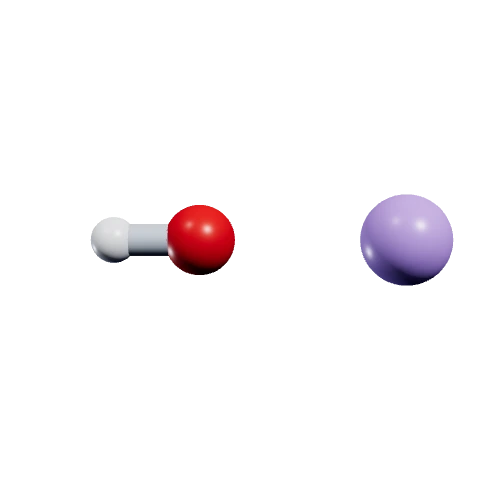


Direct air capture sounds like science fiction: machines that breathe in ordinary air and breathe out a pure stream of carbon dioxide. But the chemistry at the heart of the most mature version of it is one of the oldest, cheapest, and most boring industrial chemicals on Earth — caustic soda. Sodium hydroxide is the alkaline sponge that grabs CO2 out of the sky, and a closed loop of lime and heat (or, now, electricity) wrings it back out concentrated enough to bury underground or sell.
This guide walks through exactly how NaOH captures carbon from thin air, why it is regenerated rather than consumed, how it compares to potassium hydroxide and to amine capture, and what is making direct air capture a real, funded industry in 2026 rather than a lab curiosity. It is written for the engineers, founders, and procurement teams sizing up the carbon-removal supply chain — with the honest caveat, up front, that the marquee plant in Texas uses KOH, and a clear explanation of where sodium hydroxide genuinely fits.
What is direct air capture, and how does it pull CO₂ out of thin air?
Direct air capture (DAC) is any engineered system that removes carbon dioxide directly from ambient air, rather than from a smokestack. Because atmospheric CO2 is dilute — around 420 parts per million, a few hundred times thinner than flue gas — DAC has to move enormous volumes of air across a capture medium that is selective and strong enough to grab CO2 at that low concentration. There are two dominant families: solid sorbent (S-DAC), which uses amine-functionalized solids that release CO2 with mild heat, and liquid solvent (L-DAC), which uses a strongly alkaline aqueous solution — a hydroxide — to absorb CO2 and a high-temperature loop to regenerate it.
Sodium hydroxide lives in that second family. An L-DAC contactor is essentially a giant wet scrubber: fans pull air through a structured packing that is constantly wetted with hydroxide solution, the CO2 dissolves and reacts, and CO2-depleted air leaves the other side. The captured carbon is now locked into the liquid as a dissolved carbonate, and the real engineering challenge — the part that determines the energy bill — is getting it back out as pure CO2 so the solvent can be reused. The amine route is covered separately in our guide to monoethanolamine (MEA) carbon capture; this article is about the hydroxide route.
CO2 is mildly acidic in water. A strong base like NaOH (or KOH) drives the absorption reaction hard and fast toward carbonate, which is what lets a contactor strip CO2 from air that is only 0.04% CO2. Weaker bases simply cannot pull it down far enough at that dilution.
How does sodium hydroxide capture carbon dioxide?

Sodium hydroxide captures CO2 by reacting with it in water to form sodium carbonate, a simple acid–base neutralization: CO2 + 2 NaOH → Na2CO3 + H2O. The carbon that was a gas in the atmosphere is now a dissolved carbonate ion, chemically held in the liquid. On a mass basis the capacity is striking: sodium hydroxide can absorb roughly 76% of its own weight in carbon dioxide — about 0.76 kg of CO2 per kilogram of NaOH at full conversion.
Capture: CO2 + 2 NaOH → Na2CO3 + H2O
If the solution is only partly caustic, or as it loads up with carbonate, some CO2 is held as bicarbonate instead (NaHCO3). Either way the carbon is now in the liquid, and the air leaving the contactor is leaner in CO2 than the air that came in. That is the whole capture step — chemically trivial, mechanically demanding, because moving and wetting that much air is where the capital and the parasitic energy go.
The reason caustic soda is attractive here is the same reason it shows up in everything from soap to water treatment: it is one of the highest-volume, lowest-cost commodity chemicals in the world, it is extremely soluble, and it reacts with CO2 completely and irreversibly under ambient conditions. (That same thirst for CO2 is why caustic soda must be stored sealed — left open to air, it slowly carbonates into soda ash on its own.) For the broader industrial story of this molecule, see our complete guide to sodium hydroxide (lye) and the impact of caustic soda on modern industry.
Sodium hydroxide, NaOH, molar mass 40.0 g/mol. The capture reaction is exothermic and runs at ambient temperature — no heat input is needed to absorb CO2. All the energy in DAC goes into releasing it again and regenerating the solvent.
Does the world’s largest DAC plant run on sodium hydroxide? No — and here is why NaOH still matters
No. The world’s largest direct air capture facility — Stratos, built by 1PointFive (an Occidental subsidiary) in Ector County, Texas, using technology from Carbon Engineering — runs on an aqueous potassium hydroxide (KOH) solution, not sodium hydroxide. Stratos is engineered to capture up to 500,000 metric tons of CO2 a year, and the commercial liquid-DAC designs that descend from Carbon Engineering’s work all specify KOH as the air-contactor solvent. So if you read that “hydroxide DAC” is scaling in Texas, the specific hydroxide in those towers is potassium, not sodium.
Why KOH and not the cheaper NaOH? Potassium hydroxide is more soluble and its carbonate stays in solution more readily at the high loadings a commercial contactor runs at, which simplifies the plumbing and edges out a little more capture efficiency — published simulations put KOH around 89.8% capture versus about 86.4% for NaOH under comparable conditions. KOH costs more per ton, but at the flow rates of a megaton plant, avoiding solids and pumping problems is worth the premium.
That does not sideline sodium hydroxide — it just places it. NaOH is the low-cost, heavily-researched workhorse of hydroxide DAC: the foundational academic spray-capture experiments used NaOH, most cost-modelling and process-engineering studies use NaOH because it is the commodity baseline, and two routes covered below — DAC-to-soda-ash and electrochemical regeneration — are being developed specifically around sodium chemistry. The honest summary: KOH is the incumbent for the biggest plants; NaOH is the economical, more-studied sibling and the basis of several of the most interesting next-generation designs.
We sell caustic soda, and we are not going to pretend it is what Stratos buys — it is not. We would rather you trust the chemistry than oversell the headline. Where NaOH genuinely wins is cost, availability, and the soda-ash and electrochemical routes. That is the pitch, and it is a real one.
NaOH vs KOH vs amines: which capture chemistry fits which job?
There is no single “best” capture medium — the three leading options trade cost, energy, and engineering complexity against each other. Sodium hydroxide is the cheapest and most available; potassium hydroxide buys efficiency and easier solids handling; amine solid sorbents skip the high-temperature loop entirely but cost more per ton of capacity. The table below is the quick orientation.
| Medium | Route | Regeneration | Edge | Trade-off |
|---|---|---|---|---|
| Sodium hydroxide (NaOH) | Liquid (L-DAC) | Causticization + calcination, or electrochemical | Cheapest, ubiquitous, soda-ash co-product | Carbonate solubility limits; high-temp loop is energy-hungry |
| Potassium hydroxide (KOH) | Liquid (L-DAC) | Causticization + calcination | Higher solubility & efficiency; runs the biggest plants | More expensive per ton |
| Amines (e.g. MEA, solid-supported) | Solid (S-DAC) | Mild heat / vacuum swing (~80–120°C) | Low-grade heat; modular; no lime loop | Sorbent cost & degradation; lower throughput per unit |
For the amine path in depth, see our companion guide on MEA-driven carbon capture. The rest of this article stays on the hydroxide route, because that is where caustic soda does its work.
How is the sodium hydroxide regenerated after it captures CO₂?
Sodium hydroxide is regenerated — not consumed — through a causticization-and-calcination loop borrowed from the pulp-and-paper industry’s kraft recovery cycle. This is the part that makes DAC an energy problem rather than a chemistry problem, and understanding it is the key to understanding the whole economics. The captured carbonate is shuttled from sodium onto calcium, baked off as pure CO2, and the hydroxide is returned to the contactor. Four steps close the loop:
1 Capture: CO2 + 2 NaOH → Na2CO3 + H2O
2 Causticize: Na2CO3 + Ca(OH)2 → 2 NaOH + CaCO3↓
3 Calcine (~900°C): CaCO3 → CaO + CO2↑ (pure)
4 Slake: CaO + H2O → Ca(OH)2
Step 2 is causticization: adding slaked lime to the carbonate solution precipitates insoluble calcium carbonate and frees the sodium hydroxide, ready to capture again. Step 3 is the expensive one — the calcium carbonate is heated in a kiln to roughly 900 °C, which drives off a concentrated stream of CO2 (now ready for compression and geologic storage or use) and leaves calcium oxide. Step 4 slakes that quicklime back to calcium hydroxide, and the calcium loop closes alongside the sodium loop. In principle, nothing but energy and make-up chemical is consumed; in practice, that ~900 °C calciner is why L-DAC is hungry for high-grade heat and why so much research aims at replacing it.
The absorption step is free energy-wise. The regeneration loop — especially the high-temperature calcination — is where the kilowatt-hours and dollars go. Every credible effort to make hydroxide DAC cheaper is, at bottom, an effort to regenerate the solvent with less or lower-grade energy.
What is DAC-to-soda-ash, and why does it change the economics?

DAC-to-soda-ash is a sodium-hydroxide capture process that stops at sodium carbonate and sells it instead of regenerating the caustic and burying the CO2. Because the product of CO2 capture in NaOH solution is sodium carbonate — Na2CO3, better known as soda ash — a plant can skip the expensive causticization-and-calcination loop entirely and simply crystallize and sell the soda ash. The captured carbon stays permanently locked in a useful, salable mineral product.
This flips the economics. Conventional DAC spends energy to release the CO2 and then pays to store it, earning revenue only from carbon credits. A DAC-to-soda-ash plant earns revenue from a real commodity (soda ash feeds glass, detergents, lithium processing, and dozens of other industries) while still removing atmospheric carbon — the CO2 is sequestered in the carbonate. Recent process-engineering work in the peer-reviewed literature has laid out exactly how to run NaOH-based DAC for soda-ash production, treating the capture chemistry as a manufacturing route rather than a pure cost center.
Soda ash (Na2CO3) is the high-volume commodity with an established global market; potassium carbonate is a smaller specialty market. The DAC-to-soda-ash route is one place where sodium hydroxide is clearly the right hydroxide — the captured carbon becomes a product people already buy by the millions of tons.
Can you regenerate sodium hydroxide with electricity instead of heat?
Yes — and this is the frontier that could make hydroxide DAC run on clean electricity rather than a ~900 °C kiln. Electrochemical regeneration uses an electrolytic cell to split the spent carbonate/bicarbonate solution directly back into fresh NaOH plus a concentrated CO2 stream, with no lime loop and no high-temperature calciner. Recent demonstrations of a porous solid-electrolyte (PSE) reactor have shown selective splitting of Na2CO3/NaHCO3 solutions into a regenerated hydroxide absorbent and high-purity CO2 gas in a single, modular step.
The strategic appeal is obvious. Replacing high-grade combustion heat with electricity means the whole regeneration step can be powered by renewables, sited where clean power is cheap, and scaled in modular stacks rather than one giant kiln. Other research is chasing the same goal by other means — titanate-based causticization, for instance, has been shown to cut the high-grade heat requirement of the traditional lime cycle by around half. None of these has fully displaced the kiln at commercial scale yet, but they all point the same direction: lower-energy, electrified regeneration of sodium hydroxide.
Electrochemical and titanate regeneration are demonstrated and promising, not yet the commercial default. The honest status in 2026 is that the lime-calcination loop still runs the working plants, while the electrified routes are racing from lab and pilot toward commercial scale.
Why is direct air capture suddenly a real, funded industry?
Direct air capture became a fundable industry because policy turned carbon removal into a paid product. In the United States, the 45Q tax credit pays up to $180 per metric ton of CO2 captured from the air and stored in dedicated geologic formations — a level preserved and reinforced in 2025 legislation — and the Department of Energy committed more than $3.5 billion to its DAC Hubs program, each hub targeting roughly a million tons of capture a year. That combination de-risked megaton-scale projects and made the U.S. the most financially attractive place on Earth to build DAC.
The market numbers follow the money. Analysts project the global direct air capture market growing from roughly $91 million in 2026 to about $4.26 billion by 2034 — a compound annual growth rate near 62%. That is the kind of curve that mints new industrial buyers: contactor builders, lime and hydroxide suppliers, CO2 compression and pipeline operators, and the carbon-removal credit market underneath them all. For a commodity-chemical supplier, a steeply scaling DAC buildout is a steadily scaling demand signal for caustic soda, lime, and the rest of the alkaline supply chain.
What grade of sodium hydroxide does a capture or carbonate process need?
The grade you need depends on how clean the loop has to stay. For most caustic duty — scrubbing, neutralization, and bulk absorption — Technical Grade caustic soda is the correct, economical choice. Where impurities would accumulate in a recirculating solvent loop or contaminate a salable carbonate product, the low-chloride, low-iron Membrane Grade or a documented ACS Grade earns its premium. Caustic soda is sold both as ready-to-use solution (25% and 50%) and as solid flakes you dissolve on site to the concentration you want; flakes ship more chemical per pound of freight, which matters at volume.
| Grade | What it means | Best for |
|---|---|---|
| Technical | Standard industrial purity, economical | Bulk scrubbing, neutralization, general caustic duty |
| Membrane | Low chloride / low iron, made via membrane-cell process | Recirculating solvent loops & purity-sensitive carbonate product |
| ACS Grade | Tight impurity limits + Certificate of Analysis | Lab, QC, analytical, and documentation-critical work |
Form factor matters as much as grade: a 50% solution is ready to meter; flakes let you mix the exact strength you need and cut freight cost; 25% is a gentler, easier-to-handle concentration for smaller operations. Whatever the application, ask for the Certificate of Analysis — for any recirculating or product-bound process, knowing your chloride and iron going in saves you a contamination headache later.
Sodium hydroxide is severely corrosive to skin and eyes, and dissolving it in water is strongly exothermic — always add caustic to water, never the reverse, and never to hot water. Use full splash protection, and remember caustic soda reacts with aluminum and several other metals to release flammable hydrogen. Keep containers sealed: open caustic absorbs CO2 from the air and degrades to soda ash.
Key numbers & sources
| Fact | Value | Primary source |
|---|---|---|
| NaOH CO₂ absorption capacity | ~0.76 kg CO₂ / kg NaOH (~76% by weight) | Stolaroff et al., Env. Sci. & Tech. |
| Capture reaction | CO₂ + 2 NaOH → Na₂CO₃ + H₂O | ACS I&EC Research (soda-ash DAC) |
| KOH vs NaOH capture efficiency | ~89.8% vs ~86.4% | Zeman / KOH DAC simulation, ScienceDirect |
| 45Q DAC credit (geologic storage) | up to $180 / tonne CO₂ | Global CCS Institute |
| DOE DAC Hubs funding | > $3.5 billion | U.S. Department of Energy |
| DAC market growth | $91M (2026) → $4.26B (2034), ~61.7% CAGR | Fortune Business Insights |
| Stratos design capacity | up to 500,000 t CO₂ / yr (KOH-based) | 1PointFive |
Selected primary references: IEA — Direct Air Capture; ACS I&EC Research — NaOH-based DAC for soda-ash production; Stolaroff et al. — CO₂ capture from air using NaOH spray; Global CCS Institute — 45Q credit; 1PointFive — Stratos; PubChem — Sodium hydroxide (CAS 1310-73-2).
Caustic soda, any grade, any size — shipped nationwide
Technical, ACS, and Membrane grades, from 25% and 50% solutions to flakes, in pails through totes. Need the Certificate of Analysis? Just ask — we send it at no charge. Tell us the application — capture loop, neutralization, soda-ash, or lab — and we will spec the grade so you are not overpaying for purity you do not need, or under-spec’ing a loop that does.
Related: Magnesium Chloride for Energy & Cement: Batteries & Sorel Cement — the chemistry of pulling CO₂ straight from the air meets clean-tech: see how magnesium chloride fits.
Related: Potassium Hydroxide (KOH): Uses, Grades & Safety Guide — potassium hydroxide is used in the same alkaline-capture chemistry; here is the full grade and safety picture.
References & Authoritative Sources
Primary sources consulted for this article. Regulatory and physical-property figures above are drawn from these references.
- PubChem Compound Summary: Sodium Hydroxide (CID 14798) — National Center for Biotechnology Information, U.S. National Library of Medicine. Accessed 2026-09-04.
- Sodium Hydroxide — thermophysical data — NIST Chemistry WebBook, SRD 69, National Institute of Standards and Technology. Accessed 2026-09-04.
Frequently asked questions
How does sodium hydroxide capture carbon dioxide?
Sodium hydroxide captures CO2 by reacting with it in water to form sodium carbonate: CO2 + 2 NaOH -> Na2CO3 + H2O. The carbon that was a dilute gas in the air becomes a dissolved carbonate locked in the liquid. NaOH can absorb roughly 76% of its own weight in CO2 (about 0.76 kg CO2 per kg NaOH). In a liquid direct-air-capture system, fans pull ambient air through packing wetted with hydroxide solution; the CO2 dissolves and reacts, and CO2-leaner air leaves the contactor.
Does the largest direct air capture plant use sodium hydroxide?
No. The world largest DAC plant, 1PointFive Stratos in Ector County, Texas (Carbon Engineering technology), uses an aqueous potassium hydroxide (KOH) solution, not sodium hydroxide. KOH is more soluble and slightly more efficient at the high loadings a megaton plant runs at. Sodium hydroxide is the cheaper, more heavily researched hydroxide used across pilots and process studies, and it is the basis of the DAC-to-soda-ash and electrochemical-regeneration routes.
Is sodium hydroxide consumed in direct air capture, or reused?
It is reused. After NaOH captures CO2 as sodium carbonate, the solvent is regenerated in a causticization-and-calcination loop: adding slaked lime (Ca(OH)2) precipitates calcium carbonate and frees the NaOH; heating that calcium carbonate to about 900 C releases a pure CO2 stream and leaves calcium oxide, which is slaked back to lime. The sodium hydroxide returns to the contactor. In principle only energy and a small amount of make-up chemical are consumed.
What is the difference between NaOH and KOH for carbon capture?
Both are strong hydroxide bases that absorb CO2 the same way. Potassium hydroxide (KOH) is more soluble, keeps its carbonate in solution more easily at high loading, and is marginally more efficient (~89.8% vs ~86.4% in published simulations), which is why it runs the largest commercial plants. Sodium hydroxide (NaOH) is significantly cheaper and more available, and it produces sodium carbonate (soda ash), a high-volume salable commodity, which makes NaOH the better fit for DAC-to-soda-ash processes.
What is DAC-to-soda-ash?
DAC-to-soda-ash is a sodium-hydroxide direct-air-capture process that stops at sodium carbonate (Na2CO3, soda ash) and sells it rather than regenerating the caustic and burying the CO2. Because capturing CO2 in NaOH solution produces soda ash directly, the plant can skip the energy-intensive causticization-and-calcination loop and crystallize a salable mineral product, permanently locking the captured carbon into soda ash while earning commodity revenue.
Can sodium hydroxide be regenerated with electricity instead of heat?
Yes. Electrochemical regeneration uses an electrolytic cell, such as a porous solid-electrolyte reactor, to split the spent carbonate/bicarbonate solution directly back into fresh NaOH and a concentrated CO2 stream, with no lime loop and no ~900 C kiln. This lets the regeneration step run on clean electricity. It is demonstrated and promising but still scaling from lab and pilot toward commercial deployment; the lime-calcination loop still runs todays working plants.
What grade of sodium hydroxide is used in carbon capture and soda-ash processes?
Most caustic duty uses Technical Grade caustic soda, which is economical and correct for bulk scrubbing and neutralization. Where impurities would accumulate in a recirculating solvent loop or contaminate a salable carbonate product, low-chloride low-iron Membrane Grade or documented ACS Grade is worth the premium. Caustic soda is sold as 25% and 50% solutions and as solid flakes; flakes ship more chemical per pound of freight. Always request a Certificate of Analysis for recirculating or product-bound processes.
Why is direct air capture growing so fast in 2026?
Policy turned carbon removal into a paid product. The U.S. 45Q tax credit pays up to $180 per tonne of CO2 captured from air and stored geologically, and the Department of Energy committed over $3.5 billion to DAC Hubs (each targeting about a million tons per year). Analysts project the global DAC market growing from about $91 million in 2026 to roughly $4.26 billion by 2034, a compound annual growth rate near 62%. That scaling buildout is a steadily growing demand signal for caustic soda, lime, and the alkaline supply chain.
Related Chemical Collections
About the author
Andre Taki
This article is for informational purposes only.


