

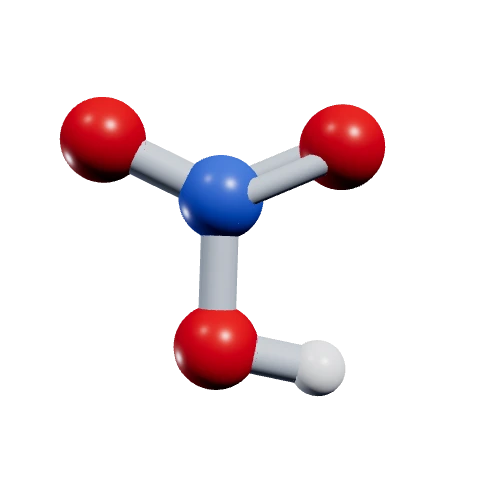


Nitric Acid Uses: 5% to 70% Applications
From 5% cleaning solutions to 70% ACS grade etchants, nitric acid drives critical industrial and laboratory processes.
Nitric acid — pick a concentration
65% is the standard reagent grade. 40% and 5% are pre-diluted for direct use.
Ships from Taylor, TX · SDS included · COA on request, no charge.
What is Nitric Acid (HNO3)?
Nitric acid (HNO3) is a highly corrosive, fuming mineral acid essential to metal finishing, laboratory synthesis, and industrial manufacturing. Unlike the weaker, unstable nitrous acid, nitric acid is a powerful oxidizing agent. When combined with hydrochloric acid, it forms a solution capable of dissolving noble metals. Whether you need a dilute 5% solution for equipment descaling or a 70% ACS grade for semiconductor etching, selecting the correct concentration of nitric is critical for operational success and safety.
In its pure form, nitric acid is a clear, colorless liquid. However, it often appears pale yellow due to the decomposition of the acid into nitrogen dioxide (NO2) over time or when exposed to light. It is highly soluble in water and miscible with most organic solvents, though mixing it with organic compounds requires extreme caution due to its oxidizing properties.
What are the differences between nitric acid and nitrous acid?
While their names are similar, nitric acid and nitrous acid behave very differently in chemical processes.
- Nitric Acid (HNO3): A strong, highly stable mineral acid and a powerful oxidizing agent. It fully dissociates in water and is manufactured on a massive industrial scale for fertilizers, explosives, and metal treatment.
- Nitrous Acid (HNO2): A weak, unstable acid that exists only in solution or as nitrite salts. It is typically generated in situ (on-site) for specific laboratory reactions, such as the preparation of diazonium salts from amines.
For industrial cleaning, etching, and passivation, nitric acid is the required chemical. Nitrous acid lacks the strength and stability for these applications.
How does nitric acid compare to hydrochloric acid?
Both nitric acid and hydrochloric acid are strong mineral acids, but they serve different primary functions due to their chemical behavior.
Hydrochloric acid is a non-oxidizing acid. It is highly effective at removing rust and scale from steel without heavily attacking the base metal, making it ideal for pickling. Nitric acid is a strong oxidizing acid. Instead of simply dissolving metal oxides, it actively oxidizes surfaces, which is why it is used for passivation and etching.
When nitric acid and hydrochloric acid are mixed together, they form aqua regia. This highly corrosive, fuming yellow mixture is one of the few reagents capable of dissolving noble metals like gold and platinum, a property utilized in precious metal recovery and analytical chemistry.
What are the industrial applications of nitric acid by concentration?
The utility of nitric acid depends entirely on its concentration. Using the wrong grade can lead to incomplete reactions or excessive material degradation.
- 5% Technical Grade: A dilute, fuming liquid used primarily for light descaling, pH adjustment, and specialized cleaning protocols where stronger oxidizers would damage equipment.
- 40% Technical Grade: A mid-strength clear, colorless liquid miscible with water and alcohol. It is heavily utilized in metal passivation, intermediate chemical synthesis, and industrial cleaning.
- 65% ACS Grade: A high-purity reagent with a boiling point of 121°C (249.8°F). It is the standard concentration for laboratory analytical work, wet chemistry, and precious metal refining.
- 70% ACS Grade - Low Particle: The highest standard concentration, boiling at 83°C (181.4°F). This grade is strictly controlled for trace impurities and is essential for semiconductor manufacturing, critical etching, and trace metal analysis.
How is nitric acid used for metal passivation and etching?
One of the most common industrial uses for nitric acid is the passivation of stainless steel. During machining and fabrication, free iron is deposited on the surface of stainless steel components. If left untreated, this iron will rust, compromising the integrity of the part.
Submerging the component in a nitric acid bath (typically using a 40% solution, diluted as per manufacturer specifications) dissolves the free iron. More importantly, the oxidizing nature of the acid promotes the formation of a thin, dense chromium oxide layer on the surface. This passive layer protects the steel from future corrosion.
In higher concentrations (65% to 70%), nitric acid is used as an etchant. It rapidly oxidizes and dissolves metals like copper, silver, and zinc, making it a staple in printed circuit board (PCB) manufacturing and jewelry making.
What are the safety, storage, and handling guidelines for nitric acid?
Nitric acid is a highly hazardous chemical. The 70% concentration is classified under Hazard Class 8 (Corrosive). It causes severe skin burns and eye damage upon contact. The fumes generated by concentrated nitric acid contain nitrogen oxides, which are highly toxic if inhaled.
Always store nitric acid in a cool, dry, well-ventilated area away from direct sunlight. Because it is a strong oxidizer, it must be strictly segregated from organic materials, reducing agents, and flammable solvents like acetone or methanol. Mixing nitric acid with organics can result in violent, explosive reactions.
Operators must wear appropriate personal protective equipment (PPE), including acid-resistant gloves, chemical splash goggles, and face shields. Always consult the specific product Safety Data Sheet (SDS) for exact UN numbers, packing groups, and emergency response procedures before handling.
| Concentration | Grade | Boiling Point | Appearance |
|---|---|---|---|
| 5% | Technical | 83°C (181.4°F) | Colorless, fuming liquid |
| 40% | Technical | 83°C (181.4°F) | Clear, colorless liquid |
| 65% | ACS Grade | 121°C (249.8°F) | Colorless to pale yellow |
| 70% | ACS Low Particle | 83°C (181.4°F) | Colorless to pale yellow |
| Acid | Formula | Primary Characteristic | Common Use |
|---|---|---|---|
| Nitric Acid | HNO3 | Strong Oxidizer | Passivation, Etching |
| Hydrochloric Acid | HCl | Non-Oxidizing | Descaling, Pickling |
| Nitrous Acid | HNO2 | Weak, Unstable | Diazonium Salt Synthesis |
Ready to order nitric acid?
Hazmat-trained packaging. SDS with every order; COA on request, no charge.
Call 512-365-6838 · Mon-Fri 8am-5pm CT · SDS included · COA on request, no charge
Frequently Asked Questions
What is the difference between nitric acid and nitrous acid?
Nitric acid (HNO3) is a strong, stable mineral acid and a powerful oxidizer used in industrial manufacturing. Nitrous acid (HNO2) is a weak, unstable acid that is typically generated on-site for specific laboratory reactions and cannot be stored long-term.
What happens when you mix nitric acid and hydrochloric acid?
Mixing nitric acid and hydrochloric acid creates aqua regia, a highly corrosive and fuming yellow liquid. This mixture is a powerful oxidizing agent capable of dissolving noble metals like gold and platinum.
What is HNO3 used for in industry?
HNO3 (nitric acid) is used for passivating stainless steel, etching printed circuit boards, refining precious metals, manufacturing fertilizers, and serving as a critical reagent in laboratory analytical chemistry.
Why does nitric acid turn yellow?
Over time, or when exposed to light and heat, nitric acid slowly decomposes into nitrogen dioxide (NO2) gas, water, and oxygen. The dissolved NO2 gas gives the liquid a yellow or brownish color.
What concentration of nitric acid is used for passivation?
Industrial passivation of stainless steel typically utilizes mid-range concentrations, such as 40% technical grade nitric acid, which is then diluted according to specific manufacturer or ASTM protocols to safely remove free iron.
Is nitric acid soluble in water?
Yes, nitric acid is highly soluble and completely miscible in water. It is also soluble in alcohols and most organic solvents, though mixing it with organics is extremely dangerous due to its oxidizing properties.
Alliance Chemical supplies high-purity nitric acid for industrial, laboratory, and manufacturing applications. From dilute technical grades to high-purity ACS reagents, our products meet strict quality standards. Browse our selection of Nitric Acid 70% ACS Grade - Low Particle, Nitric Acid 65% ACS Grade, Nitric Acid 40%, and Nitric Acid 5% to find the exact specification for your process.
Nitric Acid 70% ACS Grade - Low ParticleNitric Acid 65%ACS GradeNitric Acid 40%Related reading
Nitric Acid Fed Half the World, Powered Apollo, and Cracked Dynamite Wide Open — the cultural history — how the same molecule powered Apollo, funded the Nobel Prize, and feeds 4 billion people.
Related: Sulfuric Acid 96% ACS Grade: The Definitive Reference — sister oxidizing acid — comparison of HNO₃ vs H₂SO₄ for analytical work.
References & Authoritative Sources
Chemical identity, properties, and safety data sourced from the U.S. National Library of Medicine's PubChem database — the authoritative open-chemistry data resource maintained by the National Institutes of Health.
- PubChem CID 944: Nitric Acid 65%ACS Grade — National Center for Biotechnology Information, U.S. National Library of Medicine. CAS 7697-37-2.
- PubChem CID 313: Hydrochloric Acid 37% (HCL 37%) - Technical Grade — National Center for Biotechnology Information, U.S. National Library of Medicine. CAS 7647-01-0.
- PubChem CID 180: Acetone Technical Grade — National Center for Biotechnology Information, U.S. National Library of Medicine. CAS 67-64-1.
- PubChem CID 887: Methanol Technical Grade — National Center for Biotechnology Information, U.S. National Library of Medicine. CAS 67-56-1.
Products in this guide: Nitric Acid 20% · Nitric Acid 25%
Related: Hydrochloric Acid 37%: ACS Reagent vs Technical Grade — nitric acid uses.
Related: Bioreactor CIP Chemistry: Caustic Soda, Nitric Acid, Passivation and pH Control — nitric acid in bioreactor CIP and stainless passivation.
Related: Where to Buy Nitric Acid: Grades, Concentrations, Licensing and Shipping — if you now need to work out which concentration and grade to actually order.
Key numbers and sources
| Fact | Value | Source |
|---|---|---|
| Chemical formula of nitric acid | HNO3 | pubchem.ncbi.nlm.nih.gov |
| CAS number of nitric acid | 7697-37-2 | pubchem.ncbi.nlm.nih.gov |
| Molecular weight of nitric acid | 63.01 g/mol | pubchem.ncbi.nlm.nih.gov |
| Melting point of nitric acid | -42°C (-43.6°F) | pubchem.ncbi.nlm.nih.gov |
| Boiling point of 65% ACS grade nitric acid | 121°C (249.8°F) | See article text |
| Boiling point of 70% ACS grade nitric acid | 83°C (181.4°F) | See article text |
| Concentration of nitric acid used for stainless steel passivation | 40% technical grade | See article text |
Frequently asked questions
What is the difference between nitric acid and nitrous acid?
Nitric acid (HNO3) is a strong, stable mineral acid and a powerful oxidizer used in industrial manufacturing. Nitrous acid (HNO2) is a weak, unstable acid that is typically generated on-site for specific laboratory reactions and cannot be stored long-term.
What happens when you mix nitric acid and hydrochloric acid?
Mixing nitric acid and hydrochloric acid creates aqua regia, a highly corrosive and fuming yellow liquid. This mixture is a powerful oxidizing agent capable of dissolving noble metals like gold and platinum.
What is HNO3 used for in industry?
HNO3 (nitric acid) is used for passivating stainless steel, etching printed circuit boards, refining precious metals, manufacturing fertilizers, and serving as a critical reagent in laboratory analytical chemistry.
Why does nitric acid turn yellow?
Over time, or when exposed to light and heat, nitric acid slowly decomposes into nitrogen dioxide (NO2) gas, water, and oxygen. The dissolved NO2 gas gives the liquid a yellow or brownish color.
What concentration of nitric acid is used for passivation?
Industrial passivation of stainless steel typically utilizes mid-range concentrations, such as 40% technical grade nitric acid, which is then diluted according to specific manufacturer or ASTM protocols to safely remove free iron.
Is nitric acid soluble in water?
Yes, nitric acid is highly soluble and completely miscible in water. It is also soluble in alcohols and most organic solvents, though mixing it with organics is extremely dangerous due to its oxidizing properties.
Related Chemical Collections
About the author
Andre Taki
This article is for informational purposes only.


