

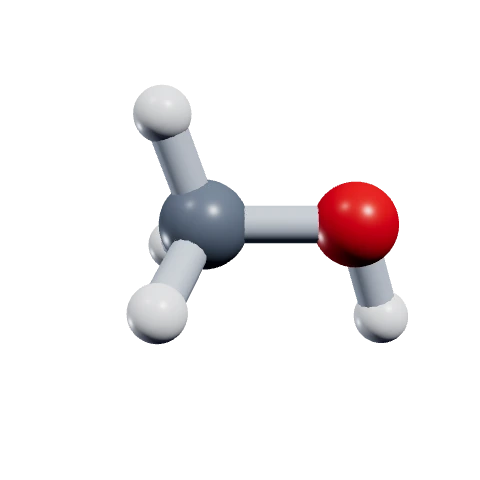


A plastic bottle and a gallon of antifreeze have a molecule in common. About a third of the weight of every PET bottle is ethylene glycol, locked into the polymer chain by ester bonds. Methanol can break those bonds. On 30 October, Eastman said the U.S. Department of Energy had reinstated the $375 million award it cancelled in 2025, and that the money will now go to running more of that reaction at the company’s plant in Kingsport, Tennessee.
This article sets out what was announced, what methanolysis does at the level of the molecule, and the arithmetic of how much methanol goes in and how much ethylene glycol comes out. It takes no position on industrial policy, on the cancellation or on the reinstatement; it reports the decision as Eastman, C&EN and Resource Recycling describe it. Where a number is our own arithmetic, we say so.
What did the Department of Energy reinstate for Eastman?
A $375 million federal award for Eastman’s methanolysis program, now aimed mostly at the existing Kingsport plant instead of a new one. C&EN’s 3 November business roundup put it in one sentence: “the US Department of Energy has reinstated a $375 million grant to Eastman Chemical to advance the firm’s methanolysis process for recycling polyester.” Eastman’s own third-quarter presentation is headed “DOE reinstates $375M award to fund a ~30% Kingsport methanolysis debottleneck and a milestone-based path to our second facility.”
| Date | What was reported | Source |
|---|---|---|
| Feb 2021 | Eastman announces a $250 million methanolysis plant at Kingsport, sized for more than 100,000 metric tons of waste polyester a year | Eastman LCA summary report, 2022 |
| Mar 2024 | Eastman announces the $375 million DOE award, then tied to a second plant at Longview, Texas | Resource Recycling, 30 May 2025 |
| May 2025 | DOE cancels the award in a wider round of grant cancellations; Eastman later delays the Texas plant | Resource Recycling, 30 May 2025 |
| 30 Oct 2026 | Eastman reports the award reinstated, with a revised scope: Kingsport capacity first, a second plant on milestones | Eastman Q3 2026 presentation; Resource Recycling, 30 Oct 2026 |
| 3 Nov 2026 | C&EN reports the reinstatement in its weekly business roundup | C&EN |
The money terms are in the presentation: “$375M reinstated grant (~$340M remaining after $35M previously received) with ~50% cost share by Eastman.” Resource Recycling’s report on the call adds the revised scope in plain words: “The money will go toward a previously announced capacity increase of about 30% at Eastman’s flagship methanolysis plant in Kingsport, through debottlenecking and technology advancements.” When the award was cancelled in 2025, the same outlet noted that “The $375 million grant represented about one-third of the required funding” for the Texas project.
What is methanolysis?
It is a reaction that uses methanol to cut a polyester back into its two starting molecules. Eastman’s life-cycle assessment summary describes the process as one in which waste polyesters are “unzipped (depolymerized) into their constituent monomers”, and says plainly: “The depolymerization occurs by reacting polyester waste with methanol.”
The chemistry is a transesterification. PET is a chain of terephthalic acid units and ethylene glycol units joined by ester bonds. A methanol molecule attacks one of those ester bonds; the terephthalate end takes the methyl group and becomes a methyl ester, and the glycol end is released with its hydroxyl group restored. Do that at both ester bonds of a repeat unit and the unit falls out of the chain as two separate molecules:
In formula terms, each C10H8O4 repeat unit plus two CH4O gives one C10H10O4 (DMT) and one C2H6O2 (ethylene glycol). The atoms balance exactly; nothing is thrown away in the equation itself. The reaction runs with a catalyst, and the 2026 ChemSusChem review of PET depolymerization surveys zinc, titanium and manganese systems among others. That review also gives the thermodynamics: “Although hydrolysis and methanolysis are thermodynamically spontaneous at ambient temperature”, their activation barriers are high, which is why the reaction needs heat and a catalyst to run at a useful rate.
The two products then have to be separated and purified. Eastman’s report describes the output as the “production of virgin-quality dimethyl terephthalate (DMT) and ethylene glycol (EG) monomers from a variety of waste polyethylene terephthalate sources.” The DMT goes back into Eastman’s own specialty polyesters. The ethylene glycol is a coproduct, and the report is frank about the difference in value: “DMT is a specialty material and EG is a commodity.”
How much methanol does it take to break down a ton of PET?
At minimum, about a third of a ton. The equation fixes the ratio: two molecules of methanol for every repeat unit of PET. PubChem lists the molar masses of methanol (32.042 g/mol), dimethyl terephthalate (194.18 g/mol) and ethylene glycol (62.07 g/mol); the PET repeat unit, C10H8O4, works out to 192.17 g/mol. The rest is our arithmetic.
| Per metric ton of PET | Mass | Basis |
|---|---|---|
| PET repeat units | 5.204 kmol | 1,000 kg ÷ 192.17 g/mol (our arithmetic) |
| Methanol consumed (minimum) | 333.5 kg | 2 × 5.204 kmol × 32.042 g/mol |
| Dimethyl terephthalate produced | 1,010.5 kg | 5.204 kmol × 194.18 g/mol |
| Ethylene glycol produced | 323.0 kg | 5.204 kmol × 62.07 g/mol |
| Check: mass in = mass out | 1,333.5 kg = 1,333.5 kg | Conservation of mass |
Two things in that table surprise people. First, the DMT that comes out weighs slightly more than the PET that went in, because each terephthalate unit picks up two methyl groups from the methanol. Second, the methanol consumed and the ethylene glycol released weigh almost the same: about 333 kg in, about 323 kg out. A ton of bottles takes a third of a ton of methanol and gives back a third of a ton of glycol.
Scale it to Kingsport for a sense of size. Eastman’s report says the plant “will have an annual capacity of recycling more than 100,000 metric tons of waste” polyester. If all of that were PET and the reaction ran to completion, the stoichiometric minimum would be about 33,000 metric tons of methanol a year in and about 32,000 metric tons of ethylene glycol a year out. A 30% increase would take those to roughly 43,000 and 42,000. These are illustrations, not Eastman figures: the real feed is a mix of polyesters, and no reaction runs to exactly 100%. The equation tells you the minimum that is used up, not how much methanol a plant keeps in circulation.
Is the glycol from a bottle the same as the glycol in antifreeze?
Yes. Ethylene glycol is one molecule, HOCH2CH2OH, whatever it was made from. Our guide to what polyester is made of traces it into the chain; methanolysis runs that step backwards. Once it is distilled to specification, glycol recovered from PET is chemically identical to glycol made from ethylene oxide, which is why Eastman’s report counts its recovered glycol as replacing conventional material. What differs from lot to lot is purity: water, residual methanol, other glycols and trace metals. That is a matter for the certificate of analysis, not the origin story.
Antifreeze is the best-known use of that molecule, which is why it surprises people that a third of a water bottle’s weight is the same compound. Our ethylene glycol complete guide covers its grades and coolant blends, and our coolant-versus-antifreeze explainer covers what is in the jug. The finished polymer and the free liquid are not interchangeable in handling, though: ethylene glycol is toxic if swallowed, and its sweet taste is the reason antifreeze is kept out of reach of children and animals.
How does methanolysis compare with glycolysis and hydrolysis?
All three break the same ester bond; they differ in what does the breaking, and so in what comes out. The ChemSusChem review groups them as alcoholysis (methanolysis is the methanol case), glycolysis and hydrolysis, alongside aminolysis and pyrolysis. Eastman’s own process diagram shows glycolysis and methanolysis side by side.
| Route | What cuts the chain | What comes out | Barrier, uncatalyzed (kJ/mol) |
|---|---|---|---|
| Methanolysis | Methanol | Dimethyl terephthalate (DMT) + ethylene glycol | 160–161 |
| Glycolysis | Ethylene glycol | Bis(2-hydroxyethyl) terephthalate (BHET) | Not given on this basis |
| Hydrolysis | Water (acid, base or neutral) | Terephthalic acid (TPA) + ethylene glycol | 165–180 |
| Aminolysis | Amines | Terephthalamide derivatives | 148–164 |
| Pyrolysis | Heat alone | Mixed fragments | 251–264 |
The barrier figures are the review’s summary of density functional theory calculations for reactions run without a catalyst; catalysts lower them in practice. The review gives one striking catalysed glycolysis result: with zinc acetate at 190°C, complete conversion of PET with 82% BHET yield within one minute. For a buyer, the products matter more than the barriers. Glycolysis uses ethylene glycol as the reagent and keeps it attached to the product. Hydrolysis gives terephthalic acid, the diacid itself. Methanolysis gives DMT, its dimethyl ester, plus free ethylene glycol; the review describes DMT as a feedstock for polyester polyols and specialty films.
What this means on a specification
Methanolysis is one more reason methanol and ethylene glycol sit next to each other in polymer and analytical labs. Anyone running bench trials, analysing recovered monomer or calibrating against it needs both molecules at a known purity. The table matches the work to the grades as they are named on our storefront.
| Work | Methanol grade | Ethylene glycol grade | What to check on the CoA |
|---|---|---|---|
| Bench depolymerization trials, catalyst screening | Methanol ACS Reagent Grade | Ethylene Glycol ACS Grade | Assay and water. Water is the reagent for a different route (hydrolysis) and gives a different product |
| Analytical standards, HPLC/GC of recovered monomer | Methanol ACS Reagent Grade | Ethylene Glycol ACS Grade | Assay, water, residue on evaporation |
| Electronics and semiconductor processing | — | Ethylene Glycol Semiconductor Grade | Trace metals, as listed for the grade |
| Solvent use, cleaning, fuel blending, freeze protection | Methanol Technical Grade | Inhibited blends for heat transfer | Assay; for coolants, the inhibitor package |
Methanol is toxic if swallowed, inhaled or absorbed through the skin, and highly flammable; it also burns with a flame that is nearly invisible in daylight, which we explain here. Read the safety data sheet, work with ventilation, gloves and eye protection, and keep ignition sources away. For the market side, our September report on why methanol is being squeezed from both ends covers the feedstock picture.
About supply. This article reports a grant decision and Eastman’s plans as published by Eastman, C&EN and Resource Recycling, and works through the chemistry from public data. Alliance Chemical has no connection to Eastman or to the projects described. The article makes no claim about ours: it does not say where the methanol or ethylene glycol we list is made, whether any of it comes from recovered polyester, or how this decision touches the supply or price of either chemical. Prices are on the product pages and change with pack size.
Common questions
What grant did the Department of Energy reinstate for Eastman?
A $375 million award for Eastman’s methanolysis process, first announced in March 2024 and cancelled in May 2025. Eastman reported its reinstatement on 30 October 2026. About $340 million remains after $35 million already received, Eastman covers about half the cost, and the money now goes first to a roughly 30% capacity increase at Kingsport, Tennessee.
What is methanolysis of PET?
A chemical reaction in which methanol breaks the ester bonds of polyethylene terephthalate. Each repeat unit of the polymer reacts with two methanol molecules and splits into one molecule of dimethyl terephthalate (DMT) and one of ethylene glycol. The products are separated and purified, and the DMT can be made into new polyester.
How much methanol is needed to depolymerize PET?
The stoichiometric minimum is about 333 kg of methanol per metric ton of PET, on our arithmetic from PubChem molar masses. That ton yields about 1,010 kg of DMT and 323 kg of ethylene glycol. That is the minimum the equation consumes; it is not a plant’s operating ratio.
Is ethylene glycol from recycled PET the same as antifreeze glycol?
It is the same molecule, HOCH2CH2OH. Once purified to specification it is chemically identical to glycol made from ethylene oxide. What varies between lots is purity, such as water, residual methanol and other glycols, which is what a certificate of analysis reports.
What is the difference between methanolysis, glycolysis and hydrolysis?
They break the same ester bond in PET with different reagents. Methanolysis uses methanol and gives DMT plus ethylene glycol. Glycolysis uses ethylene glycol and gives BHET. Hydrolysis uses water and gives terephthalic acid plus ethylene glycol. A 2026 ChemSusChem review compares their energy barriers and catalysts.
Does the Eastman grant change methanol or ethylene glycol supply?
The reporting does not say, and this article makes no forecast for the price or supply of either chemical. On our arithmetic, a plant of Kingsport’s stated size would consume tens of thousands of tons of methanol a year at most and release a similar mass of ethylene glycol, if all its feed were PET.
References & Authoritative Sources
The grant terms are from Eastman’s own presentation and trade-press reporting. The chemistry is from Eastman’s life-cycle assessment summary and a 2026 peer-reviewed review. Mass balances are our arithmetic from PubChem molar masses and are labelled in the article.
- Business Watch: US reinstates grant for Eastman PET recycling plant, and more — C&EN, 3 November 2026.
- Third-quarter 2026 conference call slides — Eastman, 30 October 2026. Award terms, cost share and revised scope.
- DOE reinstates $375m Eastman recycling grant — Resource Recycling, 30 October 2026. Kingsport scope; APR capacity figure.
- Texas plant in limbo after Eastman loses DOE grant — Resource Recycling, 30 May 2025. Award date and the 2025 cancellation.
- LCA summary report for Eastman methanolysis technology (North America) — Quantis and Eastman, January 2022. Process description, products, Kingsport capacity, Kodak history, feedstock.
- Transition Metal-Catalyzed Chemical Recycling and Upcycling of Polyethylene Terephthalate — S. Zhang, X. Yu, H. Wang, ChemSusChem 19(16), e70984, 2026. Routes, products, energy barriers, catalysts.
- Methanol, PubChem CID 887; Ethylene glycol, CID 174; Dimethyl terephthalate, CID 8441 — National Library of Medicine. Molar masses.
What we stock


Ethylene Glycol Semiconductor Grade
For electronics processing, with trace metals listed for the grade.
Running depolymerization or monomer analysis?
Tell us the reaction or method and the volumes you use. We will send the safety data sheet and, on request, the certificate of analysis for the lot you would receive, so you can check assay and water before the first run.
Read the ethylene glycol complete guideKey numbers and sources
| Figure | Value | Source |
|---|---|---|
| DOE award reinstated | $375M; ~$340M remaining; ~50% Eastman cost share | Eastman Q3 2026 presentation |
| Kingsport capacity increase | About 30% | Eastman; Resource Recycling |
| Kingsport design capacity | More than 100,000 metric tons of waste polyester a year | Eastman LCA summary report |
| Methanol per metric ton of PET (minimum) | 333.5 kg | Our arithmetic from PubChem molar masses |
| DMT and ethylene glycol per metric ton of PET | 1,010.5 kg and 323.0 kg | Our arithmetic |
| U.S. post-consumer PET processing capacity closed | About 25% in 18 months | APR, via Resource Recycling |
Frequently asked questions
What grant did the Department of Energy reinstate for Eastman?
A $375 million award for Eastman's methanolysis process, first announced in March 2024 and cancelled in May 2025. Eastman reported its reinstatement on 30 October 2026. About $340 million remains after $35 million already received, Eastman covers about half the cost, and the money now goes first to a roughly 30% capacity increase at Kingsport, Tennessee.
What is methanolysis of PET?
A chemical reaction in which methanol breaks the ester bonds of polyethylene terephthalate. Each repeat unit of the polymer reacts with two methanol molecules and splits into one molecule of dimethyl terephthalate (DMT) and one of ethylene glycol. The products are separated and purified, and the DMT can be made into new polyester.
How much methanol is needed to depolymerize PET?
The stoichiometric minimum is about 333 kg of methanol per metric ton of PET, on our arithmetic from PubChem molar masses. That ton yields about 1,010 kg of DMT and 323 kg of ethylene glycol. That is the minimum the equation consumes; it is not a plant's operating ratio.
Is ethylene glycol from recycled PET the same as antifreeze glycol?
It is the same molecule, HOCH2CH2OH. Once purified to specification it is chemically identical to glycol made from ethylene oxide. What varies between lots is purity, such as water, residual methanol and other glycols, which is what a certificate of analysis reports.
What is the difference between methanolysis, glycolysis and hydrolysis?
They break the same ester bond in PET with different reagents. Methanolysis uses methanol and gives DMT plus ethylene glycol. Glycolysis uses ethylene glycol and gives BHET. Hydrolysis uses water and gives terephthalic acid plus ethylene glycol. A 2026 ChemSusChem review compares their energy barriers and catalysts.
Does the Eastman grant change methanol or ethylene glycol supply?
The reporting does not say, and this article makes no forecast for the price or supply of either chemical. On our arithmetic, a plant of Kingsport's stated size would consume tens of thousands of tons of methanol a year at most and release a similar mass of ethylene glycol, if all its feed were PET.
Related Chemical Collections
About the author
Andre Taki
This article is for informational purposes only.