



On 21 September 2026 the US average retail price of on-highway diesel was $6.529 a gallon, up $2.78 on the same week a year earlier. Ten days before that, Saudi Arabia shut the East-West crude pipeline, the one export route that does not depend on the Strait of Hormuz, and Brent settled above $100 for the first time since May. None of that is a methanol story on its face. But three weeks earlier, on 26 August, Methanex had posted its North American methanol reference price for September at $4.25 a gallon. That is $1,414 a tonne. The same company’s posted price for Asia, published two days later, was $550 a tonne.
The two numbers sit on one sheet of paper, and the gap between them is the story. Methanol is the cheapest industrial alcohol there is, made from natural gas in enormous plants that run continuously for years. It does not usually make the news. It is making it now because the two things that set its price — where the molecules come from and who is pulling them — both moved in the same direction in the same year. This article is about the chemistry behind both moves, what a posted price actually tells you, and what any operation that buys methanol, potassium hydroxide or glycerin should check before the fourth quarter.
It is a market-structure piece. It takes no view on the conflict that started this, and it is not a recommendation to buy or sell anything on a schedule. Where a figure comes from a company’s own price sheet or a government series, that is what is cited, and the sources are listed at the end.
What happened, in order
The useful thing about this sequence is that each step has a date and a document behind it. It lets you separate the structural pressure, which will outlast the headlines, from the episodic one.
| When | What happened |
|---|---|
| 2025 | China imports about 14 million tonnes of methanol, 8.73 million of it from Iran — roughly 60% of its imports from one supplier. Iran produces about 10 million tonnes a year and exports 80–90% of it. |
| Early March 2026 | The Middle East conflict begins. Shipping through the Strait of Hormuz, which carries about 35% of seaborne methanol, is disrupted. Strikes on Iranian gas infrastructure cut the feedstock and energy that Iranian methanol plants run on. |
| 1–10 March 2026 | The SunSirs benchmark methanol price in China rises 33% in ten days, from 2,200 to 2,925 yuan a tonne. |
| 27 March 2026 | The US EPA sets renewable volume obligations for 2026 “significantly higher” than 2025. Biomass-based diesel credits (D4 RINs) move toward their 2021 highs. |
| 2 April 2026 | Fitch Ratings: Chinese coal-based and North American gas-based methanol producers “should see near-term margin uplift as conflict in the Middle East tightens supply and pushes prices higher.” |
| 8 April 2026 | A ceasefire is announced. Traffic through Hormuz stays far below pre-conflict levels. |
| 10 June 2026 | EIA forecasts 2026 US biodiesel production up 41% and renewable diesel up 24% on 2025, driven by the higher mandates. D4 RIN: $2.41. |
| 28 July 2026 | Methanex reports a Q2 average realized price of $529 a tonne, against $351 in Q1 and $374 a year earlier, with record North American production. It calls the conflict’s effect on methanol “unprecedented” and guides July–August realized prices to $460–485. |
| 26 August 2026 | Methanex posts its September North American reference price: $4.25 a gallon, $1,414 a tonne, down 20 cents from August. Asia is posted at $550 a tonne, China at $525. |
| 11 September 2026 | Saudi Arabia closes the East-West crude pipeline — up to 5 million barrels a day of Hormuz-bypass capacity to Yanbu — after drone attacks. Brent settles above $100 for the first time since May. |
| 21 September 2026 | EIA weekly retail diesel: $6.529 a gallon, up 24.4 cents in a week and $2.78 in a year. EIA’s September outlook has US distillate stocks falling below 100 million barrels this month. |
Read the table twice. The first time, notice how much of the supply story was already in place by April. The second time, notice that the demand story — the biofuel mandates — has nothing to do with the conflict at all. It was set by a rule published in March, and it would have pulled on methanol whether or not a single tanker had been delayed.
Where methanol comes from, and why one strait matters
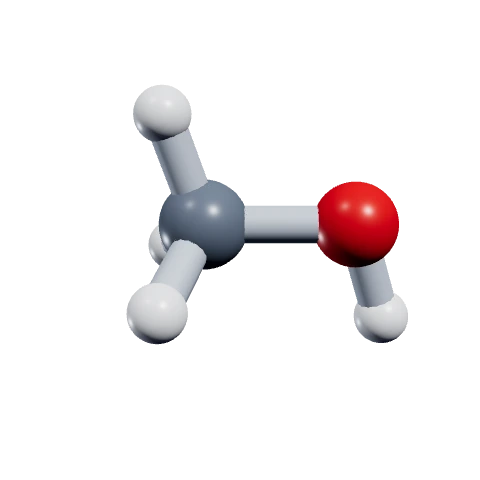
Methanol is made almost entirely from natural gas, and to a lesser extent from coal. The chemistry is a two-step: steam reforming turns methane and water into a mixture of hydrogen and carbon monoxide called synthesis gas, and a copper-zinc catalyst at around 50 to 100 atmospheres then joins them into CH3OH. Because the raw material is gas, the plants are built where gas is cheap and stranded — the Gulf Coast of the United States, Trinidad, the Persian Gulf, and in China’s case on top of coal fields.
That geography is why the supply side moved. Iran is the world’s second-largest producer after China, at roughly 10 million tonnes a year, and because domestic demand is small it exports 80 to 90% of what it makes. The main customer is China, which imported 8.73 million tonnes of Iranian methanol in 2025, about 60% of everything it brought in. Since February, according to a University of Westminster analysis published in May, those exports have “effectively ceased”, and with them a bit over 30% of global seaborne methanol supply. The strait itself carries about 35% of that seaborne trade in a normal year.
The consequence for a North American buyer is indirect but real. China backfilled from its own coal-based plants and bid for cargoes that would otherwise have gone elsewhere. Every producer outside the Gulf saw its margin widen, which is precisely what a credit-rating agency was predicting back in April. And North American production, concentrated in gas-based complexes on the Louisiana coast, became the marginal supply for buyers who used to look east. Methanex’s Geismar complex ran at a record 1.03 million tonnes in the second quarter alone.
The one-sentence version. When a third of a commodity’s seaborne trade stops moving, the price is set by whoever can still load a ship, and in 2026 that is the US Gulf Coast.
What a posted price is, and what it is not
The $4.25 figure needs handling carefully, because it is easy to misread in both directions. Methanex publishes a monthly “Non-Discounted Reference Price” for North America, quoted in dollars per gallon and converted to tonnes at 332.6 gallons per tonne. That is a list price. Contract buyers pay a negotiated discount from it, and the discount is large and variable. The same company told investors in July that it expected to realize about $460 to $485 a tonne across July and August, when its posted price for those months was in the region of $4.45 a gallon, or roughly $1,480 a tonne. In other words, the realized price was running at about a third of the posted one.
So the posted price is not what a tonne of methanol costs. What it does tell you is the direction and the scale of the move, because the discounts do not swing nearly as far as the headline does. Realized prices went from $351 in the first quarter to $529 in the second, a rise of just over 50%. The China benchmark on 22 September stood at 3,505 yuan a tonne, 19% higher than a month earlier and 56% higher than a year earlier. Whatever the discount off list, that is the slope of the floor under it.
| Region (Methanex posted, valid September 2026) | Price | Per tonne | Change vs August |
|---|---|---|---|
| North America (US Gulf Coast) | $4.25 / gal | $1,414 | −$0.20 / gal |
| Asia Pacific | — | $550 | unchanged |
| China | — | $525 | unchanged |
| Europe (Q3, July–September) | — | €915 | +€65 vs Q2 |
Two things stand out. The North American number came down 20 cents for September, consistent with the ceasefire and with record Gulf Coast output reaching the market. And the Asian and Chinese posted prices did not move at all, at well under half the North American list. That looks backwards until you remember what a posted price is: in Asia the contract price is close to a transaction price, in North America it is the reference a discount is negotiated from. Comparing the two directly is the most common error in this market.
Why a diesel record pulls on methanol
This is the part that most coverage of the diesel price has missed. When distillate is expensive and the federal blending mandate is high, the economics of making biodiesel improve twice over: the fuel it displaces is worth more, and the credit for blending it (the D4 RIN) trades near its record. EIA’s June note put the mechanism plainly: RIN prices rise with high volume obligations “to reflect the higher profit margins biofuel producers need as incentive to produce enough fuel to meet mandates.” Its forecast is for US biodiesel production to be 41% higher in 2026 than in 2025, and renewable diesel 24% higher.
Biodiesel is made by transesterification, and transesterification consumes methanol. The Department of Energy’s Alternative Fuels Data Center describes the mass balance in one sentence: about 100 pounds of oil or fat react with 10 pounds of a short-chain alcohol, usually methanol, in the presence of a catalyst, usually sodium hydroxide or potassium hydroxide, to give 100 pounds of biodiesel and 10 pounds of glycerin. A triglyceride is three fatty-acid chains on a glycerol backbone; the methoxide ion formed when hydroxide meets methanol swaps each chain off the glycerol and onto a methanol, giving three fatty-acid methyl esters — the fuel — and one free glycerol.
| Input or output | Per 100 lb of oil (DOE mass balance) | Per 40-gallon farm batch (Tennessee State Extension) | Role |
|---|---|---|---|
| Vegetable oil or fat | 100 lb | ~40 gal | Triglyceride feedstock |
| Methanol | 10 lb | ~8 gal | The alcohol that becomes the ester; used in about 100% excess to drive the reaction, then partly recovered |
| Potassium hydroxide (or sodium hydroxide) | catalytic, ~1% of oil weight | ~4 lb | Forms methoxide; not consumed in theory, lost to soap and the glycerin phase in practice |
| Biodiesel (methyl esters) | 100 lb | ~40 gal | The product |
| Crude glycerin | 10 lb | ~4 gal | Coproduct, carrying most of the catalyst, water and excess methanol |
Stoichiometrically the reaction needs three methanol molecules per triglyceride, a 3:1 molar ratio. In practice plants run around 6:1, a 100% excess, because transesterification is reversible and the excess alcohol pushes it to completion and keeps the glycerin phase separating cleanly. The surplus is distilled off and reused, so the net consumption comes out close to the 10:100 figure — but the plant still has to hold twice that in inventory to run.
Now put the two halves together. Tennessee State University’s extension service, in its farm-scale costing, works from about 8 gallons of methanol per 40-gallon batch of biodiesel, which is one fifth of a gallon of methanol per gallon of fuel. At the $1.80 methanol it assumed, that is $0.36 of methanol in every gallon. Arithmetic on the same ratio at the September posted price of $4.25 gives $0.85 a gallon, and even at a heavily discounted contract price the methanol line has roughly doubled since last winter. The catalyst is smaller but not nothing: the same costing uses about 4 pounds of potassium hydroxide per 40-gallon batch, about $0.24 a gallon at the price it quotes.
The demand side does not need the conflict. A 41% increase in biodiesel output means roughly 41% more methanol consumed by that sector, whatever is happening in the Gulf. The two pressures happen to have arrived in the same year, and they are additive.
Why methanol and not ethanol, and why potassium and not sodium
Buyers sometimes ask why the industry does not switch alcohols when methanol gets expensive. Ethanol works chemically — the product is an ethyl ester — but it is more expensive per mole of alcohol, the ethyl esters separate from glycerin less cleanly, and the reaction is slower at the same temperature. So essentially all commercial biodiesel is methyl ester, and the sector’s methanol demand is not price-elastic in the short run. If you have a plant, you buy the methanol.
The catalyst choice is a similar trade-off. Sodium hydroxide is cheaper per pound and more concentrated in base per pound — the molar mass is 40 against 56 for potassium hydroxide, so a kilogram of NaOH carries 40% more hydroxide. Potassium hydroxide, on the other hand, dissolves in methanol faster and more completely, the potassium soaps it forms are more soluble and separate into the glycerin phase rather than gelling the fuel, and a potassium-bearing glycerin stream is easier to neutralize with an acid to a usable fertilizer salt. Plants pick on their feedstock and their glycerin disposition, which is why both catalysts stay in the market and why an extension costing for a farm batch defaults to KOH.
Both are strong bases, and both form the methoxide that does the work when they meet methanol. What neither forgives is water: water in the methanol or the oil hydrolyzes ester back to fatty acid and drives the catalyst into soap, which is why the specification that matters most on the methanol side is not the assay but the water content.
What the glycerin side is doing
Every tonne of biodiesel throws off about a hundred kilograms of glycerin, so a 41% rise in biodiesel output is also a rise in crude glycerin supply. Historically that has meant a glut whenever biodiesel booms. Refined technical and USP glycerin are distilled and bleached from that crude, and their price follows refining capacity and end-use demand more than the crude glut — but the same rule that is tightening methanol is loosening the raw material for glycerin, and the two show up in the same purchasing budget more often than people expect.
What this means on a specification
None of this changes which grade of methanol you need. It changes what you should check, and when.
| Application | What to specify | What actually moves the result |
|---|---|---|
| Transesterification (biodiesel) | Technical methanol, water content stated on the certificate | Water. Above roughly 0.1% it starts costing you catalyst as soap and yield as free fatty acid. |
| HPLC, LC-MS, aflatoxin extraction | ACS reagent grade; for aflatoxin work the pre-mixed 60/40 methanol–DI water solution | UV absorbance and non-volatile residue, not the assay figure. A 99.8% technical lot can fail a reagent spec on a single absorbance point. |
| Fuel cell and generator feed | Technical methanol; check the equipment maker’s water and chloride limits | Chloride and metals poison the reformer catalyst. Ask for them on the certificate, not the assay. |
| Freeze branding, windshield fluid, antifreeze blends | Technical methanol | Nothing on the certificate beyond assay and water. Buy the container size that matches your burn rate. |
| Catalyst make-up | Potassium hydroxide flake, technical; state the KOH assay (nominally 90%) and carbonate | Carbonate. KOH pulls carbon dioxide from air, and potassium carbonate does not make methoxide. Keep the bag sealed. |
Three practical points follow from the market rather than the chemistry.
First, separate the posted price from your price. If a supplier quotes you a change “in line with Methanex”, ask which number they mean. A 20-cent move on a $4.25 posted price is under 5%; a $178-a-tonne move on a $351 realized price is over 50%. Both were true in 2026, and they are not the same thing.
Second, the certificate matters more when the market is tight. When cargoes are scarce, material moves through more hands and more tanks, and water content is the parameter that drifts. Request the certificate of analysis for the lot you are receiving rather than the typical values on the data sheet, and read the water line first.
Third, size the container to the reaction, not the price. Methanol is a Class 3 flammable liquid with a toxic subsidiary hazard (UN 1230), and potassium hydroxide flake is a Class 8 corrosive solid (UN 1813). Neither should be bought ahead of need on the strength of a price chart; a 55-gallon drum that sits for a season absorbs water through every vent, and a bag of KOH that sits open absorbs carbon dioxide. Buy what the next batch needs, with the paperwork that lets you prove what it was when it arrived.
A word on what this article does not say. It describes where the world’s methanol is produced and which routes are constrained. It makes no claim about ours — where the methanol, potassium hydroxide or glycerin we list is manufactured, or how our own inventory position is affected. Nobody writing this has verified either, and a market-structure article is the wrong place to guess.
Common questions
Why is North American methanol posted at $1,414 a tonne when Asia is posted at $550?
Because the two prices are different kinds of number. The Methanex North American figure is a Non-Discounted Reference Price, a list from which contract customers negotiate a discount, and the discount is large: the company guided investors to realized prices of $460–485 a tonne for July and August 2026 when its posted price was around $1,480. The Asian and Chinese posted contract prices are much closer to transaction prices. Compare posted to posted over time for direction, and realized to realized for level.
How much methanol does a gallon of biodiesel actually use?
About one fifth of a gallon net. The Department of Energy’s Alternative Fuels Data Center gives the mass balance as roughly 100 pounds of oil plus 10 pounds of methanol yielding 100 pounds of biodiesel and 10 pounds of glycerin, and Tennessee State University’s farm-scale costing uses about 8 gallons of methanol per 40-gallon batch. Plants charge methanol at around twice that ratio to drive the reaction and recover the excess by distillation.
Does the diesel price directly set the methanol price?
No. Methanol is made from natural gas, not crude oil, so its cost of production does not follow diesel. The link is through demand: a high diesel price and high federal blending mandates make biodiesel more profitable to produce, and biodiesel consumes methanol. In 2026 that demand pull arrived in the same year as the loss of Iranian export supply, which is why both are in the price.
Can biodiesel plants switch to ethanol or to sodium hydroxide to save money?
Ethanol works chemically but is more expensive per mole, reacts more slowly and separates from glycerin less cleanly, so commercial biodiesel is overwhelmingly methyl ester. Sodium hydroxide is a routine substitute for potassium hydroxide and carries more base per pound; potassium hydroxide dissolves in methanol more readily, forms more soluble soaps and gives a glycerin stream that is easier to neutralize. Plants choose on feedstock and on what they do with the glycerin, not on the alcohol.
Should I expect a methanol shortage in the United States?
The public data does not show one. North American gas-based plants ran at record rates in the second quarter of 2026, and the September posted price came down 20 cents from August. What the data shows is a higher price level and a market where cargoes that once flowed to Asia from the Gulf are now competing with North American buyers for the same output. Plan for price, and for the certificate, rather than for absence.
Which grade of methanol do I need?
For transesterification, fuel blending, freeze branding and general solvent use, technical methanol with the water content stated on the certificate. For chromatography, spectroscopy and analytical extraction, ACS reagent grade, which is specified on UV absorbance and residue as well as assay. For aflatoxin and mycotoxin extraction, the pre-mixed 60/40 methanol–deionized water solution removes a mixing step and a source of error. Tell your supplier the application and the parameter you are measured against, and ask for that parameter on the certificate.
References & Authoritative Sources
Methanol prices are from Methanex’s own price sheet and quarterly results; diesel, inventory and biofuel figures are from the US Energy Information Administration; the mass balance is from the US Department of Energy.
- Methanex Methanol Price Sheet, 28 August 2026 (PDF) — North America valid 1–30 September 2026: US Gulf Coast USD 4.25/gal, Methanex Non-Discounted Reference Price USD 1,414/MT, posted 26 August 2026, change vs last month −0.2/gal; Asian Posted Contract Price USD 550/MT; China USD 525/MT; European Posted Contract Price €915/MT for Q3. Conversion 332.6 gal per MT.
- Methanex Reports Record North American Production and Second Quarter 2026 Earnings — Methanex Corporation, 28 July 2026. Average realized price $529/tonne in Q2 2026 against $351 in Q1 2026 and $374 in Q2 2025; Geismar record 1,027,000 tonnes; “unprecedented impact” language; July–August realized guidance of $460–485/tonne.
- Gasoline and Diesel Fuel Update — US Energy Information Administration, week of 21 September 2026. US on-highway diesel $6.529/gal, +$0.244 on the week, +$2.780 on the year.
- Short-Term Energy Outlook, September 2026 — Petroleum products — US Energy Information Administration. Distillate inventories forecast to fall below 100 million barrels in September and to remain below the 2021–2025 low through 2026 and most of 2027; retail diesel forecast $5.07/gal for 2026 and $4.40 for 2027.
- Higher blending targets drive RIN prices close to record highs — US Energy Information Administration, Today in Energy, 10 June 2026. 2026 forecasts: biodiesel production +41%, renewable diesel +24%, fuel ethanol +2%; D4 RIN $2.41 on 4 June; renewable volume obligations announced 27 March 2026.
- Biodiesel Production and Distribution — US Department of Energy, Alternative Fuels Data Center. “Approximately 100 pounds of oil or fat are reacted with 10 pounds of a short-chain alcohol (usually methanol) in the presence of a catalyst (usually sodium hydroxide [NaOH] or potassium hydroxide [KOH]) to form 100 pounds of biodiesel and 10 pounds of glycerin.”
- Economics of On-Farm Biodiesel Production (ANR-B11, PDF) — Tennessee State University Cooperative Extension, 2014. About 8 gallons of methanol per 40-gallon batch; at $1.80/gal, $0.36 of methanol per gallon of biodiesel; about 4 pounds of potassium hydroxide per batch.
- Methanol, pistachios and cement: the other Iranian exports being choked — Farhang Morady, University of Westminster, The Conversation, 26 May 2026. Iran at roughly 10 million tonnes a year, second-largest supplier after China; exports “effectively ceased” since February 2026; over 30% of global seaborne supply removed; China imported around 14 million tonnes in 2025.
- Methanol Trade and Maritime Shipping Amidst the Middle East Conflict — SunSirs, 10 March 2026. China imported 8.73 million tonnes from Iran in 2025, 60.42% of its imports; Iran exports 80–90% of output; about 35% of seaborne methanol transits Hormuz; benchmark price 2,200 to 2,925 yuan/tonne, 1–10 March.
- Methanol Producer Margins to Widen as Supply Tightens — Hellenic Shipping News, 2 April 2026, reporting Fitch Ratings. The margin-uplift quotation for Chinese coal-based and North American gas-based producers.
- Methanol — price, chart, historical data — Trading Economics, read 22 September 2026: 3,505 CNY/tonne, +19.26% on the month, +55.64% on the year.
- Oil prices rise after Saudi Arabia shuts down critical pipeline that bypasses Strait of Hormuz — CNBC, 13 September 2026; and Why the East-West pipeline closure matters — CNN Business, 14 September 2026. Closure announced 11 September after drone attacks; up to 5 million barrels a day to Yanbu; Brent’s first settle above $100 since May.
- Methanol Fuel Cells and Generators — Alliance Chemical. The evergreen methanol hub this article hangs from: grades, water and chloride limits, and the fuel-cell use case.
- Potassium Hydroxide (KOH): Uses, Grades and Safety — Alliance Chemical. The catalyst side, including why the flake pulls carbon dioxide from air.
The three we stock

The transesterification and fuel-blending grade. Quart to 330-gallon tote; ask for water content on the certificate.

For chromatography, spectroscopy and extraction, where UV absorbance and residue are specified, not just assay.

Potassium Hydroxide (KOH) Technical Grade
The catalyst flake. 2 lb to 55 lb bags; keep it sealed, because carbonate does not make methoxide.
Not sure whether your process needs technical or reagent grade?
Tell us the application, the parameter you are measured against and the container size you receive, and we will tell you whether technical grade does the job or whether the reagent purity is actually buying you something. Tell us what the material has to do and what paperwork has to come with it, and we will tell you what fits — that is the right answer, not the nearest thing in stock.
See methanol grades and sizesKey numbers and sources
| Number | What it is | Source |
|---|---|---|
| $4.25 / gal = $1,414 / MT | Methanex North America Non-Discounted Reference Price, September 2026, posted 26 Aug; −$0.20 vs August | Methanex price sheet |
| $351 → $529 | Methanex average realized price per tonne, Q1 to Q2 2026 (Q2 2025: $374) | Methanex Q2 2026 results |
| ~10 Mt/yr; 80–90% exported | Iranian methanol production and export share | The Conversation; SunSirs |
| 8.73 Mt = 60.42% | China’s 2025 methanol imports from Iran, and their share of its total imports | SunSirs |
| +41% / +24% | EIA 2026 forecast: US biodiesel and renewable diesel production vs 2025 | EIA, 10 June 2026 |
| 100 : 10 → 100 : 10 | Pounds of oil and methanol in, pounds of biodiesel and glycerin out | DOE AFDC |
| $6.529 / gal | US on-highway diesel, week of 21 September 2026; +$2.78 on the year | EIA weekly |
Related: Same Owner, Same Catalyst, Twelve Times the Gas: Why Europe's Last Acetic Acid Plants Went Dark — methanol is 534 kg of every tonne of acetic acid, so the squeeze reaches the acetyls chain.
Frequently asked questions
Why is North American methanol posted at $1,414 a tonne when Asia is posted at $550?
Because the two prices are different kinds of number. The Methanex North American figure is a Non-Discounted Reference Price, a list from which contract customers negotiate a discount, and the discount is large: the company guided investors to realized prices of $460–485 a tonne for July and August 2026 when its posted price was around $1,480. The Asian and Chinese posted contract prices are much closer to transaction prices. Compare posted to posted over time for direction, and realized to realized for level.
How much methanol does a gallon of biodiesel actually use?
About one fifth of a gallon net. The Department of Energy's Alternative Fuels Data Center gives the mass balance as roughly 100 pounds of oil plus 10 pounds of methanol yielding 100 pounds of biodiesel and 10 pounds of glycerin, and Tennessee State University's farm-scale costing uses about 8 gallons of methanol per 40-gallon batch. Plants charge methanol at around twice that ratio to drive the reaction and recover the excess by distillation.
Does the diesel price directly set the methanol price?
No. Methanol is made from natural gas, not crude oil, so its cost of production does not follow diesel. The link is through demand: a high diesel price and high federal blending mandates make biodiesel more profitable to produce, and biodiesel consumes methanol. In 2026 that demand pull arrived in the same year as the loss of Iranian export supply, which is why both are in the price.
Can biodiesel plants switch to ethanol or to sodium hydroxide to save money?
Ethanol works chemically but is more expensive per mole, reacts more slowly and separates from glycerin less cleanly, so commercial biodiesel is overwhelmingly methyl ester. Sodium hydroxide is a routine substitute for potassium hydroxide and carries more base per pound; potassium hydroxide dissolves in methanol more readily, forms more soluble soaps and gives a glycerin stream that is easier to neutralize. Plants choose on feedstock and on what they do with the glycerin, not on the alcohol.
Should I expect a methanol shortage in the United States?
The public data does not show one. North American gas-based plants ran at record rates in the second quarter of 2026, and the September posted price came down 20 cents from August. What the data shows is a higher price level and a market where cargoes that once flowed to Asia from the Gulf are now competing with North American buyers for the same output. Plan for price, and for the certificate, rather than for absence.
Which grade of methanol do I need?
For transesterification, fuel blending, freeze branding and general solvent use, technical methanol with the water content stated on the certificate. For chromatography, spectroscopy and analytical extraction, ACS reagent grade, which is specified on UV absorbance and residue as well as assay. For aflatoxin and mycotoxin extraction, the pre-mixed 60/40 methanol–deionized water solution removes a mixing step and a source of error. Tell your supplier the application and the parameter you are measured against, and ask for that parameter on the certificate.
Related Chemical Collections
About the author
Andre Taki
This article is for informational purposes only.


