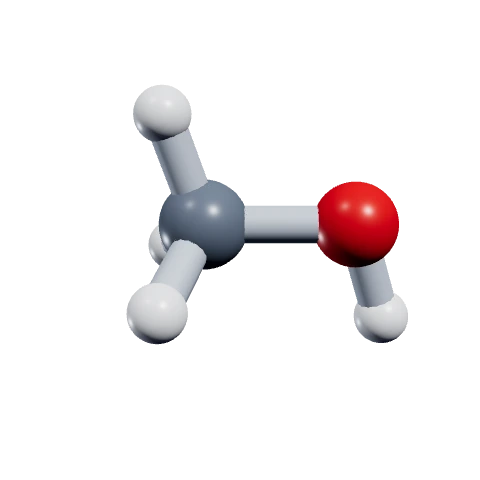
Alcohols

IPA, Methanol & Denatured Alcohol — 70% to 200 proof

26 Products
Sort by:: Best Selling
Sort by: Best Selling

FILTERS

Chemical name
  • (4)
  • (5)
  • (2)
  • (8)
  • (2)
  • (2)
  • (1)
  • (2)
Grade
  • (5)
  • (3)
  • (13)
  • (5)
Percentage
  • (1)
  • (3)
  • (2)
  • (1)
  • (1)
  • (1)
  • (2)
  • (3)
  • (1)
  • (1)
  • (7)
Form
  • (22)
Industry
  • (7)
  • (4)
  • (6)
  • (6)
  • (3)
  • (10)
  • (20)
  • (5)
  • (7)

About Alcohols

About Alcohols

Alcohols are a diverse class of organic compounds characterized by one or more hydroxyl (-OH) groups attached to a carbon atom, serving as foundational solvents and reagents across industrial chemistry. This collection includes high-purity Isopropyl Alcohol (CAS 67-63-0), Ethanol (CAS 64-17-5), and Methanol (CAS 67-56-1), provided in grades ranging from technical to ACS Reagent. These compounds are essential for applications requiring controlled evaporation rates, high solvency for polar and non-polar solutes, and reliable antimicrobial efficacy.

Common Applications

  • Electronics Cleaning: Removing flux residues and contaminants from sensitive PCBs and sensors using 99% or 99.9% anhydrous grades to prevent corrosion.
  • Surface Disinfection: Utilizing 70% USP concentrations for pharmaceutical and clinical sanitation, as this specific dilution optimizes cellular penetration in microorganisms.
  • Botanical Extraction: Deploying 200 proof food-grade ethanol or high-purity methanol for the recovery of essential oils, cannabinoids, and bioactive compounds.
  • Laboratory Analysis: Preparing mobile phases for HPLC and standard solutions for aflatoxin testing using ACS Reagent Grade methanol.
  • Fuel and Energy: Serving as a primary feedstock for direct methanol fuel cells (DMFC) and specialized high-performance combustion engines.
  • Wood Finishing: Using 200 proof denatured alcohol as a fast-evaporating solvent for shellac flakes and as a cleaner for fine woodworking.
  • Industrial Degreasing: Employing technical grade IPA for heavy-duty metal preparation and surface tension reduction in coating processes.

What We Carry

Alliance Chemical supplies alcohols in multiple purity tiers to meet the rigorous standards of specific industries. We offer packaging from 1-quart bottles to 275-gallon IBC totes, ensuring scalability for both R&D labs and high-volume manufacturing facilities.

Grade Purity Best For
ACS Reagent >99.9% Analytical laboratory testing, HPLC, and high-spec electronics manufacturing.
USP / NF Conforms to USP Medical disinfection, pharmaceutical formulation, and personal care products.
Denatured 95-100% Industrial cleaning, shellac solvent, and fuel applications (non-beverage).
Technical 99%+ General degreasing, industrial processing, and large-scale manufacturing.

Safety & Handling

Alcohols are classified as highly flammable liquids, typically categorized as GHS02 Flame and GHS07 Exclamation Mark; Methanol carries the additional GHS06 Skull and Crossbones due to acute toxicity. Handling requires the use of chemical-resistant nitrile or butyl gloves, splash-proof goggles, and operation within a well-ventilated area or fume hood to mitigate inhalation risks. Storage must comply with NFPA 30 (Flammable and Combustible Liquids Code), requiring cool, dry environments away from strong oxidizers and ignition sources. These products are regulated under OSHA 29 CFR 1910.1200 for hazard communication and DOT 49 CFR for hazardous material shipping. In the event of skin contact, flush with water for 15 minutes; for eye exposure, seek immediate medical attention. Link to SDS: Safety Data Sheets

Sourcing & Quality

Shipped from Taylor, Texas — same-day on in-stock items.

COA included with every order. Certificate of Analysis documents lot-specific purity and specifications.

28 years serving 55,000+ customers including 244 federal contracts.

✓ SDS Included ✓ COA Available ⚡ Same-Day Shipping ★ No Minimum Order

Last updated: March 2026

Frequently Asked Questions

What is the difference between 70%, 91%, and 99% Isopropyl Alcohol?
The primary difference lies in the water content and evaporation rate: 99% IPA is an anhydrous solvent used for electronics and moisture-sensitive applications, while 70% IPA contains 30% purified water, which slows evaporation and allows the alcohol to penetrate cell walls more effectively for disinfection. According to clinical standards, 70% is the optimal concentration for antimicrobial activity, whereas 99% is preferred for technical cleaning where residue or water must be avoided.
Is denatured alcohol safe for use in food-contact surface cleaning?
Denatured alcohol contains chemical additives (denaturants) like heptane or methanol to make it unfit for human consumption, and its use on food-contact surfaces depends on the specific denaturant used. For food-processing environments, it is often safer to use USP Grade Isopropyl Alcohol or FCC Grade Ethanol, ensuring compliance with FDA 21 CFR standards for food contact substances. Always verify the denaturant list on the Certificate of Analysis (COA) before use in sensitive areas.
How should bulk Methanol be stored to comply with NFPA standards?
Methanol must be stored in accordance with NFPA 30 as a Class IB Flammable Liquid, requiring a cool, well-ventilated area away from direct sunlight and incompatible materials like strong oxidizers (e.g., Nitric Acid). Bulk containers such as 55-gallon drums must be grounded and bonded during liquid transfer to prevent static discharge, which is a significant ignition risk for methanol's low flash point of approximately 11-12°C (52-54°F). OSHA 1910.106 provides further mandates on the use of safety cans and fire-resistant storage cabinets.
Why is Isopropyl Alcohol 99.9% ACS Reagent Grade required for electronics?
ACS Reagent Grade IPA (CAS 67-63-0) ensures a purity level exceeding 99.9% with extremely low levels of non-volatile residues, which is critical for semiconductor and PCB manufacturing. Lower grades may contain trace oils or minerals that leave conductive or corrosive deposits on sensitive circuitry after the alcohol evaporates. Using high-purity ACS grade prevents micro-shorts and ensures the integrity of conformal coatings.
What are the DOT shipping requirements for Isopropyl Alcohol?
Under DOT 49 CFR Part 172, Isopropyl Alcohol is classified as a Class 3 Flammable Liquid, UN1219, Packing Group II. Shipments must be properly labeled, documented with a hazardous materials manifest, and packaged in UN-rated containers. Small quantities may qualify for 'Limited Quantity' exceptions, but bulk shipments of 55-gallon drums or larger require specialized hazmat carriers and placards.
Can Methanol be used for botanical extraction processes?
Methanol is a potent solvent often used in industrial and laboratory-scale botanical extractions because of its high polarity and efficiency in recovering targeted compounds; however, it is highly toxic and requires stringent purging steps. Extractors must ensure residual solvent levels meet state or federal safety limits, often preferring Ethanol over Methanol for consumer products due to the lower toxicity profile of Ethanol. OSHA 29 CFR 1910.1000 sets strict Permissible Exposure Limits (PEL) for methanol vapor in the workspace.
What is the shelf life of high-purity alcohols in sealed containers?
Most high-purity alcohols like Isopropyl Alcohol and Methanol have a recommended shelf life of 2 to 5 years when stored in their original, sealed containers under climate-controlled conditions. Over time, alcohols can absorb atmospheric moisture (hygroscopic nature) or develop trace peroxides, particularly if exposed to light and air. We recommend retesting for moisture content if using 99.9% anhydrous grades that have been opened for longer than 6 months.
How do I calculate the volume needed to dilute 99% IPA to 70%?
To dilute 99% Isopropyl Alcohol to a 70% concentration, use the formula C1V1 = C2V2. For example, to make 1 liter (1000ml) of 70% IPA, you would take 707ml of 99% IPA and add 293ml of deionized or distilled water. This precision is vital in pharmaceutical compounding and laboratory settings to ensure the resulting solution meets USP or internal quality control benchmarks.