



Walk down the coolant aisle and you will find jugs labelled “antifreeze,” jugs labelled “coolant” and, most of the time, jugs labelled both. That is not marketing confusion for its own sake. Antifreeze is the ingredient. Coolant is the recipe. The difference only matters at the moment you pour, and that is exactly when people get it wrong: straight concentrate in the radiator, a garden hose to top it off, or a green jug poured into an orange system.
This guide answers the question in the title first, then the ones that follow it: what antifreeze is made of, why it has to be diluted, which ratio to use, why the water should be distilled or deionized, whether color means anything, and how to get rid of the old fluid. Every number comes from a coolant maker, an engine maker, an industry standard or a government agency, and each one is named where it is used.
We sell Deionized Water ACS Reagent Grade and 100% Ethylene Glycol Inhibited, from 1-quart bottles to 330-gallon totes. For a single car, a sealed jug of distilled or deionized water from the grocery store does the job, and we say so below. Bulk water and concentrate make sense for shops, fleets and equipment yards.
Last reviewed 29 October 2026 against the sources cited below. This is a practical maintenance guide, not medical, legal or regulatory advice. Your vehicle or engine maker’s manual wins wherever it differs. How we researched it is set out at the end.
Is coolant the same as antifreeze?
Coolant and antifreeze are the same product family in two strengths: antifreeze is the glycol concentrate, and coolant is the working fluid that circulates through the engine, normally that concentrate mixed about 50/50 with water. Valvoline puts it in one line: “Antifreeze is a concentrated, glycol-based fluid; coolant is antifreeze mixed with water, usually 50/50.”
The industry standard does not even use two names. ASTM D3306, the specification for glycol-based engine coolant in cars and light trucks, calls both forms “engine coolant.” Concentrates are meant to be used at 40% to 60% in water, with an allowance to 70% only by agreement between maker and user. Predilutes, the ready-to-pour 50/50 jugs, contain 50% or more concentrate and are used without adding water. Because both forms do the same job once they are in the engine, makers print “Antifreeze + Coolant” on both.
| Antifreeze (concentrate) | Coolant (50/50 premix) | |
|---|---|---|
| What is in the jug | About 98% inhibited glycol, 2% water (Prestone) | 51% concentrate, 49% water by weight (Prestone) |
| Add water before use? | Yes, to 40–60% | No, pour as is |
| Freeze point as sold | Poor on its own (pure EG freezes near 9 °F) | −34 °F |
| Best for | Full flush and fill; adjusting strength; bulk buyers | Topping off; anyone without clean water to hand |
| ASTM D3306 types | I (ethylene glycol), II (propylene glycol), V (EG + glycerin) | III, IV and VI, the matching predilutes |
The short version: if the jug says “concentrate,” it is antifreeze and needs water. If it says “50/50” or “prediluted,” it is coolant and goes in as is.
What is antifreeze actually made of?
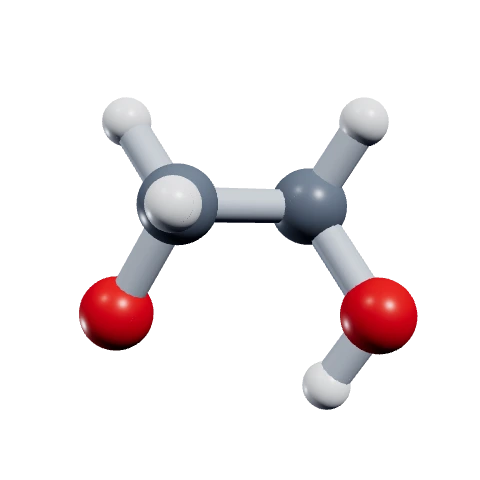
Antifreeze is a glycol, almost always ethylene glycol and sometimes the less toxic propylene glycol, plus a small package of corrosion inhibitors and a dye. The EPA’s definition is the plain one: “Antifreeze is a substance added to a solvent, such as water, to lower its freezing point.” The glycol does the freeze and boil work. The inhibitors are what separate antifreeze from a drum of plain glycol: they coat and protect the cast iron, aluminum, copper, brass and solder in the cooling system.
That is also why the inhibitor chemistry, not the glycol, is the part that differs from one coolant to the next, and the part that wears out. The EPA notes that conventional antifreeze fails “as the chemicals that slow down antifreeze corrosion are depleted.” The glycol is still there; the protection is not. For the full grade picture, see our ethylene glycol guide to antifreeze, coolant blends and grades and our comparison of propylene glycol vs ethylene glycol.

Why do you have to mix antifreeze with water? Can you run it straight?
You have to mix antifreeze with water because straight glycol protects worse, not better: pure ethylene glycol freezes at about 9 °F (−13 °C), according to MEGlobal’s product guide, while a 50/50 mix protects to −34 °F. Glycol and water lower each other’s freezing point, and the lowest point sits in the middle of the range, not at the top.
Dow’s engineering table for inhibited ethylene glycol shows the curve clearly. Protection improves up to roughly 60–75% glycol by weight, then gets worse again as the water disappears:
Degrees of freeze protection below 32 °F, ethylene glycol in water (by weight)
Source: Dow DOWTHERM SR-1 Engineering and Operating Guide, Table 3 (50–95%); MEGlobal Ethylene Glycol Product Guide (100%). Dow’s table is by weight; jug ratios are by volume, which is why a 50/50 jug is rated a few degrees colder.
Freezing is not the only problem with too much glycol. Glycol carries heat less well than water, so a rich mix runs hotter. Ford’s service manual is blunt: “NEVER increase the coolant concentration above 60%,” because concentration “above 60% will decrease the overheat protection.” Dow gives the same 60% ceiling “for efficient heat transfer.” And heavy-duty engine makers have counted the cost: a Filter Manufacturers Council bulletin reports that in a Cummins study, 54% of the water pumps examined had failed because of over-concentration, and 78% of all the pumps showed it.
Too little glycol is a problem too. Ford’s floor is 40%, because below that the mix loses “corrosion and freeze protection,” and Dow warns that below 25–30% the inhibitors are too dilute to do their job.
What ratio of antifreeze to water should you use?
Use 50/50 antifreeze to water unless your owner’s manual says otherwise; it protects to −34 °F and is what most factory fills use. Go to 60/40 only where winters regularly fall below that, and stop at 70/30, the absolute maximum. These are the coolant makers’ published ratings for ethylene glycol coolant:
| Concentrate / water (by volume) | Freeze protection | Boil-over, 15 psi cap | Note |
|---|---|---|---|
| 40/60 | −30 °F (Ford rating) | — | Ford’s minimum |
| 50/50 | −34 °F | 265 °F | Standard for most vehicles |
| 60/40 | −62 °F | 270 °F | Ford’s maximum; severe cold |
| 70/30 | −84 °F | 276 °F | Prestone labels this “MAXIMUM” |
Freeze and boil figures from the PEAK and Prestone specification sheets, at sea level with a 15 lb pressure cap. Ford rates 40% at −30 °F and 60% at −58 °F in its own manual; Dow’s lab table only says “below −60 °F” for 65–75% by weight. Read each as its publisher’s rating rather than one blended number.
Two corrections apply to the boil column. The PEAK sheet says boiling point “decreases about 2°F per 1,000 feet of altitude and increases about 2.5°F per pound” of cap pressure. Without a pressure cap at all, a 50% solution boils at about 226 °F, which is ASTM D3306’s minimum. The cap is doing a lot of the work, which is why a weak cap can look like a coolant problem.
Why use distilled water with antifreeze instead of tap water?
Use distilled or deionized water because the minerals in tap water form scale on hot metal and pull the corrosion inhibitors out of the coolant, and the antifreeze cannot fix either. Dow lists what impurities in dilution water do: they “increase metal corrosion, aggravate pitting of cast iron and steel, reduce the effectiveness of corrosion inhibitors, increase inhibitor depletion rate, cause formation of scale and other deposits on heat transfer surfaces, and cause clogging of system components.”
The Filter Manufacturers Council describes the scale half of that: “Present in all tap water are salt minerals, especially calcium and magnesium. These minerals can solidify and adhere to hot metal surfaces,” leading to hot spots and, in the worst case, cracked heads and blocks. Its conclusion: “All make-up water is corrosive but water with high mineral content cannot be made fit for use. Therefore, it is recommended that distilled or deionized water be used. Water softened by some type of salt or chloride process should not be used.”
The inhibitor half is quieter but just as real. Dow says it added a patented ingredient specifically to keep its inhibitors in solution “when mixed with hard water ions (calcium and magnesium),” and still recommends distilled or deionized water because hard water also carries chloride, sulfate and iron. Phosphate-based coolants are the most sensitive: Caltex notes that phosphates in hard water “react to create scaling.”

How hard is too hard? Caterpillar publishes minimum limits for water used in its cooling systems, and they sit well inside what counts as ordinary tap water:
| Property | Caterpillar limit for coolant water | Dow limit for dilution water | Tap water reference |
|---|---|---|---|
| Total hardness (as CaCO3) | 170 mg/L max | 100 ppm max | USGS: 121–180 mg/L is “hard,” over 180 “very hard” |
| Chloride | 40 mg/L max | 25 ppm max | EPA guideline: 250 mg/L |
| Sulfate | 100 mg/L max | 25 ppm max | EPA guideline: 250 mg/L |
| Total solids | 340 mg/L max | — | EPA guideline: 500 mg/L total dissolved solids |
| pH | 5.5–9.0 | — | — |
EPA figures are its secondary drinking-water standards, which are non-enforceable guidelines. In other words, tap water can meet every federal drinking-water guideline and still be several times over Caterpillar’s chloride limit.
Caterpillar’s own instruction is short: “Distilled water or deionized water is recommended for use in cooling systems.”
Distilled or deionized water: which is better for coolant?
Either distilled or deionized water is correct for mixing coolant; every engine maker, coolant maker and standards body we read lists the two side by side. Caterpillar says “distilled water or deionized water.” Dow says “Distilled or deionized water is recommended.” Valvoline tells customers to mix concentrate “with deionized or distilled water,” ideally deionized. GM’s own original-equipment DEX-COOL premix is sold as made with deionized water.
You will find forum posts claiming deionized water is “aggressive” and eats aluminum. We looked for an engine maker, coolant maker or ASTM document that says so and did not find one. The real point is simpler: Caterpillar warns that “water alone is corrosive at engine operating temperatures,” and that goes for distilled, deionized and tap water alike. What protects the metal is the inhibitor package in the antifreeze. Pure water’s job is to bring nothing with it that strips those inhibitors or leaves scale, and distilled and deionized water both do that. Our distilled vs deionized water guide covers how each is made.
One honest caveat: not every carmaker insists on purified water. GM’s owner manuals say “Use a 50/50 mixture of clean, drinkable water and DEX-COOL.” If your tap water is soft, that may be fine. If you do not know how hard it is, a gallon of distilled or deionized water costs less than finding out the hard way.
Can you top off coolant with just water?
You can top off coolant with a little water in an emergency, but repeated water-only top-ups weaken the mix until it no longer protects against freezing, boiling or corrosion. GM’s manual warns: “Adding only plain water to the cooling system can be dangerous. Plain water, or some other liquid such as alcohol, can boil before the proper coolant mixture will.” Caterpillar agrees that “water alone does not provide adequate protection against boiling or freezing.”
Worked example: what one quart of water does
12 quarts of 50/50 coolant + 1 quart of water = 6 ÷ 13 = 46% glycol
One quart is still inside Ford’s 40% floor. Three or four more water-only top-ups over a year are not. Top off with 50/50 premix, or with concentrate and distilled or deionized water mixed in the same ratio, then check strength with a refractometer or hydrometer.
If you keep having to add fluid, the real problem is a leak, a weak cap or a failing head gasket, not the coolant.
Does coolant color matter? Can you mix coolant types?
Coolant color does not tell you what is inside: the dye is not standardized, so the only reliable guide is the coolant technology named in your owner’s manual. Valvoline says “Color has no bearing on the performance of the antifreeze,” and NAPA notes that “the colors are not standardized across the industry.” So the answer to “is green or orange coolant better?” is: neither. The right one is whichever technology your engine was built for.
| Technology | Inhibitors | Typical use | Typical life |
|---|---|---|---|
| IAT (inorganic additive) | Silicates and phosphates | Older vehicles, before the late 1990s | About 2 years / 30,000 miles |
| OAT (organic acid) | Organic acids | Many modern vehicles, including GM DEX-COOL | About 5 years / 150,000 miles |
| HOAT (hybrid) | Organic acids plus some silicate | Several North American and European makes | About 5 years |
| P-HOAT | Phosphates plus organic acids | Many Asian makes | About 5 years |
| Si-OAT | Silicates plus organic acids | Recent European vehicles | About 5 years |
Technology descriptions from Valvoline’s coolant technical tip; intervals from Valvoline, GM and the EPA. Your manual’s interval wins.
Mixing types is where the money goes. Ford warns that “mixing coolant types degrades the corrosion protection” of its own orange coolant, and NAPA says mixing “can greatly reduce lifespan and gunk up your system.” If you have already mixed them, a full flush and refill with the right type is the fix. Topping off one technology with another “just this once” is how a five-year coolant becomes a two-year one.
How do you mix antifreeze with distilled water? Step by step
Mix antifreeze concentrate with an equal volume of distilled or deionized water in a clean container before it goes into the engine, then check the strength. Use this routine for a refill after draining, or to make your own top-off premix:
- Check the manual. Confirm the coolant technology (OAT, HOAT and so on), the total system capacity and the recommended ratio.
- Let the engine cool completely. Never open a hot radiator cap or reservoir; the coolant is under pressure and well above boiling.
- Mix in a clean container. Pour equal volumes of concentrate and distilled or deionized water into a clean jug or bucket and stir or shake. Do not use a container that held anything else.
- Fill slowly. Pour through a funnel into the reservoir or radiator, as your manual directs, to the cold fill mark.
- Bleed the air. Run the engine with the heater on high and follow the manual’s bleeding procedure; air pockets cause overheating and false low readings.
- Re-check when cold. After a drive and a full cool-down, top up to the cold mark with the same 50/50 mix.
- Test the strength. Use a refractometer or coolant hydrometer to confirm the freeze point, and keep a record of the date and mix.
Keep it away from children and pets. Ethylene glycol is poisonous. Wipe up every spill, store jugs closed and up high, and never leave a drain pan of old coolant standing open.
Is antifreeze poisonous, and how do you dispose of old coolant?
Ethylene glycol antifreeze is poisonous to people and animals in small amounts, and used coolant must go to a recycler or hazardous-waste drop-off, never a drain or the ground. The CDC’s Agency for Toxic Substances and Disease Registry puts the lethal dose of 95% ethylene glycol at about 100 mL for an adult, “although there is wide variation among reported cases.” The Merck Veterinary Manual gives the minimum lethal dose of undiluted ethylene glycol as 1.4 mL per kilogram in cats and 4.4–6.6 mL per kilogram in dogs. By that cat figure, a teaspoon of concentrate is enough to endanger an 8-pound cat.
Since 13 December 2012, makers have voluntarily added a bittering agent, denatonium benzoate, to consumer antifreeze and coolant sold in all 50 states, and some states such as Maine require it by law. Merck cautions that bittered products “still may be palatable to some animals,” so the bittering is a backstop, not a reason to relax. Propylene glycol coolant is far less acutely toxic, the EPA says, but used coolant of either kind picks up metals in service.
That is the disposal problem. The EPA warns that waste antifreeze “contains heavy metals such as lead, cadmium, and chromium” and should not be dumped “on land or discharge[d] into a sanitary sewer, storm drain, ditch, dry well, or septic system.” Pour drained coolant into a sealed, labelled container and take it to a recycler, an auto-parts store that accepts used coolant, or your local household hazardous-waste collection. Local rules vary, so check yours. For winter fluids that are meant to be drained, see our guides to winterizing an RV and why water splits iron and how glycol prevents it.
Where do you buy antifreeze concentrate and deionized water in bulk?
Shops, fleets, equipment yards and anyone mixing more than a few gallons at a time usually save by buying concentrate and purified water separately and mixing to the ratio they need. For one car, a jug of 50/50 premix or a gallon of grocery-store distilled water is the sensible buy, and we would rather tell you that than sell you a pail you do not need.
| Product | What it is | Sizes | Use it for |
|---|---|---|---|
| Deionized Water ACS Reagent Grade | Deionized water | 1 quart to 330-gallon tote; 5-gallon pail $83.46, 55-gallon drum $544.50 | Mixing concentrate, topping off, cooling loops, shop use |
| 100% Ethylene Glycol Inhibited | Inhibited ethylene glycol concentrate | 1 quart to 330-gallon tote; 1 gallon $49.00, 55-gallon drum $950.00 | Fleet, equipment and closed-loop cooling systems; dilute before use |
Prices as listed on 29 October 2026; check the product page for current pricing and freight. Our ethylene glycol concentrate is sold for antifreeze service and closed-loop heat transfer, and we do not publish an OEM approval for it. If your manual names a specific coolant, such as DEX-COOL, Motorcraft Orange or a maker’s own long-life coolant, buy that coolant.
For a wider look at vehicle coolants, from snowmobiles to RVs, read our winter vehicle antifreeze and coolant selection guide, and for how purified water is made and how it degrades in storage, our deionized water buying guide.
Key numbers and sources
| Figure | Value | Source |
|---|---|---|
| Concentrate use range, ASTM D3306 | 40–60%, to 70% by agreement | ASTM International |
| Freeze / boil, 50/50 (15 psi cap) | −34 °F / 265 °F | PEAK and Prestone specification sheets |
| Freeze / boil, 60/40 | −62 °F / 270 °F | PEAK specification sheet |
| Freeze / boil, 70/30 | −84 °F / 276 °F | PEAK and Prestone specification sheets |
| Freezing point, pure ethylene glycol | About 9 °F (−13 °C) | MEGlobal product guide |
| Maximum concentration (Ford, Dow) | 60% | Ford workshop manual; Dow SR-1 guide |
| Pump failures from over-concentration | 54% of those examined | Filter Manufacturers Council TSB 88-1, citing Cummins |
| Coolant water: hardness / chloride / sulfate / solids | 170 / 40 / 100 / 340 mg/L max | Caterpillar SEBU6251 |
| “Hard” water | 121–180 mg/L as CaCO3 | USGS |
| Coolant life, conventional / extended | 2–3 years / 5 years or 150,000 miles | EPA |
| Lethal dose, 95% ethylene glycol, adult | About 100 mL | CDC ATSDR |
| Minimum lethal dose, cats / dogs | 1.4 / 4.4–6.6 mL per kg | Merck Veterinary Manual |
How we researched this
We read every source below on 29 October 2026 and quote them verbatim. Definitions come from ASTM D3306 and Valvoline; freeze and boil ratings from the PEAK and Prestone specification sheets, Ford’s workshop manual and Dow’s engineering tables; water limits from Caterpillar, Dow and the Filter Manufacturers Council; tap-water figures from the USGS hardness classes and the EPA’s secondary standards, which are non-enforceable guidelines; intervals from Valvoline, GM and the EPA; toxicity from CDC ATSDR and the Merck Veterinary Manual. Where two publishers give different numbers for the same mix, we show both rather than average them. We did not run our own engine or coolant tests, and the two body photographs are illustrations, not test results. Search demand for this topic came from DataForSEO. Product, grade and pricing information for our products is taken from our own product pages, checked by Andre Taki, Chief Commercial Officer.
Sources
- Coolant vs. Antifreeze: Are They the Same Thing?, Valvoline
- ASTM D3306-21, Standard Specification for Glycol Base Engine Coolant for Automobile and Light-Duty Service, ASTM International
- Ethylene Glycol Product Guide, MEGlobal
- DOWTHERM SR-1 Engineering and Operating Guide, Dow
- PEAK Antifreeze + Coolant Specification Sheet, Old World Industries
- Prestone Antifreeze/Coolant Specification Sheet, Prestone
- Workshop Manual 303-03A, Engine Cooling (2014 Mustang), Ford Motor Company
- SEBU6251, Caterpillar Commercial Diesel Engine Fluids Recommendations (water quality), Caterpillar
- TSB 88-1, Cooling System Maintenance for Heavy Duty Engines, Filter Manufacturers Council
- Hardness of Water, U.S. Geological Survey
- Secondary Drinking Water Standards: Guidance for Nuisance Chemicals, U.S. Environmental Protection Agency
- Coolant Types and Proper Application, Valvoline
- Coolants 102: OAT Variations, Caltex
- What Is OAT Coolant?, NAPA
- 2010 GMC Yukon Owner Manual, Engine Coolant, General Motors
- Antifreeze (archived), U.S. Environmental Protection Agency
- Case Studies in Environmental Medicine: Ethylene Glycol and Propylene Glycol Toxicity (archived), CDC Agency for Toxic Substances and Disease Registry
- Overview of Ethylene Glycol Toxicity, Merck Veterinary Manual
- Antifreeze and Engine Coolant Being Bittered Nationwide, Humane Society Legislative Fund
Frequently asked questions
Can you put distilled water in your coolant?
Yes. Distilled or deionized water is what coolant and engine makers recommend for mixing with antifreeze concentrate, because it carries none of the minerals that cause scale or strip corrosion inhibitors. Mix it with concentrate, usually 50/50; do not add it on its own to a system that is already full of premix.
Is antifreeze the same as ethylene glycol?
Not quite. Most antifreeze is about 95–98% ethylene glycol, but the rest is a corrosion-inhibitor package and dye. Plain uninhibited glycol has none of that protection, so it is not a substitute for antifreeze in an engine.
Is green or orange coolant better?
Neither. Coolant color is a dye and is not standardized across the industry, so it does not identify the chemistry. Use the coolant technology your owner's manual specifies, whatever color it happens to be.
Can I just add new coolant to old coolant?
Only if it is the same technology, ideally the same product, mixed to the same strength. Mixing different coolant types degrades corrosion protection. If you are not sure what is in the system, a full flush and refill is the safe answer.
How often should you change your coolant?
Follow your manual. As a guide, the EPA says conventional coolant lasts 2 to 3 years and extended-life coolant 5 years or 150,000 miles. GM rates DEX-COOL at five years or 150,000 miles, whichever comes first.
How long does coolant last in a car?
About 2 years or 30,000 miles for traditional green IAT coolant, according to Valvoline, and about 5 years or 150,000 miles for most modern OAT-based coolants. The glycol lasts longer than that; it is the corrosion inhibitors that run out.
What happens if you don't change your coolant?
The inhibitors deplete and the coolant stops protecting the metal. Caterpillar lists the results: corrosion, mineral deposits, rust, scale, liner pitting and foaming. Freeze protection may still test fine while corrosion protection is gone.
Can you reuse coolant after draining it?
Not as a rule. The EPA notes that coolant picks up heavy metals in service, and recycling it properly means filtering out contaminants and restoring additives. Short-term reuse after a quick repair is only reasonable if the coolant was clean, recent and drained into a sealed, clean container.
Can I use bottled or spring water instead of distilled?
Not if you can avoid it. Spring and mineral water contain the same calcium, magnesium, chloride and sulfate that cause trouble in tap water. Choose water labelled distilled or deionized.
Is antifreeze poisonous to pets?
Yes. The Merck Veterinary Manual puts the minimum lethal dose of undiluted ethylene glycol at 1.4 mL per kilogram for cats, about a teaspoon for an 8-pound cat. Bittering agents are now added to consumer antifreeze, but some animals still drink it. Wipe up spills and store jugs closed and out of reach.
Related Chemical Collections
About the author
Andre Taki
This article is for informational purposes only.


