

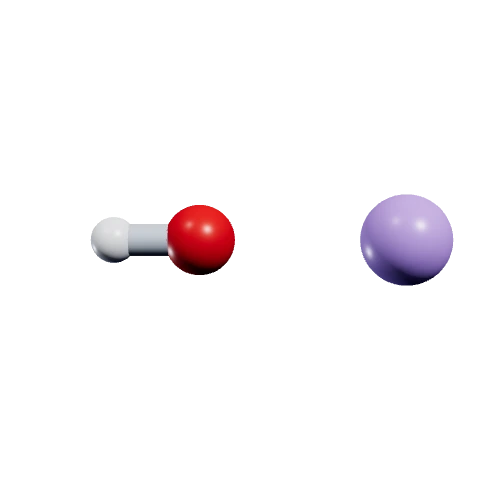


The Chemist's Guide to Sodium Hydroxide for Precision Optical Cleaning
A technical deep-dive into sodium hydroxide etching, solution preparation, and purity requirements for precision optical manufacturing.
The Role of Sodium Hydroxide in Precision Optical Cleaning
Sodium hydroxide (NaOH) serves as a foundational chemical in precision optical manufacturing. Whether you are mastering sodium hydroxide etching to remove subsurface damage, or standardizing your 10 naoh solution preparation for routine cleaning, understanding the chemistry is critical. Plant operators and process engineers rely on this strong alkali to prepare glass, quartz, and silica substrates before applying thin-film coatings. The primary mechanism at play during naoh etching and initial cleaning is saponification.
When optical components emerge from mechanical grinding and polishing, their surfaces are coated in residual polishing compounds, cutting fluids, and organic greases. Sodium hydroxide reacts directly with these organic lipids, converting insoluble fats into water-soluble soaps. This allows the contaminants to be rinsed away completely, leaving a pristine surface ready for further processing.
Standard degreasers often leave microscopic films that interfere with subsequent coating steps. Sodium hydroxide, when used at the correct concentration and temperature, strips the substrate down to the bare molecular level. This aggressive cleaning action is non-negotiable for high-power laser optics, aerospace sensors, and semiconductor manufacturing. Any residual organic material will cause poor adhesion of anti-reflective (AR) or highly reflective (HR) coatings.
Our team at Alliance Chemical frequently consults with photonics manufacturers who struggle with coating delamination. In many cases, the root cause is an inadequate pre-cleaning protocol. Implementing a dedicated sodium hydroxide cleaning bath ensures that all organic residues are chemically destroyed rather than merely displaced.
However, cleaning is only the first step. Once the organics are removed, the caustic solution begins to interact with the glass substrate itself. This transition from cleaning to active surface modification requires strict control over bath concentration, temperature, and immersion time. Operators must carefully monitor these parameters to prevent unwanted surface degradation while achieving the necessary level of cleanliness. We supply both solid flakes and pre-mixed solutions to help facilities standardize their cleaning lines and maintain consistent process control.
Sodium Hydroxide Etching Mechanics and Surface Modification
Beyond simple saponification, sodium hydroxide etching is a critical process for modifying the surface topology of optical substrates. When exposed to a caustic bath, the hydroxide ions attack the silicon-oxygen (Si-O-Si) bonds in glass and fused silica. This chemical reaction dissolves the top layer of the substrate, effectively removing material at a controlled, predictable rate.
The primary goal of NaOH etching in optics is the removal of subsurface damage (SSD). Mechanical grinding and polishing processes inevitably leave microscopic fractures and stress layers just below the visible surface of the glass. If left intact, these micro-fractures act as stress concentrators and light-scattering defects, severely degrading the optical performance and structural integrity of the component. By utilizing a controlled sodium hydroxide etching process, engineers can dissolve this damaged layer entirely, revealing the pristine, undisturbed bulk material beneath.
| Process | Primary Mechanism | Target Contaminant |
|---|---|---|
| Optical Cleaning | Saponification | Polishing compounds, organic greases, lipids |
| NaOH Etching | Si-O-Si Bond Dissolution | Subsurface damage (SSD), micro-fractures |
Etch rates are highly dependent on the concentration of the caustic solution and the operating temperature of the bath. Higher temperatures and stronger concentrations exponentially increase the rate of material removal. Process engineers must calibrate these variables to achieve the desired etch depth without introducing excessive surface roughness. An overly aggressive etch can cause pitting, which ruins the optical figure of the lens or mirror.
In semiconductor and photonics applications, sodium hydroxide etching is also used to create specific surface textures or to clean silicon wafers prior to oxidation. The isotropic nature of the NaOH etch means it removes material uniformly in all directions, smoothing out sharp microscopic peaks left by mechanical polishing. Our customers rely on high-purity caustic solutions to ensure this etching process remains predictable batch after batch. Contaminants in the bath can act as micro-masking agents, leading to uneven etching and rejected parts.
10% NaOH Solution Preparation Guide
Preparing a 10% NaOH solution is a standard requirement for many optical cleaning and etching protocols. A 10% concentration provides a highly effective balance: it is strong enough to drive rapid saponification and controlled etching, yet manageable enough to prevent runaway exothermic reactions during mixing. Plant operators can prepare this solution using either solid sodium hydroxide flakes or by diluting a concentrated 50% liquid solution.
When diluting from a Sodium Hydroxide 50% Solution ACS Grade, the math is straightforward. To achieve a 10% solution by weight, you mix one part of the 50% sodium hydroxide solution with four parts of high-purity water. We strongly recommend using Deionized Water (CAS 7732-18-5) for this process. Deionized water has a molecular weight of 18.015 and a boiling point of 100°C (212°F). Using standard tap water introduces calcium, magnesium, and other trace minerals that will immediately react with the caustic to form insoluble precipitates, ruining the bath.
If preparing the 10% NaOH solution from solid flakes, operators must weigh the dry flakes and the water precisely. Dissolving 100 grams of Sodium Hydroxide Flakes ACS Grade into 900 grams of Deionized Water yields a 10% solution by weight.
Exothermic Reaction Warning
Dissolving solid sodium hydroxide flakes in water generates extreme heat. Always add the chemical to the water slowly while stirring. Never add water directly to dry flakes, as this causes violent splattering and localized boiling.
This dissolution process is highly exothermic. It generates a massive amount of heat rapidly. The mixing vessel must be capable of withstanding high temperatures, and the solution should be allowed to cool to the target operating temperature before introducing any optical components. Consult the product SDS for specific handling and PPE requirements during preparation.
Purity Grades: ACS Reagent vs. Technical Grade Caustic
The distinction between ACS Reagent grade and Technical grade sodium hydroxide is the most critical factor in precision optical manufacturing. While Technical grade caustic is perfectly suitable for industrial wastewater neutralization or heavy-duty degreasing, it is entirely inappropriate for optical etching or semiconductor surface preparation.
Technical grade sodium hydroxide contains trace amounts of impurities, including iron, chlorides, heavy metals, and carbonates. In a standard industrial setting, these parts-per-million (ppm) contaminants are negligible. However, in an optical etching bath, these metallic ions are disastrous. As the sodium hydroxide dissolves the top layer of the silica substrate, the metallic impurities in the bath can precipitate out and embed themselves directly into the freshly exposed glass surface.
This is why Alliance Chemical stocks Sodium Hydroxide Flakes ACS Grade and Sodium Hydroxide 50% Solution ACS Grade. The American Chemical Society (ACS) establishes strict maximum limits for impurities. ACS Reagent grade caustic guarantees that heavy metal and iron concentrations remain below the threshold that would cause optical degradation.
When an operator uses a lower-grade caustic, the embedded iron and metallic ions act as absorption centers. If the optical component is destined for a high-power laser system, these microscopic iron deposits will absorb the laser energy, heat up rapidly, and cause localized thermal expansion. This leads to catastrophic failure of the optic, often shattering the lens or mirror during operation. Purchasing decision-makers must understand that saving money on Technical grade caustic for an optical cleaning line will inevitably result in massive financial losses due to rejected parts and field failures. Always specify ACS Reagent grade for any process involving thin-film coatings or laser optics.
The Physics of Failure: Contamination in Thin-Film Coatings
Understanding the physics of failure in optical coatings highlights exactly why sodium hydroxide etching protocols must be strictly controlled. After a glass substrate is cleaned and etched, it typically moves into a vacuum chamber for the deposition of thin-film coatings. These coatings, which can be anti-reflective (AR), highly reflective (HR), or specialized bandpass filters, consist of alternating layers of dielectric materials.
For these dielectric layers to adhere properly, the glass substrate must possess a high surface energy and be completely free of chemical contaminants. If the sodium hydroxide etching bath was contaminated, or if the post-etch rinsing was inadequate, a microscopic layer of sodium salts or metallic oxides remains on the surface. When the first layer of the thin-film coating is deposited, it bonds to this contamination layer rather than the bulk silica.
This weak bond inevitably leads to coating delamination. The coating may peel off immediately upon removal from the vacuum chamber, or worse, it may pass initial inspection and fail later in the field due to thermal cycling or humidity exposure.
contamination drastically lowers the Laser-Induced Damage Threshold (LIDT) of the coated optic. The LIDT is a measure of how much laser power a component can withstand before suffering physical damage. Embedded impurities from low-grade sodium hydroxide create localized defects in the coating structure. When the laser beam hits these defects, the energy is absorbed rather than transmitted or reflected. The resulting thermal shock causes the coating to blister, crack, or blow off the substrate entirely. Maintaining a pristine sodium hydroxide etching process using ACS grade chemicals is the only way to ensure high coating adhesion and maximum LIDT performance.
Neutralization and Post-Etch Rinsing Protocols
The sodium hydroxide etching process does not end when the optic is removed from the caustic bath. Halting the chemical reaction and completely removing all residual hydroxide ions is just as critical as the etch itself. If caustic residue is left on the glass, it will continue to slowly etch the surface, altering the optical figure and leaving a hazy, crystalline deposit of sodium carbonate as it reacts with carbon dioxide in the air.
Immediately upon removal from the 10% NaOH solution, the components must be submerged in a cascading rinse of Deionized Water. As noted in our technical dossier, Deionized Water (CAS 7732-18-5) is a clear, odorless liquid that is completely miscible with water, making it the ideal solvent for flushing away heavy caustic liquids. A multi-stage ultrasonic DI water rinse is typically employed to ensure that hydroxide ions are pulled out of any microscopic surface features or mounting hardware.
Following the thorough DI water rinse, the optical components require rapid, spot-free drying. Water left to evaporate on the surface will leave behind any trace dissolved gases or remaining ions as water spots, which are unacceptable in precision optics. To facilitate rapid drying, operators frequently use Isopropyl Alcohol 70% USP Grade (CAS 67-63-0).
Isopropyl Alcohol 70% has a boiling point of 82°C (179.6°F) and a flash point of 12°C (53.6°F). It acts as a water displacement agent. When the rinsed optics are submerged in or sprayed with IPA, the alcohol mixes with the residual water, significantly lowering the surface tension and increasing the vapor pressure of the mixture. This allows the liquid to sheet off the optical surface cleanly and evaporate rapidly without leaving residue. Alliance Chemical supplies both the high-purity DI water and the USP Grade IPA required for these critical post-etch protocols.
Safety Culture and Handling Highly Corrosive Caustics
Working with sodium hydroxide, whether in solid flake form or as a concentrated 50% liquid, requires a rigorous safety culture. Sodium hydroxide is a highly corrosive strong base that causes immediate and severe chemical burns upon contact with skin or eyes. Unlike acids, which often cause immediate pain, caustic burns can sometimes be delayed in their sensation, allowing the chemical to penetrate deeper into the tissue before the operator realizes the extent of the exposure.
When preparing a 10% NaOH solution or managing an active etching bath, operators must wear appropriate personal protective equipment (PPE). This includes full-face shields, chemical-resistant heavy nitrile or neoprene gloves, and specialized chemical aprons. Standard safety glasses are insufficient when handling concentrated caustics due to the risk of splashing during the exothermic dilution process.
Ventilation is another critical safety factor. While sodium hydroxide itself does not emit toxic fumes at room temperature, the violent exothermic reaction during mixing can generate caustic mists and steam. If inhaled, these mists cause severe damage to the respiratory tract. Etching baths operated at elevated temperatures must be housed under local exhaust ventilation or fume hoods to capture any airborne caustic particles.
Storage of sodium hydroxide requires careful segregation from incompatible chemicals. It must never be stored near strong acids, as accidental mixing will result in a violent, explosive neutralization reaction. Additionally, solid sodium hydroxide flakes are highly hygroscopic; they will rapidly absorb moisture from the air, turning into a corrosive slush if left unsealed. Always consult the specific product Safety Data Sheet (SDS) for detailed hazard classifications, first aid measures, and spill response protocols before introducing sodium hydroxide into your facility.
| Process | Primary Mechanism | Target Contaminant |
|---|---|---|
| Optical Cleaning | Saponification | Polishing compounds, organic greases, lipids |
| NaOH Etching | Si-O-Si Bond Dissolution | Subsurface damage (SSD), micro-fractures |
Frequently Asked Questions
How do you prepare a 10% NaOH solution?
To prepare a 10% NaOH solution by weight from a 50% liquid concentrate, mix one part 50% sodium hydroxide with four parts Deionized Water. If using solid flakes, dissolve 100 grams of sodium hydroxide flakes into 900 grams of Deionized Water. Always add the caustic to the water slowly to manage the exothermic heat generation.
What is sodium hydroxide etching used for in optics?
Sodium hydroxide etching is used to dissolve the top layer of glass or silica substrates to remove subsurface damage (SSD) and micro-fractures left behind by mechanical grinding and polishing. This creates a pristine surface necessary for thin-film coating adhesion.
Why is ACS Reagent grade NaOH required for optical cleaning?
ACS Reagent grade sodium hydroxide has strictly controlled limits on heavy metals and iron. Technical grade caustic contains trace metallic impurities that can embed into the glass during etching, which lowers the Laser-Induced Damage Threshold (LIDT) and causes coating delamination.
Does NaOH etching remove subsurface damage from glass?
Yes. By breaking the Si-O-Si bonds in the glass, sodium hydroxide etching uniformly dissolves the damaged outer layer of the substrate, effectively removing microscopic stress fractures and revealing the undisturbed bulk material.
What is the exothermic risk when mixing sodium hydroxide?
Dissolving sodium hydroxide in water releases a massive amount of heat very quickly. If water is poured directly onto dry flakes, it can cause localized boiling and violent splattering of corrosive liquid. Always add the chemical to the water slowly while stirring.
How do you rinse optics after a sodium hydroxide etch?
Optics should be immediately submerged in a cascading rinse of Deionized Water to halt the etching process and remove all hydroxide ions. This is typically followed by a final rinse in Isopropyl Alcohol 70% to displace the water and ensure rapid, spot-free drying.
Ready to standardize your optical cleaning and etching protocols? Alliance Chemical supplies ACS Reagent Grade Sodium Hydroxide in both solid flake and 50% solution formats, ensuring the high purity required for mission-critical thin-film coatings. Browse our catalog to secure the chemistry your process demands.
Deionized WaterSoda AshHydrochloric Acid 37% (HCL 37%) - Technical GradeReferences & Authoritative Sources
Chemical identity, properties, and safety data sourced from the U.S. National Library of Medicine's PubChem database — the authoritative open-chemistry data resource maintained by the National Institutes of Health.
- PubChem CID 14798: Sodium Hydroxide 50% Solution ACS Grade — National Center for Biotechnology Information, U.S. National Library of Medicine. CAS 1310-73-2.
- PubChem CID 962: Deionized Water — National Center for Biotechnology Information, U.S. National Library of Medicine. CAS 7732-18-5.
- PubChem CID 10340: Soda Ash — National Center for Biotechnology Information, U.S. National Library of Medicine. CAS 497-19-8.
- PubChem CID 313: Hydrochloric Acid 37% (HCL 37%) - Technical Grade — National Center for Biotechnology Information, U.S. National Library of Medicine. CAS 7647-01-0.
Related reading: Ammonium Bifluoride (NH₄HF₂): The Complete Guide to Flakes, ACS Grade, Aluminum Brightening & Glass Etching — the fluoride-acid counterpart to caustic NaOH etching — same problems, opposite chemistry.
Related: Sodium Hydroxide in Direct Air Capture — how caustic soda pulls CO2 straight out of the air (another high-purity caustic application).
Related: The Chemistry of Photonics Manufacturing — the wet-chemistry backbone of optical-device and silicon-photonics fabrication.
Related: Potassium Hydroxide (KOH): Uses, Grades & Safety Guide — the potassium analogue — grades, hazards and selection.
Key numbers and sources
| Fact | Value | Source |
|---|---|---|
| Deionized Water CAS | 7732-18-5 | pubchem.ncbi.nlm.nih.gov |
| Deionized water molecular weight | 18.015 | pubchem.ncbi.nlm.nih.gov |
| Deionized water boiling point | 100°C (212°F) | pubchem.ncbi.nlm.nih.gov |
| Standard 10% NaOH solution preparation | dissolving sodium hydroxide flakes or diluting a 50% solution with deionized water (CAS 7732-18-5) | See article text |
| 10% NaOH solution by weight | Dissolving 100 grams of Sodium Hydroxide Flakes ACS Grade into 900 grams of Deionized Water yields a 10% solution by weight. | See article text |
| DOT hazmat-trained (49 CFR 172.704) | 49 CFR 172.704 | See article text |
Frequently asked questions
How do you prepare a 10% NaOH solution?
To prepare a 10% NaOH solution by weight from a 50% liquid concentrate, mix one part 50% sodium hydroxide with four parts Deionized Water. If using solid flakes, dissolve 100 grams of sodium hydroxide flakes into 900 grams of Deionized Water. Always add the caustic to the water slowly to manage the exothermic heat generation.
What is sodium hydroxide etching used for in optics?
Sodium hydroxide etching is used to dissolve the top layer of glass or silica substrates to remove subsurface damage (SSD) and micro-fractures left behind by mechanical grinding and polishing. This creates a pristine surface necessary for thin-film coating adhesion.
Why is ACS Reagent grade NaOH required for optical cleaning?
ACS Reagent grade sodium hydroxide has strictly controlled limits on heavy metals and iron. Technical grade caustic contains trace metallic impurities that can embed into the glass during etching, which lowers the Laser-Induced Damage Threshold (LIDT) and causes coating delamination.
Does NaOH etching remove subsurface damage from glass?
Yes. By breaking the Si-O-Si bonds in the glass, sodium hydroxide etching uniformly dissolves the damaged outer layer of the substrate, effectively removing microscopic stress fractures and revealing the undisturbed bulk material.
What is the exothermic risk when mixing sodium hydroxide?
Dissolving sodium hydroxide in water releases a massive amount of heat very quickly. If water is poured directly onto dry flakes, it can cause localized boiling and violent splattering of corrosive liquid. Always add the chemical to the water slowly while stirring.
How do you rinse optics after a sodium hydroxide etch?
Optics should be immediately submerged in a cascading rinse of Deionized Water to halt the etching process and remove all hydroxide ions. This is typically followed by a final rinse in Isopropyl Alcohol 70% to displace the water and ensure rapid, spot-free drying.
Related Chemical Collections
About the author
Andre Taki
This article is for informational purposes only.


