



There is a chemical that does what hydrofluoric acid does — etches glass, brightens aluminum, strips concrete haze, descales stainless steel — but ships as a white crystalline flake instead of a fuming liquid. It is ammonium bifluoride, and it is the unsung workhorse of fleet detail shops, anodizing lines, and masonry contractors who need fluoride chemistry without the calcium-chelating nightmare of HF.
If you have ever watched a truck-fleet detail shop bring a curbside-grimy aluminum wheel back to mirror finish in five minutes, you have probably watched ammonium bifluoride at work. The chemical that does the heavy lifting on aluminum brightener is not the surfactant on the label — it is the fluoride salt dissolved into the working bath, and that salt is almost always NH₄HF₂, ammonium bifluoride. The same compound also frosts laboratory glassware, strips efflorescence off brick masonry, primes stainless steel before passivation, and serves as the dry, ship-by-ground precursor for in-situ hydrofluoric acid wherever HF chemistry is needed but HF itself would be a regulatory and safety burden.
For anyone spec'ing fluoride chemistry — a fleet maintenance shop, an anodizing line operator, a masonry contractor, a brewery line-wash technician, an analytical lab manager — ammonium bifluoride is often the right specification, and the wrong one to confuse with ammonium fluoride (different compound, different reactivity). We stock NH₄HF₂ in two purity grades from 2-lb packs through 55-lb bulk and field these specification questions weekly. This guide answers them in one place: what ammonium bifluoride actually is, why it is safer to handle than HF, the five industries that use it daily, how to spec ACS versus Technical grade, and the procurement question Google asks more than any other — flakes versus powder.
What is ammonium bifluoride? The chemistry behind NH₄HF₂
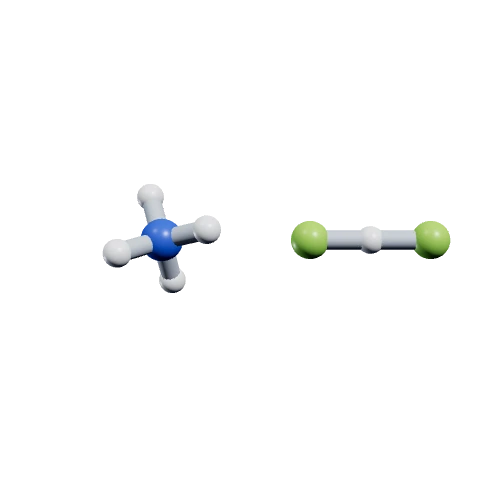
Ammonium bifluoride is a solid acid salt with the molecular formula NH₄HF₂, sometimes written NH₄HF₂ or (NH₄)(HF₂). Structurally, it is a 1:1 pairing of an ammonium cation (NH₄⁺) with a bifluoride anion (HF₂⁻) — a symmetric, strongly hydrogen-bonded pair of fluoride ions sharing a single proton. It is one of the most stable bifluoride salts known and is also one of the few solid commercial sources of latent hydrofluoric acid chemistry.
NH₄HF₂ (solid) → NH₄⁺ + HF + F⁻ (in water)
The interesting chemistry happens in solution. When ammonium bifluoride dissolves in water, the bifluoride anion dissociates into one hydrogen fluoride molecule and one fluoride ion. That generated HF — created in situ at a controlled, dilute concentration — is what gives the chemical its etching, brightening, and descaling personality. The solid itself is a non-volatile, low-dust crystalline flake; the working acid is generated on demand, in the bath, at the concentration the operator chooses to mix. That is the single fact that separates NH₄HF₂ from its more famous cousin: same chemistry, gentler delivery.
Key physical properties (ammonium bifluoride at 25°C)
| Property | Value | Notes |
|---|---|---|
| Molecular formula | NH₄HF₂ | Also written (NH₄)HF₂, ammonium hydrogen difluoride |
| Molecular weight | 57.04 g/mol | Light, high-fluoride-per-pound salt |
| CAS Number | 1341-49-7 | Same regardless of grade or pack size |
| Form | White crystalline flakes | Low-dust, easy to weigh, lower inhalation risk than powder |
| Melting point | 124.6°C (256°F) | Sublimes near melting; decomposes above ~240°C |
| Density | 1.50 g/cm³ | Bulk pour density approximately 0.95–1.05 g/cm³ |
| Water solubility | 63 g/100 mL at 20°C | Very high — makes strong working solutions easy to dose |
| pH of 1% solution | 3.5–4.5 | Strongly acidic; releases HF on contact with metals and silicates |
| Vapor pressure | Negligible at room temperature | Solid does not generate HF vapor until dissolved |
| UN shipping class | UN 1727 (PG II) | Corrosive solid; ships ground without the PG I restrictions of liquid HF |
The naming convention. Ammonium bifluoride, ammonium hydrogen fluoride, ammonium hydrogendifluoride, ammonium acid fluoride, NH₄HF₂, NH₄F·HF, and ABF all refer to the same compound (CAS 1341-49-7). It is NOT the same as ammonium fluoride (NH₄F, CAS 12125-01-8), which carries only one fluoride per ammonium and is significantly less reactive. Procurement specs should carry the CAS or the structural formula to eliminate ambiguity.
Flakes vs powder: which form do you actually need?
The single most common Google search around this chemical is some variant of "ABF powder supplier" or "ammonium bifluoride powder wholesale." We sell it as flakes — white crystalline flake, low-dust, free-flowing — and have done so for years, because for the vast majority of working applications, flakes are the better procurement choice. The "powder" naming convention is a wholesale-listing legacy more than a real product difference.
Free-flowing, low-dust handling. Dissolves rapidly in water but does not aerosolize when scooped or poured. Standard form for industrial cleaning, anodizing, and masonry use.
Higher surface-area-per-gram, slightly faster dissolution, but generates respirable dust when handled — mandates P95 or full SCBA. Specified primarily for niche metallurgical formulations.
For aluminum brightening, glass etching, masonry stripping, and stainless steel surface preparation, dissolution time is rate-limited by stirring and water temperature, not by particle size. A 2-pound flake pack dissolves in 5–10 minutes of moderate agitation in a 5-gallon bucket of warm water — fast enough for any production line. The downside of powder — dust generation, harder PPE requirements, more difficult inventory handling — is real, and we have not seen a working application where the powder form's marginal dissolution speed advantage outweighs the handling burden.
Procurement note. If a third-party SDS or formula specifically calls out "powder," check whether the spec was written 20+ years ago when flakes were less common. Most modern fluoride-salt suppliers ship flakes by default — the spec language often did not get updated.
Why is ammonium bifluoride safer to handle than hydrofluoric acid?
Ammonium bifluoride and hydrofluoric acid attack the same materials — aluminum, silicates, stainless steel oxide, calcium-bearing stone. They share the same active species (free HF in dilute aqueous solution). The difference is form factor, and form factor dictates the entire safety, shipping, and storage profile.
The HF problem (in three sentences)
Hydrofluoric acid is a fuming liquid that emits HF vapor at room temperature. Skin contact — even a few square inches at typical industrial concentrations — produces a chemical burn that often is not painful at first because HF anesthetizes the nerve endings before it diffuses through skin to react with bone calcium and magnesium, where it triggers cardiac arrhythmia and necrosis hours after exposure. Treatment requires immediate copious irrigation, topical calcium gluconate gel, and IV calcium gluconate at the hospital — and the patient may need cardiac monitoring for up to 24 hours.
How NH₄HF₂ mitigates each HF risk
| Hazard | Hydrofluoric Acid (49% liquid) | Ammonium Bifluoride (solid flake) |
|---|---|---|
| Form | Fuming liquid | Non-volatile crystalline flake |
| HF vapor at room temp | Continuous emission | None until dissolved in water |
| Splash risk | High — liquid handling | Low — solid scoop and weigh |
| UN shipping class | UN 1790 PG I or II | UN 1727 PG II |
| Required container | Fluoropolymer-lined drum | Sealed poly bag in HDPE bucket or drum |
| Storage cabinet | Acid-resistant, vented | Cool dry shelf, away from acids/bases |
| PPE for handling solid/liquid | Full chemical suit + SCBA | Gauntlet gloves, goggles, P95 |
| Working acid concentration | Pre-set by supplier (e.g., 49%) | Operator-set by dilution (e.g., 1–2%) |
| First aid still required? | Yes — calcium gluconate gel + emergency room | Yes for direct exposure — same protocol, lower urgency at dilute working concentrations |
The headline simplification is this: NH₄HF₂ does not eliminate fluoride hazard — it puts the operator in charge of when the hazard is "live." The solid in the bucket on the shelf is corrosive but not vapor-emitting and not splash-prone. The working solution in the etching tank is HF-active but at a concentration the operator chose. That control is why anodizing lines, fleet detail shops, and contract cleaning crews who once used straight HF have, over the past 20 years, almost entirely migrated to bifluoride salts.
This is not a low-hazard chemical. Ammonium bifluoride is still GHS Acute Toxicity Category 2 (oral), Skin Corrosion Category 1B, and Eye Damage Category 1. The working solution generates real HF. Calcium gluconate 2.5% topical gel must be on site before any handling. The reduction is in vapor and splash risk — not in the underlying chemistry of fluoride burn injury.
What is ammonium bifluoride used for? Five industrial applications
Ammonium bifluoride sits in a small group of chemicals where the working customer is almost never the consumer end-user — it ships from us to contract cleaning crews, fabrication shops, anodizing lines, and lab supply houses. Five applications cover the overwhelming majority of demand.
0.5–2% working solution. ABF strips the dull aluminum-oxide skin off polished and unpolished aluminum, exposing fresh mirror-bright metal. The dominant fleet detail shop application.
Pre-anodize chemical etch removes oxide and gives the anodic film a uniform substrate. Tight control on iron contamination is critical — ACS or low-iron Technical Grade is the spec.
2–10% working bath generates HF in situ to attack SiO₂. Used for frosting, lettering, surface texture, and removal of mineral haze from laboratory glassware.
Diluted working solution dissolves calcium carbonate efflorescence and mortar smears off brick, stone, and tile. The "HF alternative" specified by masonry contractors who cannot store liquid HF on site.
Combined with nitric or sulfuric acid in descaling baths, ABF accelerates removal of oxide scale and chrome-depleted layers from welded stainless. A standard ingredient in descaling pastes used after stainless welding.
Dilute solutions are used in some food-contact equipment lines as a low-foam mineral scale remover. Spec depends on local FDA cleaner approval.
How does ABF brighten aluminum truck wheels and fleet trailers?
Aluminum brightening is the single largest commercial application of ammonium bifluoride in North America. Every truck-fleet detail shop, every reefer-trailer wash bay, every aluminum boat hull restoration operation runs some version of the same chemistry: a dilute acidic surfactant solution that contains fluoride salt — almost always ammonium bifluoride — as the active ingredient.

The chemistry behind the shine
Bare aluminum forms a thin transparent oxide layer (Al₂O₃) on contact with air. That layer thickens, dulls, and stains over time, especially on road-going equipment exposed to brake dust, road salt, and acid rain. Polishing removes the layer mechanically but leaves micro-scratches. Strong-acid chemical strip can do it chemically but discolors the underlying metal. Bifluoride brighteners thread the needle: HF generated in situ from ABF attacks Al₂O₃ selectively, peeling off the oxide skin without etching the metal grain.
Al₂O₃ + 6 HF → 2 AlF₃ + 3 H₂O
The reaction is rapid (under 60 seconds at typical working concentration), self-limiting once the oxide layer is consumed, and produces aluminum fluoride that rinses away cleanly with water. The result on a freshly washed aluminum wheel is a mirror finish that pre-polishing cannot match.
A typical fleet detail shop working bath
| Component | Working concentration | Role |
|---|---|---|
| Water (DI or soft) | Balance | Solvent and dilution carrier |
| Ammonium bifluoride | 0.5–2.0% w/w | Active oxide etchant |
| Non-ionic surfactant | 2–5% w/w | Wetting, soil suspension |
| Acid (sulfuric or phosphoric) | 2–8% w/w | Boosts free HF generation |
| Glycol-ether co-solvent | 0–5% w/w | Reduces flash-drying on hot surfaces |
The detail-shop application protocol is short. Wet the wheel with low-pressure rinse, apply the working solution from a chemical-rated pump-up sprayer or foamer, dwell 60–90 seconds, agitate with a brush, then rinse thoroughly with high-pressure water. Neutralized waste flows to a pH-treatment sump or, in larger shops, to an in-line lime-precipitation unit that captures aluminum fluoride sludge for disposal.
What it will not work on. Polished stainless, chrome plating, painted surfaces, and clear-coated aluminum should not see ABF brightener. The fluoride attacks chromium oxide and dissolves clear coats. Mask or rinse promptly if overspray contacts these surfaces.
What does ammonium bifluoride do to glass and stone?
Glass etching is the second-largest commercial application of ABF and the one most familiar to non-industrial users. The chemistry is straightforward: silica (SiO₂) reacts with hydrofluoric acid to form silicon hexafluoride, which is water-soluble and rinses away. The visual result is a frosted, matte surface where the bath touched the glass; the protected areas (masked with resist or PVC tape) remain transparent.

SiO₂ + 6 HF → H₂SiF₆ + 2 H₂O
Ammonium bifluoride is the preferred etch reagent for hobbyist and small-shop glasswork for the same reason it dominates aluminum brightening: solid handling, dose-by-weight precision, no fuming. Bath concentrations for glass typically run 5–10% by weight — stronger than aluminum brightener — with dwell times of 5–20 minutes depending on depth and finish desired.
Stone and masonry: the efflorescence problem
The other side of the silicate chemistry is what makes ABF a go-to chemical for masonry contractors dealing with efflorescence — the white calcium-mineral haze that crystallizes on brick, concrete, and natural stone as water migrates through the structure carrying dissolved salts. Efflorescence is mostly calcium carbonate (CaCO₃) with some calcium sulfate. ABF dissolves it by converting calcium carbonate to calcium fluoride, which is water-insoluble but mechanically easy to rinse and brush away.
CaCO₃ + 2 HF → CaF₂ + H₂O + CO₂
Masonry working solutions are similar to aluminum brightener — 1–3% ABF, surfactant, often with a phosphoric acid booster for harder calcium deposits. Application is by chemical-rated sprayer or roller; dwell time 5–10 minutes; aggressive rinse with low-pressure water to flush calcium fluoride debris out of the substrate pores.
Why masonry contractors specify ABF over straight HF. A masonry crew working on a downtown restoration job cannot legally store and transport drums of 49% hydrofluoric acid in most jurisdictions, and the OSHA training, PPE, and emergency-response requirements would consume the project budget. A bag of ammonium bifluoride flakes ships UN 1727 PG II, sits on a closed truck shelf next to the sandblasting media, and dissolves into working strength on site. The 20-year migration from HF to bifluoride salts in restoration work was driven by exactly this calculus.
ACS Grade vs Technical Grade: which do you actually need?
Ammonium bifluoride ships in two purity grades from Alliance Chemical. The difference is real but narrow, and the pricing premium for ACS is meaningful, so spec choice should be driven by application — not by a default "buy the higher grade just in case." For most working applications (aluminum brightener, masonry stripper, glass frosting), Technical Grade is the correct choice. ACS Grade matters when trace heavy metals, iron, or anion contaminants would interfere with the chemistry downstream.
| Spec attribute | Technical Grade | ACS Grade |
|---|---|---|
| NH₄HF₂ assay | ≥ 99.0% | ≥ 99.0% (tighter analytical method) |
| Iron (Fe) | Trace, typical 50–200 ppm | ≤ 5 ppm |
| Heavy metals (as Pb) | Not specified | ≤ 10 ppm |
| Sulfate (SO₄) | Not specified | ≤ 100 ppm |
| Chloride (Cl) | Not specified | ≤ 50 ppm |
| Phosphate (PO₄) | Not specified | ≤ 50 ppm |
| Residue on ignition | Not specified | ≤ 0.1% |
| Typical price (per lb) | 1.0× baseline | ~1.2–1.3× baseline |
| Best-fit applications | Aluminum brightening, masonry cleaning, hobby glass etching | Anodizing pretreatment, analytical sample digestion, electronics-grade surface prep, semiconductor wafer cleaning |
The buying mistake we see most often
The most common procurement error on this chemical is paying the ACS premium for a dilute industrial cleaner application. A masonry contractor mixing a 2% working solution to strip efflorescence does not benefit from sub-10-ppm heavy-metal control — the application is not analyte-sensitive, and trace iron actually contributes nothing measurable to brick or stone restoration. The reverse mistake — specifying Technical Grade for an analytical or semiconductor application — is rarer but more consequential: trace iron can produce false positives in fluoride-ion-selective electrode work, and trace sulfate can contaminate downstream silicon wafer cleaning. When in doubt on a lab or electronics application, ACS Grade is the inexpensive insurance against batch-rejection costs that dwarf the price spread.
How do you safely store, handle, and dispose of ammonium bifluoride?
Ammonium bifluoride is GHS Acute Toxicity Category 2 (oral), Acute Toxicity Category 3 (dermal and inhalation), Skin Corrosion Category 1B, and Eye Damage Category 1. The working solution generates real hydrofluoric acid in dilute form. Casual handling is unsafe; informed handling with the right PPE, the right containers, and on-site calcium gluconate is straightforward and is the same protocol used in every fleet detail shop and anodizing line in the country.

Required PPE for handling solid flakes
- Nitrile inner gloves under chemical-resistant gauntlet gloves (PVC, neoprene, or butyl rubber) extending to the elbow
- ANSI Z87.1+ chemical splash goggles, with full face shield for any pouring or weighing operation
- P95 (or N100) particulate respirator when dispensing more than a few hundred grams or when transferring in still-air spaces
- Chemical-resistant apron over long sleeves; pants and closed-toe boots
- Calcium gluconate 2.5% topical gel on site (24 g minimum) — NOT optional
First aid for exposure
Skin exposure. Immediately flush with copious running water for at least 15 minutes. Apply calcium gluconate 2.5% topical gel and massage in. Seek emergency medical care — fluoride burns can cause systemic calcium and magnesium depletion delayed by hours. Tell the ER it is a fluoride exposure and bring the SDS.
Eye exposure. Rinse with copious water or normal saline for at least 30 minutes. Calcium gluconate eye rinse if available. Emergency care immediately.
Inhalation. Move to fresh air. If breathing is labored or respiratory irritation persists, seek medical care.
Ingestion. Do not induce vomiting. Give water or milk. Call Poison Control (1-800-222-1222) and seek emergency care.
Storage and incompatibilities
Store ammonium bifluoride in its original sealed poly bag inside a closed HDPE or polypropylene bucket or drum, in a cool dry location away from direct sunlight. Do not store in glass — over time, even ambient humidity will allow the chemical to begin etching the glass container. Keep separated from strong bases (sodium hydroxide, ammonia), strong acids (concentrated sulfuric, nitric), and oxidizers (peroxides, chlorates). Compatible storage neighbors include other dry fluoride and acidic salts, surfactants, and inert mineral powders.
Spill control and disposal
For dry spills, do not flush with water as the first step — this creates a working HF solution that spreads the hazard. Sweep with a dust-suppressing soft broom into a labeled poly waste container; cover any residual with dry sand or calcium carbonate (lime) to neutralize. Once dry residue is contained, rinse the spill area with sodium bicarbonate solution and follow with copious water. Liquid working solutions can be neutralized with calcium hydroxide (lime) to precipitate calcium fluoride for filtration and disposal as fluoride-bearing solid waste through a licensed waste handler. Local regulations vary; check 40 CFR 268 land disposal restrictions and applicable state hazardous waste codes before disposal planning.
Ammonium Bifluoride from Alliance Chemical
White crystalline flakes, CAS 1341-49-7. Technical Grade and ACS Grade in 2-lb, 4-lb, and 55-lb packs. DLA supplier; SDS shipped with every order, COA on request at no charge. Texas-based, 1–2 business day fulfillment.
Related: Hydrofluorosilicic Acid (HFS): The Industrial Buyer’s Guide — the other manageable fluoride source for industrial work.
References & Authoritative Sources
Primary sources consulted for this article. Regulatory and physical-property figures above are drawn from these references.
- Ammonium bifluoride (CAS 1341-49-7) — compound summary — PubChem, National Center for Biotechnology Information. Accessed 2026-09-02.
- Ammonium fluoride (CAS 12125-01-8) — compound summary — PubChem, National Center for Biotechnology Information. Accessed 2026-09-02.
- Hydrogen fluoride / hydrofluoric acid (CAS 7664-39-3) — compound summary — PubChem, National Center for Biotechnology Information. Accessed 2026-09-02.
- 29 CFR 1910.1000 — Air contaminants (Tables Z-1, Z-2 and Z-3 permissible exposure limits) — Electronic Code of Federal Regulations, Occupational Safety and Health Administration. Accessed 2026-09-02.
- 49 CFR 172.101 — Hazardous Materials Table (UN numbers, hazard classes and packing groups) — Electronic Code of Federal Regulations, U.S. Department of Transportation. Accessed 2026-09-02.
Key numbers and sources
| Fact | Value | Source |
|---|---|---|
| CAS Number | 1341-49-7 | pubchem.ncbi.nlm.nih.gov |
| Molecular formula | NH₄HF₂ | pubchem.ncbi.nlm.nih.gov |
| Molecular weight | 57.04 g/mol | pubchem.ncbi.nlm.nih.gov |
| Melting point | 124.6°C (256°F) | pubchem.ncbi.nlm.nih.gov |
| Density | 1.50 g/cm³ | pubchem.ncbi.nlm.nih.gov |
| Water solubility | 63 g/100 mL at 20°C | pubchem.ncbi.nlm.nih.gov |
| pH of 1% solution | 3.5–4.5 | See article text |
| UN shipping class | UN 1727 (PG II) | ecfr.gov |
Frequently asked questions
What is ammonium bifluoride used for?
Ammonium bifluoride (NH4HF2) is used as a solid, safer-to-handle source of hydrofluoric acid chemistry in five main industrial applications: aluminum brightening of truck wheels and fleet trailers, anodizing pretreatment, glass and stone etching, masonry and concrete cleaning (removing efflorescence and mortar haze), and stainless steel acid descaling and passivation preparation. Working concentrations typically range from 0.5% to 10% by weight depending on application.
Is ammonium bifluoride the same as ammonium fluoride?
No. Ammonium bifluoride is NH4HF2 (CAS 1341-49-7), a salt that contains the bifluoride anion HF2- and effectively delivers two fluorides per ammonium when dissolved in water. Ammonium fluoride is NH4F (CAS 12125-01-8), a different salt with only one fluoride per ammonium. Ammonium bifluoride is significantly more reactive and is the standard choice for HF-equivalent chemistry; ammonium fluoride is milder and used in different applications.
Why is ABF safer to handle than hydrofluoric acid?
Ammonium bifluoride is a non-volatile crystalline solid that does not emit HF vapor at room temperature, eliminating the inhalation and splash hazards that make liquid HF dangerous to handle and store. It ships as UN 1727 PG II rather than the more restrictive UN 1790 PG I or II of liquid HF, and stores in standard HDPE containers rather than requiring fluoropolymer-lined drums. The HF chemistry is generated in solution at the operator-chosen working concentration, putting the user in control of when the acid is active.
Can ammonium bifluoride be stored in a glass jar?
No. Ammonium bifluoride will slowly etch glass over time, even in dry storage, because ambient humidity allows trace HF generation on the salt surface. Store it in its original sealed poly bag inside an HDPE or polypropylene closed container. Polyethylene, polypropylene, and PVC are all compatible; glass, ceramic, and silica-bearing materials are not.
What is the difference between ACS Grade and Technical Grade ammonium bifluoride?
Both grades assay at least 99.0% NH4HF2. ACS Grade adds tight specifications on trace contaminants: iron at or below 5 ppm, heavy metals as lead at or below 10 ppm, sulfate at or below 100 ppm, chloride at or below 50 ppm, and residue on ignition at or below 0.1%. Technical Grade is the correct choice for industrial cleaning, aluminum brightening, masonry stripping, and hobby glass etching where trace contaminants do not affect the working chemistry. ACS Grade matters for anodizing pretreatment, analytical sample digestion, electronics-grade surface preparation, and semiconductor wafer cleaning where trace contaminants would compromise downstream results.
What is the pH of ammonium bifluoride in water?
A 1% aqueous solution of ammonium bifluoride has a pH of approximately 3.5 to 4.5. The solution is strongly acidic relative to plain ammonium fluoride (which is closer to neutral) because the bifluoride anion releases free hydrogen fluoride. Working solutions at typical industrial concentrations of 2 to 5 percent will have a pH between 2.5 and 3.5.
Does ammonium bifluoride etch aluminum or just clean it?
It selectively etches the aluminum oxide layer (Al2O3) rather than the underlying aluminum metal. The reaction Al2O3 + 6HF produces 2AlF3 + 3H2O, and the reaction is self-limiting because once the oxide skin is consumed, the rate of attack on the underlying metal slows dramatically. The visual result is removal of dull oxide haze and exposure of mirror-bright fresh metal. Extended dwell or stronger working solutions can begin to attack the metal itself, so working concentration of 0.5 to 2 percent and dwell times under 90 seconds are standard.
What first-aid treatment is required for ABF skin exposure?
Immediately flush the exposed skin with copious running water for at least 15 minutes. Apply calcium gluconate 2.5% topical gel and massage it in. Seek emergency medical care, telling the emergency room that the exposure is a fluoride salt and bringing the SDS. Calcium gluconate gel must be available on-site before any handling because fluoride burns can delay pain onset and produce systemic calcium and magnesium depletion hours after exposure. Eye exposure requires copious saline or water rinse for 30 minutes and immediate emergency care.
Related Chemical Collections
About the author
Andre Taki
This article is for informational purposes only.
