

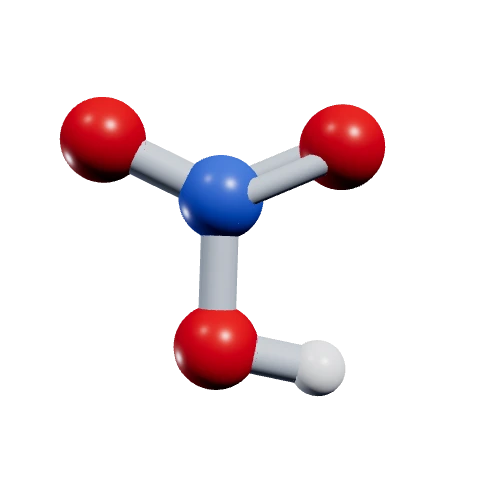


Just before noon on Tuesday, 8 September, a plume the colour of rust rose from behind the roofline of a one-storey commercial building on South Cypress Street in La Habra and sat over the neighbourhood for the better part of three hours. Residents within a mile were told to shelter in place. A middle school half a mile away was emptied. Then the cloud thinned, the fire department gave the all-clear, and everyone went back to work. Nobody was hurt. Nobody has officially said what the chemical was.
We ship nitric acid, isopropyl alcohol and phosphoric acid every week, so this is not a story we can watch from a distance. What follows is what the colour of that cloud says on its own, what the incompatibility tables say about how it forms, why a company that makes cleaning products would have both halves of the reaction on site, and the one line in your own safety data sheet that turns the whole episode into a floor plan.
What happened on South Cypress Street
The timeline below is assembled from the Los Angeles County Fire Department’s statements as reported by ABC7, CBS Los Angeles, LAist and Voice of OC. Where the outlets differ on a detail, the more conservative version is used.
| Time (PT) | What was reported | Source |
|---|---|---|
| 11:54 a.m. | Hazmat incident reported at a manufacturer of industrial cleaning products in the 500 block of South Cypress Street. Responding firefighters saw an orange plume rising from the roof of a one-storey commercial building. | CBS LA, LAist |
| ~12:00 p.m. | Evacuation order for roughly a one-mile radius, later downgraded to a shelter-in-place advisory over a smaller area. Washington Middle School, about half a mile away, evacuated as a precaution. | ABC7, CBS LA |
| Early afternoon | Hazmat teams enter, isolate the leaking tank and confirm the leak is controlled. Active air monitoring in place. South Coast AQMD deploys staff to investigate. | ABC7, LAist |
| ~2:30 p.m. | All-clear. Shelter-in-place lifted. Three employees evaluated by paramedics at the scene; LAist reported minor respiratory irritation, and none needed further treatment. | ABC7, LAist, Voice of OC |
On cause, the reporting agrees on the shape and not the substance. ABC7 put it this way: workers were cleaning out their system when “some of the chemicals they were using came into contact with residual chemicals still in the line, causing a reaction.” CBS Los Angeles was more specific about one half of the pair: “Investigators believe the orange-yellow plume was accidentally created when a chemical inside the plant mixed with alcohol.”
A crowdsourced Citizen alert during the incident named nitric and phosphoric acid. No official source has confirmed that, and this article does not assert what was in the tank. It does not need to. The colour does most of the work.
Second time this year for Orange County. On 21 May a methyl methacrylate tank at a Garden Grove aerospace facility triggered a much larger response. We covered it at the time: Orange County MMA Tank Incident Triggers Large Hazmat Response. Different chemistry, same lesson about what sits next to what.
Orange smoke has one common meaning
Most industrial releases are invisible, white, or grey. A dense orange-brown cloud is unusual enough that it carries its own identification. In practice there are two gases that colour: bromine vapour, which almost nobody outside a specialist plant keeps in quantity, and nitrogen dioxide, which any site running nitric acid can make by accident in seconds.
The NIOSH Pocket Guide describes nitrogen dioxide as a “yellowish-brown liquid or reddish-brown gas (above 70°F) with a pungent, acrid odor.” The colour is a property of the molecule: NO₂ absorbs strongly at the blue–violet end of the visible spectrum, so the light that gets through a cloud of it to your eye is what is left over — orange, tan, brown, depending on thickness. A witness across the street told LAist it “looked like pollen dust.” That is a fair description of a thin NO₂ cloud in full sun.
The same fact is written into nitric acid itself. Concentrated nitric acid is nominally colourless; the yellow or red tint you see in an older bottle is dissolved NO₂ that the acid has generated by slowly decomposing. NIOSH’s nitric acid entry says so directly: “Fuming nitric acid is concentrated nitric acid that contains dissolved nitrogen dioxide.” The acid carries a small sample of the gas it can make.
The numbers behind the colour
Nitrogen dioxide is not the most acutely toxic gas a plant can release, and that is part of what makes it dangerous: the exposure limits are low, and the worst effects are delayed.
| Limit | Value | Meaning |
|---|---|---|
| NIOSH REL (short-term, 15 min) | 1 ppm | Recommended ceiling for any 15-minute period |
| OSHA PEL (ceiling) | 5 ppm | Legal limit; never to be exceeded at any moment |
| NIOSH IDLH | 13 ppm | Immediately dangerous to life or health |
Thirteen parts per million is a small number. For scale, a cloud dense enough to be photographed from across a street and to sit visibly over a neighbourhood for hours is not a trace release, which is why a one-mile shelter-in-place was the correct call and not an over-reaction.
The delayed part matters more than the acute part. NIOSH lists the symptoms of NO₂ exposure as irritation of the eyes, nose and throat, cough, decreased pulmonary function, chest pain and, at the serious end, pulmonary edema. The ATSDR fact sheet for nitrogen oxides adds the timing: “Exposure to low levels can also result in fluid build-up in the lungs 1 or 2 days after exposure.” NO₂ is less water-soluble than ammonia or hydrogen chloride, so less of it is scrubbed out in the moist upper airway and more of it reaches the deep lung.
“I feel fine” is not the end of an NO₂ exposure. The three employees checked on Tuesday were evaluated at the scene and did not need further treatment, which is the right outcome. But the reason paramedics evaluate everyone after an orange-cloud incident, including people who feel fine, is the one-to-two-day delay in the ATSDR sentence above. If you are ever near one of these, get evaluated the same day and say what colour the cloud was.
Where the gas comes from: nitric acid is an oxidizer first
People file nitric acid under “acid” and manage it like hydrochloric or sulfuric. It is an acid, but its defining hazard is different. Nitric acid is a strong oxidizing agent, which means it does not just dissolve things — it pulls electrons out of them, and in doing so its own nitrogen gets reduced and leaves as a gas. That gas is a mixture of nitrogen oxides, and in air the mixture is dominated by NO₂.
The NIOSH Pocket Guide entry for nitric acid lists its incompatibilities in one line: “Combustible materials, metallic powders, hydrogen sulfide, carbides, alcohols.” Five categories. Two of them describe isopropyl alcohol, which is both an alcohol and a combustible liquid with a flash point of 53°F.
The University of Washington’s Environmental Health & Safety office, which publishes a nitric acid safety focus sheet after incidents on its own campus, gives the longer list: nitric acid “reacts violently with alcohols, alkalis, reducing agents, combustible materials, organic materials, metals, acids, cyanides, terpenes, charcoal, and acetone.” Read that against the inventory of a plant that formulates industrial cleaners — alcohols, surfactants, terpene degreasers, chelants, alkaline builders — and almost every line is a match.
What the reaction looks like from the outside
When concentrated nitric acid meets an alcohol, the acid oxidises the alcohol — an alcohol like isopropanol is taken to acetone and onward — and the acid’s nitrogen comes off as NO and NO₂. Three things about that reaction explain Tuesday:
- It is exothermic. Heat accelerates it, so a reaction that starts slowly in a cool line can run away as the mixture warms.
- It makes gas from liquid. A modest volume of liquid reagents becomes a large volume of gas. In an open system that gas leaves through the roof, which is what the photographs show. In a closed container it becomes pressure, which is what the next section is about.
- It can start late. Nitric acid and organics do not always react on contact. The classic laboratory version of this accident involves a container that sat quietly for a while first.
Why a cleaning-products plant has both halves of the reaction
It is worth being clear that nothing in this section is a statement about what the La Habra facility was doing. It is an explanation of why the two reagents CBS named — an acid and an alcohol — are ordinary neighbours in this industry.
Clean-in-place chemistry for food and beverage plants runs on an alternating cycle: an alkaline wash to strip fats and proteins, then an acid wash to dissolve the mineral scale the alkali cannot touch. In dairies that scale is milkstone, a calcium phosphate deposit that builds up on heat exchangers and vessel walls. The standard acid step is nitric acid or a nitric/phosphoric blend, because nitric acid dissolves the scale quickly and helps re-passivate the stainless steel between cycles. Commercial CIP acid cleaners sold to dairies are commonly formulated exactly that way: low-foaming nitric and phosphoric acid blends. We wrote about the same chemistry from the biotech side in Bioreactor CIP Chemistry: Caustic Soda, Nitric Acid, Passivation and pH Control.
Alcohol is the other half of the same product line. Isopropyl and ethyl alcohol are the base of food-contact surface sanitisers, quick-drying equipment wipes and no-rinse sprays. A formulator serving food processors will have nitric acid blends and alcohol-based products on the same site, often on the same day, sometimes on the same filling line.
The hazard is not that a plant has both. Thousands do. The hazard is a line that changes service — acid product on Monday, alcohol product on Tuesday — without a flush that is verified empty in between. ABC7’s account of Tuesday is that sentence exactly: chemicals being used to clean the system met residual chemicals still in the line.
The laboratory version: the waste bottle
Every chemist has heard of this accident at bench scale, and a lot of them have seen the aftermath. Nitric acid waste goes into a container that already holds organic solvent waste, or an empty solvent bottle that was not rinsed. Nothing happens. The cap goes on. Some time later — minutes, hours, occasionally the next morning — the reaction gets going, the container pressurises, and the cap or the bottle lets go.
The University of Washington reports it plainly: “There have been two separate waste container explosions at the UW. Luckily, no injuries resulted from these incidents; however, there were chemical spills and broken glass to clean up.” Its guidance that followed is the one every nitric acid user should already have on the wall: “Do not mix nitric acid waste with any other waste streams, including other inorganic acids.” Never reuse an organic solvent bottle for nitric acid waste. Keep nitric acid waste in its own labelled, vented container, in secondary containment, away from everything on the incompatibility list.
The scale is the only difference. A litre waste bottle makes enough NO₂ to fill a fume hood. A process line makes enough to close a middle school.
Los Angeles has seen this colour before
There is a reason the South Coast Air Quality Management District had staff on South Cypress Street within the hour, and it is older than the agency.
On 26 July 1943, in the middle of the Second World War, the South Coast AQMD’s own history records that “a pall of smoke and fumes descended on downtown, cutting visibility to three blocks,” and that the “gas attack” — the phrase Los Angeles residents actually used, because they assumed the city was under Japanese chemical attack — came with an “eye-stinging, throat-scraping sensation.” It was not an attack. It was the city’s own cars and factories, trapped under an inversion layer.
Four years later the county established the Los Angeles County Air Pollution Control District, the first body of its kind in the United States. In 1948 a Caltech biochemist named Arie Haagen-Smit, until then a plant-biochemistry researcher, turned his attention to why the smog was killing crops and stinging eyes. By 1952 he had the recipe, and he published it in Industrial & Engineering Chemistry: hydrocarbons from gasoline, oxides of nitrogen, and sunlight. In his words, “The photochemical oxidation is initiated by the dissociation of NO₂ into NO and atomic oxygen.”
That is the same molecule. Los Angeles smog is famously brown rather than grey because of the NO₂ in it, and the entire architecture of Californian air regulation — the district that responded on Tuesday included — was built to control it at the parts-per-billion level across a basin. What La Habra saw for two and a half hours was the same gas at a concentration high enough to photograph.
“Keep away from organics and combustibles” is a floor plan
Section 7 of every nitric acid safety data sheet — Handling and Storage — contains a version of the line keep away from combustible and organic materials. Most people read it as a warning label. It is more useful read as a set of instructions about where things go and what order things happen in. Three questions the SDS raises but does not answer for your site:
- Where does the acid line end, and what was in it before? A shared transfer line, a shared filling head, a shared drain. If a line carries nitric acid product and an alcohol product on different days, the flush between them is a process step with a verification, not a rinse.
- What is within a spill’s reach of the acid? Not the same shelf — the same containment. Nitric acid in secondary containment of its own, as the University of Washington recommends, is not a bureaucratic nicety; it is the difference between a spill and a reaction.
- Is the isopropyl alcohol on the same shelf? IPA is on the nitric acid incompatibility list twice, as an alcohol and as a combustible. It gets its own cabinet.
Our own Professional’s Guide to Chemical Storage works through the segregation logic for acids, bases and solvents, and How to Read a Safety Data Sheet walks Section 7 and Section 10 (Stability and Reactivity), which is where the incompatibility list lives.
The one-line version. Separate cabinets. Separate lines. A full, verified flush before a line changes service. If you do only one thing after reading this, go and look at what is physically next to the nitric acid.
If you ever see an orange-brown cloud
This is not medical advice; it is what the agencies say. Move away from it and upwind, indoors if the local fire department says shelter in place, and follow their instructions rather than social media. Do not go back for equipment. If you were close enough to smell it — acrid, sharp, like the inside of a bottle of fuming nitric acid — get evaluated the same day even if you feel well, and tell the clinician the cloud was orange-brown, because that word tells them to watch for the delayed lung effects ATSDR describes.
Where this matters in our own catalogue
We stock all three of the chemicals this story touches, and we would rather you buy them with the incompatibility table in mind than find out about it from the roof.
| Product | Grades we carry | The note that matters here |
|---|---|---|
| Nitric acid | 65%, 69% and 70% in technical and ACS grades; dilute 5–40% solutions | Oxidizer. Own cabinet, own containment, own waste stream. 70% is concentrated, not fuming. |
| Isopropyl alcohol | 99% technical, 99.9% ACS, plus 50–91% USP dilutions | On the nitric acid incompatibility list as an alcohol and as a combustible (flash point 53°F). |
| Phosphoric acid | 85% technical, 85% ACS, dilutions to 5% | The usual partner in CIP acid blends. Not an oxidizer; the nitric half of the blend is the one that makes NO₂. |
If you are specifying nitric acid for the first time, Where to Buy Nitric Acid: Grades, Concentrations, Licensing and Shipping covers the concentration and paperwork questions, and The Definitive Guide to Nitric Acid Passivation covers the stainless-steel side of the CIP story.
Common questions
Why was the smoke over La Habra orange?
Because orange-brown is the colour of nitrogen dioxide. NIOSH describes NO₂ as a reddish-brown gas; it absorbs blue light, so a cloud of it looks orange to tan in daylight. No official source has named the chemical involved, but the colour is characteristic, and investigators told CBS Los Angeles the plume formed when a chemical inside the plant met alcohol.
How dangerous is nitrogen dioxide?
NIOSH sets a 15-minute exposure limit of 1 ppm and an IDLH of 13 ppm; OSHA’s ceiling is 5 ppm. The acute symptoms are eye, nose and throat irritation and cough. The serious effect is pulmonary edema, and ATSDR notes that fluid build-up in the lungs can appear one or two days after exposure, which is why everyone near an NO₂ release should be evaluated even if they feel well.
What happens when nitric acid meets alcohol?
Nitric acid is a strong oxidizer, and it oxidises the alcohol. The reaction is exothermic and releases nitrogen oxides, mainly NO₂, as gas. NIOSH lists alcohols among nitric acid’s incompatibilities, and the University of Washington describes the reaction as violent. It can also start after a delay, which is how nitric acid waste bottles explode.
Has the chemical in the La Habra incident been officially identified?
Not as of publication. The fire department did not name the chemical. CBS Los Angeles reported investigators’ belief that a chemical inside the plant mixed with alcohol; a Citizen alert during the incident named nitric and phosphoric acid. This article explains the chemistry that produces an orange plume and does not assert what was in the tank.
Can nitric acid and isopropyl alcohol be stored at the same site?
Yes, and they routinely are. The SDS instruction is separation: nitric acid in its own cabinet and its own secondary containment, away from organics and combustibles; isopropyl alcohol, which is both, in a flammables cabinet. Any shared transfer line or filling head needs a verified flush before it changes from one service to the other.
What should you do if you see an orange-brown cloud?
Move away and upwind, follow the local fire department’s shelter-in-place or evacuation instructions, and do not return for equipment. If you were close enough to smell it, get a medical evaluation the same day even if you feel fine, and tell the clinician the cloud was orange-brown so they know to watch for delayed lung effects.
References & Authoritative Sources
Exposure limits and physical descriptions are from the NIOSH Pocket Guide and ATSDR; the incident timeline is from Los Angeles County Fire Department statements as reported by the outlets below.
- Hazmat situation in Orange County city of La Habra prompts evacuations — CBS Los Angeles, 8 September 2026. Source of the investigators’ “mixed with alcohol” statement and the 11:54 a.m. / 2:30 p.m. timeline.
- All-clear given after orange smoke seen rising from chemical leak in La Habra — ABC7 Los Angeles, 8 September 2026. Source of the “residual chemicals still in the line” account and the employee evaluations.
- Authorities respond to a leak of an unknown chemical from a tank in La Habra — LAist, 8 September 2026. Witness description, South Coast AQMD deployment, minor respiratory irritation.
- La Habra shelter-in-place order lifted after orange plume hovers above City Hall neighborhood — Voice of OC, September 2026.
- NIOSH Pocket Guide to Chemical Hazards: Nitrogen dioxide — CAS 10102-44-0. Physical description, REL, PEL, IDLH and symptoms.
- NIOSH Pocket Guide to Chemical Hazards: Nitric acid — CAS 7697-37-2. Incompatibilities and the note on fuming nitric acid.
- NIOSH Pocket Guide to Chemical Hazards: Isopropyl alcohol — Flash point 53°F; incompatible with strong oxidizers and acids.
- ATSDR: Nitrogen Oxides — Agency for Toxic Substances and Disease Registry. Delayed pulmonary effects one to two days after exposure.
- Reduce your risk of a nitric acid incident — University of Washington Environmental Health & Safety. Reactivity list, the two campus waste-container explosions, and waste segregation guidance.
- The Southland’s War on Smog: Fifty Years of Progress Toward Clean Air — South Coast Air Quality Management District. The 26 July 1943 episode.
- Fifty Years of Clearing the Skies — Caltech. Haagen-Smit’s identification of the smog recipe and the founding of the Los Angeles County Air Pollution Control District in 1947.
- Haagen-Smit, A. J. (1952). Chemistry and Physiology of Los Angeles Smog. Industrial & Engineering Chemistry — the primary paper.
- MPA Clear No. 148 Acid Cleaner — Nitric and Phosphoric Blend, Low-Foaming for CIP Systems — Nelson-Jameson product listing, cited as an example of a commercial dairy CIP acid cleaner formulated as a nitric/phosphoric blend for milkstone and mineral deposits.
Buying nitric acid and want the SDS first?
Tell us the concentration, the grade and the container size and we will send the safety data sheet before you order, not after it lands on your dock. If you are setting up a CIP acid step or a passivation line and are not certain which concentration it needs, describe the application — we would rather get it right than ship the wrong material.
Browse nitric acid by grade and sizeKey numbers and sources
| Number | What it is | Source |
|---|---|---|
| 11:54 a.m. → 2:30 p.m. | First report to all-clear, 8 Sept 2026 | CBS Los Angeles |
| 1 ppm / 5 ppm / 13 ppm | NO₂ NIOSH 15-min REL / OSHA ceiling / IDLH | NIOSH Pocket Guide 0454 |
| 1–2 days | Delay before lung fluid build-up can appear | ATSDR |
| 5 categories | Nitric acid incompatibilities, alcohols among them | NIOSH Pocket Guide 0447 |
| 53°F | Isopropyl alcohol flash point | NIOSH Pocket Guide 0359 |
| 2 explosions | Nitric acid waste containers at one university | UW EH&S |
| 26 July 1943 / 3 blocks | The Los Angeles “gas attack” and its visibility | South Coast AQMD |
Frequently asked questions
Why was the smoke over La Habra orange?
Because orange-brown is the colour of nitrogen dioxide. NIOSH describes NO₂ as a reddish-brown gas; it absorbs blue light, so a cloud of it looks orange to tan in daylight. No official source has named the chemical involved, but the colour is characteristic, and investigators told CBS Los Angeles the plume formed when a chemical inside the plant met alcohol.
How dangerous is nitrogen dioxide?
NIOSH sets a 15-minute exposure limit of 1 ppm and an IDLH of 13 ppm; OSHA's ceiling is 5 ppm. The acute symptoms are eye, nose and throat irritation and cough. The serious effect is pulmonary edema, and ATSDR notes that fluid build-up in the lungs can appear one or two days after exposure, which is why everyone near an NO₂ release should be evaluated even if they feel well.
What happens when nitric acid meets alcohol?
Nitric acid is a strong oxidizer, and it oxidises the alcohol. The reaction is exothermic and releases nitrogen oxides, mainly NO₂, as gas. NIOSH lists alcohols among nitric acid's incompatibilities, and the University of Washington describes the reaction as violent. It can also start after a delay, which is how nitric acid waste bottles explode.
Has the chemical in the La Habra incident been officially identified?
Not as of publication. The fire department did not name the chemical. CBS Los Angeles reported investigators' belief that a chemical inside the plant mixed with alcohol; a Citizen alert during the incident named nitric and phosphoric acid. This article explains the chemistry that produces an orange plume and does not assert what was in the tank.
Can nitric acid and isopropyl alcohol be stored at the same site?
Yes, and they routinely are. The SDS instruction is separation: nitric acid in its own cabinet and its own secondary containment, away from organics and combustibles; isopropyl alcohol, which is both, in a flammables cabinet. Any shared transfer line or filling head needs a verified flush before it changes from one service to the other.
What should you do if you see an orange-brown cloud?
Move away and upwind, follow the local fire department's shelter-in-place or evacuation instructions, and do not return for equipment. If you were close enough to smell it, get a medical evaluation the same day even if you feel fine, and tell the clinician the cloud was orange-brown so they know to watch for delayed lung effects.
Related Chemical Collections
About the author
Andre Taki
This article is for informational purposes only.


