

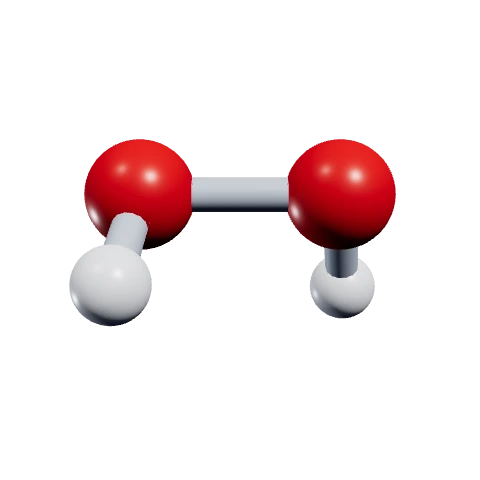


Few solutions in a laboratory have a reputation like piranha. Two clear, colorless liquids go into a glass beaker, the mix gets hot enough to boil water, and anything organic it touches, from a fingerprint to a baked-on layer of photoresist, is oxidized away. University safety offices write whole procedures for it. Some require training before anyone may mix a single batch.
That reputation is earned, and it is also why so much of what is written about piranha online is vague. This guide sets out what university environmental health and safety (EHS) procedures and peer-reviewed papers actually say: the ratios in use, the order of mixing, how hot it gets, what it is used for, how it differs from “base piranha” and aqua regia, and where the experts disagree on gloves and disposal. Every quotation is verbatim and linked at the end.
We sell the two ingredients, Sulfuric Acid 96% ACS Grade and Hydrogen Peroxide 30% ACS Grade. We do not sell piranha solution itself, and nobody should: it has to be made fresh, used and retired the same day.
Last reviewed 12 October 2026 against the university procedures and papers cited below. This is a chemistry reference, not a substitute for your institution’s written procedure, training or EHS office. How we researched it is set out at the end.
| Piranha solution at a glance | |
|---|---|
| Ingredients | Concentrated sulfuric acid (CAS 7664-93-9) + 30% hydrogen peroxide (CAS 7722-84-1) |
| Usual ratio | 3:1 by volume (protocols run 3:1 to 7:1) |
| Order of mixing | Peroxide slowly into the acid, never the reverse |
| Temperature on mixing | 100 °C or more, from the reaction alone |
| Active oxidizer | Peroxymonosulfuric (Caro’s) acid, H₂SO₅ |
| Main uses | Removing organic residue from silicon wafers, glass and quartz; making surfaces hydrophilic |
| Never | Organic solvents nearby, plastic containers, a sealed or capped container |
| Storage | None: make fresh, use, retire |
| Disposal | Cool open in a fume hood, then your institution’s route (waste collection or neutralization) |
What is piranha solution?
Piranha solution is a mixture of concentrated sulfuric acid (H₂SO₄) and hydrogen peroxide (H₂O₂) that oxidizes organic matter off surfaces. The University of Pittsburgh’s procedure describes the common version precisely: piranha solutions “typically contain a 3:1 mixture of concentrated sulfuric acid and 30% hydrogen peroxide.” Yale’s EHS office says it is “used to remove organic residues from substrates, particularly in microfabrications laboratories.”
It is sometimes called piranha etch, and in semiconductor manufacturing it is usually written as SPM, short for sulfuric acid and hydrogen peroxide mixture. It is not a product you buy in a bottle. It is something you make in a beaker in a fume hood, use within the hour and then let cool and decompose.
The two ingredients. Sulfuric acid, CAS 7664-93-9, used at 95–98% concentration. Hydrogen peroxide, CAS 7722-84-1, used at 30%. Piranha is a mixture made on the spot, so it is identified by its two ingredients; its composition keeps changing as the peroxide reacts and decomposes.
What is the piranha solution ratio?
The standard piranha ratio is 3 parts concentrated sulfuric acid to 1 part 30% hydrogen peroxide by volume, but published protocols range from 3:1 to 7:1. The University of Illinois describes it as “usually in a ratio of 3:1 to 7:1,” and the University of Cambridge chemistry department’s procedure notes that “other protocols may use a 4:1 or even a 7:1 mixture.” Stanford’s nanofabrication facility lists a 9:1 bath, and a 2019 electrochemistry paper in Chemical Science cleaned its glassware in a 5:1 mix.
More acid gives a hotter, more strongly dehydrating bath; more peroxide gives more oxidant but brings real danger, covered below. Here are the volumes for 100 mL of finished solution:
| Ratio (acid : peroxide) | Concentrated H₂SO₄ | 30% H₂O₂ | Where you see it |
|---|---|---|---|
| 3:1 | 75 mL | 25 mL | The common default in university SOPs |
| 4:1 | 80 mL | 20 mL | Alternative protocols |
| 5:1 | 83.3 mL | 16.7 mL | Electrochemistry glassware cleaning |
| 7:1 | 87.5 mL | 12.5 mL | Upper end of the usual range |
| 9:1 | 90 mL | 10 mL | Some nanofabrication resist strips |

Do not let peroxide take over. Pitt says “concentrations of hydrogen peroxide should not exceed 30%.” Princeton and the University of Rhode Island say peroxide “should be kept under 30% and should NEVER exceed 50%,” and Illinois warns that “mixtures of 50% peroxide or stronger should be avoided due to the possibility of explosion.” A letter to Chemical & Engineering News in 1990 described a peroxide-rich batch, 150 mL of each, that sat for a week and then “detonated spontaneously.”
How does piranha solution work?
Piranha works because hydrogen peroxide reacts with concentrated sulfuric acid to form peroxymonosulfuric acid, H₂SO₅, also called Caro’s acid, an extremely strong oxidizer. The University of Illinois puts it this way: “The reaction of hydrogen peroxide on concentrated sulfuric acid produces highly activated and oxidizing peroxymonosulfuric acid (H2SO5), also called Caro’s acid,” citing the Royal Society of Chemistry monograph Applications of Hydrogen Peroxide and Derivatives. Illinois adds that piranha “can contain up to 5% peroxymonosulfuric acid.”
H₂SO₄ + H₂O₂ → H₂SO₅ + H₂O
Concentrated sulfuric acid is itself a strong dehydrating agent, and the Caro’s acid it forms with peroxide is a far stronger oxidizer than either ingredient alone. Together they break down organic films that solvents only redistribute, which is why piranha is used as the last cleaning step on parts that must carry no organic residue at all.
The second effect matters just as much for many users. Cambridge notes that piranha “will also hydroxylate most surfaces (add OH groups), making them extremely hydrophilic.” A glass slide or silicon wafer that comes out of piranha and is rinsed in clean water lets water spread across it in a continuous sheet instead of beading up.

What is piranha solution used for?
Piranha solution is used to remove organic contamination from substrates that can survive it: silicon wafers, glass, quartz and some metals. The main uses documented in procedures and papers:
- Semiconductor and microfabrication. Stripping photoresist and organic residue from wafers before and after process steps. Stanford’s facility notes it is “traditionally used for resist removal.” Our guides to high-purity chemicals in semiconductor fabrication and photonics manufacturing chemistry show where it sits in a process line.
- Electrochemistry and hydrogen research. Electrocatalysis results are notoriously sensitive to trace contamination, so many labs piranha-clean their glass cells. A 2022 paper in Communications Chemistry reports: “All glassware was piranha-cleaned and subsequently rinsed at least 20 times with Millipore water.” The same care applies in labs developing electrolyzers, fuel cells and solar water-splitting devices; see our guide to potassium hydroxide in electrolysis.
- Surface preparation. Making glass and oxide surfaces hydrophilic before coating, bonding or growing self-assembled monolayers.
- Cleaning fritted and fine glassware. Removing organic deposits from sintered-glass filters and other glass that brushes cannot reach.
It is not a general-purpose cleaner. It attacks many metals, destroys plastics and reacts violently with any significant amount of organic material, which is why it is reserved for already-clean parts that need to be truly clean.
How do you mix piranha solution safely?
Add the hydrogen peroxide slowly to the sulfuric acid, never the other way round, in a glass container inside a fume hood. Yale’s procedure is direct: “Slowly add the hydrogen peroxide to the sulfuric acid.” Pitt says the peroxide is “added to the sulfuric acid VERY SLOWLY while stirring,” and Princeton and URI state: “DO NOT add sulfuric acid to hydrogen peroxide.” Caltech’s procedure gives the reason: “Adding sulfuric acid to H2O2 could cause an explosion (oxygen concentration becomes too high).”
This is the opposite of the usual dilution rule. When diluting concentrated sulfuric acid with water you add acid to water, as covered in our sulfuric acid concentration guide. Piranha is not a dilution, and its procedures put the peroxide into the acid. We found one older facility procedure (Tel Aviv University, 2012) that applies the “always add acid” rule to piranha; every other procedure we read says the reverse.
The sequence most university procedures share:
- Prepare. Work in a fume hood; Yale specifies the sash lowered to 12 inches. Clear the hood of every organic solvent, wash bottle of acetone or isopropanol, and anything plastic. Many institutions require written training first.
- Use glass. Pitt states “THE USE OF PLASTIC CONTAINERS FOR PIRANHA SOLUTION IS PROHIBITED” and prefers borosilicate glass “(preferably Pyrex®)”. Stand the beaker in secondary containment.
- Acid first, then peroxide, slowly. Measure the sulfuric acid into the beaker. Add the 30% peroxide slowly while stirring. Expect the mixture to heat quickly: Pitt says “reaction temperatures ≥100°C should be expected,” and Cambridge says mixing “can raise the temperature to 120°C.”
- Clean only clean parts. Pre-rinse parts so that only trace organics remain. Lower them in gently; piranha splashes when parts drop in.
- Retire it. When finished, leave the solution to cool and finish reacting in an open, labeled glass container in the hood, then follow your institution’s disposal route. Never cap it.

Why does piranha solution explode?
Piranha explodes when it meets too much organic material or is trapped in a closed container while it is still releasing gas. Pitt lists the classic triggers: contact with “acetone, isopropanol, Photoresist, and nylon will result in an explosion.” Illinois reminds users that “any chemical containing a C-H bond” is organic. The 1990 C&EN letter traced one university explosion to “an acetone residue” in the glassware.
The second hazard is pressure. The peroxide in piranha keeps decomposing to oxygen for hours. Pitt writes in capitals: “DO NOT STORE FRESHLY PREPARED PIRANHA SOLUTION IN A CLOSED/SEALED CONTAINER,” and Yale is shorter still: “Piranha stored in a closed container will explode.” Our existing Sulfuric Acid 96% ACS Grade reference makes the same point: piranha is freshly prepared, used once and never sealed.
Acid in the beaker first. Peroxide in slowly. Nothing organic nearby. Nothing ever sealed.
What PPE do you need for piranha solution?
Piranha requires splash goggles and a face shield, heavy chemical-resistant gloves, a lab coat and chemical-resistant apron, and a fume hood. Yale lists “Safety goggles and a face shield,” a “chemical-resistant apron,” and gloves of “utility style nitrile or neoprene … worn over an exam-style nitrile glove.”
Gloves are where procedures disagree. Pitt specifies “Neoprene or butyl rubber gloves,” URI specifies butyl, and the University of Maryland, Baltimore County warns “Nitrile is not sufficient.” Caltech allows doubled acid-compatible nitrile only for very small volumes. If your institution names a glove, use that one; if it does not, the conservative reading of these procedures is a heavy neoprene or butyl glove. Our guide to nitrile glove chemical resistance explains how breakthrough times are measured and why glove material matters.
| Topic | What most procedures say | Where they differ |
|---|---|---|
| Peroxide strength | 30% | Pitt: never above 30%. URI, Princeton, Cambridge: never above 50% |
| Order of addition | Peroxide into acid, slowly | One 2012 facility SOP says the reverse |
| Container | Borosilicate glass | Yale accepts PTFE; Caltech warns heat can melt it |
| Gloves | Heavy neoprene or butyl | Yale accepts heavy nitrile over exam nitrile; UMBC says nitrile is not enough |
| Storage | Never; make fresh | One SOP allows a vented cap |
| Eye exposure | Flush at least 15 minutes | UMBC says at least 30 minutes |
For any skin contact, Pitt says to “immediately rinse the exposed area for at least 15 minutes” and seek medical attention; for the eyes, UMBC says to irrigate “for at least 30 minutes.” Follow your own institution’s first-aid procedure and the safety data sheets for both ingredients.
How do you dispose of or neutralize piranha solution?
First let the solution cool and finish reacting in an open container in the fume hood; after that, universities split between collecting it as hazardous waste and neutralizing small amounts. Pitt has users “cool overnight in a properly labeled open container within a fume hood” before it is “disposed of via the University’s Chemical Waste Program.” Illinois waits “for at least 24 hours” before collection.
Beyond that point the procedures genuinely conflict:
- Waste only. URI: “Under no circumstances should any amount of piranha solution be neutralized or otherwise treated.” Pitt and Yale also route it to chemical waste collection.
- Neutralize small volumes. Princeton says “quantities less than 100ml should be neutralized” to a pH between 4 and 10, and warns that “the neutralization process is exothermic and an ice bath may be necessary.” Illinois describes adding the spent solution to ice before slowly adding dilute base.
Which applies to you depends on your institution, your local wastewater rules and your waste contractor, not on a blog. The common ground is clear: never treat hot or freshly mixed piranha, never pour it into a waste container with organic solvents, and never cap it. For spills of the concentrated acid itself, see our sulfuric acid spill response guide.
What is base piranha?
Base piranha is a mixture of ammonium hydroxide and hydrogen peroxide, usually heated, used instead of the acid version where a surface or metal will not tolerate concentrated sulfuric acid. There is no single recipe. Cambridge describes “a 3:1 mixture of ammonium hydroxide (NH4OH) with hydrogen peroxide” that “must be heated to 60°C.” Published papers use other proportions, including a 5:1:1 or 6:1:1 mix of water, ammonia and 30% peroxide at about 60–65 °C.
Those water-diluted versions closely resemble SC-1, the first step of the RCA clean that Werner Kern and David Puotinen published in 1970. In Kern’s own description, wafers were cleaned “first in H2O2-NH4OH-H2O to oxidize organics… then in H2O2-HCl-H2O,” and the two baths were “dubbed ‘SC-1’ and ‘SC-2’.” Neither RCA bath contains sulfuric acid, so SPM (acid piranha) is not an RCA step, even though fabs often run it before them. Our ammonium hydroxide 29% guide covers the base side, and Ammonium Hydroxide 29% ACS Grade is the grade typically specified.
Piranha solution vs aqua regia: what is the difference?
Piranha destroys organic material; aqua regia dissolves noble metals. Aqua regia is nitric acid and hydrochloric acid, “1:3 V/V” in the University of California, Santa Barbara procedure, and the University of Washington notes it is “best known for its ability to dissolve gold and platinum.” Piranha is used to clean organic films off glass and silicon and does not have that reputation for dissolving gold.
| Piranha (acid) | Base piranha | Aqua regia | |
|---|---|---|---|
| Ingredients | Conc. H₂SO₄ + 30% H₂O₂ | NH₄OH + H₂O₂ (often + water) | Conc. HNO₃ + conc. HCl |
| Typical ratio | 3:1 to 7:1 | Varies (3:1; 5:1:1; 6:1:1) | 1:3 |
| Main job | Remove organics, hydroxylate surfaces | Remove organics and particles more gently | Dissolve gold, platinum and other metals |
| Signature hazard | Self-heating, explosion with organics or in sealed containers | Heated, corrosive vapors; peroxide decomposition | Corrosive, toxic fumes |
| Storage | Never | Never | Never; make fresh |
Does piranha solution dissolve gold?
Piranha solution is routinely used to clean gold electrodes rather than to dissolve gold, but it can damage thin gold films. A 2022 study in Scientific Reports on cleaning gold electrodes notes that piranha “has been considered the most popular oxidizing agent to remove different kinds of impurities and organic materials from the gold surface,” while “some evidence of delamination of gold film from the substrate and topography damage have been reported in addition to the gold-oxide formation on the surface that requires to be removed with further cleaning procedures.” Dissolving gold is aqua regia’s job, covered above. For thin, printed or plated gold, shorter exposures or electrochemical cleaning are common alternatives.
Is there an SDS for piranha solution?
Piranha solution is mixed on the spot and not sold, so the safety data sheets that apply are those of its two ingredients, read alongside your institution’s written piranha procedure. We do not sell piranha and publish no SDS for it. The SDSs for our ingredients are online: Sulfuric Acid 96% ACS Grade SDS and Hydrogen Peroxide 30% ACS Grade SDS.
Is piranha solution legal?
Piranha solution itself is mixed on the spot rather than sold, but regulators do track its ingredients, and the rules depend on concentration and country. This section reports what the rules say; it is not legal advice.
- United States. The Chemical Facility Anti-Terrorism Standards (CFATS) list in 6 CFR Part 27, Appendix A, includes “Hydrogen peroxide (concentration of at least 35%)”; sulfuric acid is not on that list. The Cybersecurity and Infrastructure Security Agency notes that “as of July 28, 2023, Congress allowed the statutory authority” for CFATS “to expire” and that it “cannot enforce compliance with the CFATS regulations at this time.”
- European Union. Regulation (EU) 2019/1148 on explosives precursors lists hydrogen peroxide above 12% w/w and sulfuric acid above 15% w/w as restricted: they are not to be made available to members of the general public above those limits, except where a member state licenses it.
In practice, professional and institutional buyers purchase both ingredients routinely. Shipping concentrated sulfuric acid and 30% hydrogen peroxide also involves hazardous-materials transport rules, and piranha could not be shipped premixed anyway, because it cannot be sealed.
Why does the grade of sulfuric acid and peroxide matter?
The grade matters because piranha leaves behind whatever non-organic impurities its ingredients carried. Piranha burns organic contamination away, but metals and other inorganic impurities in the acid or peroxide stay in the bath, and some can deposit on the very surface you are trying to clean. For glassware headed into electrochemistry, trace analysis or surface science, that defeats the purpose.
ACS grade means the material meets the American Chemical Society’s Reagent Chemicals specification, which sets maximum limits for impurities such as iron and heavy metals. For the most contamination-sensitive semiconductor work, fabs buy dedicated electronic or semiconductor grades with far tighter metal limits; ACS grade is the usual choice for research labs, teaching labs and pilot lines. A certificate of analysis for the lot is available on request, so you can check the figures against your own specification.
Our ingredients, with listed prices read from the product pages on 8 October 2026:
| Pack | Sulfuric Acid 96% ACS Grade | Hydrogen Peroxide 30% ACS Grade |
|---|---|---|
| 1 quart | $44.00 | $25.30 |
| 1 gallon | $68.00 | $52.90 |
| 4 × 1 gallon case | $230.00 | $136.20 |
| 5 gallon pail | $285.00 | $161.70 |
| 55 gallon drum | $1,500.00 | $1,078.00 |
Prices change; the product pages are current. At 3:1, each 100 mL bath uses 75 mL of acid and 25 mL of peroxide, so a quart (about 946 mL) of acid covers about 12 baths while a quart of peroxide covers about 37; labs usually reorder acid first. Rinse parts afterward with high-purity water such as our Deionized Water ACS Reagent Grade. Hydrogen peroxide slowly loses strength in storage; see does hydrogen peroxide expire? and our hydrogen peroxide concentration guide.
The short version: piranha is concentrated sulfuric acid and 30% hydrogen peroxide, usually 3:1, mixed fresh in glass in a fume hood with the peroxide added slowly to the acid. It reaches 100 °C or more, explodes with organic solvents or in sealed containers, and is retired by cooling in an open container before your institution’s disposal route.
How we researched this
We read the current piranha procedures published by the EHS offices of Yale, the University of Pittsburgh, Princeton, the University of Rhode Island, the University of Illinois, Caltech, UMBC, Tennessee Tech and the University of Cambridge chemistry department, and quoted them verbatim; where a page was unavailable we used its archived copy. Where procedures disagree we say so rather than picking one. Base piranha and glassware-cleaning details come from peer-reviewed papers, and the RCA history from Werner Kern’s own account. Regulatory text is quoted from 6 CFR Part 27, CISA and EUR-Lex. Prices were read from our product pages on 8 October 2026. The three photographs in the body and the header image are illustrations, not test results. We did not run our own piranha experiments for this article.
Key numbers and sources
All web sources were read between 8 and 12 October 2026. Quotations are verbatim.
- Piranha Solution Standard Operating Procedure, Yale Environmental Health & Safety
- Piranha Solution (Guideline 04-034), University of Pittsburgh EH&S
- Piranha Solutions, Princeton University EHS (archived 8 December 2025)
- Piranha Solutions, University of Rhode Island EHS
- Piranha Solutions, University of Illinois Division of Research Safety
- Piranha Etch SOP, Caltech Molecular Materials Research Center
- Piranha Solution SOP, University of Maryland, Baltimore County
- Piranha Solutions, Tennessee Tech University
- DSO017C Acid Piranha Solution, University of Cambridge Department of Chemistry (archived)
- Piranha solutions, Stanford Nanofabrication Facility Nanoguide
- Piranha solution explosions (reprinting C&EN letters, 1990), The Safety Zone, C&EN (archived)
- Acid anion electrolyte effects on platinum for oxygen and hydrogen electrocatalysis, Kamat, Zamora Zeledón, Gunasooriya et al., Communications Chemistry 5 (2022)
- Oxygen reactions on Pt{hkl} in a non-aqueous Na+ electrolyte: site selective stabilisation of a sodium peroxy species, Galloway, Dong, Li et al., Chemical Science 10 (2019)
- Citation Classic: Kern & Puotinen, RCA Review 31:187 (1970), W. Kern, Current Contents (1983)
- Polyanhydride Microcapsules Exhibiting a Sharp pH Transition at Physiological Conditions for Instantaneous Triggered Release, Eriksson et al., Langmuir (2023); source of the 6:1:1 base piranha at 65 °C
- Cleaning of LTCC, PEN, and PCB Au electrodes towards reliable electrochemical measurements, Fakhr, Beshchasna, Balakin et al., Scientific Reports 12 (2022)
- Aqua Regia SOP, UC Santa Barbara EH&S
- Aqua Regia SOP, University of Washington EH&S
- Chemical Facility Anti-Terrorism Standards (CFATS), Cybersecurity and Infrastructure Security Agency
- Regulation (EU) 2019/1148 on the marketing and use of explosives precursors, EUR-Lex
Frequently asked questions
What is the ratio for piranha solution?
The common ratio is 3 parts concentrated sulfuric acid to 1 part 30% hydrogen peroxide by volume. University procedures describe a range of 3:1 to 7:1, and some nanofabrication baths use 9:1. Peroxide-rich mixtures are far more dangerous and should be avoided.
Do you add peroxide to acid or acid to peroxide?
Add the hydrogen peroxide slowly to the sulfuric acid. Yale, Pitt, Princeton, URI and Caltech all say so, and Caltech warns that adding the acid to the peroxide could cause an explosion. This is the reverse of the acid-into-water rule used for ordinary dilution.
How hot does piranha solution get?
Expect 100 °C or more on mixing. Pitt says reaction temperatures of at least 100 °C should be expected, and the University of Cambridge procedure says mixing can raise the temperature to 120 °C.
Can you store piranha solution?
No. Piranha keeps releasing oxygen as the peroxide decomposes, and Yale states that piranha stored in a closed container will explode. Make it fresh, use it, and let spent solution cool in an open, labeled container in a fume hood.
What happens if piranha solution touches acetone or isopropanol?
It can explode. Pitt lists acetone, isopropanol, photoresist and nylon as materials that will cause an explosion in contact with piranha, and a documented university explosion was traced to acetone residue in glassware. Keep every organic solvent out of the hood while piranha is in use.
What gloves should you wear for piranha solution?
Heavy neoprene or butyl rubber gloves are the conservative choice, with goggles, a face shield and a chemical-resistant apron. Procedures differ on nitrile: Yale accepts a heavy nitrile or neoprene utility glove over an exam glove, while UMBC says nitrile is not sufficient. Follow your institution's procedure.
How do you dispose of piranha solution?
Let it cool and finish reacting in an open, labeled glass container in a fume hood, typically overnight, then follow your institution's procedure. Some universities collect all piranha as hazardous waste and forbid neutralizing it; others neutralize volumes under 100 mL with care.
What is the difference between piranha solution and base piranha?
Acid piranha is concentrated sulfuric acid with hydrogen peroxide. Base piranha is ammonium hydroxide with hydrogen peroxide, usually heated to about 60 °C and often diluted with water, which makes it similar to the SC-1 step of the RCA clean. Recipes for base piranha vary widely between sources.
Does piranha solution dissolve gold?
No, it is widely used to clean gold electrodes, but a 2022 Scientific Reports study notes reports of thin gold films delaminating, surface damage and gold-oxide formation that needs further cleaning. Aqua regia, a 1:3 mix of nitric and hydrochloric acids, is the solution known for dissolving gold.
Is there an SDS for piranha solution?
Because piranha is mixed on the spot rather than sold, use the safety data sheets for its two ingredients, concentrated sulfuric acid and 30% hydrogen peroxide, together with your institution's written piranha procedure.
Related Chemical Collections
About the author
Andre Taki
This article is for informational purposes only.


