Product Overview
Sodium Chlorite Flakes 80% ACS Grade is a solid oxidizing compound supplied in flake form under CAS 7758-19-2. It serves primarily as a precursor to chlorine dioxide (ClO₂) in water treatment, as an oxidizing reagent in analytical laboratories, and as a feedstock in industrial bleaching and disinfection processes.
The ACS grade designation identifies this product as a procurement tier specified by QC departments, analytical labs, and research facilities that require documented, analytical-grade reagents for their workflows. This is not a bench-scale product — it is available to order in 100 lb units sized for production-scale water treatment systems, industrial reactors, and high-throughput laboratory operations.
Why This Concentration
At 80% active content, this sodium chlorite delivers the highest practical concentration available in a dry, stable solid form. The flake format dissolves at a controlled rate — faster than granules or briquettes, slower than fine powder — letting operators meter precise charges into dissolving tanks, batch reactors, or ClO₂ generators without the dusting risk that comes with powdered product.
The ACS grade designation matters when your receiving QC department or SOP requires batch-documented analytical-grade oxidizers. If your process does not carry that documentation requirement — industrial water treatment, pulp bleaching, general oxidation — the Sodium Chlorite 80% Technical Grade provides the same 80% active strength for process applications at a lower cost point. Choose ACS when the documentation trail matters; choose Technical when throughput and cost efficiency are the priority.
Chemical Profile
Sodium chlorite carries the molecular formula ClNaO₂ and a molecular weight of 90.44 g/mol. Its CAS registry number is 7758-19-2. This product is supplied as dry flakes at 80% active sodium chlorite content. Sodium chlorite is an inorganic salt that functions as a strong oxidizer — its primary industrial value lies in its ability to generate chlorine dioxide on activation with acid, which makes it a workhorse feedstock in water treatment and bleaching operations. The flake form offers practical advantages for bulk handling: controlled dissolution, reduced dust generation compared to powder, and straightforward volumetric metering into process equipment.
Industrial Applications
Sodium chlorite at this concentration supports a range of oxidation-dependent processes across environmental, industrial, and laboratory sectors.
-
Water Treatment and Disinfection — Sodium chlorite is the standard precursor to chlorine dioxide in municipal and industrial water systems. Activated with hydrochloric or sulfuric acid in a ClO₂ generator, it produces a disinfectant effective against taste- and odor-causing compounds, iron, manganese, and biological contaminants. Water treatment operators value the flake form for its storage stability and ease of batching compared to liquid sodium chlorite solutions.
-
Chlorine Dioxide Generation for Bleaching — Pulp and paper mills, textile processors, and food-contact surface sanitization operations use sodium chlorite as the feedstock for on-site ClO₂ generation. The 80% active content reduces the mass of raw material needed per batch compared to lower-concentration products.
-
Analytical and Laboratory Reagent — In wet chemistry, sodium chlorite serves as an oxidizing reagent in titrations, standard preparations, and controlled oxidation reactions. The ACS grade designation aligns with laboratory procurement protocols that require documented reagent-grade inputs for reproducible analytical work.
-
Industrial Oxidation Reactions — Chemical processors use sodium chlorite as a selective oxidizer in synthesis pathways where chlorine dioxide or the chlorite ion itself drives the target reaction. The solid flake form simplifies inventory handling versus liquid oxidizers that degrade in storage.
Handling & Storage
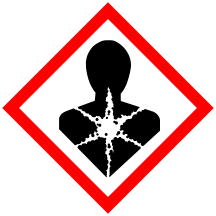
Sodium Chlorite Flakes 80% ACS Grade carries a signal word of Danger (per the product's GHS classification). This is a strong oxidizer with serious health and environmental hazards — treat it accordingly.
Key hazard statements (per the product's GHS classification):
- H271 — May cause fire or explosion; strong oxidizer
- H272 — May intensify fire; oxidizer
- H301 — Toxic if swallowed
- H310 — Fatal in contact with skin
- H314 — Causes severe skin burns and serious eye damage
- H318 — Causes serious eye damage
- H373 — May cause damage to organs through prolonged or repeated exposure
- H400 — Very toxic to aquatic life
- H410 — Very toxic to aquatic life with long lasting effects
- H412 — Harmful to aquatic life with long lasting effects
Storage: Keep in a cool, dry, well-ventilated area away from heat sources and direct sunlight. Use HDPE or glass containers with tight-fitting lids. Sodium chlorite is a powerful oxidizer — store it physically separated from reducing agents, strong acids, combustible materials, organic matter, and any source of ignition. Contact with incompatible materials can cause fire or explosion.
Personal protection: Wear chemical-resistant gloves, indirect-vent splash goggles, and a dust respirator rated for oxidizer dusts when handling dry flakes. Ensure adequate ventilation to prevent airborne dust accumulation. Have an emergency eyewash and safety shower accessible within the handling area.
Hazmat & Shipping
Sodium Chlorite Flakes 80% ACS Grade is regulated as a hazardous material for transport. Every shipment from our Taylor, TX facility includes DOT-compliant hazmat packaging, labeling, and shipping documentation.
-
UN Number: UN1496 (per 49 CFR 172.101)
-
Hazard Class: 5.1 — Oxidizer (per 49 CFR 172.101)
-
Packing Group: II (per 49 CFR 172.101)
-
Proper Shipping Name: SODIUM CHLORITE (per 49 CFR 172.101)
Our shipping team manages the full hazmat workflow — placarding, marking, documentation — so the product arrives with all required paperwork in place.
Documentation
A Safety Data Sheet (SDS) in English ships with every order. A lot-specific Certificate of Analysis (COA) is available for buyers who need batch-level documentation for incoming QC or regulatory files. A Technical Data Sheet (TDS) is also available on request. If you need documentation before placing an order, contact our team directly.
Why Buy from Alliance Chemical
This is a Class 5.1 oxidizer in Packing Group II — it requires proper DOT hazmat packaging, labeling, and shipping papers on every shipment. Our team in Taylor, TX handles that entire workflow in-house, so you receive the product with compliant documentation rather than sorting it out yourself. Unlike suppliers who treat hazmat as an afterthought, Alliance Chemical has shipped regulated chemicals daily since 1998 (USDOT #2188383), serving over 55,000 customers across industrial, municipal, and laboratory operations. All shipping and handling guidance on this page is reviewed by Andre Taki, DOT Hazmat Specialist.