

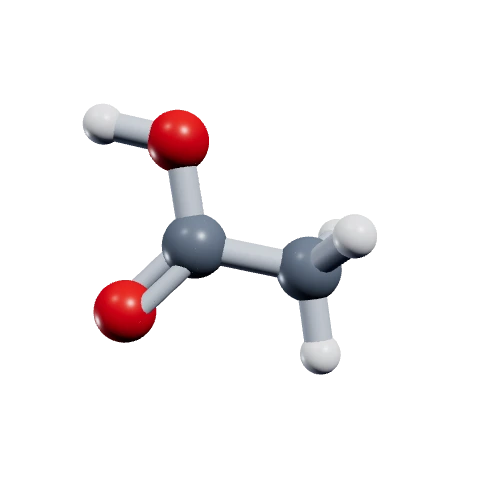


The jar is back. Since mid-October, lifestyle outlets have run the same recipe at least four times: orange peels, white vinegar, a week on the counter, then a spray bottle. It is a good recipe. It also hides one of the most satisfying numbers in kitchen chemistry, because the ingredient people credit for the grease-cutting barely makes it into the liquid at all.
This article takes no position against the jar. It is cheap, it uses peels that would be thrown away, and it smells far better than plain vinegar. What follows is the chemistry of what actually ends up in the spray bottle, worked from published figures: a citrus industry yield, a fruit weight, a solubility and the legal strength of vinegar. Where a number is our arithmetic, it says so.
What is the orange-peel vinegar cleaner, and why is it everywhere again?
It is a steeped household cleaner, and it is having another moment. Cronista’s US edition has published three versions since 16 October, the latest on 9 November, and Grazia’s US site ran its own on 30 October under the line “Four oranges, a jar of vinegar and a week of patience: the homemade cleaner that smells far better than it should.” The recipe most of them follow comes from a University of Florida IFAS extension sheet on homemade household cleaners, which lists it as an all-purpose cleaner:
The coverage disagrees about what the jar does. Some versions pitch it as a germ fighter for the whole house. Grazia is more careful: it presents the jar as an everyday cleaner and names the real attraction, “the main benefit is the scent”. The chemistry sides with Grazia, and the reason is a number.
How much orange oil is in four orange peels?
About 4 grams, on the industrial yield. The University of Florida’s fact sheet on the by-products of Florida citrus processing gives the output per box of oranges, and one of the lines is “Essential oil and d-limonene” at 0.3 kg per box, where a box is 40.8 kg of fruit. The USDA’s food composition database weighs one Florida orange at 141 to 151 grams. Put together:
| Step | Figure | Basis |
|---|---|---|
| Oil recovered per kilogram of oranges | About 7.4 g | 0.3 kg ÷ 40.8 kg (UF/IFAS) |
| Four Florida oranges | About 584 g of fruit | 4 × 146 g, midpoint of USDA’s 141–151 g |
| Orange oil and d-limonene in that fruit | About 4.3 g | Our arithmetic |
| Share of cold-pressed orange oil that is d-limonene | 93–97% | EFSA, citing the ISO specification |
That 4.3 grams is a ceiling, not a jar measurement. A juice plant gets there by pressing peel and stripping the rest of the d-limonene out with heat; a jar on a counter does neither. The oil sits in tiny glands in the coloured outer layer of the peel, and soaking releases only part of it. The point of the figure is scale: the peels in the jar hold a few grams of a powerful solvent. The question is how much of it the vinegar can take.
How much of that d-limonene can vinegar dissolve?
About 13 milligrams per quart, on water’s figure. PubChem’s entry for d-limonene lists its solubility as “In water, 13.8 mg/L at 25 °C”. Vinegar is mostly water: the FDA’s compliance policy guide on vinegar says each listed variety “should contain 4 grams of acetic acid per 100 mL”, and supermarket white vinegar is usually sold at 5 percent. A quart is 0.946 litres, so the most d-limonene a quart of water can hold dissolved is about 13 milligrams. Set against roughly 4.3 grams in the peels, that is about one part in 329.
One square dissolves. All of it would take 329 quarts.
Each square is about 13 mg, what a full quart of water-like liquid can hold in solution at 25 °C. All of them together are the oil in four oranges.
About 4.3 g of orange oil and d-limonene in four oranges 329 squares
Two honest adjustments, and neither changes the scale. Acetic acid is a better partner for hydrocarbons than water, so 5 percent vinegar will dissolve somewhat more than pure water; we did not find a measured solubility for d-limonene in household-strength vinegar, so we used water’s. And dissolved is not the only way oil leaves a jar: the undissolved part floats as a thin sheen, and a shake can carry fine droplets into the spray bottle. Those droplets are real, but they are an unmeasured, uneven extra. They are not the steady, dissolved orange solvent the recipe implies.
Why does d-limonene float instead of mixing in?
Because it has nothing for water to hold on to. D-limonene is C10H16: ten carbons and sixteen hydrogens in a ring with a short side chain, and no oxygen at all. Water molecules stick to each other through hydrogen bonds, and acetic acid joins in because it carries an oxygen-hydrogen group of its own. A hydrocarbon cannot take part, so the liquid squeezes it out and it collects as a separate layer. It is the same reason salad dressing separates, and why chemists say like dissolves like.
Why the orange oil floats
Vinegar is mostly water: about 63 water molecules for each acetic acid at 5%. D-limonene has no oxygen to bond to water, so it gathers on top. Shake the jar; drag to turn.

Settled: d-limonene on top, acetic acid in the water
That is also why d-limonene is useful. The University of Florida sheet notes that “d-Limonene is used industrially as feedstock for adhesives, degreasers, flavors, cleaners, and solvents”. It dissolves grease, tar and adhesive precisely because it is oily itself. Our explainer on why d-limonene dissolves Styrofoam shows the same property at work on polystyrene. But an oil only cleans where it touches. Getting it to spread through water takes an emulsifier, and a jar of vinegar and peels has none.
So what does the cleaning in the jar?
The acetic acid, mostly, with the orange doing the smelling. Grazia’s explainer puts it plainly: “White vinegar contains acetic acid, which helps cut through light grease, everyday dirt and mineral deposits.” The mineral part is real chemistry. Hard-water spots and kettle scale are largely calcium carbonate, and an acid turns them into a soluble salt plus carbon dioxide:
The orange contributes aroma, and a nose needs very little d-limonene to register it. That is why a jar that holds about 13 milligrams in solution can still smell like a crate of oranges. The scent is the feature people notice; the acid is the part that works on deposits.
| Ingredient | Mixes with water? | What it does on a surface |
|---|---|---|
| Acetic acid (the “5%” in vinegar) | Yes, in any proportion | Dissolves carbonate scale and hard-water spots; helps with light soil |
| D-limonene (the orange oil) | Barely: 13.8 mg/L | Dissolves grease, tar and adhesive, where it touches |
| The steeped jar | Vinegar plus a trace of orange | Behaves like scented vinegar |
Where should the jar not go?
Anywhere vinegar should not go, and never near bleach. Grazia’s piece warns: “Avoid using the mixture on marble, granite, other natural stone and terrazzo, where it can etch or dull the finish.” Marble and limestone are calcium carbonate, so the reaction above is the same one that removes scale. The University of Florida sheet adds the warning that matters most for any homemade cleaner: “NEVER mix bleach with ammonia, vinegar, rubbing alcohol, or other household cleaners”. Acid and bleach release chlorine gas. Our article on the viral peroxide-and-vinegar super-cleaner covers another combination that does more than its fans think.
If you want the orange solvent itself
Use it directly rather than hoping a jar extracts it. D-limonene is sold as a liquid in its own right, and the orange oil from juice plants is where it comes from: our report on the 2026 Florida orange forecast and d-limonene supply follows the peel from the juice plant to the drum, and what makes d-limonene different from orange oil explains the refining step. For mineral deposits, the acid is the active part, and stronger vinegar simply carries more of it. Our vinegar strength guide covers what 10, 30, 50 and 75 percent acetic acid each do and how to dilute them. Concentrated vinegar is corrosive to skin and eyes: read the safety data sheet, wear gloves and eye protection, and add acid to water when diluting.
What this means on a specification
The jar is a home recipe, not a specification, but the same two chemicals are bought on paper every day. The table matches each to what to check before ordering.
| Job | Grade | What to check on the CoA |
|---|---|---|
| Solvent for grease, tar and adhesive | D-Limonene Technical Grade | D-limonene content by GC; colour; water content |
| Mineral deposits, dilutable stock | 10% Vinegar - Concentrated Industrial Strength | Acetic acid % by weight |
| Concentrate for dilution on site | 30% Vinegar - Concentrated Industrial Strength | Acetic acid % by weight; corrosive class on the SDS |
About claims. This article describes a published home recipe and the chemistry of its ingredients. The yield, weight and solubility figures describe oranges and pure compounds, not any product. Alliance Chemical makes no claim about ours beyond what its certificate of analysis and safety data sheet state, and makes no germ-killing claim for the jar or for any vinegar.
Common questions
Does the orange-peel vinegar cleaner work?
As a scented vinegar, yes. The acetic acid dissolves hard-water spots and carbonate scale and helps with light soil, and the peels add an orange smell. What it does not become is an orange-oil solvent: d-limonene dissolves in water at only 13.8 mg/L, so a quart holds roughly 13 milligrams of it in solution.
How much d-limonene ends up in orange-peel vinegar?
On our arithmetic, about 13 milligrams dissolved per quart, using d-limonene’s water solubility of 13.8 mg/L at 25 °C. Four oranges carry about 4.3 grams of orange oil and d-limonene on the juice-industry yield, so the dissolved share is roughly one part in 329. Acetic acid raises the solubility somewhat, and shaking carries some floating droplets into the spray.
How long should orange peels soak in vinegar?
The University of Florida IFAS recipe says about one week, using the peel from four oranges in a quart jar of white vinegar. Some versions online steep for two or three weeks. Because d-limonene’s solubility in water is the limit, a longer steep mainly deepens the scent rather than adding much dissolved orange oil.
Is orange-peel vinegar a germ killer?
No such claim holds up. Grazia’s explainer presents it as an everyday cleaner, not a germ-control product, and the University of Florida sheet uses a diluted bleach solution, not vinegar, for its germ-control recipe. Never combine the two: the same sheet warns against mixing bleach with vinegar, because acid and bleach release chlorine gas.
Can I use orange-peel vinegar on granite or marble?
It is best kept off natural stone. Marble and limestone are calcium carbonate, which acetic acid dissolves, and acid can etch or dull polished stone and terrazzo. Use a cleaner made for stone instead.
Why does d-limonene not dissolve in vinegar?
D-limonene is a hydrocarbon, C10H16, with no oxygen to hydrogen-bond with water. Vinegar is about 95 percent water, so the d-limonene is pushed out and floats as a separate layer. Mixing an oil into water needs an emulsifier, which a jar of peels and vinegar does not have.
References & Authoritative Sources
The recipe is from a University of Florida IFAS extension sheet; coverage is from Cronista and Grazia. Yields, weights, solubility and vinegar strength are from UF/IFAS, the USDA, PubChem, EFSA and the FDA. Calculations labelled as ours are our arithmetic.
- Homemade Household Cleaners (FCS3319) — Griffin and Cantrell, UF/IFAS EDIS, revised February 2025. All-purpose orange-peel recipe; bleach warning.
- Mixing White Vinegar and Orange Peels: What It’s Used For and Why It’s So Highly Recommended — Grazia US, 30 October 2026.
- Mix orange peels with vinegar in a jar: What it’s for and why it’s recommended for the home — Cronista US, 9 November 2026.
- Major By-Products of the Florida Citrus Processing Industry (FSHN05-22) — Goodrich and Braddock, UF/IFAS EDIS, archival copy. Oil and d-limonene per box; d-limonene uses.
- Oranges, raw, Florida (FDC 169918) — USDA FoodData Central, search record 169918. Weight of one fruit.
- Limonene, PubChem CID 440917 — National Library of Medicine. Water solubility, formula, 3D conformer.
- Safety and efficacy of feed additives consisting of expressed sweet orange peel oil and its fractions — EFSA FEEDAP Panel, EFSA Journal, 2021. D-limonene share of orange oil.
- CPG Sec. 525.825 Vinegar, Definitions — U.S. Food and Drug Administration. Acetic acid content of vinegar.
What we stock


10% Vinegar - Concentrated Industrial Strength
Twice the acetic acid of table vinegar, for mineral deposits.

30% Vinegar - Concentrated Industrial Strength
Concentrate to dilute; corrosive, so gloves and eye protection.
Buying d-limonene or acetic acid by the drum?
Tell us the job, the surfaces and the volumes you use. We will send the safety data sheet and, on request, a certificate of analysis for the lot, and quote by the pail, drum or tote.
Read the d-limonene explainerKey numbers and sources
| Figure | Value | Source |
|---|---|---|
| Recipe | Peel of 4 oranges, 1 quart white vinegar, about one week | UF/IFAS FCS3319 |
| Oil and d-limonene recovered per box | 0.3 kg per 40.8 kg | UF/IFAS FSHN05-22 |
| D-limonene solubility in water | 13.8 mg/L at 25 °C | PubChem |
| Dissolved per quart vs. in four oranges | About 13 mg vs. about 4.3 g | Our arithmetic |
Frequently asked questions
Does the orange-peel vinegar cleaner work?
As a scented vinegar, yes. The acetic acid dissolves hard-water spots and carbonate scale and helps with light soil, and the peels add an orange smell. What it does not become is an orange-oil solvent: d-limonene dissolves in water at only 13.8 mg/L, so a quart holds roughly 13 milligrams of it in solution.
How much d-limonene ends up in orange-peel vinegar?
On our arithmetic, about 13 milligrams dissolved per quart, using d-limonene's water solubility of 13.8 mg/L at 25 °C. Four oranges carry about 4.3 grams of orange oil and d-limonene on the juice-industry yield, so the dissolved share is roughly one part in 329. Acetic acid raises the solubility somewhat, and shaking carries some floating droplets into the spray.
How long should orange peels soak in vinegar?
The University of Florida IFAS recipe says about one week, using the peel from four oranges in a quart jar of white vinegar. Some versions online steep for two or three weeks. Because d-limonene's solubility in water is the limit, a longer steep mainly deepens the scent rather than adding much dissolved orange oil.
Is orange-peel vinegar a germ killer?
No such claim holds up. Grazia's explainer presents it as an everyday cleaner, not a germ-control product, and the University of Florida sheet uses a diluted bleach solution, not vinegar, for its germ-control recipe. Never combine the two: the same sheet warns against mixing bleach with vinegar, because acid and bleach release chlorine gas.
Can I use orange-peel vinegar on granite or marble?
It is best kept off natural stone. Marble and limestone are calcium carbonate, which acetic acid dissolves, and acid can etch or dull polished stone and terrazzo. Use a cleaner made for stone instead.
Why does d-limonene not dissolve in vinegar?
D-limonene is a hydrocarbon, C10H16, with no oxygen to hydrogen-bond with water. Vinegar is about 95 percent water, so the d-limonene is pushed out and floats as a separate layer. Mixing an oil into water needs an emulsifier, which a jar of peels and vinegar does not have.
Related Chemical Collections
About the author
Andre Taki
This article is for informational purposes only.