



Last Friday the US Department of Agriculture published its first orange forecast of the season, and the Florida number was small even by recent standards. “The 2026-2027 Florida all orange forecast released today by the USDA Agricultural Statistics Board is 10.0 million boxes, down 23 percent from last season’s final production.” In 1997–98 the same state picked 244 million.
Most coverage stops at orange juice. This article follows the peel. D-limonene, the solvent in citrus degreasers, adhesive removers and a long list of cleaners and flavors, is recovered mainly from orange peel at juice plants: pressed out before the juice and boiled off after it. So the question for anyone who buys it is simple: when the orange crop shrinks, where does that show up?
The short answer is that Florida no longer decides much. Below we set out what USDA actually forecast, how d-limonene is recovered from a box of fruit, why Brazil sets the supply, and what the price record does and does not show. We make no forecast of prices. Every figure is linked to its source at the end, and where we did our own arithmetic, we show it and label it as ours.
What USDA forecast on 9 October
Direct answer: 10.0 million 90-pound boxes of Florida oranges for 2026–27, with the early-season varieties hit hardest.
The forecast splits Florida’s oranges into two groups. Non-Valencia oranges, the early and midseason fruit picked from autumn to winter, are forecast at 3.00 million boxes, 37 percent below last season. Valencias, the late fruit picked in spring, are forecast at 7.00 million boxes, 14 percent lower. The state has an estimated 17.0 million bearing orange trees.
| Orange crop | 2025–26 final | 2026–27 forecast | Change |
|---|---|---|---|
| Florida, non-Valencia | 4.77M boxes | 3.00M boxes | −37% |
| Florida, Valencia | 8.18M boxes | 7.00M boxes | −14% |
| Florida, all oranges | 12.95M boxes | 10.0M boxes | −23% |
| California, all oranges | 49.5M boxes | 50.5M boxes | +2% |
| Texas, all oranges | 1.09M boxes | 1.20M boxes | +10% |
| United States | 63.54M boxes | 61.7M boxes | −3% |
Box weights differ by state, which matters when comparing them: a box of oranges is 90 pounds in Florida, 85 in Texas and 80 in California. Most Florida oranges go to juice. Of last season’s 12.95 million boxes, USDA’s August summary counts 11.59 million as processed, about 89 percent.
The industry put the drop down to the weather. Matt Joyner of Florida Citrus Mutual told Citrus Industry magazine: “The devastating freezes last winter were a speed bump on our road to recovery.” USDA’s own forecast notes list the seasons it sets aside as disaster years: hurricanes Ian and Nicole in 2022–23, Hurricane Milton in 2024–25, and the freeze in 2025–26. The next forecasts are due on 12 January, 9 April and 9 July 2027.
Florida oranges since the 1997–98 peak
Direct answer: Florida’s orange crop has fallen by about 96 percent since its 1997–98 peak, and the long fall started before any of the recent storms.
| Season | Florida oranges | What happened |
|---|---|---|
| 1997–98 | 244.0M boxes | The record season |
| 2003–04 | 242.0M boxes | The last season above 200 million |
| 2004–05 | 149.8M boxes | Down 38% in a single season |
| 2013–14 | 104.7M boxes | Nine years after greening was found |
| 2017–18 | 45.05M boxes | Hurricane Irma |
| 2022–23 | 15.82M boxes | Hurricanes Ian and Nicole |
| 2025–26 | 12.95M boxes | Winter freeze |
| 2026–27 | 10.0M boxes | First forecast, 9 October 2026 |
The storms explain individual bad years. The trend is citrus greening, also called huanglongbing or HLB, a bacterial disease carried from tree to tree by a tiny sap-feeding bug, the Asian citrus psyllid. Infected trees drop fruit before harvest. The University of Florida’s huanglongbing guide records the arrival: “In August 2005, the disease was found in the south Florida region of Homestead and Florida City.” This season USDA expects 40 percent of Florida’s Valencias to drop before harvest.
In one line: in 1997–98 Florida grew 244 million boxes of oranges; the 2026–27 forecast is 10.0 million, about 4 percent of that.

Where d-limonene actually comes from
Direct answer: from the peel, at the juice plant, in two places: the oil pressed from the peel before or during juicing, and the vapors boiled off the peel when the plant dries it into cattle feed.
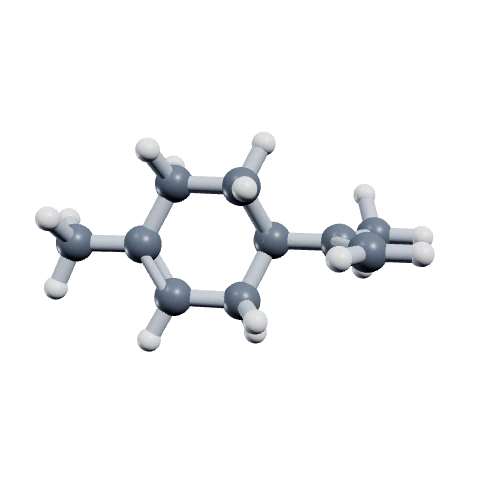
D-limonene is a monocyclic terpene, formula C10H16. It is the main compound in the oil sacs in orange rind, the oil that sprays out when you bend a peel. (Why it dissolves polystyrene, and what the “D” means, are covered in our Styrofoam explainer and our Nobel chirality piece.)
A University of Florida fact sheet on the by-products of the Florida citrus industry describes the first recovery point: “The oil is typically recovered from the fruit either prior to or during juice extraction.” Commercial lines recover about 65 to 75 percent of the oil in the fruit. That cold-pressed oil is mostly d-limonene. The European Food Safety Authority’s 2021 review of sweet orange peel oil gives d-limonene at 93 to 97 percent of the oil, with myrcene at 1.5 to 3.5 percent and small amounts of aldehydes that carry the orange flavor.
The second point is less obvious. After juicing, the wet peel goes to a feed mill on site, where it is pressed and dried into citrus pulp pellets for cattle. Heat from the dryer drives d-limonene off with the water. The same fact sheet: “The primary point of recovery is after the feed mill waste heat evaporator, where it is readily separated from the evaporator condensate by simple decantation.” D-limonene does not mix with water, so it floats and is skimmed off.
Flavor houses also “fold” cold-pressed oil, distilling off the limonene to concentrate the aldehydes. That stream is d-limonene too. So the commodity sold as d-limonene or orange terpenes is the bulk of the oil, and orange oil proper is a smaller, flavor-rich product.

| Per box of oranges (40.8 kg) | Recovered |
|---|---|
| Juice yield | About 55% of the fruit weight |
| Dried citrus pulp pellets | 4.0 kg |
| Citrus molasses | 1.4 kg |
| Essential oil and d-limonene | 0.3 kg |
That 0.3 kilograms works out to about 7.4 kilograms per tonne of fruit. The figure comes from a 2004 Florida fact sheet, revised in 2006, and real yields vary with variety, ripeness and plant, so treat it as a typical value, not a constant.
How much d-limonene a crop can make
Direct answer: on the University of Florida yield, this season’s Florida crop has a ceiling of about 3,000 tonnes of oil and d-limonene combined, against about 73,000 tonnes at the 1997–98 peak.
This is our arithmetic, not a reported figure. It multiplies boxes by 0.3 kilograms and assumes every box is processed, which overstates the real number: about 89 percent of Florida oranges go to juice, and plants recover only part of the oil.
| Crop | Boxes | Ceiling at 0.3 kg per box (our estimate) |
|---|---|---|
| Florida, 1997–98 | 244.0M | About 73,000 tonnes |
| Florida, 2026–27 forecast | 10.0M | About 3,000 tonnes |
| Brazil citrus belt, 2026–27, 80% processed | 263.15M | About 63,000 tonnes |
The Brazil line applies a Florida yield to Brazilian fruit, so it is a rough comparison of scale, nothing more. The point it makes is robust: the Florida forecast changes the world total by a few thousand tonnes at most.
Why Brazil sets the supply
Direct answer: Brazil’s citrus belt grows about 26 times as many oranges as Florida this season and processes about 80 percent of them for juice, so its peel is where most of the world’s orange d-limonene starts.
Fundecitrus, the growers’ research fund for the citrus belt of São Paulo and western Minas Gerais, uses the same 40.8-kilogram, 90-pound box as Florida, which makes the comparison direct. In May it forecast 255.2 million boxes for 2026–27. On 10 September it raised that to 263.15 million. Both figures are below last season’s 292.94 million, by about 10 percent at the September number. Fundecitrus put the higher fruit drop down to greening, together with leprosis and citrus canker at levels above historical averages.
Brazil has greening too, and it is spreading. Fundecitrus’ 2025 survey found it in 47.63 percent of the belt’s orange trees, up from 44.35 percent a year earlier. A USDA attaché report from Brasília, published in January 2026, describes how the crop is used: “approximately 20 percent of orange production is sold as fresh fruit (in natura), while the remaining 80 percent is processed for juice.” The same report notes that Brazil supplies about 60 percent of the world’s orange juice, and that the processors now market “essential oils, d-limonene, terpenes, pectin, and fibers” as ingredients in their own right.
| Florida | Brazil citrus belt | |
|---|---|---|
| 2026–27 forecast | 10.0M boxes | 263.15M boxes |
| Change on last season | −23% | About −10% |
| Box | 90 lb | 40.8 kg (90 lb) |
| Share processed for juice | About 89% (2025–26) | About 80% |
| Greening | Present since 2005 | 47.63% of trees (2025 survey) |
| Forecaster | USDA NASS, 9 Oct 2026 | Fundecitrus, 10 Sep 2026 |
What the price record shows
Direct answer: smaller crops have pushed citrus oil and terpene prices up before, but d-limonene does not move one-for-one with orange oil, and a single forecast says little about the next price.
The clearest statement comes from Flotek Industries, which then owned Florida Chemical, a Florida processor of citrus oils. Its annual report for 2017 to the Securities and Exchange Commission said: “Citrus greening disease has adversely affected the availability of citrus crops around the world, thereby negatively impacting the supply and increasing the price of citrus terpenes.” Its report for 2018 said the market “was affected by the historic high prices experienced in 2017 and 2018”.
The 2023 season is the counterexample. With no carryover left from the previous crop, the Swiss distributor ECSA Chemicals reported orange oil quotations “still above 18 USD/kg” in July 2023, while d-limonene and orange terpenes were “below 5.5-6.0 USD/kg”, adding: “This is the biggest price gap between Orange Oil and D-Limonene ever seen.” The flavor value of orange oil sits in its aldehydes; d-limonene is sold mostly as a solvent, so the two can price apart.
In Brazil, the Center for Advanced Studies on Applied Economics (CEPEA) at the University of São Paulo reported record fruit prices in 2024, after a 2024–25 crop of 223.14 million boxes, down 27.4 percent. We could not find a credible, dated 2026 price for d-limonene, so we do not quote one. Short crops have tended to tighten citrus oils, the gap between orange oil and d-limonene can be wide, and the Brazilian number matters more than the Florida one.
Sourcing note: this article describes the global orange crop and the market for citrus co-products. Alliance Chemical makes no claim about ours: nothing here says where the d-limonene we sell comes from, or that its supply is or is not affected by either crop.
What this means on a specification
Direct answer: the crop changes where d-limonene comes from and what it costs. Your specification should pin down what is in the drum.
| Line on the order | Why it matters in a short-crop year |
|---|---|
| Limonene content by GC, as a minimum percentage | Orange oil runs about 93–97% d-limonene, and recovered or blended terpene streams vary. A number on the certificate is the only reliable comparison. |
| Grade named in the product title | A grade for food use and a technical grade are different products with different paperwork. Our guide to d-limonene grades sets out the difference. |
| Certificate of analysis for the lot you receive | Ask for the lot’s own results, not a typical sheet. We send it on request. |
| Orange oil or d-limonene, stated plainly | They are priced and used differently; What Makes D-limonene Better Than Orange Oil? covers when each one makes sense. |
| Pack size matched to use rate | D-limonene is a liquid solvent; buying the pack you will use keeps containers sealed between uses. |
Common questions
What did USDA forecast for Florida oranges in October 2026?
On 9 October 2026 USDA’s National Agricultural Statistics Service forecast Florida’s 2026–27 orange crop at 10.0 million 90-pound boxes, down 23 percent from 12.95 million boxes in 2025–26. Valencias are forecast at 7.00 million boxes and early and midseason oranges at 3.00 million. California is forecast at 50.5 million boxes and Texas at 1.20 million.
Where does d-limonene come from?
Commercial d-limonene is recovered mainly from orange peel at juice plants. It is the main part of the cold-pressed oil taken from the peel before or during juicing, at roughly 93 to 97 percent of sweet orange oil, and it is also skimmed from the condensate when the leftover peel is dried into cattle feed. Folding orange oil for flavor removes more of it.
How much d-limonene comes from a box of oranges?
A University of Florida fact sheet gives about 0.3 kilograms of essential oil and d-limonene per 40.8-kilogram box of oranges, or about 7.4 kilograms per tonne of fruit. Yields vary with variety, maturity and processing plant, so the figure is a typical value, not a fixed one.
Why does Brazil matter more than Florida for d-limonene?
Brazil’s citrus belt is forecast at 263.15 million boxes for 2026–27, about 26 times Florida’s 10.0 million, and about 80 percent of Brazil’s oranges are processed for juice. Because d-limonene is a by-product of juicing, most of the world’s orange-derived d-limonene starts in Brazilian juice plants.
Does a smaller orange crop always raise d-limonene prices?
Not on its own. Flotek reported that citrus greening raised the price of citrus terpenes, with historic highs in 2017 and 2018. But in July 2023 ECSA Chemicals reported orange oil above 18 dollars per kilogram while d-limonene stayed below 5.5 to 6.0 dollars, the widest gap it had seen. We do not forecast prices.
What should a buyer specify when ordering d-limonene?
State the minimum limonene content by gas chromatography, the grade by name, and whether you need d-limonene or orange oil, and ask for the certificate of analysis for the lot you will receive. Those four lines make two offers comparable whatever the crop is doing.
References & Authoritative Sources
Crop figures are from USDA and Fundecitrus. Chemistry and yields are from the University of Florida and EFSA. Price history is from company filings and published market reports. Our own arithmetic is labelled in the article.
- Citrus Forecast, 2026–2027 season — USDA National Agricultural Statistics Service, Florida field office, 9 October 2026. Forecast quotation, variety and state figures, box weights, bearing trees, disaster seasons.
- Florida Citrus Statistics 2024–2025 — USDA NASS, March 2026. Florida orange production by season, including 244.0 million boxes in 1997–98.
- Season’s First Forecast Shows Stark Contrasts Among Citrus-Producing States — Citrus Industry magazine, 9 October 2026. Florida Citrus Mutual quotation.
- Winter freezes cut Florida orange forecast by 23 percent — Fresh Fruit Portal, 9 October 2026.
- Major By-Products of the Florida Citrus Processing Industry (FSHN05-22) — R. M. Goodrich and R. J. Braddock, University of Florida IFAS Extension, 2004, revised 2006 (archival copy). Yields per box and both d-limonene recovery quotations.
- Florida Citrus Pest Management Guide: Huanglongbing (PP-225) — University of Florida IFAS Extension, revised 2018 (archival copy). Greening found in Florida, August 2005.
- Huanglongbing confirmed in Florida (RS 2005/082) — EPPO Reporting Service, 2005. Confirmation by USDA and the Florida Department of Agriculture, September 2005.
- 2026–2027 Orange Crop Forecast Update — Fundecitrus, 10 September 2026. 263.15 million boxes of 40.8 kg.
- Estimativa da safra de laranja 2026–2027 (sumário executivo) — Fundecitrus, 8 May 2026. Initial 255.2 million boxes; 2025–26 final of 292.94 million.
- Brazil: Citrus Annual (BR2025-0052) — USDA Foreign Agricultural Service, 6 January 2026. Processing share, juice share, greening incidence of 47.63 percent, co-products.
- Safety and efficacy of feed additives consisting of expressed sweet orange peel oil and its fractions from Citrus sinensis — EFSA FEEDAP Panel, EFSA Journal, 2021. D-limonene at 93–97 percent of the oil.
- 21 CFR 182.20, Essential oils, oleoresins and natural extractives and 21 CFR 182.60, Synthetic flavoring substances and adjuvants — Electronic Code of Federal Regulations. Sweet orange peel oil and limonene listings.
- Flotek Industries, Form 10-K for 2017 and Form 10-K for 2018 — US Securities and Exchange Commission filings. Greening and citrus terpene prices.
- Orange oil market update — ECSA Chemicals, 14 July 2023. Orange oil above 18 USD/kg; d-limonene below 5.5–6.0 USD/kg.
- Due to low production and firm demand, orange prices hit records in 2024 — CEPEA, University of São Paulo, 6 January 2025.
The d-limonene we stock


Comparing d-limonene offers this season?
Tell us the application and the minimum limonene content your process needs. We will point you to the grade that matches and send the certificate for the lot you would receive, so two quotes can be compared on the same terms.
Read the guide to d-limonene gradesKey numbers and sources
| Number | What it is | Source |
|---|---|---|
| 10.0M boxes, −23% | Florida all-orange forecast, 2026–27 | USDA NASS, 9 Oct 2026 |
| 244.0M boxes | Florida oranges, 1997–98 record | Florida Citrus Statistics 2024–25 |
| August 2005 | Citrus greening found in Florida | UF/IFAS PP-225 |
| 0.3 kg per box | Essential oil and d-limonene per 40.8 kg box | UF/IFAS FSHN05-22 |
| 93–97% | D-limonene in cold-pressed sweet orange oil | EFSA Journal, 2021 |
| 263.15M boxes | Brazil citrus belt forecast, 2026–27 | Fundecitrus, 10 Sep 2026 |
| 80% / 47.63% | Brazil crop processed for juice; trees with greening (2025) | USDA FAS, BR2025-0052 |
| >18 vs <5.5–6.0 USD/kg | Orange oil vs d-limonene, July 2023 | ECSA Chemicals |
| About 3,000 tonnes | Ceiling on Florida oil and d-limonene this season | Our arithmetic: 10.0M × 0.3 kg |
Frequently asked questions
What did USDA forecast for Florida oranges in October 2026?
On 9 October 2026 USDA's National Agricultural Statistics Service forecast Florida's 2026–27 orange crop at 10.0 million 90-pound boxes, down 23 percent from 12.95 million boxes in 2025–26. Valencias are forecast at 7.00 million boxes and early and midseason oranges at 3.00 million. California is forecast at 50.5 million boxes and Texas at 1.20 million.
Where does d-limonene come from?
Commercial d-limonene is recovered mainly from orange peel at juice plants. It is the main part of the cold-pressed oil taken from the peel before or during juicing, at roughly 93 to 97 percent of sweet orange oil, and it is also skimmed from the condensate when the leftover peel is dried into cattle feed. Folding orange oil for flavor removes more of it.
How much d-limonene comes from a box of oranges?
A University of Florida fact sheet gives about 0.3 kilograms of essential oil and d-limonene per 40.8-kilogram box of oranges, or about 7.4 kilograms per tonne of fruit. Yields vary with variety, maturity and processing plant, so the figure is a typical value, not a fixed one.
Why does Brazil matter more than Florida for d-limonene?
Brazil's citrus belt is forecast at 263.15 million boxes for 2026–27, about 26 times Florida's 10.0 million, and about 80 percent of Brazil's oranges are processed for juice. Because d-limonene is a by-product of juicing, most of the world's orange-derived d-limonene starts in Brazilian juice plants.
Does a smaller orange crop always raise d-limonene prices?
Not on its own. Flotek reported that citrus greening raised the price of citrus terpenes, with historic highs in 2017 and 2018. But in July 2023 ECSA Chemicals reported orange oil above 18 dollars per kilogram while d-limonene stayed below 5.5 to 6.0 dollars, the widest gap it had seen. We do not forecast prices.
What should a buyer specify when ordering d-limonene?
State the minimum limonene content by gas chromatography, the grade by name, and whether you need d-limonene or orange oil, and ask for the certificate of analysis for the lot you will receive. Those four lines make two offers comparable whatever the crop is doing.
Related Chemical Collections
About the author
Andre Taki
This article is for informational purposes only.