

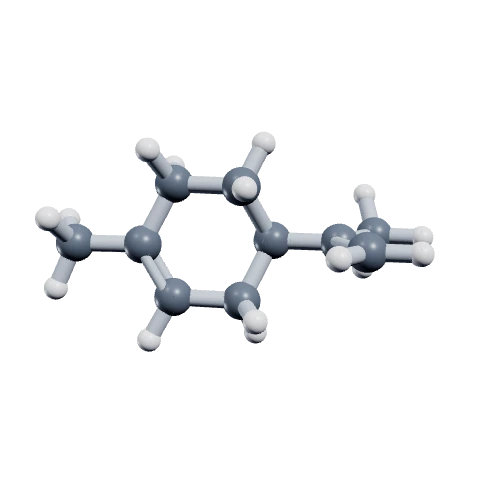


Drop a chunk of packing foam into a cup of clear, orange-smelling liquid and it doesn’t just shrink — it appears to melt out of existence, fizzing down into a tiny blob in seconds. The internet loves this clip. The liquid isn’t some exotic lab acid. It’s d-limonene: the oil pressed out of orange peels.
So what’s actually happening, is it safe, and why is the same “citrus” chemical sitting in your kitchen cleaner, your hand soap, and your soda? Here is the honest chemistry — no magic, just solvency.
Why does d-limonene dissolve Styrofoam?

d-Limonene dissolves polystyrene foam because both are non-polar, and chemistry’s oldest rule of thumb — like dissolves like — says non-polar solvents dissolve non-polar materials. Polystyrene (the plastic in “Styrofoam,” coffee cups, and packing blocks) is a long non-polar carbon chain held to itself by weak van der Waals forces. d-Limonene is a non-polar hydrocarbon whose molecules slip between those chains, pull them apart, and surround them — the same way water dissolves salt, just on the oily side of the fence.
The dramatic part — the disappearing — is a trick of geometry, not destruction. Expanded polystyrene (EPS) is roughly 95 to 98% air by volume. It is mostly empty foam. When the limonene dissolves the thin plastic walls, all that trapped air rushes out and the structure collapses. A whole cup’s worth of foam folds down into a marble of sticky gel because you were really only ever looking at a few grams of actual plastic puffed up with gas.
The plastic does not evaporate or vanish. It dissolves into the liquid, exactly like sugar into tea. Let the limonene evaporate off and the polystyrene comes right back as a solid film — which is precisely how some recyclers use limonene to shrink and recover foam waste for reuse.
That recovery angle is why this isn’t just a party trick. EPS foam is bulky, light, and expensive to haul, so it often goes to landfill. Limonene-based processes dissolve it on-site, drop the volume by an order of magnitude, and let the polystyrene be precipitated back out — turning a transport problem into a recoverable resource.
What melts Styrofoam? Which liquids dissolve it and which do not
Styrofoam is dissolved, not melted, by organic solvents: hydrocarbons such as d-limonene, toluene, xylene and gasoline, and ketones such as acetone and MEK, all collapse expanded polystyrene. Water-based liquids do not: plain water, vinegar, drugstore hydrogen peroxide and rubbing alcohol leave it intact. Heat is the other route; polystyrene is a thermoplastic, so a hot wire or hot glue gun softens it.
Polarity alone is not the dividing line: acetone mixes with water in any proportion yet dissolves polystyrene, while rubbing alcohol does not. The better rule of thumb is how closely a solvent's intermolecular forces match the polymer's, which chemists put numbers on as solubility parameters. Polystyrene is a hydrocarbon chain with no hydrogen-bonding groups; hydrocarbons and ketones can mix in among its chains, while water and alcohols hold on to each other through hydrogen bonds and stay out.
| Liquid | Dissolves Styrofoam? | Flash point |
|---|---|---|
| Water | No; polystyrene floats on it unchanged | Not flammable |
| Vinegar, drugstore hydrogen peroxide | No; both are mostly water | Not flammable |
| Rubbing alcohol (isopropyl) | No; alcohols are poor solvents for polystyrene | Flammable |
| Acetone | Yes, fastest of the common solvents | -18 °C (0 °F) |
| Toluene | Yes | 4 °C (40 °F) |
| d-Limonene | Yes, slower, with a citrus odor | About 48 °C (118 °F) |
Does Styrofoam dissolve in water?
No. Water molecules hold tightly to one another through hydrogen bonds, and polystyrene has no groups that can join in, so water cannot pull the polymer chains apart; Styrofoam floats and stays intact. To get rid of the bulk you need an organic solvent such as d-limonene, or heat.
What dissolves Styrofoam best?
Acetone is the fastest and is what most demonstration videos use. d-Limonene is slower but carries a far higher flash point (about 48 °C / 118 °F, versus about -18 °C / 0 °F for acetone), which makes it the easier choice in a classroom, a shop, or a foam-recovery process where the polystyrene is to be reused.
Can a hot glue gun melt Styrofoam?
Yes. That is heat, not solvent: polystyrene is a thermoplastic that softens and shrinks when hot, so a glue gun nozzle or hot glue can leave a dent or hole. A low-temperature glue gun, or a foam-safe adhesive, avoids it.
What is d-limonene, exactly?
d-Limonene is a cyclic monoterpene — a small ring-shaped hydrocarbon — and it is the single compound most responsible for the smell of oranges. The “d” marks it as the right-handed (R)-(+) mirror-image form, the one citrus fruit make; its left-handed twin smells more of pine and turpentine. It makes up the lion’s share of the oil in citrus peels.
Here is the part that surprises people: it is essentially a byproduct of your morning orange juice. When citrus is pressed for juice, the peels are steam-distilled or cold-pressed and the recovered oil is mostly limonene. Nobody drills for it; it is squeezed out of a waste stream measured in millions of pounds a year. That is why a high-performance industrial solvent can also be the “natural” scent in a green cleaner.
| Property | Value |
|---|---|
| Formula / type | C10H16 — cyclic monoterpene |
| CAS number | 5989-27-5 (d / R-(+)-limonene) |
| Molar mass | 136.23 g/mol |
| Density | ~0.841 g/mL (lighter than water; it floats) |
| Boiling point | ~176 °C (349 °F) |
| Flash point | ~48 °C (118 °F), closed cup; GHS Category 3 flammable liquid (H226) |
| Polarity | Non-polar; immiscible with water, mixes with oils & many plastics |
| Source | Steam-distilled / cold-pressed citrus peel oil |
Yes, but it sits in the least severe flammable class. At ~48 °C, d-limonene’s flash point is far higher than acetone’s (about −18 °C / 0 °F), so under GHS it is a Category 3 flammable liquid (H226, “flammable liquid and vapor”), not a “highly flammable” Category 2 liquid like acetone (H225). For shipping, DOT counts any liquid with a flash point at or below 60 °C (140 °F) as Class 3 flammable, and 49 CFR 173.120 lets one with a flash point at or above 38 °C (100 °F) be reclassed as a combustible liquid for ground transport. Keep it away from open flame and heat.
Which plastics does d-limonene dissolve — and which are safe?
Polystyrene is the headline victim, but it is not the only plastic d-limonene touches — and that matters the moment you reach for a container or try it near the wrong surface. The short rule: non-polar, soft, or styrene-based plastics are at risk; tight, crystalline, fluorinated plastics shrug it off.
| Material | d-Limonene effect |
|---|---|
| Polystyrene / EPS “Styrofoam” (PS) | Dissolves — the classic demo |
| ABS, many soft & rubber plastics | Softens, swells, or attacks — avoid |
| Polyethylene (HDPE/LDPE), polypropylene (PP) | Generally resistant for short contact — common safe bottle plastics |
| PET, PTFE (Teflon), HDPE drums | Resistant — safe for storage |
| Glass & metal | Inert — the best container choice |
Never store or run d-limonene in a polystyrene cup or thin-walled foam tray — it will dissolve the container along with whatever you meant to clean. Reach for glass, metal, HDPE, or PP. When in doubt, test a hidden spot first.
Where is d-limonene secretly hiding?

Once you know the smell, you find it everywhere — usually labeled as “citrus oil,” “orange terpenes,” or just “limonene” in the fine print. The exact molecule that eats foam is the one marketed to you as gentle and natural.
| Where you meet it | What it’s doing there |
|---|---|
| “Orange” degreasers & all-purpose cleaners | The actual grease-cutting solvent — and the scent |
| Citrus adhesive & sticker removers | Dissolves the gummy non-polar adhesive |
| Heavy-duty hand cleaners | Lifts oil, grease, and ink off skin |
| Soda, candy & baked goods | Orange/citrus flavoring, listed by FDA as GRAS (21 CFR 182.60) |
| Perfume, lotions & shampoo | Fresh citrus top-note fragrance |
So the next time a cleaner brags about being “made with orange power,” it is telling the truth in the most literal way: the working ingredient is the same terpene a chemistry teacher uses to make foam vanish on camera. The dose and grade change; the molecule does not.
Is d-limonene toxic, or is it safe?
d-Limonene is one of the safer solvents you can handle — the FDA recognizes it as GRAS (Generally Recognized As Safe) as a synthetic flavoring (21 CFR 182.60), and its acute oral toxicity is low (rat oral LD50 about 5 g/kg, per the Hazardous Substances Data Bank), but it is a GHS Category 3 flammable liquid, oxidized limonene is a skin sensitizer, and it is an aspiration hazard (H304). That is a big part of its appeal as a “green” replacement for harsher petroleum and chlorinated solvents.
But “safe” is not the same as “do whatever you want,” and there are two real caveats worth knowing:
Fresh limonene is mild, but when it sits and reacts with air it forms hydroperoxides that are recognized skin sensitizers. The EU requires “limonene” to be declared on cosmetics for exactly this reason. Use gloves, and store it sealed and cool so it does not oxidize.
Being GRAS as a trace flavor does not mean you should drink straight solvent. Like other hydrocarbons it carries an aspiration hazard (dangerous if it gets into the lungs). And as a VOC it can react with indoor ozone to form trace formaldehyde — so ventilate when you use a lot of it.
Bottom line: treat it with normal solvent respect — gloves, ventilation, no flame, keep it sealed — and d-limonene is genuinely one of the gentler tools in the box. It is a solvent and a degreaser, not a registered disinfectant; it cleans and lifts grease, it does not make sanitizing claims.
Food Grade (94%) vs Technical Grade — which do you need?
Both grades are the same molecule; the difference is purity, consistency, and what the supplier certifies it for. Picking the wrong one means either overpaying for purity you’ll never use, or under-spec’ing a job that needed food-contact assurance.
| 94% Food Grade | Technical Grade | |
|---|---|---|
| Best for | Flavor, fragrance, food-contact cleaning, health & home use | Industrial degreasing, foam recycling, parts & surface cleaning |
| Purity | ≥94% d-limonene, tighter spec | High-purity industrial solvent grade |
| Smell | Clean, consistent sweet orange | Strong citrus, less refined |
| Typical cost | Slightly higher per quart | Lower — the value pick for cleaning |
If it touches food, skin, or flavor → 94% Food Grade. If it’s a degreaser, a solvent, or your foam-dissolving project → Technical Grade does the job for less. Not sure? Tell us the application and we’ll spec the grade for you.
How to dissolve and recover polystyrene foam with d-limonene
If you want to try the demo — or actually shrink foam waste for recycling — here is the safe, sensible way to do it.
- Ventilate and glove up. Work in a well-ventilated area, wear nitrile gloves and eye protection, and keep the liquid away from any flame or heat source.
- Use Technical Grade in a limonene-safe container. Glass or metal is best. Avoid polystyrene or many soft plastics for the container itself — the solvent attacks them too.
- Add the foam to the solvent a little at a time. It will collapse fast as trapped air escapes. A small amount of limonene dissolves a surprisingly large volume of EPS.
- Let it settle into a polystyrene gel. You now have the original plastic dissolved in the citrus solvent — nothing has been burned off or destroyed.
- Recover or dispose responsibly. Let the limonene evaporate (in ventilation) and the polystyrene returns as a solid you can collect, or dispose of the gel per local solvent-waste rules. Never pour solvent down the drain.
How to buy d-limonene without overpaying
Because it is a citrus byproduct, d-limonene pricing swings with the orange harvest — but the bigger swing in your cost is pack size and grade. Buying a quart spray bottle to degrease an engine bay is the expensive way; buying a tote of food-grade for a one-off cleaning job is the other expensive way.
- Match the grade to the job (see the table above) so you are not paying food-grade rates for a parts-cleaning task.
- Step up the pack size for anything recurring — per-quart cost drops sharply from quart cans to pails, drums, and totes.
- Ask for the paperwork. Need the Certificate of Analysis? Just ask, we send it at no charge.
Common mistakes people make with d-limonene
It is forgiving, but a few habits turn a gentle solvent into a headache. Most of these come from assuming “natural” and “citrus” mean “do anything.”
1. Letting it oxidize on the shelf
An open, half-used jug slowly reacts with air into hydroperoxides — the form that triggers skin allergies. Buy a sensible pack size, keep it sealed, cool, and out of sunlight.
2. Using it in a plastic cup or foam tray
The solvent attacks polystyrene and many soft plastics, so it will quietly dissolve the very container you mixed it in. Glass, metal, HDPE, or PP only.
3. Treating “GRAS” as “drinkable”
GRAS covers trace amounts as a flavor. Concentrated solvent is not a beverage and carries an aspiration hazard — keep it out of reach of kids and pets.
4. Expecting it to disinfect
It cleans and degreases; it is not a registered sanitizer. If you need to kill germs, use an actual EPA-registered disinfectant.
5. Skipping ventilation on big jobs
As a VOC it can react with indoor ozone to form trace formaldehyde. A quick wipe is fine; dissolving a trash bag of foam in a closed room is not — open a window or run a fan.
Get real d-limonene — the right grade, with the paperwork
From 1-quart cans to 275 & 330-gallon totes. Tell us the application and we’ll spec the grade so you don’t overpay.
References & Authoritative Sources
Primary sources consulted for this article. Regulatory and physical-property figures above are drawn from these references.
- Limonene (racemic, CAS 138-86-3), compound summary — PubChem, National Center for Biotechnology Information. Accessed 2026-09-02.
- d-Limonene — thermochemical and phase data — NIST Chemistry WebBook, SRD 69. Accessed 2026-09-02.
- 21 CFR 182.60 — Synthetic flavoring substances and adjuvants generally recognized as safe — Electronic Code of Federal Regulations, U.S. Food and Drug Administration. Accessed 2026-09-02.
- 40 CFR 51.100(s) — Definition of volatile organic compound — Electronic Code of Federal Regulations, U.S. Environmental Protection Agency. Accessed 2026-09-02.
- (R)-(+)-Limonene, d-limonene (CID 440917, CAS 5989-27-5), compound summary incl. HSDB data, PubChem, National Center for Biotechnology Information. Accessed 2026-09-28.
- NIOSH Pocket Guide to Chemical Hazards: Acetone, Centers for Disease Control and Prevention. Accessed 2026-09-28.
- NIOSH Pocket Guide to Chemical Hazards: Toluene, Centers for Disease Control and Prevention. Accessed 2026-09-28.
- 49 CFR 173.120: Class 3, definitions (flammable and combustible liquids), Electronic Code of Federal Regulations, U.S. DOT PHMSA. Accessed 2026-09-28.
Key numbers and sources
| Fact | Value | Source |
|---|---|---|
| Chemical formula of d-limonene | C10H16 | pubchem.ncbi.nlm.nih.gov |
| CAS number of d-limonene | 5989-27-5 | pubchem.ncbi.nlm.nih.gov |
| Molar mass of d-limonene | 136.23 g/mol | pubchem.ncbi.nlm.nih.gov |
| Density of d-limonene | 0.8411 g/mL at 20 °C | pubchem.ncbi.nlm.nih.gov (HSDB) |
| Boiling point of d-limonene | ~176 °C (349 °F) | webbook.nist.gov |
| Flash point of d-limonene | ~48 °C (118 °F), closed cup | pubchem.ncbi.nlm.nih.gov (HSDB) |
| FDA GRAS status for d-limonene as a flavoring | 21 CFR 182.60 | ecfr.gov |
| GHS flammability class of d-limonene | Category 3 flammable liquid (H226) | pubchem.ncbi.nlm.nih.gov |
Related: The Chemistry Nobel Went to Mirror Molecules. Textbooks Still Get Limonene Wrong — what the D in D-limonene means, and why citrus makes only one mirror image of it.
Related: Florida Will Pick 10 Million Boxes of Oranges. Why D-Limonene Watches Brazil — where the orange-peel solvent comes from: the 2026 Florida orange forecast and why Brazil sets d-limonene supply.
Frequently asked questions
What melts Styrofoam?
Styrofoam is dissolved, not melted, by organic solvents: hydrocarbons such as d-limonene, toluene, xylene and gasoline, and ketones such as acetone and MEK, which slip between the polystyrene chains and collapse the foam. Water, vinegar, drugstore hydrogen peroxide and rubbing alcohol do not affect it. Heat also works: polystyrene is a thermoplastic, so a hot wire or hot glue gun softens and shrinks it.
Does Styrofoam dissolve in water?
No. Styrofoam is expanded polystyrene, a hydrocarbon plastic with no hydrogen-bonding groups, while water molecules hold tightly to each other through hydrogen bonds, so water cannot pull the polymer chains apart. The foam floats and stays intact. Vinegar and drugstore hydrogen peroxide are mostly water and behave the same way. To dissolve it you need an organic solvent such as d-limonene, toluene or acetone.
Does rubbing alcohol dissolve Styrofoam?
No. Rubbing alcohol is isopropyl alcohol and water, and alcohols are poor solvents for polystyrene, so Styrofoam does not collapse in it. Solvents that do dissolve it are hydrocarbons and ketones: d-limonene, toluene, xylene, acetone and MEK. Polarity alone does not explain it, since acetone mixes with water; the rule of thumb is that polystyrene has no hydrogen-bonding groups, and alcohols and water bond strongly to each other.
What dissolves Styrofoam best?
Acetone is the fastest and is what most demonstration videos use. d-Limonene is slower but has a much higher flash point, about 48 °C (118 °F), against about -18 °C (0 °F) for acetone and 4 °C (40 °F) for toluene. That makes it the easier choice in a classroom, a shop, or a foam-recovery process where the dissolved polystyrene is recovered after the solvent evaporates.
Why does d-limonene dissolve Styrofoam?
Because both are non-polar and like dissolves like. d-Limonene is a non-polar hydrocarbon and polystyrene is a non-polar plastic, so the solvent slips between the polymer chains and pulls them apart. The foam appears to vanish because expanded polystyrene is 95 to 98% trapped air; once the thin plastic walls dissolve, the air escapes and the volume collapses into a small gel.
Does the plastic actually disappear?
No. It dissolves into the liquid like sugar into tea, even though it looks like it vanishes. Let the limonene evaporate off and the polystyrene comes back as a solid film, which is how some recyclers use limonene to shrink and recover foam waste. Nothing is burned off or destroyed; you have the same plastic in a much smaller volume.
What is d-limonene made from?
It is steam-distilled or cold-pressed from citrus peels and is essentially a byproduct of orange-juice production. It is the main component of orange peel oil and the compound responsible for the smell of oranges. The d form, (R)-(+)-limonene, CAS 5989-27-5, is the one citrus fruit make; its mirror image smells more of pine and turpentine.
Is d-limonene toxic or safe?
It is one of the gentler solvents: FDA lists limonene as a GRAS flavoring in 21 CFR 182.60, and its rat oral LD50 is about 5 g/kg according to the Hazardous Substances Data Bank. The real caveats are that oxidized limonene is a skin sensitizer (use gloves, store sealed) and, like other hydrocarbons, it is an aspiration hazard (H304), so industrial solvent must never be swallowed. Check the SDS.
Can I put d-limonene on my skin?
Fresh, diluted limonene appears in many hand cleaners and cosmetics, but oxidized limonene is a known skin sensitizer, and the EU requires it to be declared on cosmetic labels. It is also classified as a skin irritant (H315). Use gloves with the concentrated solvent, avoid prolonged skin contact, and keep containers sealed so the solvent does not oxidize.
Is d-limonene flammable?
Yes. Its flash point is about 48 °C (118 °F), closed cup, which makes it a GHS Category 3 flammable liquid (H226), the least severe flammable class, not a highly flammable Category 2 liquid like acetone. DOT counts liquids with flash points at or below 60 °C as Class 3, and 49 CFR 173.120 allows one at or above 38 °C to be reclassed as combustible for ground shipment.
Can a hot glue gun melt Styrofoam?
Yes. That is heat rather than solvent: polystyrene is a thermoplastic that softens and shrinks when heated, so hot glue or a glue-gun nozzle can dent or hole expanded polystyrene foam. A low-temperature glue gun or a foam-safe adhesive avoids the damage. A solvent such as d-limonene works differently, dissolving the plastic instead of softening it.
What is the difference between Food Grade and Technical Grade d-limonene?
They are the same molecule; the difference is purity and certification. 94% Food Grade is for flavor, fragrance, and food-contact or home use; Technical Grade is the value pick for industrial degreasing, parts cleaning, and foam recycling. Match the grade to the job to avoid overpaying. Need the Certificate of Analysis? Just ask, we send it at no charge.
Related Chemical Collections
About the author
Andre Taki
This article is for informational purposes only.


