

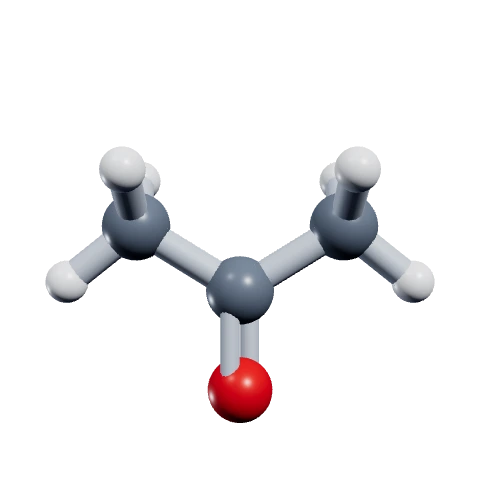


Everyone forecast a soft, oversupplied year for acetone. Instead, US spot prices ran to a two-year high and buyers found themselves in a seller’s market. The reason isn’t a demand boom — it’s a quirk of how acetone is made. Here’s the buyer’s briefing.
What’s actually happening in the acetone market
Short answer: US acetone supply tightened sharply through early 2026, pushing spot values to about $1,547/MT FOB US Gulf Coast in April — the highest since February 2024 — even though the year was expected to be weak.
Coming into 2026, most outlooks called for ample acetone and lukewarm demand. That flipped. A combination of production outages, firm export pull from Europe and Latin America, and elevated aromatic feedstock costs turned a “weak” year into what traders described as a seller’s market. At least one supplier was reported sold out into mid-year, and the tightness is widely expected to persist for roughly the next six months.
For anyone who buys acetone as a solvent — coatings and adhesives, parts cleaning and surface prep, resin and composite work, cosmetics, or lab use — the practical result is longer lead times, thinner spot availability, and quotes that move week to week.
Why acetone is a “co-product” (and why that matters)
Short answer: More than 95% of acetone is produced as a by-product of phenol through the cumene process. Every tonne of phenol drags along roughly 0.6 tonnes of acetone — so acetone supply is set by phenol production rates, not by acetone demand.
The cumene process is the workhorse of the aromatics world. Benzene and propylene combine to make cumene; cumene is oxidized to cumene hydroperoxide; and an acid cleavage step splits that molecule into two products at once — phenol and acetone. Because they come out of the same reaction, they are chemically joined at the hip. Producers don’t decide how much acetone to make; they decide how much phenol to make, and the acetone follows in a fixed ratio.

That ratio is the whole story. In 2024, the world made more than 9.5 million tonnes of phenol and, alongside it, more than 6.2 million tonnes of acetone — not because 6.2 million tonnes of acetone were ordered, but because that’s what the phenol run yielded.
The paradox: scarce because of a glut next door
Short answer: When phenol demand is soft, producers cut cumene run rates — and acetone, riding along as the by-product, gets scarce even in an oversupplied year.
Phenol’s single largest end use is bisphenol A (BPA), the building block for polycarbonate plastics and epoxy resins — together roughly 30–35% of phenol demand. When construction, electronics, and durable-goods demand cools, BPA and polycarbonate orders soften, and phenol margins compress. Producers respond by trimming cumene throughput.
Here’s the twist: cutting phenol output also cuts the acetone that would have come with it. So a market that looks “long” on paper — plenty of nameplate capacity, tepid demand — can still leave acetone physically short at the tank. Acetone didn’t get scarce because the world suddenly wanted more of it. It got scarce because the world wanted less phenol, and acetone was collateral.
What the squeeze means for buyers
Short answer: Expect week-to-week price movement and tighter spot volumes into the second half of the year. Know exactly which grade you actually need, and consider whether isopropyl alcohol can cover part of your solvent duty.

Not every job needs the same acetone. Buying the right grade — rather than defaulting to the highest — protects both budget and availability during a squeeze:
| Grade | Typical use | Buy this when… |
|---|---|---|
| Acetone, Technical Grade | Industrial cleaning, degreasing, surface prep, resin/composite work, thinning | You need a workhorse solvent and don’t require reagent-level purity documentation |
| Acetone, ACS Grade | Analytical, laboratory, and high-purity applications | Your process or QC spec calls for ACS purity with a certificate of analysis |
| Isopropyl Alcohol, 99% Technical | Cleaning, drying, electronics/parts wipe-down | A slower-evaporating alcohol can cover part of the duty and hedge acetone availability |
Isopropyl alcohol is not a drop-in replacement for acetone in every application — evaporation rate, solvency, and material compatibility differ. Match the solvent to the job, and confirm compatibility before switching.
How to protect your supply during the squeeze
Short answer: Confirm the grade and specification you truly need, ask for the certificate of analysis up front, and line up a supplier who can quote and confirm quickly rather than leaving volume to the spot market.
- Pin down the spec. Know whether your process genuinely needs ACS grade or whether technical grade meets the requirement. Over-speccing wastes money and shrinks your available pool in a tight market.
- Ask for the COA. A certificate of analysis tells you exactly what is in the drum — identity, purity, and key limits — so you’re buying a verified spec, not a label.
- Right-size the order. Bottles, cases, pails, drums, and totes each carry different lead-time and price dynamics; matching pack size to real throughput smooths out spot exposure.
- Keep a substitution plan. Where the chemistry allows, knowing which alternative solvent can cover part of your duty gives you a lever when acetone is short.
- Work with a stocking distributor. A domestic supply base and a fast quote-to-confirmation turnaround matter more when the commodity market is volatile than when it’s calm.
• S&P Global Commodity Insights — US acetone supply tightens sharply, defying weak 2026 outlook
• Future Market Insights — Why acetone production is governed by phenol economics
• ICIS — Phenol and acetone market analytics
This article is educational market commentary, not procurement or investment advice. Prices and availability move quickly — confirm current figures with your supplier.
Frequently asked questions
Why did acetone prices rise in 2026 if the market was oversupplied?
Because acetone is a by-product of phenol. When phenol demand softened, producers cut cumene run rates, which also cut the acetone that comes out of the same reaction. Acetone went physically short even though nameplate capacity looked ample — it was scarce because of weak phenol demand, not strong acetone demand.
How is acetone made?
More than 95% of acetone is made through the cumene process, which converts benzene and propylene into cumene, then splits cumene hydroperoxide into phenol and acetone in a single acid-cleavage step. Acetone is the co-product of phenol production.
How much acetone comes from each tonne of phenol?
Roughly 0.6 tonnes of acetone per tonne of phenol, set by the fixed reaction stoichiometry of the cumene process. That fixed ratio is why acetone availability tracks phenol production rather than acetone demand.
How high did acetone prices go?
US spot acetone reached about $1,547 per metric ton FOB US Gulf Coast in April 2026, the highest level since February 2024, amid production outages, firm export demand, and elevated feedstock costs.
Can isopropyl alcohol replace acetone?
In some cleaning and drying applications, isopropyl alcohol can cover part of the duty, but it is not a universal drop-in. Evaporation rate, solvency, and material compatibility differ, so confirm compatibility for your specific process before substituting.
What acetone grade should I buy?
Technical grade suits most industrial cleaning, degreasing, surface prep, and resin work. ACS grade is for analytical, laboratory, and high-purity uses that require a certificate of analysis. Buying the grade you actually need protects both cost and availability during a supply squeeze.
Sources
- US acetone supply tightens sharply, defying weak 2026 outlook · S&P Global Commodity Insights (2026)
- Why acetone production is governed by phenol economics rather than acetone demand alone · Future Market Insights (2026)
- Phenol and acetone market analytics · ICIS (2026)
Related Chemical Collections
About the author
Andre Taki
This article is for informational purposes only.


