



Using acetone in carbon fiber & composites? See Acetone in Carbon Fiber & Composite Manufacturing — surface prep, resin cleanup, fiber recycling (solvolysis), and which grade to buy.
Decoding Acetone: From Nail Polish Remover to Industrial Powerhouse
The definitive guide to the world's most versatile ketone solvent — chemistry, applications, grades, safety, and expert techniques for every industry.
Buying or specifying acetone?
Use the canonical commercial route: Acetone Technical Grade product for grade, packaging, SDS/COA, and ordering context.
In the vast landscape of industrial solvents, acetone (propan-2-one, CAS 67-64-1) occupies a singular position. As the simplest and most important ketone, this colorless, fast-evaporating compound is an indispensable tool in dozens of industries — from precision aerospace manufacturing and pharmaceutical research to professional nail care and household repair. With global production exceeding 6.7 million metric tons annually and climbing, acetone is one of the most widely used organic solvents on the planet.
This comprehensive guide decodes everything professionals and enthusiasts need to know about acetone: the science behind its extraordinary solvency power, its critical applications across industries, expert how-to techniques, grade selection guidance, head-to-head comparisons with competing solvents like MEK, isopropyl alcohol, and toluene, and the safety protocols that keep you protected.
The Chemistry Behind Acetone's Exceptional Solvency
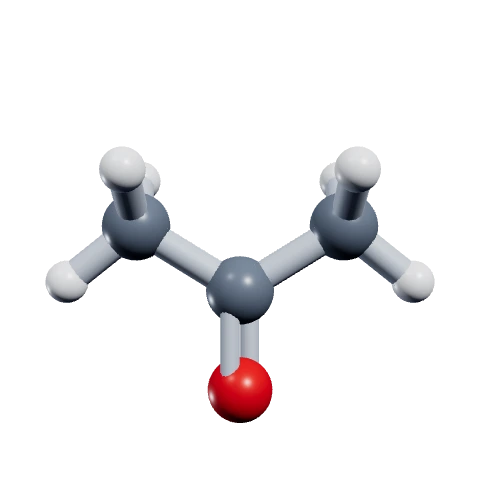
Acetone's chemical formula is C₃H₆O (IUPAC: propan-2-one; molecular weight: 58.08 g/mol). Its remarkable versatility traces back to its unique molecular structure: a carbonyl group (C=O) flanked by two methyl groups. This structure makes acetone a polar aprotic solvent — it has a significant dipole moment (2.91 D), enabling it to dissolve polar substances like water, salts, and sugars, but it lacks an acidic hydrogen atom, meaning it won't react with many sensitive solutes.
What makes acetone truly exceptional among solvents is its dual solubility character. While polar enough to be completely miscible with water, it simultaneously dissolves a wide array of nonpolar organic materials. This "bridge" quality means acetone can dissolve substances that neither water nor typical hydrocarbon solvents can handle alone:
- Polymers and plastics: polystyrene, polycarbonate, ABS, PMMA (acrylic)
- Resins: uncured epoxy, polyester, vinyl ester, alkyd resins
- Coatings: varnishes, lacquers, shellac, automotive clear coats
- Adhesives: cyanoacrylate (super glue), contact cements, rubber cements
- Natural oils and waxes: greases, tars, fatty residues
- Many organic compounds: dyes, inks, marker stains
Why Does Acetone Evaporate So Fast?
Acetone's boiling point is just 56.2°C (133°F), and it has a vapor pressure of 231 mmHg at 20°C. Because it lacks hydrogen bonding between its own molecules (unlike water or alcohols), the intermolecular forces holding it in liquid form are relatively weak. This means acetone molecules escape into the gas phase rapidly, leaving behind a residue-free surface — one of the key properties that makes it invaluable for surface preparation and cleaning.
The combination of powerful solvency, rapid evaporation, and a clean finish with no residue makes acetone the go-to solvent for countless cleaning, stripping, degreasing, and formulation tasks across virtually every sector. Understanding chemical grades is essential when selecting acetone for your particular application.
Physical and Chemical Properties of Acetone
Below is a comprehensive reference table of acetone's key physical and chemical properties. These values are critical for engineers, chemists, and safety professionals who work with this solvent in process design and hazard analysis.
| Property | Value | Significance |
|---|---|---|
| Molecular Formula | C₃H₆O (CH₃COCH₃) | Simplest ketone |
| Molecular Weight | 58.08 g/mol | Low MW = fast evaporation |
| CAS Number | 67-64-1 | Universal chemical identifier |
| Boiling Point | 56.2°C (133.2°F) | Very low — rapid evaporation |
| Melting Point | -94.7°C (-138.5°F) | Remains liquid at extreme cold |
| Density | 0.7845 g/cm³ at 25°C | Lighter than water |
| Vapor Pressure | 231 mmHg at 20°C | High — volatilizes quickly |
| Flash Point | -20°C (-4°F) | Extreme fire hazard |
| Auto-Ignition Temp | 465°C (869°F) | Can ignite without spark above this temp |
| Explosive Limits (LEL/UEL) | 2.5% – 12.8% in air | Wide flammable range |
| Dipole Moment | 2.91 D | Strong polarity — dissolves polar + nonpolar |
| Water Solubility | Fully miscible | Mixes with water in all proportions |
| Dielectric Constant | 20.7 at 25°C | Moderate — good for ionic compounds |
| Kauri-Butanol Value | >200 | Extremely high solvency power |
| Evaporation Rate | 7.7 (n-butyl acetate = 1) | One of the fastest-evaporating common solvents |
| Odor Threshold | ~13 ppm | Detectable sweet/fruity smell |
Industry Applications: Where Acetone Makes the Difference
Acetone's versatility spans an extraordinary range of industries. Here are the primary sectors that depend on it daily:
Manufacturing & Aerospace
Surface prep, degreasing, composite fabrication, and precision cleaning before bonding or coating.
Laboratory & Pharma
Analytical-grade solvent, reaction medium, extraction agent, and glassware drying.
Nail Care & Beauty
Gel polish removal, acrylic dissolution, nail plate dehydration, and tool sanitation.
Arts & Crafts
Image transfers, brush cleaning, surface etching, and adhesive removal.
Automotive & Marine
Pre-paint wipe, fiberglass repair, gasket removal, and parts degreasing.
Home & DIY
Super glue removal, paint stripping, stain cleanup, and tool maintenance.
The Industrial Workhorse: Acetone in Manufacturing & Research
Surface Preparation and Heavy-Duty Degreasing
In aerospace, automotive, and precision manufacturing, surface cleanliness is not optional — it is a strict process requirement. Before painting, powder coating, anodizing, or adhesive bonding, a metal or composite surface must be free of oils, fingerprints, machining residues, and contaminants down to a molecular level. ACS Grade Acetone is the preferred solvent for this final critical wipe-down.
The process is straightforward but demands consistency: technicians saturate a lint-free wipe with acetone, make a single unidirectional pass across the surface, then discard the wipe. This technique — sometimes called "solvent wipe per ASTM D2651" — ensures contaminants are removed rather than redistributed. Acetone's rapid evaporation means the surface is ready for the next process step within seconds, minimizing production downtime. This makes it indispensable in automotive and aerospace applications.
Industry Best Practice
In critical bonding applications (structural adhesives, composite layups), always use a "two-solvent wipe" technique: first mineral spirits to dissolve heavy oils, then acetone as the final cleaning pass. This two-step process ensures both nonpolar and polar contaminants are removed completely.
Plastics, Composites, and 3D Printing
Acetone is fundamental to working with many polymer and composite systems. In fiberglass boat building, wind turbine blade manufacturing, and custom automotive bodywork, uncured polyester and epoxy resins must be cleaned from tools and equipment before they harden. Acetone is the standard solvent for this task because it dissolves uncured resins rapidly without damaging metal or glass tooling.
How-To: Fiberglass & Resin Cleanup
- Immediately after laminating, submerge brushes, rollers, squeegees, and mixing containers in a basin of Technical Grade Acetone.
- Agitate the tools vigorously in the solvent for 30–60 seconds to dissolve uncured resin.
- Remove tools, wipe clean with a lint-free cloth, and repeat if any residue remains.
- Allow tools to air-dry in a well-ventilated area. Properly dispose of spent acetone as hazardous waste.
In the 3D printing community, acetone has become essential for post-processing ABS (acrylonitrile butadiene styrene) prints. The "vapor smoothing" technique leverages acetone's ability to dissolve ABS at a controlled rate, melting away visible layer lines to produce a glossy, injection-molded appearance.
How-To: ABS 3D Print Vapor Smoothing
- Place the ABS print on aluminum foil inside a sealable glass container (never plastic — acetone will dissolve it).
- Soak a paper towel in acetone and hang or place it inside the container. It must not touch the print.
- Seal the container and allow vapors to circulate for 15 minutes to several hours, checking progress periodically.
- When layer lines have smoothed to your satisfaction, remove the part with gloves and cure in open air for 24 hours.
Important: This technique only works with ABS plastic. PLA, PETG, and nylon are not acetone-soluble. Always review your PPE requirements before handling acetone vapors.
Laboratory, Pharmaceutical, and Electronics Applications
In research laboratories and pharmaceutical manufacturing, acetone serves multiple critical roles. Its high purity (especially at ACS or HPLC grade) makes it a reliable solvent for organic reactions, liquid-liquid extraction, and chromatography (HPLC and GC). It is also the standard final rinse for laboratory glassware: after aqueous washing, a rinse with acetone displaces water and evaporates in seconds, leaving glassware bone-dry and free of water spots or residues that could contaminate the next experiment.
In electronics manufacturing, acetone is used to clean circuit boards, remove flux residue after soldering, strip photoresist in semiconductor fabrication, and degrease precision components. The fact that it evaporates cleanly with zero nonvolatile residue (NVR) is critical in these applications where even parts-per-billion contamination matters.
Did You Know?
Your body naturally produces small amounts of acetone as a byproduct of fat metabolism (ketogenesis). It is detectable in human breath and blood, and elevated levels are a clinical marker for diabetic ketoacidosis. Acetone is one of the few industrial solvents that is also an endogenous human metabolite.
The Salon Standard: Acetone in Professional Nail Care
High-purity acetone has become the gold standard in the professional nail industry. No other solvent can match its ability to break down the tough, cross-linked polymer networks used in modern gel and acrylic nail systems. Here is how professionals use it:
Gel Polish Removal
UV/LED-cured gel polish forms a rigid polymer matrix that resists water and mild solvents. Acetone is the only practical solvent that penetrates and breaks down this cross-linked structure. Technicians soak cotton pads in pure acetone, apply them to each nail, then wrap with foil for 10–15 minutes. The gel softens and can be gently pushed off without damaging the natural nail plate.
Acrylic Nail Removal
Acrylic nails (PMMA polymer + monomer system) dissolve in acetone over 20–30 minutes of soaking. The acetone infiltrates the polymer matrix, breaking it down from rigid to soft and pliable. This is far safer than mechanical filing, which risks damage to the natural nail. Salons typically use Technical Grade Acetone for this purpose.
Acetone is also used for nail plate dehydration before product application (ensuring maximum adhesion), cleaning nail art brushes, removing stubborn nail art decorations, and sanitizing metal tools. It is the single most-used chemical product in any professional nail salon.
Salon Pro Tip
To minimize skin dryness during gel removal, apply a thin layer of petroleum jelly to the cuticle area and fingertip skin before wrapping with acetone-soaked cotton. This creates a barrier that protects the skin while the acetone works on the gel. Follow up with cuticle oil and hand cream after the procedure.
Home, DIY, and Craft Applications
Beyond professional settings, acetone is one of the most useful solvents for homeowners and crafters. Common household applications include:
- Super glue removal: Acetone is the primary solvent for dissolving cyanoacrylate adhesive (super glue) from skin, countertops, and tools
- Paint and varnish stripping: Effective on lacquers, shellac, and many spray paints
- Sticker and adhesive residue removal: Dissolves the adhesive backing on labels, tape, and decals
- Ink and marker stain removal: Effective on permanent marker, ballpoint ink, and printer toner
- Image transfer art: Used to transfer laser-printed images onto wood, canvas, or ceramic surfaces
- Tool cleaning: Dissolves dried paint, caulk, and adhesive from brushes, scrapers, and blades
Material Warning
Acetone will damage or dissolve many common household materials, including polystyrene (Styrofoam), ABS plastic, acrylic sheet (Plexiglass), rayon/acetate fabric, and many painted or varnished surfaces. Always test on an inconspicuous spot first. Store acetone only in glass, metal, or HDPE plastic containers.
Buyer's Guide: Selecting the Right Acetone Grade
Choosing the correct chemical grade of acetone is essential for achieving reliable results and regulatory compliance. Using a grade lower than your application requires can lead to analytical errors, coating defects, or product contamination. Using a grade higher than necessary wastes money. Here is a detailed comparison:
| Grade | Purity | Key Specs | Best Applications | Price Tier |
|---|---|---|---|---|
| ACS Reagent Grade | ≥99.5% | Meets ACS specifications; certified low water (≤0.5%), low NVR, low acidity | HPLC/GC analysis, pharmaceutical synthesis, semiconductor cleaning, research | $$$ |
| HPLC/Spectro Grade | ≥99.8% | Ultra-low UV absorbance, minimal fluorescence interference | High-performance liquid chromatography, UV spectrophotometry | $$$$ |
| Technical Grade | ≥99.0% | Industrial specification, consistent quality, cost-effective | Degreasing, resin cleanup, nail care, paint stripping, general solvent use | $$ |
| NF/USP Grade | ≥99.5% | Meets National Formulary/USP standards for pharmaceutical use | Pharmaceutical manufacturing, medical device cleaning, cosmetics | $$$ |
Alliance Chemical Advantage
Every batch of Alliance Chemical acetone is lab-tested and certified at our domestic facilities. Ask for the Certificate of Analysis (CoA) and we will send it at no charge, documenting exact purity, water content, and residue levels. This is the quality assurance that separates professional-grade suppliers from commodity distributors.
Acetone vs. Competing Solvents: The Technical Showdown
How does acetone stack up against other popular industrial solvents? The table below provides a detailed head-to-head comparison across the metrics that matter most: solvency power, evaporation rate, safety profile, material compatibility, and cost. This data helps you decide whether acetone is the right choice for your specific task — or whether a solvent like MEK, IPA, or toluene is a better fit.
| Property | Acetone | MEK | IPA (99%) | Toluene | Ethyl Acetate |
|---|---|---|---|---|---|
| Chemical Class | Ketone | Ketone | Alcohol | Aromatic | Ester |
| KB Value (Solvency) | >200 (Very High) | 195 (Very High) | 60 (Moderate) | 105 (High) | 88 (Moderate-High) |
| Evap Rate (BuAc=1) | 7.7 (Very Fast) | 3.8 (Fast) | 2.8 (Fast) | 2.0 (Medium) | 4.1 (Fast) |
| Boiling Point | 56°C | 80°C | 82°C | 111°C | 77°C |
| Flash Point | -20°C | -3°C | 12°C | 4°C | -4°C |
| Water Miscible? | Yes (fully) | Partially (27%) | Yes (fully) | No | Slightly (8.3%) |
| Plastic Safety | Attacks many plastics | Attacks most plastics | Safe on most plastics | Attacks many plastics | Moderate risk |
| Odor | Sweet, mild | Sharp, pungent | Mild alcohol | Strong aromatic | Fruity, pleasant |
| VOC/Regulatory | Exempt in most US states | Regulated VOC | Exempt (most states) | Regulated VOC | Regulated VOC |
| Relative Cost | $$ | $$$ | $$ | $$$ | $$ |
| Best Use Case | Resins, plastics, fast degreasing, nail care | Heavy-duty coatings, industrial adhesives | Gentle cleaning, electronics, disinfection | Oil-based paints, rubber, thinning applications | Coatings, inks, mild degreasing |
VOC Exemption: Acetone's Regulatory Advantage
Acetone is one of the few common solvents classified as a VOC-exempt compound by the U.S. EPA (per 40 CFR 51.100). This means it does not contribute to ground-level ozone formation and is not counted toward VOC limits in most regulatory frameworks. This exemption makes acetone increasingly attractive as industries shift toward greener chemistry and lower-VOC formulations.
Application Guide: Acetone by Industry, Grade, and Technique
This reference table maps specific applications to the recommended acetone grade, concentration, and technique. Use it as a quick-reference field guide for your operation.
| Application | Industry | Recommended Grade | Concentration | Key Technique |
|---|---|---|---|---|
| HPLC / GC Solvent | Analytical Lab | ACS or HPLC Grade | 100% (neat) | Use directly; never reuse or contaminate |
| Glassware Rinse | Lab / Pharma | ACS Grade | 100% | Final rinse after aqueous wash; air dry |
| Surface Prep (Metals) | Aerospace / Auto | Technical or ACS | 100% | Single-direction lint-free wipe; discard after each pass |
| Fiberglass Resin Cleanup | Marine / Construction | Technical Grade | 100% | Submerge tools immediately; agitate and wipe |
| 3D Print Vapor Smoothing | Prototyping / Hobbyist | Technical Grade | 100% | Sealed glass chamber; ABS only; monitor closely |
| Gel Polish Removal | Nail Salon | Technical Grade | 100% | Soak cotton pad; foil wrap 10–15 min |
| Acrylic Nail Removal | Nail Salon | Technical Grade | 100% | Soak fingers 20–30 min; gently push off |
| Paint / Lacquer Stripping | Furniture / DIY | Technical Grade | 100% | Apply with rag; allow to soften; scrape off |
| Super Glue Removal | Home / Workshop | Technical Grade | 100% | Soak bond for 5–10 min; peel apart gently |
| Semiconductor / PCB Cleaning | Electronics | ACS or HPLC Grade | 100% | Ultrasonic bath or precision spray; cleanroom protocols |
| Chemical Synthesis | Pharma / Chemical | ACS Grade | As specified | Per reaction protocol; verify CoA purity |
| Image Transfer Art | Craft / Art | Technical Grade | 100% | Saturate laser print face-down; burnish and peel |
Safety Protocols: Handling Acetone Responsibly
Acetone is widely regarded as one of the "safer" organic solvents due to its low toxicity (compared to chlorinated solvents or aromatics like toluene and benzene) and its rapid metabolism in the human body. However, its extreme flammability makes it one of the most fire-hazardous chemicals in any workshop or lab. Proper chemical safety protocols are non-negotiable.
Mandatory Safety Protocols for Acetone Handling
1. Fire Prevention (Primary Hazard)
- Acetone has a flash point of -20°C (-4°F) — it can form ignitable vapors at virtually any ambient temperature
- Eliminate ALL ignition sources: open flames, sparks, hot surfaces, static discharge, electrical switches
- Acetone vapor is heavier than air (vapor density 2.0) and will pool at floor level — ensure ventilation at ground level
- Use only non-sparking tools and explosion-proof electrical equipment in acetone storage and use areas
- Keep a Class B fire extinguisher immediately accessible
2. Personal Protective Equipment (PPE)
- Gloves: Butyl rubber or Silver Shield laminate (nitrile provides only limited, short-term protection)
- Eye protection: Splash-proof chemical safety goggles (not just safety glasses)
- Respiratory: In confined spaces or high-vapor situations, use an organic vapor cartridge respirator
- Body: Chemical-resistant apron for quantities exceeding 1 liter
- Review our complete PPE guide for chemical safety
3. Ventilation Requirements
- OSHA PEL: 1,000 ppm (8-hour TWA); ACGIH TLV: 250 ppm (2023 update)
- Always work in a well-ventilated area or under a fume hood
- In large-scale operations, use continuous air monitoring and mechanical exhaust ventilation
4. Storage and Disposal
- Store in original container or approved safety cans (FM/UL listed) in a flammable liquids storage cabinet
- Keep away from oxidizing agents, strong acids, and peroxide-forming chemicals
- Dispose of spent acetone and acetone-contaminated materials as hazardous waste per local, state, and federal regulations
- Never pour acetone down drains or into municipal waste streams
Environmental and Sustainability Considerations
From an environmental perspective, acetone has several favorable characteristics. It biodegrades readily in soil and water (half-life of 1–10 days in most environments), does not bioaccumulate, does not deplete the ozone layer, and is VOC-exempt under EPA regulations. This positions acetone as a more sustainable alternative to many chlorinated solvents and aromatic hydrocarbons that it can replace.
However, responsible use still demands proper chemical disposal practices. Acetone should never be poured down drains, released to soil, or disposed of with general waste. Used acetone from industrial processes can often be reclaimed through distillation and recycled, significantly reducing both waste and purchasing costs.
Storage Best Practices
Proper storage of acetone is crucial for safety and maintaining product quality. Follow these guidelines for compliant chemical storage:
- Store in a dedicated flammable liquids cabinet rated to NFPA 30 / OSHA 29 CFR 1910.106
- Keep containers tightly sealed to prevent vapor release and moisture absorption
- Maintain storage temperatures below 40°C (104°F); ideal range is 15–25°C
- Ground and bond all metal containers during dispensing to prevent static sparks
- Segregate from oxidizers (peroxides, nitric acid), strong acids, and amines
- Label all secondary containers clearly with product name, hazard warnings, and date
Further Reading on Acetone
For a complementary perspective covering additional consumer applications, safety data sheet interpretation, and first aid procedures, see our companion article: Acetone Uses and Safety: The Complete Guide.
Frequently Asked Questions About Acetone
Is acetone safe to use on skin?
Brief skin contact with acetone is generally not harmful — it is widely used in nail salons directly on skin and nails. However, prolonged or repeated exposure will degrease the skin, causing dryness, cracking, and possible dermatitis. Always minimize skin contact, wash exposed areas promptly, and apply moisturizer afterward. People with sensitive skin or eczema should take extra precautions.
Can I use acetone to clean electronics?
Yes, but with important caveats. ACS or HPLC grade acetone is excellent for cleaning metal contacts, desoldering flux, and removing conformal coatings. However, acetone will dissolve many plastic housings, cable insulation, and LCD screen coatings. For general electronics cleaning where plastics are present, 99% isopropyl alcohol is the safer choice. Reserve acetone for metal-only or glass components.
What is the difference between acetone and nail polish remover?
Most commercial nail polish removers contain acetone diluted with water, oils, fragrances, and moisturizing agents (typically 60–80% acetone). Pure acetone (100%) is significantly more effective for professional use — especially for gel and acrylic removal — but is also more drying to the skin. Professional-grade pure acetone from Alliance Chemical works faster and more completely than retail nail polish removers.
Does acetone expire or go bad?
When stored properly in a sealed container away from heat and moisture, acetone has an essentially indefinite shelf life. It does not polymerize, oxidize, or decompose under normal conditions. The primary risk is moisture absorption if the container is repeatedly opened, which can reduce effective purity over time. For analytical work, always check the Certificate of Analysis and use within the recommended period.
Can acetone damage car paint?
Yes. Modern automotive clear coats are resistant to brief acetone exposure, but prolonged contact or rubbing can soften, dull, or remove clear coat. For spot cleaning (removing tar, bug splatter, or overspray), apply acetone to a cloth — not directly to the paint — make one quick wipe, and immediately follow with a water rinse. For safer alternatives, see our guide to mineral spirits vs. paint thinner.
Get Lab-Tested, Certified Acetone — Shipped Fast
From 500mL lab bottles to 55-gallon drums, Alliance Chemical supplies ACS-grade and Technical-grade acetone with Certificates of Analysis on request at no charge. Domestically sourced, rigorously tested, competitively priced.
Shop All Acetone ProductsRequest a Bulk QuoteBuying this chemical? See our Acetone Supplier Comparison for supplier comparisons, grade selection, and pricing guidance.
References & Authoritative Sources
Chemical identity, properties, and safety data sourced from the U.S. National Library of Medicine's PubChem database — the authoritative open-chemistry data resource maintained by the National Institutes of Health.
- PubChem CID 180: Acetone ACS Grade — National Center for Biotechnology Information, U.S. National Library of Medicine. CAS 67-64-1.
- PubChem CID 6569: Methyl Ethyl Ketone (MEK) — National Center for Biotechnology Information, U.S. National Library of Medicine. CAS 78-93-3.
- PubChem CID 1140: Toluene — National Center for Biotechnology Information, U.S. National Library of Medicine. CAS 108-88-3.
- PubChem CID 944: Nitric Acid 65%ACS Grade — National Center for Biotechnology Information, U.S. National Library of Medicine. CAS 7697-37-2.
Related from Alliance Chemical
Toluene 99.5%: The Complete Guide to Race-Gas Octane, Nitrocellulose Lacquer & Synthesis Solvent
The aromatic hydrocarbon at the intersection of race-fuel octane chemistry, nitrocellulose lacquer formulation, and organic-synthesis Grignard work.
Related: Acetone in Carbon Fiber & Composite Manufacturing — the chemistry primer behind the composites use.
Shop acetone — Technical & ACS grade
CoA on request at no charge, quart bottles to 275/330-gallon totes. Not sure which grade? Tell us the application and we’ll spec it.


Related: Ethyl Acetate as a Green Solvent: The NMP Replacement — the low-toxicity, bio-based ester replacing hazardous solvents across coatings, pharma and electronics.
Related: MEK vs. Acetone: Which Solvent Do You Actually Need? — the other side of the comparison — where acetone wins over MEK.
Related: How to Choose a Bulk Chemical Supplier — grade selection is where buyers most often overpay — the buyer’s guide explains why.
Key numbers and sources
| Fact | Value | Source |
|---|---|---|
| Molecular Formula | C₃H₆O | pubchem.ncbi.nlm.nih.gov |
| CAS Number | 67-64-1 | pubchem.ncbi.nlm.nih.gov |
| Molecular Weight | 58.08 g/mol | pubchem.ncbi.nlm.nih.gov |
| Boiling Point | 56.2°C (133.2°F) | pubchem.ncbi.nlm.nih.gov |
| Melting Point | -94.7°C (-138.5°F) | pubchem.ncbi.nlm.nih.gov |
| Density | 0.7845 g/cm³ at 25°C | pubchem.ncbi.nlm.nih.gov |
| Flash Point | -20°C (-4°F) | pubchem.ncbi.nlm.nih.gov |
Frequently asked questions
What is acetone used for besides nail polish removal?
Acetone is used industrially for surface preparation before painting and bonding, thinning polyester and fiberglass resins, cleaning precision parts in electronics manufacturing, dissolving adhesives and epoxies, degreasing metal surfaces, extracting oils and fats in laboratories, and as a chemical feedstock for methyl methacrylate production.
Is acetone safe to use and what are the main hazards?
Acetone is one of the less toxic organic solvents—the body naturally produces small amounts during metabolism. Main hazards are its extreme flammability (flash point -4°F/-20°C) and CNS depression at high concentrations. Use adequate ventilation (OSHA PEL 1,000 ppm), keep away from ignition sources, and avoid prolonged skin contact which causes drying.
How does acetone compare to MEK as an industrial solvent?
Acetone evaporates faster (relative evaporation rate 5.6 vs MEK 3.8) and has a higher PEL (1000 ppm vs 200 ppm), making it safer for workers. MEK is a stronger solvent for many coatings and has better wetting properties. MEK leaves a smoother finish in coating applications, while acetone is preferred for fast cleaning and degreasing operations.
Can acetone damage surfaces or materials?
Acetone dissolves or damages most plastics (polystyrene, ABS, acrylic/Plexiglas, polycarbonate), synthetic fabrics (rayon, acetate, modacrylic), lacquer and shellac finishes, rubber, and some adhesives. It's safe on glass, metal, ceramic, cured polyester/fiberglass, cured epoxy, and natural fabrics (cotton, wool). Always test on an inconspicuous area first.
Related Chemical Collections
About the author
Andre Taki
This article is for informational purposes only.


