



The Unsung Hero: Why N-Butyl Acetate is the Gold Standard for Automotive Coatings
From preventing orange peel defects to delivering a mirror-like showroom shine, discover the science behind the most critical solvent in the professional automotive painter's toolkit—and why purity makes all the difference.
(n-BuAc = Standard)
Urethane Grade
Ideal Range
Alliance Chemical
Introduction: The Chemistry Behind the Perfect Automotive Finish
Look at the mirror-like shine on a brand-new vehicle rolling off the production line. That deep, flawless gloss is not simply about pigment—it is the result of a precisely engineered chemical process involving multiple layers of advanced coatings. While resins provide the structural backbone of the film and pigments deliver color, the secret weapon that makes flawless application possible is the solvent system.
In the world of high-performance automotive coatings, one solvent towers above the rest as the undisputed industry workhorse: N-Butyl Acetate (nBA). This ester-based solvent is the benchmark against which all other coating solvents are measured—literally, since its evaporation rate of 1.0 serves as the universal reference standard used across the entire coatings industry.
This comprehensive guide provides a deep dive into the chemistry, properties, and practical applications of N-Butyl Acetate. Whether you are a professional refinisher, a coating formulator, or a restoration enthusiast, you will learn why nBA is indispensable for achieving results that stand the test of time. For background on how solvent chemistry fits into broader industrial solvent applications, that companion guide provides excellent foundational knowledge.

Chapter 1: The Science of N-Butyl Acetate—A Chemical Profile
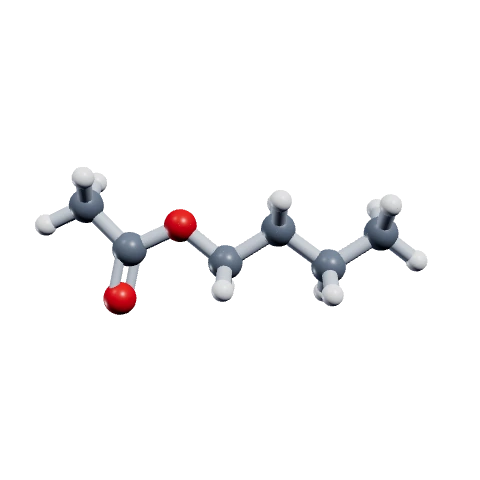
N-Butyl Acetate (chemical formula C6H12O2, CAS number 123-86-4) is an organic ester produced through the esterification reaction of n-butanol and acetic acid. It is a clear, colorless liquid with a characteristic mild, pleasant fruity odor that is far less aggressive than many other industrial solvents like toluene or xylene.
But the pleasant smell is merely a footnote. The real power of nBA lies in its unique combination of physical and chemical properties, which are almost perfectly tuned for high-performance coating applications:
Molecular Structure and Solvency
The molecular structure of N-Butyl Acetate features a four-carbon butyl chain bonded to an acetate ester group. This gives it a balance between polarity and non-polarity that makes it an exceptional solvent for the polymers used in modern coatings—including acrylics, polyurethanes, alkyds, nitrocellulose, and epoxy systems. It dissolves these resins efficiently without being so aggressive that it attacks the underlying substrate or previously applied layers.
Understanding chemical grades is important when selecting nBA, because the purity level directly impacts the quality of the final finish. Reagent-grade nBA is suitable for laboratory work, while urethane grade is specifically designed for coating applications where moisture content must be minimized.
The Evaporation Rate Standard
Perhaps the single most important fact about N-Butyl Acetate: it is the universal reference standard for measuring solvent evaporation rates in the coatings industry. Its evaporation rate is defined as 1.0, and every other solvent is rated relative to this baseline. Faster solvents (like acetone at ~5.6) have higher numbers; slower solvents have lower numbers. This “Goldilocks” evaporation rate is precisely what makes nBA irreplaceable for quality finishes.
Key Physical Properties
- Molecular Weight: 116.16 g/mol
- Boiling Point: 126.1°C (259°F)
- Flash Point: 22°C (72°F) — closed cup
- Specific Gravity: 0.88 at 20°C
- Vapor Pressure: 11.5 mmHg at 20°C
- Water Solubility: Low (~0.7 g/100 mL) — resists moisture absorption
- Kauri-Butanol Value: ~102 (excellent solvency power)
- Hansen Solubility Parameters: δD 15.8, δP 3.7, δH 6.3 MPa1/2
Chapter 2: N-Butyl Acetate vs. Other Coating Solvents—A Head-to-Head Comparison
Professional formulators have many solvents to choose from, and each one brings different trade-offs. Understanding how nBA stacks up against common alternatives like MEK (methyl ethyl ketone), xylene, toluene, and acetone is critical for making informed decisions. See also our guide to mineral spirits vs. paint thinner for additional context on hydrocarbon solvents.
| Property | N-Butyl Acetate | MEK | Xylene | Toluene | Acetone |
|---|---|---|---|---|---|
| Evaporation Rate (nBuAc=1) | 1.0 (standard) | 3.8 | 0.7 | 2.0 | 5.6 |
| Boiling Point (°C) | 126 | 80 | 138–144 | 111 | 56 |
| Solvency (KB Value) | ~102 | ~105 | ~98 | ~105 | ~100 |
| Odor Intensity | Mild / Fruity | Sharp / Pungent | Strong / Sweet | Strong / Sweet | Sharp / Pungent |
| HAP Status | Non-HAP | Non-HAP | HAP Listed | HAP Listed | Non-HAP |
| Resin Compatibility | Acrylics, PU, Epoxy, NC, Alkyd | Acrylics, Epoxy, Vinyl | Alkyds, Epoxy, Rubber | Rubber, Alkyds, PU | Acrylics, Epoxy |
| Flow & Leveling | Excellent | Poor (too fast) | Good (slow dry) | Fair | Very Poor (too fast) |
| Automotive Suitability | Primary Choice | Blending only | Legacy use only | Limited / declining | Cleaning / prep only |
Why HAP Status Matters
An increasingly important factor is environmental regulation. Both xylene and toluene are classified as Hazardous Air Pollutants (HAPs) under the Clean Air Act, subjecting facilities that use them to stringent emission monitoring and reporting requirements. N-Butyl Acetate is not a listed HAP, giving it a significant regulatory advantage. For shops exploring greener formulation approaches, our article on green chemistry principles provides additional perspective on sustainable solvent selection.
Chapter 3: Evaporation Rate and Film Formation—The Technical Guide
Evaporation rate is the single most critical parameter that determines coating quality. Understanding the relationship between evaporation rate, ambient conditions, and film formation allows professionals to select the right solvent blend for any situation.
Evaporation Rate Classification System
| Speed Class | Evaporation Rate (nBuAc=1) | Example Solvents | Film Formation Effect | Best Use in Automotive |
|---|---|---|---|---|
| Super Fast | >3.0 | Acetone (5.6), MEK (3.8) | Rapid skin formation; solvent trapping, orange peel, micro-bubbling | Pre-cleaning and degreasing only |
| Fast | 1.5 – 3.0 | Toluene (2.0), Ethyl Acetate (2.8) | Limited flow time; acceptable for thin films or warm conditions | Fast-flash blending component in summer reducers |
| Medium (Optimal) | 0.8 – 1.5 | N-Butyl Acetate (1.0), Isobutyl Acetate (1.4) | Ideal flow and leveling; proper metallic flake lay-down; maximum DOI | Primary solvent in basecoats, clearcoats, primers |
| Slow | 0.3 – 0.8 | Xylene (0.7), n-Butanol (0.46) | Extended open time; risk of sags and dust inclusion | Tail solvent for hot-weather blends; flow promoter |
| Very Slow | <0.3 | Mineral spirits (0.14), PM Acetate (0.31) | Very long open time; prone to runs and contamination | Specialty blending for extreme heat conditions |
Temperature-Adjusted Solvent Selection
Professional painters adjust their reducer (thinner) formulation based on ambient booth temperature. In cooler conditions (below 65°F / 18°C), a faster-evaporating blend helps prevent sags. In hot conditions (above 85°F / 29°C), a slower blend prevents dry spray and loss of gloss. N-Butyl Acetate serves as the backbone of all three temperature ranges and is blended with faster or slower co-solvents to fine-tune performance. This versatility is why it appears in virtually every automotive reducer formulation on the market.
Chapter 4: Defect Prevention—How N-Butyl Acetate Protects Your Work
In automotive finishing, the enemy is imperfection. A single defect can mean hours of rework—wet sanding, buffing, or in worst cases, stripping and starting over. N-Butyl Acetate's balanced evaporation rate is the primary weapon against the most common and costly paint defects.
The “Goldilocks” Effect: Not Too Fast, Not Too Slow
- Too Fast (like Acetone): The solvent flashes off before the atomized paint droplets can flow together and level. This causes rough texture (orange peel), traps air bubbles (solvent pop), and can draw atmospheric moisture into the film (blushing).
- Too Slow: The paint stays wet far too long, leading to runs, sags, curtaining, and attracting airborne dust and fiber contaminants into the wet film.
- Just Right (N-Butyl Acetate): Provides the perfect window—typically 30 to 90 seconds of “open time”—for atomized paint droplets from the spray gun to coalesce into a single, uniform, glass-like film before beginning to cure.

Common Coating Defects and How nBA Prevents Them
- Orange Peel: Caused by premature surface skinning before the film can flow out. nBA's medium evaporation rate gives the film adequate time to self-level, producing a smooth, high-DOI (Distinction of Image) surface.
- Blushing / Hazing: Occurs when fast-evaporating solvents cool the surface below the dew point, causing moisture condensation in the film. nBA's moderate evaporation and low water miscibility minimize this risk significantly.
- Solvent Pop / Pinholes: Happen when solvent vapor is trapped beneath a hardened surface skin. nBA's controlled release rate allows trapped solvent to escape before the surface closes off.
- Metallic Mottling: In metallic and pearlescent basecoats, uneven solvent evaporation causes irregular flake orientation. nBA ensures uniform drying across the entire sprayed surface for consistent metallic appearance.
- Runs and Sags: While primarily caused by over-application, an overly slow solvent exacerbates the problem. nBA dries fast enough to “set” the film before gravity can cause it to flow.
Chapter 5: N-Butyl Acetate in Action—Applications Across the Coating System
N-Butyl Acetate's versatility makes it valuable throughout the entire automotive coating system—from the first primer coat to the final protective clearcoat. Its consistent performance at every layer is what makes it the backbone of modern automotive finishing.
Primers & Surfacers
Excellent solvency ensures strong adhesion to bare metal, e-coat, and fiberglass substrates. Creates a smooth, uniform base that sands easily and provides a consistent foundation for color coats. The controlled evaporation prevents pinhole formation in thick primer builds.
Basecoat (Color Layer)
Critical for proper metallic and pearlescent flake orientation. nBA's even evaporation prevents mottling and ensures vibrant, consistent color across large panels. Enables the “wet edge” needed for seamless blending during spot repairs.
Clearcoat (Protection)
This is nBA's most critical role. Delivers maximum Distinction of Image (DOI) and gloss by allowing the topcoat to flow out perfectly. Prevents pinholes and solvent pop by allowing trapped air and volatile components to escape before film hardening.
Custom Reducers & Thinners
Serves as the primary component (40–60%) in temperature-adjusted reducer blends. Combined with faster or slower co-solvents to optimize performance for specific booth conditions, coating types, and application methods.
OEM Production Lines
Used in high-volume factory finishes where consistency, repeatability, and regulatory compliance are non-negotiable. Its non-HAP status makes it preferred in facilities subject to Clean Air Act emission limits.
Collision Repair & Refinish
The standard solvent in aftermarket refinishing systems from all major brands (PPG, Axalta, BASF, Sherwin-Williams). Essential for color matching, blending, and achieving factory-quality results in body shop environments.
Beyond Automotive: Other Industries That Rely on nBA
While automotive is the flagship application, N-Butyl Acetate is equally valued in wood finishing (lacquers and varnishes), aerospace coatings, marine paints, industrial maintenance coatings, printing inks, and adhesive formulations. Its balanced properties translate across industries wherever a high-quality, defect-free film is required. For those working with coatings in non-automotive contexts, our industrial solvents guide covers broader applications.
Chapter 6: Application Parameters by Coating Type
The following table provides recommended nBA usage parameters across common coating types. These values represent industry-standard starting points; always consult your coating manufacturer's technical data sheet for product-specific guidance.
| Coating Type | nBA % in Reducer | Recommended Mix Ratio | Spray Pressure (HVLP) | Flash Time Between Coats | Typical Film Build (mils) |
|---|---|---|---|---|---|
| Automotive 2K Clearcoat | 50–65% | 4:1 or 2:1 + reducer | 28–32 PSI at cap | 5–10 min | 1.5–2.0 |
| Automotive Basecoat | 40–55% | Varies by system | 26–30 PSI at cap | 3–5 min | 0.5–1.0 |
| 2K Primer/Surfacer | 45–60% | 4:1 + 10–25% reducer | 28–34 PSI at cap | 5–15 min | 3.0–5.0 |
| Wood Lacquer | 35–50% | Per manufacturer | 22–28 PSI | 3–8 min | 1.0–2.0 |
| Industrial Epoxy | 30–45% | Per manufacturer | 30–40 PSI | 10–20 min | 3.0–8.0 |
| Nitrocellulose Lacquer | 40–55% | 1:1 typical | 24–30 PSI | 2–5 min | 0.5–1.5 |
Chapter 7: Safety, Handling, and Regulatory Considerations
While N-Butyl Acetate has a more favorable toxicity and environmental profile than many alternative solvents, it is still a flammable organic liquid that demands proper respect and handling. Following established safety protocols protects both the applicator and the work environment. For a broader overview, our comprehensive chemical safety guide is essential reading.
Hazards and Precautions
- Flammability: Flash point of 22°C (72°F). Always work in explosion-proof environments with proper ventilation. Eliminate all ignition sources in the spray area.
- Inhalation: Vapors can cause headache, dizziness, and respiratory irritation at high concentrations. The OSHA PEL is 150 ppm (TWA 8-hour). Use a NIOSH-approved organic vapor respirator.
- Skin Contact: Can cause defatting and mild irritation with prolonged exposure. Wear gloves rated for n-butyl acetate on the manufacturer's permeation chart, such as laminated film; thin disposable nitrile is splash protection only against esters and should be changed as soon as it is wetted. Consult our PPE selection guide for detailed recommendations.
- Eye Contact: Causes irritation. Wear splash-proof safety goggles or a full-face respirator.
- Environmental: Non-HAP listed, but still a VOC. Follow local and federal regulations for VOC emissions and disposal.
Proper Storage
Store N-Butyl Acetate in tightly sealed, original containers in a cool, dry, well-ventilated area away from heat sources and direct sunlight. Keep away from strong oxidizers and acids. Ground and bond containers during dispensing to prevent static discharge. Our article on safe chemical disposal covers end-of-life handling for spent solvents and contaminated waste.
Environmental and Regulatory Advantages
N-Butyl Acetate offers significant regulatory advantages over traditional aromatic solvents:
- Not a Hazardous Air Pollutant (HAP) under the Clean Air Act
- Exempt from SARA 313 reporting requirements in many jurisdictions
- Lower photochemical reactivity than xylene and toluene (lower ozone-forming potential)
- Biodegradable under aerobic conditions
- Increasingly preferred in green chemistry initiatives as a replacement for HAP-listed aromatics
Chapter 8: Why Purity Matters—The Alliance Chemical Advantage
For professional applications, not just any N-Butyl Acetate will do. The difference between a flawless finish and a costly rework often comes down to the purity grade of the solvent. Impurities—especially water—are the hidden enemy of quality coatings.
The Problem with Moisture
Even a tiny amount of water in your solvent can trigger a cascade of problems in moisture-sensitive coating systems. In 2K polyurethane clearcoats, water reacts with the isocyanate hardener, consuming cross-linking sites that should be building the polymer network. The chemical reaction produces CO2 gas, which becomes trapped in the curing film as micro-bubbles. The results: loss of gloss, reduced hardness, blushing, and in severe cases, complete adhesion failure.
Alliance Chemical Urethane Grade Specifications
- Purity: >99.5% N-Butyl Acetate
- Water Content: <0.05% (<500 ppm) — verified by Karl Fischer titration
- Color (APHA): <10 (water-white clarity)
- Acidity: <0.01% as acetic acid
- Non-volatile Residue: <5 ppm
Choosing the Right Grade for Your Application
Not all applications require urethane-grade purity. Here is a quick guide:
- Urethane Grade (>99.5%, <0.05% water): Required for 2K clearcoats, polyurethane primers, and any isocyanate-catalyzed system.
- Technical Grade (99%, <0.1% water): Suitable for lacquers, general-purpose thinning, and applications not involving moisture-sensitive chemistry.
- Standard Grade (98%+): Appropriate for industrial cleaning, degreasing, and non-critical thinning applications.
Conclusion: The Clear Choice for Professional-Grade Results
N-Butyl Acetate is far more than a simple thinner—it is a high-performance solvent precisely engineered for flawless finishes. Its “Goldilocks” evaporation rate (the literal industry standard at 1.0) is the key to preventing common, costly paint defects like orange peel, blushing, and solvent pop. Its excellent solvency power makes it a versatile workhorse across the entire coating system, from primer through clearcoat. And its non-HAP regulatory status makes it the environmentally responsible choice for forward-thinking shops and manufacturers.
By understanding the science behind solvent performance and insisting on a high-purity, urethane-grade product from a trusted supplier, professional painters and coating formulators can ensure every job meets the highest standard of quality, durability, and customer satisfaction.
Ready to experience the difference that premium-grade N-Butyl Acetate makes? Explore our product range or contact our technical team for custom volume pricing and formulation support.
Ready to Achieve Flawless, Showroom-Quality Results?
Explore our high-purity, Urethane Grade N-Butyl Acetate—trusted by professional refinishers, OEM manufacturers, and coating formulators nationwide. Available in quarts, gallons, 5-gallon pails, and 55-gallon drums.
Shop N-Butyl Acetate Request a Bulk QuoteReferences & Authoritative Sources
Chemical identity, properties, and safety data sourced from the U.S. National Library of Medicine's PubChem database — the authoritative open-chemistry data resource maintained by the National Institutes of Health.
- PubChem CID 6569: Methyl Ethyl Ketone (MEK) — National Center for Biotechnology Information, U.S. National Library of Medicine. CAS 78-93-3.
- PubChem CID 1140: Toluene — National Center for Biotechnology Information, U.S. National Library of Medicine. CAS 108-88-3.
- PubChem CID 180: Acetone Technical Grade — National Center for Biotechnology Information, U.S. National Library of Medicine. CAS 67-64-1.
- PubChem CID 31272: N-Butyl Acetate — National Center for Biotechnology Information, U.S. National Library of Medicine. CAS 123-86-4.
Related from Alliance Chemical
Toluene 99.5%: The Complete Guide to Race-Gas Octane, Nitrocellulose Lacquer & Synthesis Solvent
The aromatic hydrocarbon at the intersection of race-fuel octane chemistry, nitrocellulose lacquer formulation, and organic-synthesis Grignard work.
Related: Tert-Butyl Acetate (TBAc): The VOC-Exempt Solvent Guide — its straight-chain, non-exempt twin.
Related: N-Butyl Alcohol (1-Butanol): The Complete Guide to Uses, Grades, Isomers & Safety — n-Butyl acetate is made from n-butanol — see the parent alcohol's full guide for grade selection and coatings background.
Key numbers and sources
| Fact | Value | Source |
|---|---|---|
| Chemical formula of N-Butyl Acetate | C6H12O2 | See article text |
| CAS number of N-Butyl Acetate | 123-86-4 | See article text |
| Boiling point of N-Butyl Acetate | 126.1°C | See article text |
| Flash point of N-Butyl Acetate | 22°C | See article text |
| Specific gravity of N-Butyl Acetate at 20°C | 0.88 | See article text |
| Molecular weight of N-Butyl Acetate | 116.16 g/mol | See article text |
| Vapor pressure of N-Butyl Acetate at 20°C | 11.5 mmHg | See article text |
Frequently asked questions
What does this guide cover?
This guide covers the unsung hero - why n-butyl acetate is the gold standard for automotive coatings. It provides technical information, practical applications, and safety guidelines for professionals working with these materials.
What safety precautions should be followed?
While resins provide protection and pigments offer color, the secret to a perfect application lies in the solvent system . Each of these vehicles requires a durable, protective, and aesthetically perfect coating. Always consult the Safety Data Sheet (SDS) for complete handling and emergency information before use.
What are the main applications covered in this guide?
The Perfect Finish Industry Scale What is nBA? Preventing Defects Applications Safety & Purity Look at the mirror-like shine on a brand-new car. That deep, flawless gloss isn't just from the pigment; it's the result of a perfectly engineered chemical process.
What are the key differences discussed in this guide?
This guide will provide a deep dive into what n-Butyl Acetate is, why its unique properties are indispensable for automotive coatings , and how choosing a high-purity grade is critical for achieving professional-grade results that stand the test of time. Chapter 5: Formulation, Safety, and Choosing the Right Grade Safety and Handling N-Butyl Acetate is a flammable liquid and its vapors can be irritating.
Related Chemical Collections
About the author
Andre Taki
This article is for informational purposes only.


