

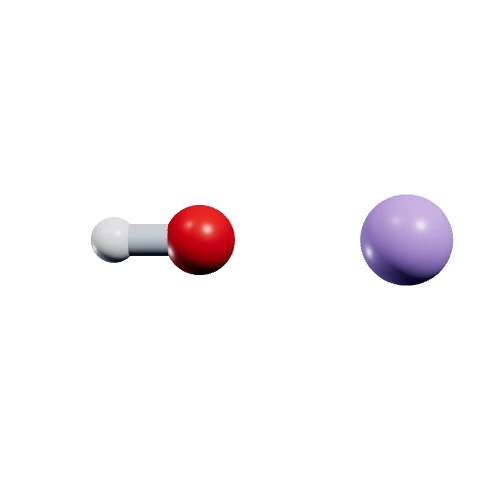


Every heavy-duty oven cleaner on a hardware-store shelf runs on the same idea: a strong alkali that turns old cooking fat into soap, so it wipes away with water. The can calls it sodium hydroxide. Your grandmother called it lye. Knowing that one fact explains why the stuff works, why the label is so strict, and why it will wreck some ovens and parts while it cleans others perfectly.
This guide covers what is actually in oven cleaner, how to use it on a standard oven step by step, when the oven makers tell you not to use it at all, how to deal with racks and door glass, how gentle baking soda really compares, and how cast iron collectors use a plain lye bath to strip old skillets back to bare metal. We sell the chemical at the center of it, Sodium Hydroxide Flakes (Technical Grade), so we have also been careful to say where lye is the wrong tool and where we will not give you a recipe.
Last reviewed 10 November 2026 against the sources cited below. This is a practical cleaning and chemistry guide, not medical, legal or regulatory advice. Always follow your oven’s manual and the label on your cleaner. If lye gets in an eye or is swallowed, call Poison Help at 1-800-222-1222. How we researched it is set out at the end.
What is in oven cleaner, and why does it work?
Heavy-duty oven cleaner works because its main active ingredient, sodium hydroxide (lye, CAS 1310-73-2), turns baked-on cooking fat into soap and glycerol that rinse off with water. The front of an Easy-Off Heavy Duty can says it plainly: “CONTAINS SODIUM HYDROXIDE (LYE)”. Its current US safety data sheet lists sodium hydroxide at 1 to 5 percent, alongside monoethanolamine, a glycol ether, benzyl alcohol and butane propellant, each also at 1 to 5 percent, and gives the product a pH of 13.3. The sheet explains why it only gives ranges: “Any concentration shown as a range is to protect confidentiality or is due to batch variation.”
The chemistry is the same reaction that makes bar soap. As one university chemistry lab text puts it, “To make soap, a fat or oil containing fatty acid triglyceride molecules is combined with a strong base such as sodium hydroxide (NaOH) or potassium hydroxide (KOH).” The result is glycerol and a fatty acid salt, which is soap. Grease that has been baked onto enamel for months is still mostly fat, so a strong alkali left on it long enough softens it into a slippery, water-soluble film. The other ingredients matter too: the solvent and amine help the alkali wet and penetrate greasy soil, and the foam keeps it clinging to the walls and ceiling instead of running to the floor.

Not every oven cleaner is lye. Easy-Off Fume Free, for example, lists no sodium hydroxide at all on its safety data sheet. It relies on potassium carbonate, monoethanolamine and a glycol ether instead. That does not make it mild: the same sheet gives it a pH of 12.5 and warns that it “Causes serious eye irritation.” It also tends to need a longer wait. Both kinds are alkaline cleaners; the heavy-duty kind is simply the stronger one.
What lye does not do. Saponification works on fats and oils. Black carbonized spots, the char from a pie that boiled over, are not fat, and we found no source saying lye dissolves carbon. In practice, the cleaner softens the greasy layer the char is stuck in so it lifts with a plastic scraper. Expect to scrape the worst spots.
Short version: heavy-duty oven cleaner is a few percent lye in a clinging foam, and it cleans by turning grease into soap.
How do you clean an oven with oven cleaner, step by step?
You clean a standard (manual-clean) oven with oven cleaner by applying it to a cold or barely warm oven, waiting the time on the can, then wiping and rinsing repeatedly with clean water. GE’s guidance for its standard ovens is that “Tougher soils might require a commercial oven cleaner made for use in a standard clean oven. Be sure to follow the instructions on the product label.” Here is the sequence, with the label wording quoted where it matters.
Deep-cleaning a standard oven with a heavy-duty (lye) oven cleaner
- Check the oven type first. Look in the manual or on the control panel for “self-clean” or “continuous clean”. If it says either, stop and read the next section.
- Take everything out. Remove racks, thermometers, pizza stones and the bottom drawer contents. Racks get their own method below.
- Dress for it. Easy-Off’s product page says “Wear long rubber gloves when using”. Add eye protection: lye in the eye is the injury that matters most. Open a window and run the range hood.
- Protect what lye damages. Lay newspaper or old towels on the floor in front of the oven. The heavy-duty label says “Keep off all electrical connections such as heating element, thermostat, bulb receptacles, light switch.” and “Avoid spraying over pilot light.” Do not spray the rubbery or woven door gasket, and keep foam off the outside of the oven.
- Apply to a cold oven. The heavy-duty directions are to “spray in cold oven from a 9-12 inches distance; allow to stand for 30 sec”. For a deep clean the same page has you “pre-heat oven (200°F) & turn off” first, then gives an exposure time of 1 hour 15 minutes; spots take 30 seconds to a minute. Label versions differ between cans and countries, so use the times printed on yours.
- Wipe, then rinse, then rinse again. The label says “wipe clean with a wet sponge, cloth or paper towel”. Work from the top down, rinse the sponge in a bucket of clean water often, and use a plastic scraper on char. Finish with two or three clean-water passes until the surfaces no longer feel slippery. Slipperiness is soap and lye, and it is the residue you are trying to remove before food goes back in.
- Dry and air out. Leave the door open for a while, wash your gloves before taking them off, and put the racks back once they are clean and dry.
Why the rinsing matters: in a UK study of oven cleaner poisonings, “Only 103 of the 285 patients ingested oven cleaner directly, whereas 182 patients ingested food they considered to have been contaminated with oven cleaner.”
How long should you leave oven cleaner on?
Leave oven cleaner on for exactly the time printed on your can, which on current Easy-Off pages ranges from 30 seconds for spots to 1 hour 15 minutes for a heavy-duty deep clean, or 2 hours for Fume Free. Easy-Off’s Fume Free deep-clean direction is to “close door and wait for 2 hours” in a cold oven. Some older printed labels give longer or overnight times, which is one more reason to read the can in your hand rather than a web page, including this one.
Longer is not automatically better. The reaction needs time to soften thick grease, but the foam also dries out, and dried cleaner is harder to rinse. If a heavy spot is still stubborn after one round, scrape what has loosened, rinse, and apply a second short round to that spot rather than leaving the whole oven coated for hours.
Can you use oven cleaner on a self-cleaning oven?
No, not according to the oven makers: GE, Samsung and Whirlpool all tell owners not to use commercial oven cleaner in their self-cleaning or porcelain ovens, and the Easy-Off Heavy Duty label agrees. GE’s wording is the bluntest: “No commercial oven cleaner or oven liner of any kind should be used in or around any part the of the self-clean oven.” Samsung explains the reason: “Residue from oven cleaners will damage the inside of the oven during a self-cleaning operation.” Whirlpool adds, for its porcelain oven interiors: “Do not use oven cleaners.” And the heavy-duty can itself says: “Do not use on self-cleaning or continuous cleaning ovens.”
The conflict to know about is that Easy-Off markets its Fume Free product as safe for self-cleaning ovens (“Safe for self-cleaning ovens.”), provided the self-clean cycle is not run with the cleaner in the oven. The oven makers’ statements above make no such exception. When the appliance maker and the cleaner maker disagree, follow the appliance manual: it is the oven, and the warranty, that is on the line.
| Oven type | Heavy-duty lye cleaner | What the makers say instead |
|---|---|---|
| Standard / manual-clean | Allowed, following the label | GE: a commercial cleaner “made for use in a standard clean oven”; GE also suggests a dish of household ammonia overnight in a cold oven |
| Self-clean (pyrolytic) | No (GE, Samsung, heavy-duty label) | Run the self-clean cycle per the manual; wipe ash afterward |
| Continuous-clean | No (both Easy-Off labels) | Follow the manual for that coating |
| Steam clean / other | Check the manual | We found no general maker rule that covers every model |
Sources: GE Appliances, Samsung, Whirlpool and Easy-Off pages cited below.
A self-clean cycle does the job with heat instead of chemistry. GE says “During the cleaning cycle the oven is heated to about 880 degrees Fahrenheit (471° C.)” and that “At this temperature, food soils inside the oven decompose, leaving behind a small amount of ash.” Cycle length varies by brand, from about one and a half hours to several hours. Lye left on the enamel and baked at that temperature is what Samsung means by damage. GE also notes a useful middle path for standard ovens: “Place 1/2 cup in a shallow glass or pottery container in a cold oven overnight,” referring to household ammonia, with the caution “Do not turn oven on while ammonia is inside.” Do not combine it with oven cleaner or any other product; the Fume Free safety sheet’s own advice is “Do not mix with household chemicals.”
What can oven cleaner damage?
Oven cleaner damages aluminum, chrome, painted and baked-enamel surfaces, and it must be kept off heating elements, the thermostat and electrical parts. The heavy-duty label puts it in one line: “Do not use on exterior oven surfaces, aluminum, chrome, baked enamel.” It lists where it is meant to go: “Recommended for use ONLY on porcelain enamel, iron, stainless steel, ceramic and glass surfaces.”
Aluminum is the one with real chemistry behind it. PubChem’s reactivity profile for sodium hydroxide says it “Attacks aluminum and zinc with evolution of hydrogen, a flammable gas.” Foil oven liners, aluminum drip pans and baking sheets, and aluminum trim all fall in that group. The door gasket is another quiet casualty: Samsung tells owners “Make sure the gasket does not get wet.”, because a damaged seal lets heat escape.
| Surface or part | Heavy-duty oven cleaner? | Why |
|---|---|---|
| Porcelain enamel oven interior (standard oven) | Yes | Listed on the label |
| Stainless steel, cast iron, ceramic, glass | Yes (go easy on glass) | Listed; label says “Avoid excessive use on glass.” |
| Aluminum (foil liners, drip pans, sheets) | No | Lye corrodes it and releases hydrogen |
| Chrome, shiny plated racks | No | Chrome is on the label’s do-not list |
| Exterior, painted, baked enamel | No | Label do-not list |
| Elements, thermostat, light, switches, pilot | No | Label: keep off electrical connections |
| Door gasket | No | Samsung: keep it dry |
How do you clean oven racks?
Clean oven racks according to what they are made of: shiny plated racks with hot water, dish soap and a scrub, stainless steel racks with oven cleaner if needed, and porcelain-coated racks the way your manual says. That matters because the heavy-duty label excludes chrome, and rack finishes vary by brand: Samsung refers to nickel and porcelain-coated shelves, GE to stainless steel and “self clean” racks.
- Shiny plated racks (nickel or chrome). Soak in very hot water with dish soap in a laundry tub or a bathtub lined with an old towel to protect the finish, then scrub with a non-scratch pad. A baking soda paste helps on brown film. This is our practical suggestion; it is slower, but it does not fight the label.
- Stainless steel racks. Stainless steel is on the heavy-duty label’s allowed list. Do it outdoors on old cardboard or inside a heavy trash bag, wearing gloves and eye protection, then rinse thoroughly with a hose.
- Porcelain-coated racks. Samsung says “Porcelain-coated oven shelves may be cleaned in the oven during a self-cleaning cycle.” while “Nickel oven shelves should be removed from the oven during a self-cleaning cycle.” GE says “you may leave self clean racks in your oven, but you must remove stainless steel racks.” Check your model.
If racks stay in during a self-clean cycle when the manual says to remove them, expect them to darken, lose their shine and slide less easily.
How do you clean oven door glass?
Clean the inside of the oven door glass with a baking soda paste or a light pass of oven cleaner on a standard oven, and the outside with glass cleaner or soapy water. Samsung’s method for greasy residue is to “simply mix baking soda and water to create a paste that’s great for removing greasy food residue. Apply the paste, and then wipe it off using white vinegar, which reacts with the baking soda to help it dissolve.” For the outer panel it says to use “a glass cleaner or soapy water, and then rinse and dry the glass thoroughly.”
If grease and drips are trapped between the panes, you are dealing with a door that has to come apart or be cleaned through its vents, and that is model-specific. Use the manual’s door-removal steps. Do not pour liquid into the door vents.
Is baking soda or lye better for cleaning an oven?
Lye is far stronger and faster; baking soda is gentler, slower and the better choice for light soil, door glass and anywhere the label rules out oven cleaner. The difference is the pH. PubChem gives a freshly made baking soda solution a pH of 8.3, while a 5 percent sodium hydroxide solution is about 14. Because pH is logarithmic, about five pH units means roughly one hundred thousand times more hydroxide, our arithmetic from those published values.
How alkaline is it? pH of common oven-cleaning options
Bars scaled to pH 14. Sources: PubChem (sodium bicarbonate, sodium hydroxide); Reckitt safety data sheets for Easy-Off Fume Free and Heavy Duty.
The trade-off is real either way. At about pH 8, a baking soda paste is suited to a light film of grease and is easy to rinse, but it is slow, and a year of baked-on roast drippings is a lot to ask of it. A heavy-duty cleaner is built for that job, in about an hour on current labels, but it brings the glove, goggle and rinse discipline described above. For an oven you clean every few months, baking soda and a scraper is often enough. For the once-a-year, before-the-holidays deep clean of a standard oven, the lye cleaner earns its label.
Why we are not giving you a homemade lye oven cleaner recipe. We sell sodium hydroxide, and the obvious move would be a do-it-yourself version of the can. We looked for a credible, published home concentration and did not find one. A commercial cleaner is not just lye and water: it is a few percent lye in a foam with solvents and amines that make it cling and wet greasy soil, tested and labeled for that job. Lye water sprayed in an oven runs, dries in patches and is easy to get in your eyes. Buy a cleaner made for ovens. Where plain lye does have a well-documented home job is next.
How do you use a lye bath to strip cast iron?
A lye bath strips old seasoning and carbon from cast iron by soaking the pan for several days in a solution of about one pound of lye per five gallons of water, then rinsing and reseasoning. This is the cast iron collectors’ method, not the cookware maker’s. Cast Iron Collector, a long-running restoration reference, puts the ratio simply: “One pound of lye crystals per five gallons of water is the formula.” The Wagner & Griswold Society gives a similar recipe: “Mix 1 can of lye (i.e., Red Devil) with 4-5 gallons of water in a plastic container.” It is the same chemistry as oven cleaner, without the foam and with far more time.

Lye bath for black (bare) cast iron, per the restorer sources
- Use a plastic tub with a tight lid, outdoors or in a locked garage, away from children and pets. Never aluminum.
- Water first, then lye. Fill the tub with cold water, then slowly add the lye while stirring with a plastic or wooden stick. Cast Iron Collector’s rule: “Always add the lye to the water, never the reverse.” A university lab safety procedure gives the reason: “A large amount of heat is generated when strong bases are mixed with water.”
- Gloves, goggles, long sleeves. The same procedure lists suitable glove materials: “Wear nitrile, butyl, neoprene, polyvinyl chloride (PVC), or Viton gloves”.
- Submerge the pan and wait. Cast Iron Collector says “it will take from a few to several days for the lye to soften and dissolve the crud.” Lift it out with a wire hook, scrub loosened crust with a nylon brush, and return it if needed.
- Rinse thoroughly. “Be sure to rinse the piece well before proceeding with initial seasoning.” Bare iron flash-rusts quickly, so dry it at once.
- Deal with rust separately, then reseason (below).
Lye baths last a long time and can be reused. When you are finished with one, it must be neutralized before disposal; see our guide to neutralizing spent sodium hydroxide baths and follow local rules.
Three limits make or break the result. First, lye does not remove rust. The Wagner & Griswold Society says it in capitals, “LYE does not remove rust”, and Cast Iron Collector notes that “the high pH of the solution actually works as a rust inhibitor.” Rust takes an acid soak, such as diluted white vinegar, or electrolysis. Second, “Lye should not be used to clean cast aluminum ware as it will dissolve it.” Third, “Lye should not be used to clean enameled cast iron pieces; it will dull the finish.”
There is a smaller version of the same idea using a can of heavy-duty oven cleaner. Cast Iron Collector describes it: coat the piece with oven cleaner spray, “wrap the piece up in a plastic trash bag, and place it in a warm spot, away from the reach of children and pets”, and wait, because “It will take several days for the oven cleaner to work its magic.” The same source warns that cleaners sold on reduced odor usually are not lye-based and will not work for this.
Lodge, the cookware maker, does not mention lye or oven cleaner at all. For rusty pans it says to “Scour the rusty sections with steel wool or the Lodge Rust Eraser.”, then wash, dry, oil lightly and bake at 450 to 500 °F for an hour. That reseasoning step is the same whichever way you stripped the pan. And do not strip cast iron in a self-clean cycle: restorers warn it can ruin a piece, and America’s Test Kitchen reports that many oven makers will void the warranty if you do.
Is oven cleaner toxic, and what if it gets on your skin or in your eyes?
Heavy-duty oven cleaner is corrosive: its safety data sheet classifies it in the most severe categories for skin corrosion and serious eye damage, and eye splashes are the injury to prevent above all. Poison Control’s eye advice is to “Use lots of room temperature water and irrigate for at least 15 to 20 minutes.” It adds: “Every second matters and a delay could result in loss of sight.” For skin, flush immediately with plenty of water and remove soaked clothing. Then call Poison Help at 1-800-222-1222 or get medical care.
The best published picture of real-world harm comes from the UK. The National Poisons Information Service reviewed seven years of calls and reported: “There were 796 enquiries relating to 780 patients.” It found that “Ninety-six percent of the products involved in the reported exposures contained sodium hydroxide and/or potassium hydroxide.” and that “Skin burns (n = 91) predominantly involving the hands or arms, occurred in 44% of dermal exposures.” Most effects were minor; moderate or severe effects occurred in about 4 percent of cases. We found no equivalent US figure, so we are not quoting one.
Two mixing notes. Lye reacts violently with acids: PubChem says it “Reacts rapidly and exothermically with acids, both organic and inorganic.” That means heat and spatter, so do not chase oven cleaner with a strong acid cleaner. And do not combine products in general. You do not need a second chemical; you need time, a scraper and clean water. Glove choice matters as well; our nitrile glove resistance guide explains why a glove that is fine for one chemical can fail with another.
Which sodium hydroxide should you buy for a lye bath?
For a cast iron lye bath, buy dry sodium hydroxide flakes or beads, because the restorers’ ratio is measured by weight of dry lye and dry flakes store for years in a sealed container. Our Sodium Hydroxide Flakes (Technical Grade) come in 2 lb and 4 lb packs up to 55 lb bags. At the restorers’ 1 lb per 5 gallons, one 2 lb pack makes a 10-gallon bath, enough for a large skillet or a Dutch oven, and a 4 lb pack makes a 20-gallon tub for several pieces at once.
- Keep it labeled and locked. Lye looks like sugar or salt. Our write-up on a degreaser mistaken for sugar shows how unlabeled containers end in the emergency room.
- Not for food. This is a technical-grade cleaning and stripping chemical. Do not use it in recipes.
- Store sealed and dry. Flakes pull water and carbon dioxide from air and cake if left open.
If you want more of the chemistry, our caustic soda guide covers grades and handling, sodium hydroxide in soap and drains covers the same saponification reaction in bar soap, and our liquid soap guide shows the potassium version.
How we researched this
We read the sources below on 10 November 2026. What is in oven cleaner, its pH and its directions come from Reckitt’s safety data sheets and Easy-Off product pages. What to do and avoid with each oven type comes from GE Appliances, Samsung, Whirlpool and LG support pages. The chemistry of saponification comes from university chemistry texts, and pH and reactivity data from PubChem. Exposure limits come from the NIOSH Pocket Guide, first aid from Poison Control, handling rules from a Washington State University lab safety procedure, and injury data from a UK National Poisons Information Service study. The lye bath method and its limits come from cast iron restoration references (Cast Iron Collector and the Wagner & Griswold Society), with Lodge and America’s Test Kitchen for the cookware side. Rack and door-glass methods not covered by a maker are our practical suggestions and are labeled as such. The photographs in this article are illustrations, not test results.
Sources
- Easy-Off Heavy Duty Oven Cleaner, Safety Data Sheet, Reckitt Benckiser (2021)
- Easy-Off Fume Free Oven Cleaner, Safety Data Sheet, Reckitt Benckiser (2016)
- Easy-Off Heavy Duty Oven Cleaner, Easy-Off (Reckitt)
- Easy-Off Fume Free Oven Cleaner, Easy-Off (Reckitt)
- Range 101: Cleaning Options, GE Appliances Canada
- How to clean your Samsung oven, Samsung US
- Routine Oven Cleaning: Range, Whirlpool
- How to clean your oven using Self Clean, LG US
- Soap lab, LibreTexts Chemistry (Westfield State University)
- Sodium hydroxide (CID 14798), PubChem, National Library of Medicine
- Sodium bicarbonate (CID 516892), PubChem, National Library of Medicine
- Sodium hydroxide, NIOSH Pocket Guide to Chemical Hazards, CDC / NIOSH
- Help for poisons splashed in the eye, Poison Control (National Capital Poison Center)
- Sodium Hydroxide Standard Operating Procedure, Washington State University Environmental Health & Safety (2024)
- Toxicity resulting from exposure to oven cleaners as reported to the UK National Poisons Information Service (NPIS) from 2009 to 2015, Clinical Toxicology (2017), via All Wales Therapeutics & Toxicology Centre
- The Lye Bath, Cast Iron Collector
- Cleaning Cast Iron, Cast Iron Collector
- Lye, Wagner & Griswold Society
- Restore and Season Rusty Cast Iron, Lodge Cast Iron
- How to refurbish a really bad pan, America’s Test Kitchen
Frequently asked questions
What is the active ingredient in oven cleaner?
In heavy-duty oven cleaners it is sodium hydroxide, also called lye or caustic soda. The current US safety data sheet for Easy-Off Heavy Duty lists it at 1 to 5 percent. Fume-free cleaners use other alkalis, such as potassium carbonate, instead.
Can you use oven cleaner on a self-cleaning oven?
GE, Samsung and Whirlpool say not to, because residue baked in a self-clean cycle damages the oven, and the heavy-duty Easy-Off label agrees. One fume-free product is marketed as safe for self-cleaning ovens, but follow your oven manual when the two disagree.
How long do you leave oven cleaner on?
Use the time on your can. Current Easy-Off pages give 30 seconds to a minute for spots and 1 hour 15 minutes for a heavy-duty deep clean, and 2 hours for Fume Free. Older labels differ.
Do you have to rinse oven cleaner off?
Yes. Wipe it off with a wet sponge, then rinse with clean water several times until the surfaces no longer feel slippery. In UK poisoning data, more people swallowed oven cleaner on contaminated food than directly.
Can you use oven cleaner on oven racks?
Only on racks the label allows. The heavy-duty label permits stainless steel but excludes chrome and aluminum, so wash shiny plated racks with hot soapy water and a scrub instead, and check your manual for porcelain-coated racks.
Can you use oven cleaner on aluminum?
No. Sodium hydroxide attacks aluminum and releases hydrogen, a flammable gas, and both Easy-Off labels prohibit aluminum. That includes foil liners, aluminum drip pans and baking sheets.
Is baking soda as good as oven cleaner?
Not for heavy soil. Baking soda solution is about pH 8.3 against roughly 13 to 14 for a lye cleaner, so it is gentler and slower. It is a good choice for light grease, door glass and ovens where oven cleaner is not allowed.
What should you do if oven cleaner gets in your eye?
Flush the eye with lots of room-temperature water for at least 15 to 20 minutes, as Poison Control advises, and call Poison Help at 1-800-222-1222 or get medical care. Do not wait to see if it settles.
Does a lye bath remove rust from cast iron?
No. Lye strips seasoning, grease and carbon, but restorer sources agree it does not remove rust. Use a diluted vinegar soak or electrolysis for rust, then reseason the pan.
How much lye do you use for a cast iron lye bath?
Restorers use about one pound of lye per five gallons of water in a lidded plastic tub, adding lye to water and never the reverse. Never put aluminum or enameled cast iron in it.
Related Chemical Collections
About the author
Andre Taki
This article is for informational purposes only.


