

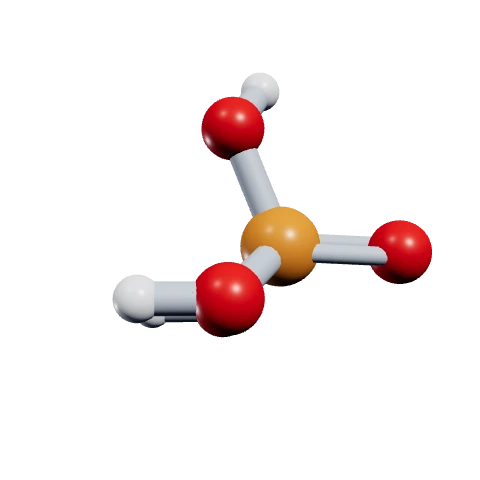


In November 1857, at a séance in Jersey City, the medium Leah Brown said her body was giving off luminous particles so intense they almost burned her hands. She rinsed them under a tap and pressed them into the damp earth outside. The next evening the soil was still glowing where her hands had been, and the particles were identified as phosphorus. Brown’s explanation was that spirits produce “phosphoric lights” in a medium’s body. The historian Aditi Sen, writing in The Conversation this week, offers a simpler one: “She’d probably secretly brought phosphorus with her and had used it in the séance.”
This article explains the chemistry behind that glow, in time for Halloween. It covers why white phosphorus shines in the dark, how it differs from the glow-in-the-dark paint that replaced it, what Sherlock Holmes got wrong about it, why it was so dangerous to the people who worked with it, and what happens to the element when the reaction runs to the end. It is history and chemistry, not a recipe: white phosphorus is a poison and a fire hazard, and nothing here describes handling it. Alliance Chemical sells phosphoric acid; we do not sell elemental phosphorus.
What made the “spirit lights” at Victorian séances glow?
Mostly white phosphorus, the most reactive common form of the element. Sen’s article states the chemistry in two sentences: “White phosphorus, also called yellow phosphorus, gives off a faint light as it slowly reacts with oxygen in the air. The effect is chemiluminescence, light from a chemical reaction — it’s not evidence of supernatural energy.” The Royal Society of Chemistry’s element page gives the same picture from the chemist’s side: “It glows in the dark and is spontaneously flammable when exposed to air.”
Those two properties are one property seen at two speeds. White phosphorus is made of P4 molecules, four phosphorus atoms in a small, strained tetrahedron, and enough of them escape as vapour at room temperature to meet the oxygen around them. Where vapour and oxygen meet, the phosphorus oxidizes in a chain of short-lived intermediates, and some of the energy released comes out as a faint blue-green light instead of heat. That is the glow. Warm the solid, or give it more air, and the same oxidation speeds up until it is a flame.
In a dark room this was very convincing. The light is cold, so it does not look like a candle or a match. It is faint and slightly mobile, because it lives in the vapour just above the surface. And it can be smeared: on fingers, on a cloth, on a face, which is exactly where a séance audience was looking. The Brown episode also shows its weakness as a trick. The glow outlasts the performance, and the evidence is still shining in the garden the next night.
Was it phosphorescence? Three ways to make a ghost glow
No, and the difference is the most useful thing to know about this story. Phosphorus gave its name to phosphorescence, but phosphorus itself does not phosphoresce. Phosphorescence is light given back after a material has absorbed light, slowly, over minutes or hours. Chemiluminescence is light produced by a reaction, with no light needed going in. Victorian ghost-makers used both, and Sen’s article names the main tools.
| Ghost light | What makes it glow | Kind of light | The catch |
|---|---|---|---|
| White phosphorus smeared on hands, cloth or props | Its vapour oxidizing in air | Chemiluminescence | A poison and a fire hazard, and it leaves glowing evidence |
| Phosphorised oil and phosphorus lamps | Phosphorus dissolved in oil, oxidizing at the surface | Chemiluminescence | The same element, diluted; tested by William Crookes in 1874 |
| Luminous paint based on calcium sulphide, sold from 1877 | Absorbs light, then gives it back in the dark | Phosphorescence | Has to be charged by light first, and fades as the night goes on |
| “Spirit hands” made from props and luminous paint | The same paint on a shaped prop | Phosphorescence | Shown as a trick by the magician William Marriott in 1910 |

The paint is the safer ghost. Sen describes the 1877 calcium sulphide formulation as “a major commercial success” and explains why it worked: “This compound could absorb light and glow in darkness.” Leave it in a lit room and it stores energy in its crystal; turn the lights off and it releases that energy slowly as visible light. It needs no air and burns nothing. It also dims steadily, so a spirit painted with it fades through a long evening, which a careful sitter could notice.
The science establishment took the question seriously. In Sen’s account, William Crookes, a leading chemist of the period, investigated self-luminous objects at séances in 1874: “He specifically tested phosphorised oil and phosphorous lamps to see if he could understand the process better.” Our earlier guide to who discovered phosphorus covers the naming irony in full: the element called “bringer of light” is the textbook example of chemiluminescence, while the phenomenon named after it belongs to materials like that calcium sulphide paint.
Did Sherlock Holmes get phosphorus wrong?
On one point, yes. The most famous phosphorus ghost in literature is the hound in Arthur Conan Doyle’s The Hound of the Baskervilles, published in 1902. When the beast is finally shot, Watson touches its glowing muzzle and finds that “my own fingers smouldered and gleamed in the darkness”. He names the substance as phosphorus. Holmes agrees, calls it “A cunning preparation of it”, and then sniffs the animal and adds: “There is no smell which might have interfered with his power of scent.”
The chemistry disagrees. The U.S. Agency for Toxic Substances and Disease Registry describes the element plainly: “White phosphorus is a colorless, white, or yellow waxy solid with a garlic-like odor.” The vapour that makes the glow is the same vapour that carries the smell. A hound painted with enough phosphorus to light up a moor at night would have smelled of garlic to Watson, never mind to a tracking dog. Doyle needed the hound to keep its nose for the plot to work, so the “cunning preparation” is doing a lot of quiet work in that sentence.
Sen notes that Doyle had a keen interest in the paranormal and wanted to believe in ghosts, which makes the hound a neat inversion: a believer used a chemical trick to fake a supernatural beast, and gave the job of exposing it to fiction’s great rationalist.
Why was white phosphorus so dangerous?
Because the property that makes it glow, its eagerness to react, also makes it a poison and a fire risk. Sen is direct: “Phosphorus is not a safe chemical.” The worst harm was not at séances but in factories. White phosphorus was the active ingredient in the early “strike anywhere” matches, and the RSC’s history of the element records the cost: “Breathing in phosphorus vapour led to the industrial disease phossy jaw, which slowly ate away the jaw bone.” The RSC dates the first phosphorus matches to Stockton-on-Tees in 1827, and the disease fell hardest on the young women who made them.
Sen is careful about what the evidence shows for mediums: there is no definitive record of a medium developing phossy jaw, and an evening of smeared phosphorus is not years of daily factory exposure. Her point is a different one: “white phosphorus was a known industrial poison and yet it was used regularly for seances”. The hazard was public knowledge. The glow was too useful to give up.
Chemistry offered a way out, and it is the same one the match industry eventually took. The RSC notes that “Red phosphorus is made by gently heating white phosphorus to about 250°C in the absence of air”, and that “Red phosphorus however has none of these fascinating properties.” It does not glow and does not ignite on its own in air, and it is the form on the striking strip of a box of safety matches today. The glow and the danger leave together.
What happens when the glow runs to the end?
You get phosphoric acid. The faint light on a séance table is phosphorus oxidizing slowly and incompletely. Run the same oxidation fast and completely, in a furnace with plenty of air, and every phosphorus atom ends up bonded to oxygen as phosphorus pentoxide. Add water and the pentoxide becomes phosphoric acid. That is not an analogy. It is how the purest phosphoric acid has been made industrially, and the U.S. Environmental Protection Agency’s emissions handbook, AP-42, describes it in three words for the inputs: “Raw materials for the production of phosphoric acid by the thermal process are elemental (yellow) phosphorus, air, and water.”
| Step (U.S. EPA, AP-42 section 8.9) | What happens | Chemistry |
|---|---|---|
| 1. Combustion | Liquid elemental phosphorus is burned in air in a combustion chamber at 1,650 to 2,760°C | P4 + 5 O2 → 2 P2O5 (written as P4O10 in most textbooks) |
| 2. Hydration | The phosphorus pentoxide is absorbed in water or dilute acid | 2 P2O5 + 6 H2O → 4 H3PO4 |
| 3. Demisting | Acid mist is stripped from the gas before it leaves the stack | Recovers product and controls emissions |

The handbook is precise about the product: “Concentration of H3PO4 produced from thermal process normally ranges from 75 to 85 percent.” And about the yield: “Efficient plants recover about 99.9 percent of the elemental phosphorus burned as phosphoric acid.” Those are the two numbers most buyers know from the other end, because 75% and 85% are the standard strengths phosphoric acid is sold in.
There is a neat loop hidden here. The RSC describes how phosphorus was made in the nineteenth century, after the urine method gave way to bones: “Bone can be dissolved in sulfuric acid to form phosphoric acid, which is then heated with charcoal to form white phosphorus.” So the element that lit the séance rooms was itself made from phosphoric acid, by stripping the oxygen back off with carbon. Thermal acid production runs that step in reverse, putting the oxygen back on. The acid becomes the element, the element glows on its way back to the acid.
Thermal acid and wet acid: why the route mattered
Burning phosphorus is not the only way to make phosphoric acid, and it is not the main one. Most of the world’s phosphoric acid is made by the wet process, which dissolves phosphate rock in sulfuric acid, the modern version of the bone method above. AP-42 gives the split for 1987: “over 9 million megagrams” of wet-process acid, measured as phosphorus pentoxide, against “Only about 363,000 Mg” from the thermal process. On our arithmetic, thermal acid was under 4 percent of U.S. output that year.
The small share bought purity. The handbook explains the division of labour: wet-process acid goes mostly into fertilizer, while “Thermal process phosphoric acid is of a much higher purity” and went into high-grade chemicals, pharmaceuticals, detergents, food products and beverages. The reason is the feedstock. Phosphate rock carries fluoride, metals and other impurities into the acid, while elemental phosphorus has already been distilled once, in the furnace that made it. Wet-process acid can also be purified to high grades, which is why a grade on a label tells you more than the name of a process.
For food uses, the federal rule is short. The FDA lists phosphoric acid among multiple-purpose substances generally recognized as safe, and 21 CFR 182.1073 reads in full: “This substance is generally recognized as safe when used in accordance with good manufacturing practice.” That status belongs to the substance used in food under good manufacturing practice, which is why the grade a buyer specifies matters more than the chemical name.
What this means on a specification
Nobody needs white phosphorus to buy phosphoric acid, and the séance story does not change how the acid is specified. It does explain where the standard strengths come from and why the grade line on a label carries the weight. The questions a buyer actually has to answer are these.
| Question | What to specify | Basis |
|---|---|---|
| Strength | 85% or 75% concentrate for formulation and dilution; ready-diluted strengths where the method or job names one | Standard concentrate strengths (AP-42: 75 to 85 percent from the thermal route) |
| Grade | The grade the application or method names: reagent (ACS) for lab methods, the pharmacopoeial and food-use grade where the use requires it, technical for industrial and metal work | The method, the regulation or the customer specification |
| Manufacturing route | Specify the grade and its impurity limits, not the route; both routes can meet high grades | Grade specification |
| Rust removal and metal prep | A diluted technical acid; the strength in the procedure you follow | Our rust removal guide |
| Documents | Safety data sheet; certificate of analysis for the lot on request | Supplier |
About supply. This article explains the history and chemistry of phosphorus and the published description of how phosphoric acid can be made. It makes no claim about ours: nothing here states which manufacturing route produced any lot we list, and we do not sell elemental phosphorus. Grades, strengths, pack sizes and prices are on the product pages.
Common questions
What made the ghost lights at Victorian séances glow?
Usually white phosphorus. Its vapour reacts slowly with oxygen in the air and gives off a faint blue-green light, which is chemiluminescence. Some performers later used luminous paint based on calcium sulphide, which glows after it has absorbed light.
Is the glow of phosphorus phosphorescence?
No. Phosphorescence is light re-emitted after a material absorbs light. White phosphorus glows because it is reacting with oxygen, so its light is chemiluminescence. The calcium sulphide paints sold from 1877 are the phosphorescent ones.
Does white phosphorus have a smell?
Yes. The U.S. Agency for Toxic Substances and Disease Registry describes white phosphorus as a waxy solid with a garlic-like odor. In The Hound of the Baskervilles, Holmes says the phosphorus on the hound has no smell, which is the one detail the chemistry does not support.
How is phosphoric acid made from phosphorus?
In the thermal process, liquid elemental phosphorus is burned in air to phosphorus pentoxide, which is then absorbed in water to form phosphoric acid. The U.S. EPA reports a product of 75 to 85 percent acid, with about 99.9 percent of the phosphorus recovered in efficient plants.
What is the difference between thermal and wet process phosphoric acid?
Thermal acid is made by burning elemental phosphorus; wet process acid is made by dissolving phosphate rock in sulfuric acid. In 1987 the wet process made over 9 million megagrams of acid as phosphorus pentoxide and the thermal process about 363,000. Thermal acid was historically the purer route.
Why was white phosphorus dangerous to match workers?
Breathing phosphorus vapour caused phossy jaw, an industrial disease that destroyed the jaw bone, according to the Royal Society of Chemistry. It struck the workers, mostly young women, who made early strike-anywhere matches. Safety matches use red phosphorus instead.
References & Authoritative Sources
The séance history is from Aditi Sen’s article in The Conversation; element properties and history from the Royal Society of Chemistry and ATSDR; the thermal process from the U.S. EPA’s AP-42; food status from the Code of Federal Regulations; the Holmes quotations from the Project Gutenberg text. The thermal share of 1987 output is our arithmetic.
- Glowing ghoul or chemical tool? The toxic chemistry behind Victorian séances — Aditi Sen, Queen’s University, The Conversation, 26 October 2026.
- Phosphorus: element information, properties and uses — Royal Society of Chemistry periodic table.
- ToxFAQs: White Phosphorus — Agency for Toxic Substances and Disease Registry (ATSDR).
- AP-42, Section 8.9: Phosphoric Acid — U.S. Environmental Protection Agency, Compilation of Air Emission Factors, July 1993 (reformatted January 1995).
- 21 CFR 182.1073: Phosphoric acid — Code of Federal Regulations, Title 21, as of 1 April 2025.
- The Hound of the Baskervilles — Arthur Conan Doyle, 1902, Project Gutenberg text.
What we stock


Phosphoric Acid 30% - The Ultimate Rust Remover Solution Technical Grade
Ready-diluted technical acid for rust and metal prep.
Choosing a phosphoric acid strength or grade?
Tell us the concentration and grade your method or customer specification names and the container size you can store. We will send the safety data sheet and, on request, the certificate of analysis for the lot you would receive.
Compare phosphoric acid grades and usesKey numbers and sources
| Figure | Value | Source |
|---|---|---|
| Leah Brown’s phosphorus séance | November 1857, Jersey City | Sen, The Conversation |
| Crookes tests phosphorised oil and lamps | 1874 | Sen, The Conversation |
| Calcium sulphide luminous paint | 1877 | Sen, The Conversation |
| White phosphorus odor | Garlic-like | ATSDR |
| Thermal acid strength | 75 to 85 percent | U.S. EPA, AP-42 8.9 |
| Phosphorus recovered as acid, efficient plants | About 99.9 percent | U.S. EPA, AP-42 8.9 |
| Thermal share of U.S. acid output, 1987 | Under 4 percent | Our arithmetic on AP-42 figures |
Frequently asked questions
What made the ghost lights at Victorian séances glow?
Usually white phosphorus. Its vapour reacts slowly with oxygen in the air and gives off a faint blue-green light, which is chemiluminescence. Some performers later used luminous paint based on calcium sulphide, which glows after it has absorbed light.
Is the glow of phosphorus phosphorescence?
No. Phosphorescence is light re-emitted after a material absorbs light. White phosphorus glows because it is reacting with oxygen, so its light is chemiluminescence. The calcium sulphide paints sold from 1877 are the phosphorescent ones.
Does white phosphorus have a smell?
Yes. The U.S. Agency for Toxic Substances and Disease Registry describes white phosphorus as a waxy solid with a garlic-like odor. In The Hound of the Baskervilles, Holmes says the phosphorus on the hound has no smell, which is the one detail the chemistry does not support.
How is phosphoric acid made from phosphorus?
In the thermal process, liquid elemental phosphorus is burned in air to phosphorus pentoxide, which is then absorbed in water to form phosphoric acid. The U.S. EPA reports a product of 75 to 85 percent acid, with about 99.9 percent of the phosphorus recovered in efficient plants.
What is the difference between thermal and wet process phosphoric acid?
Thermal acid is made by burning elemental phosphorus; wet process acid is made by dissolving phosphate rock in sulfuric acid. In 1987 the wet process made over 9 million megagrams of acid as phosphorus pentoxide and the thermal process about 363,000. Thermal acid was historically the purer route.
Why was white phosphorus dangerous to match workers?
Breathing phosphorus vapour caused phossy jaw, an industrial disease that destroyed the jaw bone, according to the Royal Society of Chemistry. It struck the workers, mostly young women, who made early strike-anywhere matches. Safety matches use red phosphorus instead.
Related Chemical Collections
About the author
Andre Taki
This article is for informational purposes only.