

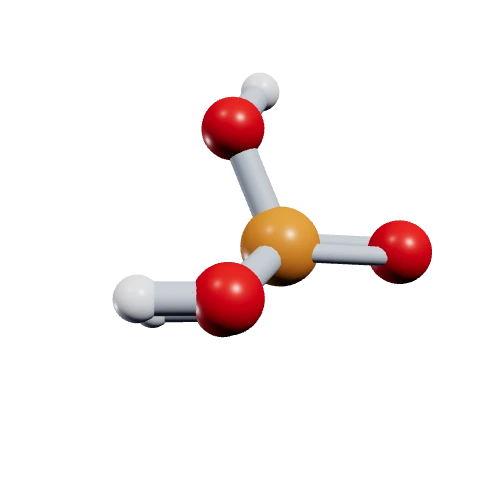


Almost every element on the periodic table was either always known or found by someone looking for it. Phosphorus is the odd one out. It was found in 1669 by a man who was not doing chemistry as we would recognise it, was not looking for an element, and had convinced himself that the raw material for gold was flowing, unnoticed and free, out of every person in Hamburg.
He was wrong about the gold. He was accidentally right about something considerably stranger.

Who discovered phosphorus?
Phosphorus was discovered by Hennig Brand in Hamburg in 1669. Brand was a merchant and amateur alchemist, not a trained natural philosopher, and he was hunting the philosopher's stone — the legendary substance believed to transmute base metals into gold.
His reasoning was not random, even if it was wrong. Alchemical thinking of the period leaned heavily on correspondence: like reveals like. Urine is gold-coloured. It comes from the living human body, which alchemists considered the most perfected vessel in nature. If gold were hiding anywhere in plain sight, a seventeenth-century alchemist could talk himself into believing it was hiding there.
So Brand did what a wealthy man with an obsession does. He began collecting urine in bulk, and he began boiling it.
The essentials: Discovered 1669, Hamburg. Discoverer: Hennig Brand. Element symbol P, atomic number 15. Named from the Greek phosphoros, "light-bearer". Brand's own name for it was cold fire.
How was phosphorus discovered? The 1669 process, step by step
Phosphorus was discovered by evaporating urine to a residue, letting that residue putrefy, and then roasting it at high heat with sand and charcoal so that the vapour could be condensed under water. The sequence, as it is generally described, ran roughly like this.
- Collection. Urine was gathered in bulk over weeks and left to stand.
- Evaporation. It was boiled down, over a period of around two weeks, to a thick black syrup or sludge.
- Putrefaction. The residue was left to stand and decompose further — a stage that made the process as foul as it sounds.
- Roasting. The residue was mixed with sand and charcoal and heated to a fierce temperature in a retort.
- Condensation. The vapour driven off was condensed under water, where it collected as a waxy white solid.
That solid glowed. In a darkened cellar it produced a pale, steady, greenish light that gave off no appreciable heat and consumed nothing visible. Brand called it cold fire, and the name is a better piece of observation than it is given credit for — he had correctly noticed that whatever this was, it was not combustion as he understood it.
How much urine? Sources genuinely disagree, and we are not going to pretend otherwise. The Science History Institute describes Brand boiling down about 1,200 gallons over two weeks. The Royal Society of Chemistry's education arm describes 50 buckets yielding roughly 120 g of the element. Other accounts cite 1,500 gallons. These figures do not reconcile with one another, and any single number you see quoted confidently is quoting one source and ignoring the others. What is not in dispute is the shape of it: an enormous input, weeks of labour, and a yield you could hold in one hand.
Why was there phosphorus in urine at all?
There is phosphorus in urine because phosphorus is an essential dietary element and the kidneys excrete the excess. Phosphate is structural to living things — it is in the backbone of DNA, in the ATP that carries energy around every cell, in cell membranes, and in the mineral phase of bone. A body takes in more phosphate than it needs and routes the surplus out, largely in urine, as dissolved phosphate salts.
Brand's process, stripped of its alchemy, was a crude but genuine industrial separation. Evaporation concentrated those dissolved phosphates. The fierce roasting step with charcoal then did the real chemical work: at high temperature, carbon reduces phosphate to elemental phosphorus, which leaves as a vapour and can be caught. It is a carbothermal reduction, and a recognisable ancestor of the electric-furnace process later used industrially.
This is the quiet joke at the centre of the story. Brand believed he was performing a mystical operation on the noblest fluid of the noblest creature. He was in fact running a phosphate ore-processing plant, and his ore was a waste stream.
Was phosphorus the first element ever discovered?
No — and the popular version of this claim needs an asterisk. Around a dozen elements were already in human hands long before 1669, including gold, silver, copper, iron, lead, tin, mercury, carbon, sulfur, antimony, zinc and bismuth. Nobody "discovered" those in any documented sense; they were worked, traded and written about across antiquity and the middle ages with no identifiable first finder.
What is defensible about phosphorus is narrower and more interesting:
- It is generally regarded as the first element whose discovery can be credited to a specific, named individual on a specific date — the point at which element discovery becomes a documented event rather than an inheritance.
- It is, per the Royal Society of Chemistry, unique among the elements in having first been discovered in human urine. That claim has no asterisk at all.
Even the first point deserves care. Arsenic is sometimes credited to Albertus Magnus in the thirteenth century, and if you accept that attribution then phosphorus is not first by named discoverer either. We would rather give you the honest version with its edges showing than a clean sentence that falls apart the moment somebody checks it.
The safest formulation: phosphorus is the first element discovered in the modern, documented sense — and the only one ever first isolated from human urine.

Why does white phosphorus glow — and why "phosphorescence" is the wrong word for it?
White phosphorus glows because its vapour is slowly oxidising in air, which is chemiluminescence — not phosphorescence. This is one of the better ironies in chemical nomenclature: the word phosphorescence is derived from phosphorus, and yet the glow of phosphorus is not phosphorescence.
The distinction is real and worth getting right:
- Phosphorescence is the delayed re-emission of light that a material previously absorbed. You must shine light on it first. Glow-in-the-dark stars work this way.
- Chemiluminescence is light released directly by a chemical reaction. No prior illumination is needed. Glow sticks work this way — and so does white phosphorus.
White phosphorus sitting in air produces a faint greenish light because its vapour reacts with oxygen at room temperature, and that reaction emits photons. Take away the oxygen and the glow stops. Note also that this applies to white phosphorus specifically; red phosphorus, the allotrope on the side of a matchbox, does not do it.
Safety note, because this is not a home experiment. White phosphorus is pyrophoric — it can ignite spontaneously in air — and is acutely toxic. It is stored under water for exactly that reason. Alliance Chemical does not sell elemental phosphorus. The commercial product discussed below is phosphoric acid, a stable aqueous acid, which is a very different material with a very different hazard profile.
How did the secret get out?
Brand kept his method secret and the knowledge spread anyway, through a mix of sales, replication and eventual publication. He showed and sold samples of the glowing substance to other alchemists while guarding the process that produced it — a reasonable commercial instinct, and a doomed one.
Johann Kunckel, having seen Brand's material, worked out a urine-based route of his own and is credited with producing phosphorus by 1678. Robert Boyle in London obtained it by 1680 and, crucially, published the method of manufacture. Publication is what turned a closely-held marvel into ordinary chemistry. Within a generation phosphorus had moved from an alchemical curiosity shown to paying audiences into a substance that could be made deliberately by anyone with the recipe and the stomach for it.
What happened to Hennig Brand?
Brand sold his process and did not become rich from it. He is reported to have sold the recipe for 200 thalers to Johann Daniel Krafft of Dresden, who then toured the courts of Europe demonstrating the glowing substance to royal audiences in the hope of building a business on it.
It is a familiar shape of story. The person who does the strange, unglamorous, years-long work is rarely the person who captures the value of it. Brand had spent an enormous amount of his own money and effort on a theory that was wrong, and the thing he found along the way was worth more than the thing he was looking for — but he sold it for a fixed fee before anybody understood what it was.
His reputation recovered better than his finances. The discovery of phosphorus is now treated as one of the hinge moments where alchemy starts turning into chemistry: a documented substance, isolated by a named person, on a stated date, reproducible by anyone willing to follow the method.
Where does phosphorus come from now?
Phosphorus has not been made from urine on any meaningful scale for around 250 years. The raw material moved twice, and each move was driven by the same thing: finding a more concentrated source of the same phosphate.
- Urine (from 1669). Brand's route. Chemically sound, practically miserable — the phosphate is dilute, so the input volumes are enormous and the yield is tiny.
- Bone ash (from about 1769–1771). Johan Gottlieb Gahn identified calcium phosphate as a constituent of bone in 1769, and Carl Wilhelm Scheele published a route to extract phosphorus from burnt bone shortly afterwards. Bone is far richer in phosphate than urine, and bone ash promptly displaced the urine process.
- Phosphate rock (modern). Mined sedimentary and igneous phosphate deposits are richer still, and they are the feedstock for essentially all phosphorus and phosphate chemistry today — fertiliser, food phosphates, detergents, and the phosphoric acid discussed here.
Read in sequence, that progression is the whole history of industrial chemistry in miniature: identify the species you actually want, then go and find the most concentrated place it occurs. Brand had the right chemistry and the worst possible ore.
Worth keeping straight: the element never changed and the reduction chemistry barely changed. What changed was the feedstock — urine, then bone ash, then rock — each one a denser source of the same phosphate ion.
How do you get from phosphorus to phosphoric acid?
Modern phosphoric acid is not made by Brand's route, and has not been for a very long time. There are two industrial processes, and the difference between them explains most of what you will encounter when buying it.
The wet process
Phosphate rock is digested with sulfuric acid, producing phosphoric acid and calcium sulfate as a by-product. This is the dominant route by volume and the source of most fertiliser-grade material. The raw output carries impurities from the ore, so acid intended for food or reagent use is purified downstream.
The thermal process
Elemental phosphorus is burned in air to phosphorus pentoxide, which is then hydrated to the acid. This route runs through the same elemental phosphorus Brand first isolated, and historically it was the way to get high-purity acid — the direct industrial descendant of a man boiling urine in a cellar.
Phosphoric acid is triprotic. It donates three protons, at pKa values of approximately 2.15, 7.20 and 12.32. Those three widely-spaced steps are precisely why it is such a useful buffering acid across a broad pH range, and why it turns up in everything from soft drinks to metal pretreatment baths.
What is phosphoric acid used for today?
Phosphoric acid is used as a food acidulant, a rust converter, a metal-finishing acid, a fertiliser intermediate and a battery-materials feedstock. The four that matter most commercially:
- Food and beverage. It supplies the sharp bite in cola and functions as an acidulant and pH control agent. It is affirmed GRAS by the FDA under 21 CFR 182.1073 when used per good manufacturing practice. We go deeper in what phosphoric acid actually does in food.
- Rust removal and conversion. It converts iron oxide into a more stable iron phosphate layer, which is why it appears in rust converters and pre-paint treatments. See our complete guide to phosphoric acid for rust removal.
- Metal finishing. Pickling, brightening, passivation and phosphate conversion coatings before paint or powder coat.
- LFP battery materials. Lithium iron phosphate cathode production consumes purified phosphoric acid, covered in phosphoric acid from cola to EV batteries.

How strong is phosphoric acid, and what concentration do you need?
Phosphoric acid is a moderately strong acid, and concentration is a separate decision from grade. Its first dissociation at pKa 2.15 is vigorous enough to do real work on oxides and scale, while the second and third steps are weak enough that it buffers rather than simply crashing pH — which is why it behaves so differently from a strong mineral acid like hydrochloric at the same nominal strength.
In practice, the concentration you want tracks the job rather than the chemistry:
| Concentration | Typically used for | Notes |
|---|---|---|
| 5–20% | Light cleaning, mild descaling, pH adjustment, dilute treatment baths | Ready to use; no dilution step or handling of concentrate required |
| 25–50% | Rust removal and rust conversion, metal cleaning and brightening | The working range for most rust and surface-prep tasks |
| 75–85% | Concentrate for on-site dilution, food and beverage acidulation, metal finishing, reagent use | Lowest cost per unit of acid; you dilute to your own working strength |
If you use a lot of acid, buying at 75–85% and diluting on site is almost always the cheaper route, because you stop paying to ship water. If you use small volumes intermittently, a ready-diluted 5–30% product removes a handling step and the risk that goes with it.
Always add acid to water, never water to acid. Diluting concentrated phosphoric acid is exothermic. Adding water to concentrate can drive localised boiling and spattering. Add the acid slowly into the water, with agitation, wearing appropriate eye and skin protection, and consult the SDS for the specific product and concentration before you start.
What grades of phosphoric acid are there, and which one do you need?
Grade is a statement about impurity limits and documentation, not about strength — concentration and grade are two separate decisions. Buying a higher grade than your process requires is one of the most common and most expensive procurement mistakes we see.
| Grade | What it means | Typical use |
|---|---|---|
| Technical Grade | Industrial purity; impurity limits not certified to a pharmacopoeia standard | Rust removal, metal cleaning and finishing, general industrial and water treatment |
| Food-grade to USP/FCC specification | Meets pharmacopoeia and Food Chemicals Codex specifications for food contact | Beverage acidulant, food processing, pH adjustment in food streams |
| ACS Reagent Grade | Highest documented purity, meets American Chemical Society reagent specifications | Analytical work, laboratory reagents, QC methods, research |
Alliance Chemical stocks phosphoric acid from 5% to 85% across those grades, in pack sizes from 1-quart bottles through 330-gallon IBC totes, with the lot Certificate of Analysis on request at no charge. If you are unsure which grade a step actually requires, tell us the application and we will spec it with you — the goal is that you are neither paying for purity you will never use, nor under-spec'ing a step where it matters.
Key numbers and sources
| Fact | Value | Source |
|---|---|---|
| Discovery of phosphorus | 1669, Hamburg, by Hennig Brand | Science History Institute |
| Urine boiled down | ~1,200 gallons over two weeks (other sources differ) | Science History Institute |
| Yield reported | 50 buckets → ~120 g of element | RSC Education |
| Only element first found in urine | Phosphorus | RSC Education |
| Phosphorus | Symbol P, atomic number 15 | IUPAC periodic table |
| Phosphoric acid CAS | 7664-38-2 (H₃PO₄, MW 98.00) | NIST WebBook |
| pKa values | 2.15 / 7.20 / 12.32 | Standard reference data |
| FDA GRAS status | Affirmed GRAS, per GMP | 21 CFR 182.1073 |
| Method published | Boyle, London, 1680 (Kunckel c.1678) | Historical record |
Phosphoric acid, specified properly
Technical, food-grade to USP/FCC specification, and ACS Reagent Grade — 5% to 85%, quart bottles through 330-gallon totes, CoA on request at no charge. Tell us the application and we will help you spec the grade.
Keep reading: Phosphoric acid: from cola to EV batteries · Industrial and food-grade applications · Phosphoric acid: the industrial workhorse · Phosphoric acid in agriculture
Related: Who Discovered Ammonia? The Salt of Ammon and a 1,900-Year-Old Naming Mistake — another product whose name outlived the story that produced it.
Related reading
Potash: The Chemical Behind America’s First Patent — and What It Became — another founding story of an industrial chemical — potash, and the first patent the United States ever issued.
References & Authoritative Sources
Primary sources consulted for this article. Regulatory and physical-property figures above are drawn from these references.
- PubChem Compound Summary: Phosphoric Acid (CID 1004) — National Center for Biotechnology Information, U.S. National Library of Medicine. Accessed 2026-09-04.
Related: What Is Denatured Alcohol? Why the Government Poisons Perfectly Good Ethanol on Purpose — another chapter of chemistry history where the strangest part of the story is entirely true.
Frequently asked questions
Who discovered phosphorus?
Phosphorus was discovered by Hennig Brand, a merchant and amateur alchemist, in Hamburg in 1669. He was searching for the philosopher’s stone and boiling down human urine in the belief that gold could be extracted from it.
How was phosphorus discovered?
Brand evaporated collected urine to a thick black residue over roughly two weeks, let it putrefy, then roasted the residue with sand and charcoal in a retort and condensed the resulting vapour under water. The waxy white solid that collected was elemental phosphorus.
How much urine did Hennig Brand use?
Sources disagree. The Science History Institute describes about 1,200 gallons boiled down over two weeks; RSC Education describes 50 buckets yielding roughly 120 grams. Other accounts cite 1,500 gallons. All agree the input was enormous relative to the yield.
Why was there phosphorus in urine?
Phosphorus is an essential dietary element used in DNA, ATP, cell membranes and bone. The body excretes surplus phosphate largely through urine as dissolved salts. Boiling concentrated those phosphates, and roasting with charcoal reduced them to elemental phosphorus.
Was phosphorus the first element ever discovered?
No. About a dozen elements including gold, copper, iron, sulfur and carbon were known since antiquity with no identifiable discoverer. Phosphorus is generally regarded as the first element credited to a specific named individual on a specific date, though arsenic is sometimes attributed to Albertus Magnus in the thirteenth century. Phosphorus is, however, the only element first discovered in human urine.
Why does white phosphorus glow in the dark?
White phosphorus glows because its vapour slowly oxidises in air, releasing light directly from that chemical reaction. This is chemiluminescence, not phosphorescence, even though the word phosphorescence is derived from phosphorus. Remove the oxygen and the glow stops. Red phosphorus does not glow this way.
Is phosphorus the same thing as phosphoric acid?
No. Phosphorus is the element, symbol P, atomic number 15. Phosphoric acid is H₃PO₄, CAS 7664-38-2, a stable triprotic aqueous acid. Elemental white phosphorus is pyrophoric and acutely toxic; phosphoric acid is a routine industrial and food-grade chemical. Alliance Chemical supplies phosphoric acid, not elemental phosphorus.
What grade of phosphoric acid do I need?
Grade describes impurity limits and documentation, not strength. Technical Grade suits rust removal, metal cleaning and general industrial use. Food-grade to USP/FCC specification is required for food and beverage contact. ACS Reagent Grade is for analytical and laboratory work. Concentration and grade are separate decisions.
About the author
Andre Taki
This article is for informational purposes only.


