

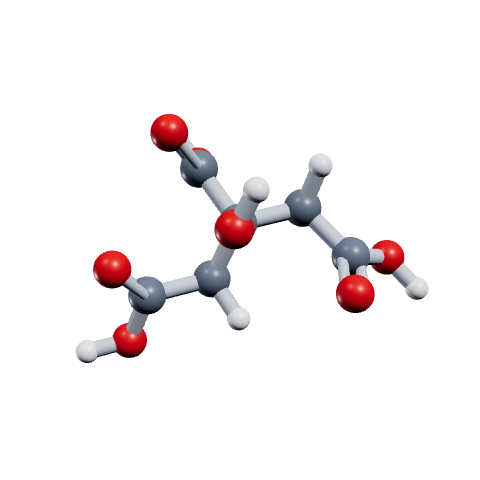


On 19 October 2026 the Federal Register carried a short notice about citric acid from Colombia: one producer, one review period, a preliminary dumping margin of 3.25%. On its own it is routine. Read next to the other notices published this year, it completes a picture most buyers of citric acid have not seen in one place. Six countries that make the acid now have a U.S. trade case attached to them, the rates run from zero to more than 150%, and the two largest new cases, against Canada and India, came out of the preliminary stage pointing in opposite directions.
This article sets out the six origins side by side, shows how two kinds of duty add up on an Indian entry, explains why the dates in our June article moved from November to January, and covers what the scope language means for crystals, solutions and citrate salts. It takes no side in the cases. Every rate is quoted from the Federal Register and linked at the end, and where we did our own arithmetic, we label it as ours. It is not legal advice.
Which countries face U.S. duties on citric acid in 2026?
Six: China, Belgium, Colombia and Thailand under existing antidumping orders, and Canada and India in new investigations opened in February 2026. The table lists each origin with the most recent number Commerce has published for it this year. These are not all the same kind of number, and the column on the right says which is which.
| Origin | Case status | Latest published rate | What that number is |
|---|---|---|---|
| India | New investigations (opened Feb 2026) | 63.88% CVD + 98.22% AD = 162.10% (All Others) | Preliminary cash deposits, 26 June and 26 August 2026 |
| Canada | New investigations (opened Feb 2026) | 16.50% CVD; AD 0.00% | Preliminary, 26 June and 26 August 2026 |
| China | AD and CVD orders since 2009; continued 29 May 2026 | 7.23% for RZBC; China-wide entity 156.87% | Preliminary review result, 6 August 2026 |
| Colombia | AD order since 2018 | 3.25% for Sucroal S.A. | Preliminary review result, 19 October 2026 |
| Belgium | AD order since 2018 | 0.00% for Citribel N.V. | Preliminary review result, 14 September 2026 |
| Thailand | AD order since 2018 | 0% for COFCO and Sunshine | Preliminary review result, 16 July 2026 |

The pattern is easy to miss because the notices arrive one at a time, months apart, under different case numbers. A buyer who reads only the June headlines about Canada and India would not know that the Belgian, Colombian and Thai orders date from July 2018, or that the Chinese orders were continued for another five years this spring after their third sunset review.
How do the two duties add up on Indian citric acid?
An antidumping duty answers one question: is the product sold in the U.S. below its normal value? A countervailing duty answers another: did a foreign government subsidize the producer? Commerce can find both, and when it does, both cash deposits are collected on the same entry. That is the stack. On 26 August 2026 Commerce preliminarily set these antidumping rates for India:
| Indian exporter | AD margin | AD cash deposit after offset | CVD (26 June) | Combined deposit |
|---|---|---|---|---|
| Daffodil Pharmachem Private Limited | 151.73% | 149.74% | 63.88% | 213.62% |
| All Others | 100.21% | 98.22% | 63.88% | 162.10% |
The step from 100.21% to 98.22% is an offset, and it is the most instructive line in the notice. Commerce found 1.99% of the Indian subsidies to be export subsidies. An export subsidy lowers the export price and therefore already shows up inside the dumping margin, so collecting it again in the countervailing duty would charge the same thing twice. Commerce subtracts it from the antidumping deposit instead. In the notice’s words, “We adjusted cash deposit rates for export subsidies of 1.99 percent determined for Daffodil in the companion CVD investigation.”
Here is what the stack does to an entry, on our arithmetic. Take an entered value of $10,000 of Indian citric acid from an exporter at the All Others rate. The countervailing deposit is $6,388 and the antidumping deposit is $9,822, so $16,210 is deposited with U.S. Customs and Border Protection before the goods are released. For an entry from the individually examined exporter the same $10,000 carries $21,362.

Two caveats matter. Daffodil’s 151.73% was set using facts available with adverse inferences, which the notice marks with an asterisk; Commerce applied the highest margin alleged in the petition. And a deposit is an estimate. The U.S. system is retrospective: the duty actually owed is fixed later, when the entry is liquidated, and can be higher or lower than what was deposited.
Why was Canada cleared of dumping but still charged a duty?
Because the two cases are separate. In the antidumping investigation Commerce calculated a weighted-average margin of 0.00% for Jungbunzlauer Canada Inc., the producer it examined, and preliminarily determined that Canadian citric acid “is not being, or is not likely to be, sold in the United States at less than fair value.” With a negative preliminary finding there is no antidumping cash deposit for Canada. The countervailing investigation reached the opposite preliminary result: 16.50% for Jungbunzlauer Canada and for all others, effective 26 June 2026.
This is the second time Canadian citric acid has been through this process. An antidumping order on Canada was issued in May 2009 alongside the one on China, continued in 2015 and revoked in June 2020, when the domestic producers withdrew from the sunset review. The new petitions, filed on 21 January 2026 by Archer-Daniels-Midland Company, Cargill and Primary Products Ingredients Americas LLC, reopened the question with both kinds of duty at once.
Why did the final decisions move from November to January?
Because the parties asked, and the statute allows it. A final antidumping determination is normally due 75 days after the preliminary one. Section 735(a)(2) of the Tariff Act lets Commerce postpone it to 135 days, at the request of the petitioners when the preliminary result is negative, or of a significant exporter when it is affirmative. Both happened. On 14 July 2026 the petitioners asked for more time in the Canadian case; on 1 July Daffodil asked for more time in the Indian case and for its provisional measures to be extended from four months to six. The countervailing finals were aligned with the antidumping finals in June. One hundred thirty-five days after 26 August 2026 is 8 January 2027.
| Date | Step | Source |
|---|---|---|
| 21 January 2026 | Petitions filed on Canada and India | ITC scheduling notice |
| 26 June 2026 | Preliminary countervailing duties: Canada 16.50%, India 63.88% | 91 FR 38664 and 38666 |
| 26 August 2026 | Preliminary antidumping: Canada 0.00% (negative), India 100.21% All Others | Federal Register, 26 Aug 2026 |
| Late October 2026 | Four months after the countervailing preliminaries | 19 U.S.C. 1671b(d) |
| By 8 January 2027 | Commerce final determinations, Canada and India | 135 days after 26 August 2026 |
| 12 January 2027 | ITC final-phase hearing | ITC scheduling notice, 11 Sep 2026 |
| 4 February 2027 | Final comments due at the ITC | ITC scheduling notice, 11 Sep 2026 |
The late-October row is the one that is easy to overlook. The statute that governs preliminary countervailing measures says the instructions to suspend liquidation and collect deposits “may not remain in effect for more than 4 months.” Four months from 26 June lands in late October, more than two months before the January final. How entries made in that interval are treated is set by the instructions Customs issues, and a customs broker will have the current message. The antidumping deposits on India run on their own clock, which Daffodil’s request extended to six months.
The International Trade Commission makes the other half of the decision. Commerce decides whether there is dumping or subsidy and by how much; the Commission decides whether U.S. producers are materially injured by it. An order issues only if both are affirmative. The Commission scheduled its final phase so that the Canadian antidumping case can proceed concurrently in the event that Commerce reverses its negative preliminary finding.
Does the order cover solutions, monohydrate and citrate salts?
Yes, broadly. The scope in both new investigations covers “all grades and granulation sizes of citric acid, sodium citrate, and potassium citrate in their unblended forms, whether dry or in solution, and regardless of packaging type.” It names the hydrous and anhydrous forms of citric acid, trisodium and monosodium citrate, and blends where the citric acid or citrate content is 40% or more by weight. The same wording runs through the older orders.
Two clauses show how well the drafters knew the chemistry. The first brings in crude calcium citrate, “which are intermediate products in the production of citric acid.” Citric acid is made by fermenting sugar with the mold Aspergillus niger; the acid is pulled out of the broth by adding lime, which precipitates calcium citrate, and is then freed again with sulfuric acid, leaving gypsum behind. Our guide to how citric acid is made walks through each step. Without that clause, a producer could ship the precipitate and finish the last step somewhere else.
The second is the third-country clause. The scope reaches merchandise “processed in a third country, including by commingling, diluting, introducing or removing additives,” if the processing would not take it out of scope in the subject country. Dissolving crystals into a 50% solution does not change what they are. The one listed exclusion is narrow: calcium citrate meeting the United States Pharmacopeia standard and mixed with at least 2% of a functional excipient such as dextrose or starch.
What this means on a specification
Duties are charged on value, not on weight of acid, but the form changes how much acid each kilogram delivers. The molar masses are 192.12 g/mol for anhydrous citric acid and 210.14 g/mol for the monohydrate. The right-hand column is our arithmetic.
| Form | In scope? | HTSUS | Citric acid per kg (our arithmetic) |
|---|---|---|---|
| Citric acid, anhydrous (C6H8O7) | Yes | 2918.14.0000 | 1.000 kg |
| Citric acid, monohydrate | Yes (hydrous form) | 2918.14.0000 | 0.914 kg |
| Citric acid 50% solution | Yes (“in solution”) | 2918.14.0000 | 0.500 kg |
| Sodium citrate, trisodium or monosodium | Yes | 2918.15.1000 | Salt, not free acid |
| Potassium citrate; crude calcium citrate | Yes | 2918.15.5000 | Salt, not free acid |
| Blends at 40% or more citric or citrate | Yes | 3824.99.9397 | Depends on the blend |
The scope says the written description is dispositive and the tariff numbers are given for convenience, so a product that fits the words is covered whatever code it was entered under. For a buyer, the practical questions are the country of origin of the acid itself, not the country where it was dissolved or packed, and whether a supplier can document it.
About sourcing. This article describes the U.S. trade cases on citric acid. It makes no claim about ours: it does not say where the citric acid we sell is made, which origin it comes from, or how any of these duties apply to it. For the products and the lot you would receive, ask us and we will answer with the documents.
Common questions
What duties apply to citric acid from India in 2026?
Two preliminary cash deposits. A countervailing duty of 63.88% from 26 June 2026, and an antidumping deposit of 98.22% for all other exporters (149.74% for Daffodil Pharmachem) from 26 August 2026, after a 1.99% export-subsidy offset. Together that is 162.10% of entered value at the All Others rate.
Was Canadian citric acid found to be dumped?
Not at the preliminary stage. On 26 August 2026 Commerce calculated a 0.00% dumping margin for Jungbunzlauer Canada and made a negative preliminary determination. Canadian citric acid still carries a 16.50% preliminary countervailing duty, and the antidumping final can differ from the preliminary.
When are the final citric acid decisions due?
Commerce’s final determinations on Canada and India are due no later than 135 days after 26 August 2026, which is 8 January 2027. The International Trade Commission holds its hearing on 12 January 2027, and an order issues only if both agencies make affirmative final findings.
Which countries already have citric acid duty orders?
China has antidumping and countervailing orders from May 2009, continued on 29 May 2026. Belgium, Colombia and Thailand have antidumping orders from 25 July 2018. Annual reviews of those orders produced preliminary rates in 2026 of 7.23% for RZBC (China), 0.00% for Citribel (Belgium), 0% for COFCO and Sunshine (Thailand) and 3.25% for Sucroal (Colombia).
Does the order cover citric acid solutions and sodium citrate?
Yes. The scope covers citric acid, sodium citrate and potassium citrate in all grades and granulation sizes, dry or in solution, plus blends of 40% or more by weight and crude calcium citrate. Material diluted or blended in a third country stays in scope.
Is the cash deposit the final duty?
No. A cash deposit is an estimate collected at entry. The U.S. system is retrospective: the duty owed is fixed when the entry is liquidated, usually after an administrative review, and the difference is refunded or billed with interest.
References & Authoritative Sources
Rates, dates and scope language are quoted from the Federal Register. The provisional-measures limit is from the U.S. Code. Deposits on a $10,000 entry and acid content per kilogram are our arithmetic and are labelled in the article.
- Citric Acid and Certain Citrate Salts From Colombia: Preliminary Results of Antidumping Duty Administrative Review; 2024-2025 — Commerce, 19 October 2026. Sucroal S.A. 3.25%.
- Citric Acid and Certain Citrate Salts From India: Preliminary Affirmative Determination of Sales at Less Than Fair Value — Commerce, 26 August 2026. 151.73% and 100.21%; 1.99% offset; postponement to 135 days.
- Citric Acid and Certain Citrate Salts From Canada: Preliminary Negative Determination of Sales at Less Than Fair Value — Commerce, 26 August 2026. 0.00% for Jungbunzlauer Canada.
- Citric Acid and Certain Citrate Salts from Canada: Preliminary Affirmative Countervailing Duty Determination — Commerce, 26 June 2026. 16.50%; scope, Appendix I.
- Citric Acid and Certain Citrate Salts From India: Preliminary Affirmative Countervailing Duty Determination — Commerce, 26 June 2026. 63.88%.
- Citric Acid and Certain Citrate Salts From Canada and India; Scheduling of the Final Phase — U.S. International Trade Commission, 11 September 2026. Hearing 12 January 2027.
- Citric Acid From China: Preliminary Results of the Antidumping Duty Administrative Review — Commerce, 6 August 2026. RZBC 7.23%; China-wide 156.87%.
- Citric Acid From China: Continuation of Antidumping Duty Order and Countervailing Duty Order — Commerce, 29 May 2026.
- Citric Acid From Belgium: Preliminary Results of Antidumping Duty Administrative Review — Commerce, 14 September 2026. Citribel 0.00%.
- Citric Acid From Thailand: Preliminary Results of Antidumping Duty Administrative Review — Commerce, 16 July 2026. COFCO and Sunshine 0%.
- Citric Acid From Belgium, Colombia and Thailand: Antidumping Duty Orders — Commerce, 25 July 2018.
- Citric Acid From Canada: Final Results of Sunset Review and Revocation of Order — Commerce, 23 June 2020.
- 19 U.S.C. 1671b, Preliminary determinations (countervailing duties) — subsection (d): instructions “may not remain in effect for more than 4 months.”
- Citric acid, PubChem CID 311 — National Library of Medicine. Molar mass 192.12 g/mol.
What we stock


Need the documents for your file?
Tell us the products and pack sizes you buy. We will send the safety data sheets and the certificate of analysis, with assay, for the lots you would receive, and answer origin questions in writing.
Read the citric acid guideKey numbers and sources
| Figure | Value | Source |
|---|---|---|
| India, preliminary CVD | 63.88% | Commerce, 26 June 2026 |
| India, preliminary AD deposit | 98.22% All Others; 149.74% Daffodil | Commerce, 26 August 2026 |
| India, combined deposit | 162.10% All Others | Our arithmetic |
| Canada, preliminary CVD / AD | 16.50% / 0.00% | Commerce, 26 June and 26 August 2026 |
| Colombia, preliminary review | 3.25% (Sucroal S.A.) | Commerce, 19 October 2026 |
| Final determinations due | By 8 January 2027 | 135 days after 26 August 2026 |
| ITC hearing | 12 January 2027 | ITC, 11 September 2026 |
| Citric acid in monohydrate | 91.4% by mass | Our arithmetic, 192.12 / 210.14 |
Frequently asked questions
What duties apply to citric acid from India in 2026?
Two preliminary cash deposits. A countervailing duty of 63.88% from 26 June 2026, and an antidumping deposit of 98.22% for all other exporters (149.74% for Daffodil Pharmachem) from 26 August 2026, after a 1.99% export-subsidy offset. Together that is 162.10% of entered value at the All Others rate.
Was Canadian citric acid found to be dumped?
Not at the preliminary stage. On 26 August 2026 Commerce calculated a 0.00% dumping margin for Jungbunzlauer Canada and made a negative preliminary determination. Canadian citric acid still carries a 16.50% preliminary countervailing duty, and the antidumping final can differ from the preliminary.
When are the final citric acid decisions due?
Commerce's final determinations on Canada and India are due no later than 135 days after 26 August 2026, which is 8 January 2027. The International Trade Commission holds its hearing on 12 January 2027, and an order issues only if both agencies make affirmative final findings.
Which countries already have citric acid duty orders?
China has antidumping and countervailing orders from May 2009, continued on 29 May 2026. Belgium, Colombia and Thailand have antidumping orders from 25 July 2018. Annual reviews of those orders produced preliminary rates in 2026 of 7.23% for RZBC (China), 0.00% for Citribel (Belgium), 0% for COFCO and Sunshine (Thailand) and 3.25% for Sucroal (Colombia).
Does the order cover citric acid solutions and sodium citrate?
Yes. The scope covers citric acid, sodium citrate and potassium citrate in all grades and granulation sizes, dry or in solution, plus blends of 40% or more by weight and crude calcium citrate. Material diluted or blended in a third country stays in scope.
Is the cash deposit the final duty?
No. A cash deposit is an estimate collected at entry. The U.S. system is retrospective: the duty owed is fixed when the entry is liquidated, usually after an administrative review, and the difference is refunded or billed with interest.
About the author
Andre Taki
This article is for informational purposes only.