



On June 26, 2026, the U.S. Department of Commerce set preliminary duties on citric acid imported from Canada and India. If your formulation, cleaning line, or food and beverage production runs on either origin, your landed cost has already changed — and the larger ruling is still months away.
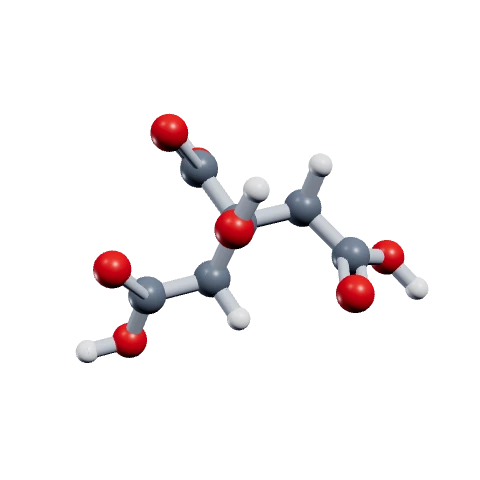
Citric acid is one of the most quietly universal chemicals in commerce. It acidifies soft drinks, buffers cleaning products, chelates metals in industrial washes, sequesters minerals in cosmetics, and passivates stainless steel. Much of the citric acid consumed in the United States is imported — and a trade case that has been building all year just produced its first hard numbers.
Here is what changed, what it means for the price you pay, and how to think about sourcing while the case plays out.
The one-line answer
Commerce has preliminarily set countervailing duties of 16.50% on Canadian citric acid and 63.88% on Indian citric acid. Cash deposits at those rates are already required at the border. A separate antidumping decision — with alleged margins running far higher — is due in early November 2026.
What just happened
In January 2026, three domestic producers — Archer-Daniels-Midland Company, Cargill Incorporated, and Primary Products Ingredients Americas LLC — filed petitions asking the U.S. government to investigate citric acid and certain citrate salts imported from Canada and India. They alleged two things at once: that the imports were being dumped (sold below fair value) and that foreign governments were subsidizing the producers behind them.
The U.S. Department of Commerce opened countervailing duty investigations in February 2026. On June 26, 2026, it published its preliminary affirmative determinations — the first stage at which real money starts moving. As of that date, U.S. Customs and Border Protection began requiring cash deposits on covered imports at the rates below.

The numbers that matter
| Origin | Preliminary CVD rate | Individually examined producer |
|---|---|---|
| Canada | 16.50% | Jungbunzlauer Canada Inc. (and "All Others") |
| India | 63.88% | Daffodil Pharmachem Pvt. Ltd. (and "All Others") |
Two features of that table matter for buyers. First, both rates are also the "All Others" rate — they are not limited to a single named exporter, so the exposure follows the origin, not just one supplier. Second, these are countervailing duties only. The antidumping side of the case is still open, and the petition's alleged dumping margins were much larger:
Canada — alleged AD margin
up to 97%
petition allegation, not yet ruled
India — alleged AD margin
up to 252%
petition allegation, not yet ruled
2024 imports, both origins
$225M
citric acid & citrate salts
Those percentages are what the petitioners alleged, not what Commerce has found. But they set the scale of what a final antidumping determination — due in early November 2026 — could add on top of the countervailing duties already in place.
Antidumping vs. countervailing: the difference in plain terms
These two tools get lumped together as "AD/CVD," but they answer different questions.
Antidumping duty (AD)
Offsets goods sold in the U.S. below fair value — below the price they fetch in the exporter's home market, or below their cost to make. It targets the pricing behavior of foreign producers.
Countervailing duty (CVD)
Offsets unfair government subsidies that let foreign producers undercut on price — grants, preferential loans, tax breaks. It targets the government support behind the goods.
Both can apply to the same product at the same time, which is exactly the situation citric acid from Canada and India is in. The June 26 numbers are the CVD half. The AD half is what lands in November.
How the duties stack
This is the part that reshapes a sourcing budget. Countervailing and antidumping duties are additive. If a final antidumping determination lands anywhere near the alleged margins, Indian-origin citric acid could face combined duty exposure well into triple digits — the 63.88% already assessed, plus whatever antidumping rate Commerce finalizes on top of it.
Worth underlining: a duty is charged on the customs value of the goods, then flows into your landed cost before freight and handling. A combined rate in the triple digits does not trim a formulation budget — it re-writes it. Buyers locked into a single overseas origin have the most to reconcile.
This is country-specific, not a blanket citric acid tariff
It is worth being precise: this case targets Canada and India specifically. It is not a tariff on all citric acid everywhere. In a separate, pre-existing proceeding, Commerce reviewed citric acid from Thailand for the 2024–2025 period and preliminarily found no sales below fair value in that window (published July 16, 2026). Different origin, different proceeding, different result.
The takeaway for a buyer is not "citric acid is now expensive." It is "the price of citric acid now depends heavily on where yours comes from" — which is a sourcing question, and a solvable one.

What this means for your sourcing
A trade case moves in stages, and the smart moves are the boring ones: know your exposure, diversify your origins, and match grade to the job so you are neither over-paying nor under-specifying.
Know which origin you are actually buying
Many buyers purchase citric acid through a distributor and have never asked where the material was produced. With duties now origin-dependent, that is the first question worth answering — ask your supplier for the country of origin and the grade documentation on every lot.
Match the grade to the application, not out of habit
Citric acid is not one product. A descaling or cleaning line does not need the same grade as a pharmaceutical buffer, and paying for ACS Reagent purity where food-grade would do is its own quiet over-spend. (For a deeper look at the range, see our guide to citric acid uses beyond the citrus zest, and the practical food-grade descaling ratios if that is your use case.)
Consider a domestic supply base
We stock citric acid in solution and dry forms, in food and reagent grades, held in inventory and shipped from Texas. Most stocked orders ship in 1–2 business days, with the lot Certificate of Analysis on request at no charge. That is not a claim that any single origin is immune to a global market — it is a way to take origin risk off the table while a trade case runs its course.
Citric acid grades we keep in stock
USP / Food-Grade
Citric Acid Monohydrate
USP Food-Grade crystalline citric acid for food, beverage, and formulation work, 2 lb to bulk.
View USP Food-Grade →ACS Reagent
Citric Acid Anhydrous
ACS Reagent-grade anhydrous citric acid for laboratory and analytical use.
View ACS Anhydrous →Ready-to-dose solution
Citric Acid 50% Solution
Pre-dissolved 50% citric acid solution for cleaning, passivation, and process dosing without handling dry powder.
View 50% Solution →Key numbers and sources
| Fact | Value | Source |
|---|---|---|
| Preliminary countervailing duty rate on Canadian citric acid | 16.50% | federalregister.gov |
| Preliminary countervailing duty rate on Indian citric acid | 63.88% | federalregister.gov |
| Date preliminary countervailing duties set by U.S. Department of Commerce | June 26, 2026 | See article text |
| Alleged antidumping margin for Canadian citric acid (petition allegation, not yet ruled) | up to 97% | See article text |
| Alleged antidumping margin for Indian citric acid (petition allegation, not yet ruled) | up to 252% | See article text |
| 2024 imports of citric acid & citrate salts from both origins | $225M | See article text |
| Individually examined producer for Canada in CVD determination | Jungbunzlauer Canada Inc. (and "All Others") | federalregister.gov |
| Individually examined producer for India in CVD determination | Daffodil Pharmachem Pvt. Ltd. (and "All Others") | federalregister.gov |
References & Authoritative Sources
Primary sources consulted for this article. Regulatory and physical-property figures above are drawn from these references.
- PubChem Compound Summary: Citric Acid (CID 311) — National Center for Biotechnology Information, U.S. National Library of Medicine. Accessed 2026-09-04.
- Citric Acid — thermophysical data — NIST Chemistry WebBook, SRD 69, National Institute of Standards and Technology. Accessed 2026-09-04.
Frequently asked questions
Are there tariffs on citric acid in 2026?
On June 26, 2026, the U.S. Department of Commerce set preliminary countervailing duties of 16.50% on citric acid from Canada and 63.88% from India. A separate antidumping determination is expected in early November 2026. The measures apply to citric acid and certain citrate salts from those two origins specifically.
Which countries are affected by the citric acid duties?
Canada and India are the subjects of these specific investigations. Citric acid from other origins is not covered by them. For example, a separate review of Thailand published July 16, 2026 preliminarily found no dumping in the 2024-2025 period.
What is the difference between an antidumping and a countervailing duty?
An antidumping duty offsets goods sold below fair value; a countervailing duty offsets unfair foreign government subsidies. Both can apply to the same product at once, and they are additive.
When are the final citric acid duties decided?
Commerce aligned the final determinations, which are due in early November 2026 unless the schedule is postponed. Until then, the preliminary countervailing duty cash-deposit rates remain in effect.
Where can I buy citric acid that is not subject to these duties?
Alliance Chemical stocks citric acid in food and reagent grades, in solution and dry forms, held in U.S. inventory and shipped from Texas with the lot Certificate of Analysis on request at no charge. Browse the full citric acid range or request a quote.
About the author
Andre Taki
This article is for informational purposes only.


