

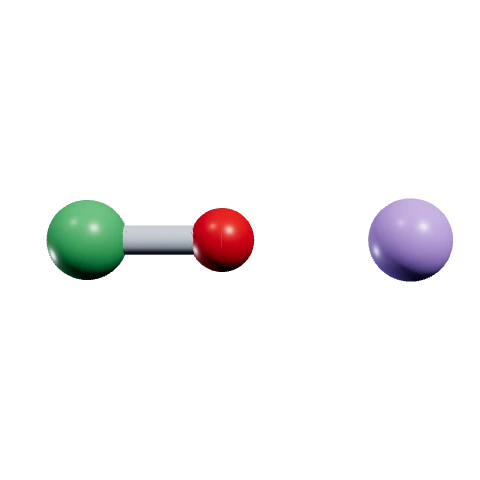


Every hyperscale data center training the next AI model rejects an enormous amount of heat — and a large share of that heat leaves the building through evaporative cooling towers, warm open-air basins of recirculating water. Those basins are also a near-perfect incubator for bacteria, biofilm, and Legionella. The chemical that most often keeps them under control is the same one in the jug under your kitchen sink: sodium hypochlorite.
This guide is the sodium-hypochlorite-specific companion to our broader cooling tower water treatment guide. It goes deep on the three questions that guide — and almost every article online — skips: how much NaOCl you actually dose, what a pound of active chlorine really costs at each concentration, and why the AI data-center boom is a structural tailwind for cooling-water disinfection. It also tells the honest truth about where bleach is the wrong tool.
- Cooling-tower water treatment is a different chemistry problem from closed-loop glycol cooling; the two systems should not be conflated.
- Sodium hypochlorite dosing depends on water chemistry, microbiological control targets, equipment materials, and site operating procedures.
- Use the current SDS, water-treatment plan, applicable regulations, and qualified treatment professionals for any facility-specific dosing decision.
Which chemistry is used to control microbial growth in cooling-tower water?
The most common cooling-tower disinfectant is sodium hypochlorite — liquid chlorine bleach — dosed continuously as an oxidizing biocide to hold a measurable free-chlorine residual in the recirculating water. It is chosen over the alternatives for three blunt reasons: it is the cheapest source of active chlorine per pound, it feeds easily as a liquid with a metering pump (no pressurized chlorine-gas cylinders, scrubbers, or process-safety program), and it is broadly accepted by health authorities as a Legionella control. Calcium hypochlorite, bromine, chlorine dioxide, and monochloramine all have real roles, but liquid bleach is the default workhorse.
A complete cooling-water program is more than the biocide: it also includes scale inhibitors, corrosion inhibitors, dispersants, and pH/alkalinity control. Sodium hypochlorite is the microbiological leg of that program. Get it wrong and you do not just grow slime — you lose heat-transfer efficiency, you invite microbiologically influenced corrosion, and, most seriously, you create a Legionella risk that is now regulated by law in a growing list of jurisdictions.
CAS: 7681-52-9 • Formula: NaOCl • Molar mass: 74.44 g/mol • Active species: hypochlorous acid (HOCl) + hypochlorite ion (OCl−) • Trade grades: typically 10–12.5% available chlorine for industrial use. Compound data: PubChem CID 23665760.
Why does chlorine work in a cooling tower — and why is pH the catch?
When sodium hypochlorite enters water it forms hypochlorous acid (HOCl), and HOCl is the species that actually kills microbes — a small, uncharged molecule that slips through the cell wall and oxidizes the organism’s internal machinery. The complication is that HOCl is in equilibrium with the hypochlorite ion (OCl−), which is negatively charged, repelled by the bacterial surface, and a far weaker disinfectant.
That split is governed by pH. The pKa of HOCl is about 7.5, so:
| Water pH | HOCl (strong killer) | OCl− (weak) | Practical effect |
|---|---|---|---|
| 7.0 | ~75% | ~25% | Chlorine near its most effective |
| 7.5 | ~50% | ~50% | Half-strength |
| 8.0–8.5 | ~20–30% | ~70–80% | Where towers run — chlorine is weakest |
Here is the honest tension most marketing skips: cooling towers are usually run alkaline (pH ~8.0–8.5) on purpose, to control scale and corrosion — which is precisely the pH band where chlorine is at its weakest. Sodium hypochlorite still works there, but you are fighting the chemistry, and that is exactly why bromine and chlorine dioxide exist (more on that below). Anyone who tells you bleach is equally effective at any pH is selling you something. It is not a reason to avoid NaOCl; it is a reason to control pH, dose to a measured residual, and know when a high-pH system warrants a different oxidizer.
ORP (oxidation-reduction potential, in mV) is the best real-time signal because it measures oxidizing power, not just concentration — but there is no universal “X mV = Y ppm” rule. The same free-chlorine ppm reads a lower ORP at higher pH, because the species shift to weak OCl−. ORP setpoints must be field-calibrated against measured free chlorine at your system’s actual pH.
How much sodium hypochlorite do you add per 1,000 gallons?
As a working rule of thumb, about one fluid ounce of fresh 12.5% sodium hypochlorite per 1,000 gallons of water raises the available chlorine by roughly 1 ppm — before the water’s chlorine demand is satisfied. That single relationship lets you size both routine and shock doses, as long as you remember it is a starting point, not a substitute for measuring a residual.
The arithmetic behind it: a 12.5% trade solution carries about 125 grams of available chlorine per liter. One gallon (3.785 L) therefore delivers roughly 473 grams of available chlorine; spread through 1,000 gallons (3,785 L) that is ~125 mg/L, i.e. ~125 ppm. Divide down and ~1 fl oz per 1,000 gal ≈ 1 ppm.
| Goal | Target residual | Approx. fresh 12.5% NaOCl per 1,000 gal* |
|---|---|---|
| Continuous trim feed | ~0.5 ppm free Cl | ~0.5 fl oz (demand-driven; trim to ORP/ppm) |
| Routine maintenance / light shock | ~2–5 ppm | ~2–5 fl oz |
| Legionella / remedial shock | 5–10 ppm free Cl (per CDC/ASHRAE protocol) | ~5–10 fl oz |
*Before chlorine demand. A fouled or high-organic system “eats” chlorine first (breakpoint chlorination), so you must dose past demand to hold a free residual — always confirm with a test kit or analyzer, not arithmetic alone.
Label strength is not delivered strength. Sodium hypochlorite decomposes in storage, so a drum labeled 12.5% may actually be testing 10% by the time it reaches the dosing pump. If your pump is calibrated to 12.5% but the product is really 10%, you are silently under-dosing by ~20% — the fast track to microbial breakthrough. Either dose to a measured residual/ORP (which self-corrects) or adjust feed volume for the real, tested available chlorine. This is the single most common quiet failure in chlorine-fed towers.
What does cooling-tower chlorine actually cost? Cost per pound of active chlorine
The price on the drum is the wrong number to compare — what you are really buying is available chlorine, so the only honest comparison is dollars per pound of active chlorine. On that basis, buying the higher concentration in bulk is meaningfully cheaper, even though the sticker price is higher. Here is the math on Alliance Chemical 275-gallon totes (live pricing):
| Product (275-gal IBC tote) | Tote price | Available chlorine in the tote | Cost per lb active chlorine |
|---|---|---|---|
| Sodium Hypochlorite 5.25% | $1,845 | ~120 lb | ~$15.3 / lb |
| Sodium Hypochlorite 10% (Technical) | $2,500 | ~230 lb | ~$10.9 / lb |
| Sodium Hypochlorite 12.5% (Water Treatment) | $2,600 | ~287 lb | ~$9.1 / lb |
The 12.5% tote costs only ~41% more than the 5.25% tote but holds roughly 2.4× the active chlorine — so the cost per pound of disinfecting power drops by about 40%. For any operation feeding chlorine continuously, the concentrated grade in bulk is the lower-cost-per-active-ingredient choice. The trade-off is freshness: a stronger solution decays faster (next section), so the cost advantage is real only if you turn the inventory before it degrades.
Compare quotes on $ per pound of available chlorine, not $ per gallon, and pair the concentrated grade with a delivery cadence that keeps stock fresh. That is where bulk procurement actually saves money.
Legionella in cooling towers: what the chemistry does, and what the law requires
Yes — maintaining an adequate free-chlorine residual is a recognized control for Legionella in cooling towers, and for an active outbreak the CDC and ASHRAE protocols call for shock disinfection to 5–10 ppm free chlorine. The reason this matters so much in cooling towers is biology: Legionella proliferates in the 25–45°C (77–113°F) window, which is squarely the operating temperature of a cooling tower, and the towers aerosolize fine water droplets that can carry the bacteria into the air people breathe.
One nuance that drives real-world dosing: free-swimming (planktonic) bacteria die easily at modest chlorine levels, but bacteria sheltered inside biofilm are far harder to reach — which is why programs combine an oxidizer with a biodispersant and periodic shock dosing rather than relying on a low continuous residual alone.
The regulatory backdrop has tightened sharply, and it is the most durable reason demand for cooling-tower disinfection keeps growing:
- ANSI/ASHRAE Standard 188 — requires a written Water Management Program for building water systems, including cooling towers. It is the national benchmark referenced by most local rules. (ASHRAE 188)
- CDC cooling-tower guidance — operationalizes ASHRAE 188: maintain a measurable oxidant residual, monitor, and shock-disinfect at 5–10 ppm free chlorine when needed. (CDC toolkit)
- NYC Local Law 77 / Local Law 159 — mandatory cooling-tower registration and maintenance plans; the 2025 update raised Legionella monitoring frequency to monthly. New York State has parallel statewide rules, and other jurisdictions are following. A 2025 Central Harlem outbreak tied to cooling towers killed several people and drove the tougher law.
Why are AI data centers driving cooling-tower demand?
AI data centers are multiplying the number of evaporative cooling towers that legally and operationally need disinfection — not because AI “requires” bleach, but because dense AI hardware rejects far more heat, and the cheapest way to reject that heat at scale is to evaporate water in a cooling tower. More towers, running hot, means more basins that must be kept free of biofilm and Legionella.
The scale is real. U.S. data centers consumed an estimated 17.4 billion gallons of water directly for on-site cooling in 2023, with projections of continued steep growth as AI training and inference expand (figures reported from the 2024 Lawrence Berkeley National Laboratory data-center energy study). A single large facility can use on the order of hundreds of thousands of gallons per day — some figures cite up to several million gallons per day at peak. Operators track this with Water Usage Effectiveness (WUE), liters of water per kWh of IT energy; the industry average sits around 1.8 L/kWh, and evaporative systems run higher.
| Cooling method | Water use | Energy (PUE) | Disinfection need |
|---|---|---|---|
| Evaporative cooling towers | High (1.5–3.0 L/kWh) | Low / efficient (PUE ~1.1–1.3) | Continuous biocide — the NaOCl market |
| Air cooling | ~0 | High (PUE ~1.4–1.8) | Minimal |
| Closed-loop / direct liquid | Near 0 (recirculated) | Very low (PUE ~1.05–1.2) | Still needs biocide; heat often still rejected via a tower |
The honest picture (and why this is durable, not hype): evaporative cooling trades water for energy efficiency, which is exactly why hyperscalers use it despite water-scarcity pressure. New “zero-water” closed-loop designs are emerging and genuinely reduce evaporative loss — but the installed base is overwhelmingly tower-based, direct-to-chip liquid cooling still usually rejects its heat to a facility loop that ends in a cooling tower, and even closed loops need microbiological control. Layer on ASHRAE 188 and laws like NYC LL159, and the result is structural: the AI buildout multiplies the towers that must be disinfected, regardless of the water source. Sodium hypochlorite, as the cheapest easy-to-feed oxidizer, is the default beneficiary — though it competes with chlorine dioxide and bromine, especially on high-pH or high-organic systems.
Sodium hypochlorite vs bromine, chlorine dioxide, and monochloramine
Sodium hypochlorite is the default, but it is not always the right answer — the best oxidizer depends on your pH, your organic load, and your handling constraints. An honest comparison:
| Biocide | Strengths | Weaknesses | Chosen when |
|---|---|---|---|
| Sodium hypochlorite (NaOCl) | Cheapest active Cl, easy liquid feed, no gas hazard, accepted Legionella control | Weak above pH 8; decomposes in storage; corrosive at high residual | Default for most towers; safe, simple liquid dosing at scale |
| Calcium hypochlorite | Solid, more storage-stable, high available Cl | Adds calcium (scaling), dust handling | Remote/small sites, shock dosing |
| Bromine (activated NaBr / BCDMH) | Stays active at high pH (HOBr), less corrosive than Cl | More expensive; needs a feeder | High-pH towers — common upgrade from straight NaOCl |
| Chlorine dioxide (ClO2) | pH-independent, excellent biofilm penetration, low dose | Must be generated on-site; generator cost | High-organic, biofilm-heavy, or high-pH water |
| Monochloramine | Penetrates biofilm, persistent, low corrosion | Weak/slow oxidizer | Targeted Legionella/biofilm control in large systems |
The pattern: NaOCl wins on cost and simplicity and is the right default for most well-controlled towers. As pH climbs, organic load rises, or biofilm becomes stubborn, bromine and chlorine dioxide earn their premium. Many programs also alternate in a non-oxidizing biocide to hit biofilm a different way and discourage resistance. For a fuller treatment of the whole chemical program — scale, corrosion, and microbiological control together — see our cooling tower water treatment guide.
What should you never mix — and how do you store it?
Never combine sodium hypochlorite with acid. Mixing bleach with an acid liberates toxic chlorine gas (Cl2) — and this is not a theoretical kitchen warning in a cooling-water context, because many tower programs also dose acid (often sulfuric) to control pH and alkalinity. The hypochlorite and the acid feed systems must be physically separated, with independent containment and separate injection points; they must never share a line or a drip pan. Also never mix NaOCl with ammonia (chloramine vapors) or with other reducing agents.
Bleach + acid → chlorine gas. Keep sodium hypochlorite and any acid (pH-adjust, descaler) in separate storage with separate secondary containment and separate metering pumps and injection quills. This is the highest-consequence mistake in a chlorine-fed cooling program.
Storage is really a freshness problem, because sodium hypochlorite is one of the least stable commodity chemicals you will buy. Decomposition speeds up with heat (roughly several-fold faster per +10°C), with UV/sunlight, with transition-metal contamination (copper, nickel, iron all catalyze decay), and at lower pH. A 12.5% solution can lose about 20% of its available chlorine in 28 days at room temperature — faster when hot. Practical rules:
- Buy fresh and turn inventory quickly; ask for a recent manufacture date and a Certificate of Analysis.
- Store cool, dark, and vented (it off-gasses oxygen) in HDPE or lined tanks — never carbon steel, copper, brass, aluminum, or galvanized.
- Re-test available chlorine periodically and correct dosing for the real strength.
- Handle the concentrated grades as corrosive: goggles, gloves, apron, ventilation, eyewash.
Buying sodium hypochlorite for cooling water: grades, CoA, and bulk
For cooling-tower and data-center duty the two grades that matter are Sodium Hypochlorite 12.5% (our Water Treatment grade) and Sodium Hypochlorite 10% (Technical grade). The 12.5% gives the best cost per pound of active chlorine; the 10% trades a little strength for a slightly slower decay curve. Both are available from quarts up to 55-gallon drums and 275/330-gallon IBC totes. If you are unsure which grade or pack fits your tonnage and dosing cadence, that is exactly the kind of thing our supply team helps spec — tell us your system volume and turnover and we will help you avoid both paying for strength you cannot use before it decays and under-buying so your dosing runs dry.
What a serious buyer should insist on: a Certificate of Analysis stating actual available chlorine for the lot you receive, a recent manufacture date, reliable delivery cadence so dosing pumps stay calibrated to fresh product, and bulk logistics (drums or totes) that match your storage. Those are the things that actually keep a chlorine program on-spec — not marketing claims about speed. For more on what the grade names mean, see our guide to chemical grades.
Sources & verification notes
- U.S. Department of Energy FEMP: Cooling Water Efficiency Opportunities for Federal Data Centers — WUE definition, cooling-tower water use, direct liquid cooling, and water-saving strategies.
- DOE Best Practices Guide for Energy-Efficient Data Center Design — liquid-cooling architectures, CDUs, glycol-based fluids, dry coolers, and water/energy tradeoffs.
- ASHRAE AI Data Center Energy Performance Framework — current liquid-cooling class terminology and system context.
- Open Compute Project Cooling Environments — current workstreams for cold plates, CDUs, immersion, coolant chemistry, commissioning, monitoring, and maintenance.
- National Laboratory of the Rockies: HPC Data Center Water Usage Efficiency — documented hybrid dry-cooler results; cited as a case study, not a universal performance guarantee.
- ISO/IEC 30134-9:2022 — WUE KPI definition and reporting framework.
- National Weather Service Phoenix climate records — climate claims must be checked against the selected station, period, and design percentile.
- Alliance Chemical inhibited EG/PG and DI-water product pages — product-specific concentration, documentation, availability, and logistics claims require current TDS/SDS/COA confirmation before procurement.
Architecture-level performance values are design- and site-dependent. Product-specific values should be confirmed against the current lot documentation and equipment OEM requirements.
Continue the data-center cooling series
Bulk sodium hypochlorite, with the lot CoA on request at no charge
Water Treatment 12.5% and Technical 10% — quarts to 275/330-gallon totes. Tell us your system volume and we will help you spec the grade.
Key numbers & sources
| Fact | Value | Source |
|---|---|---|
| CAS / formula | 7681-52-9 / NaOCl | PubChem CID 23665760 |
| HOCl pKa | ~7.5 (pH governs efficacy) | Water-chemistry references |
| Legionella growth window | 25–45°C (77–113°F) | CDC |
| Shock-disinfection target | 5–10 ppm free chlorine | CDC / ASHRAE 188 protocol |
| Water-management standard | ANSI/ASHRAE Standard 188 | ASHRAE |
| U.S. data-center direct cooling water (2023) | ~17.4 billion gallons (reported) | DOE / LBNL 2024 |
| 12.5% decay | ~20% available-Cl loss in 28 days (room temp) | Supplier stability data |
Related: Magnesium Chloride for Energy & Cement: Batteries & Sorel Cement — keeping data-center cooling water clean meets clean-tech: see how magnesium chloride fits.
Related: Sulfuric Acid in Vanadium Flow Batteries — how sulfuric acid serves as the electrolyte in grid-scale vanadium redox flow batteries.
Related: What Bleach Actually Is: Sodium Hypochlorite From 1% to 12.5% — the underlying chemistry: why hypochlorite removes colour, how the 1%–12.5% ladder works, and why it decays in storage.
Related: Who Discovered Chlorine? The 1774 Green Gas That Became Sodium Hypochlorite — the discovery history of the chemistry these towers run on.
Related: Does Bleach Expire? Sodium Hypochlorite Shelf Life, Decay Chemistry & Storage - how fast strength fades, and the storage rules that slow it.
References & Authoritative Sources
Primary sources consulted for this article. Regulatory and physical-property figures above are drawn from these references.
- Sodium Hypochlorite — thermophysical data — NIST Chemistry WebBook, SRD 69, National Institute of Standards and Technology. Accessed 2026-09-04.
Frequently asked questions
What chemical is used to disinfect cooling tower water?
Sodium hypochlorite (liquid chlorine bleach, NaOCl) is the most common cooling-tower disinfectant. It is dosed as an oxidizing biocide to hold a free-chlorine residual that controls biofilm, algae, and Legionella. It is preferred for being the cheapest source of active chlorine, easy to feed as a liquid, and accepted by health authorities. Bromine, chlorine dioxide, calcium hypochlorite, and monochloramine are alternatives chosen for high-pH or biofilm-heavy systems.
How much sodium hypochlorite do you add per 1,000 gallons of cooling water?
As a rule of thumb, about 1 fluid ounce of fresh 12.5% sodium hypochlorite per 1,000 gallons raises available chlorine by roughly 1 ppm, before chlorine demand. A continuous trim feed targets ~0.5 ppm free chlorine; a Legionella or remedial shock targets 5-10 ppm. Always confirm with a test kit or analyzer, because a fouled system consumes chlorine first and decayed product delivers less than its label strength.
What free-chlorine level should a cooling tower run?
Most cooling towers hold roughly 0.2-0.5 ppm free chlorine continuously, controlled to an ORP or ppm setpoint, with periodic shock dosing to 5-10 ppm for biofilm or Legionella control per CDC and ASHRAE 188 protocols. The exact setpoint is system-specific and depends on pH, because chlorine is weaker at the alkaline pH (8.0-8.5) towers typically run.
Does sodium hypochlorite kill Legionella in cooling towers?
Yes. Maintaining an adequate free-chlorine residual is a recognized Legionella control, and for an active problem CDC and ASHRAE protocols call for shock disinfection to 5-10 ppm free chlorine. Bacteria sheltered in biofilm are harder to reach than free-swimming cells, so programs pair the oxidizer with a biodispersant and periodic shock dosing rather than a low continuous residual alone.
Why is sodium hypochlorite less effective at high pH?
In water, sodium hypochlorite forms hypochlorous acid (HOCl), the strong biocidal species, in equilibrium with the weaker hypochlorite ion (OCl-). The split is set by pH around the HOCl pKa of ~7.5: below it HOCl dominates and kill is strong; at pH 8.0-8.5, where cooling towers run for scale and corrosion control, 70-80% is the weak OCl- ion. NaOCl still works there but is fighting the chemistry, which is why high-pH systems sometimes use bromine or chlorine dioxide.
Why is the strength of 12.5% bleach not the same when it arrives?
Sodium hypochlorite decomposes in storage. A 12.5% solution can lose about 20% of its available chlorine in 28 days at room temperature, faster when hot, in sunlight, or contaminated with copper, nickel, or iron. So a drum labeled 12.5% may test closer to 10% at the dosing pump. If the pump is set for label strength, you silently under-dose by ~20%. Dose to a measured residual or correct feed volume for the tested available chlorine, and buy fresh with a Certificate of Analysis.
Is it cheaper to buy 12.5% or 5.25% sodium hypochlorite for a cooling tower?
Compared on cost per pound of active chlorine, the 12.5% grade in bulk is cheaper. A 275-gallon tote of 12.5% costs only about 41% more than a 5.25% tote but holds roughly 2.4 times the available chlorine, so the cost per pound of disinfecting power drops about 40%. The catch is freshness: stronger solutions decay faster, so the savings are real only if the inventory turns before it degrades.
What should you never mix with cooling tower bleach?
Never mix sodium hypochlorite with acid, which releases toxic chlorine gas. This is a real hazard in cooling-water programs because many also dose acid (often sulfuric) for pH control, so the bleach and acid feed systems must be physically separated with independent containment and injection points. Also never mix it with ammonia or other reducing agents.
Related Chemical Collections
About the author
Andre Taki
This article is for informational purposes only.


