

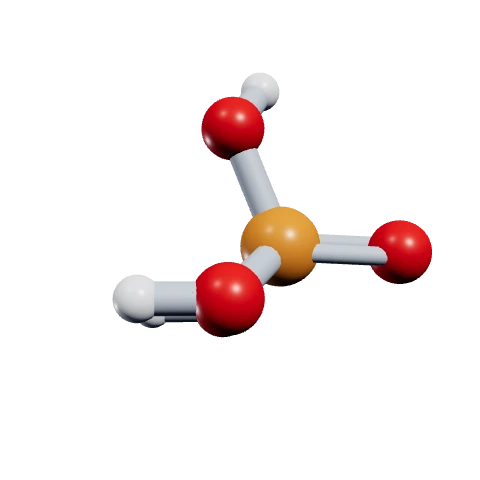


How do acids actually remove rust?
Acid treatments can dissolve iron oxides; organic acids such as citric and oxalic acid can also bind dissolved iron. Phosphoric-acid formulations can produce phosphate-containing surface layers. These mechanisms can overlap, and none proves that a treatment will leave the underlying metal or its finish undamaged.
Start by identifying the substrate and any plating, paint or adjacent materials. The Canadian Conservation Institute's iron-care guidance cautions against commercial acid rust removers for museum objects because they can expose bare metal and leave residues. That guidance concerns conservation; it is a useful reason to seek specialist advice for historic or valuable objects.
Does vinegar really remove rust?
Acetic-acid solutions can be considered for compatible cleaning processes, but household vinegar and concentrated industrial vinegar are different products. More concentrated acid is not automatically more economical or appropriate for the surface.
Our 30% concentrated vinegar is Technical Grade. Check its product documents before selecting it. The vinegar dilution calculator can calculate a target specified by your procedure; it does not choose a safe treatment concentration for your part.
Is citric acid a good rust remover?
Citric acid can participate in iron-oxide dissolution and iron complexation. Performance still depends on the formulation and conditions; it is not a guarantee against etching, coating damage or corrosion after rinsing.
The linked 25% citric acid solution is Technical Grade. Do not treat it as food grade or assume it is approved for cookware or food-contact equipment. Match the actual product specification and equipment manufacturer's cleaning instructions to the intended use.
What should you check before choosing oxalic acid?
Oxalic acid also interacts with iron and is used in some cleaning and stain-removal processes. That does not establish it as the fastest option or a treatment that cannot damage metal. A powder sold by mass also needs a different purchasing calculation from a liquid solution sold by volume.
Our oxalic acid product is ACS Reagent Grade. Review its SDS and technical data for chemical form, assay and handling requirements. Confirm the process specification before preparing a solution; ACS grade is a reagent specification, not an application approval.
When does phosphoric acid fit metal preparation?
Phosphoric acid is an ingredient in some rust-treatment and metal-preparation formulations. A commodity solution is not automatically equivalent to a formulated rust converter, and a darkened surface does not prove it is ready for primer.
For example, OSPHO's manufacturer directions specify preparation, drying and residue removal for its own formulation, with coating-compatibility checks. Those directions cannot be transferred to every phosphoric-acid solution.
Alliance's 30% phosphoric acid is Technical Grade. Review its product documents, your surface-preparation procedure and the coating manufacturer's requirements. Rinsing, drying and subsequent protection must be specified together; rust removal alone is not permanent corrosion protection.
Is muriatic (hydrochloric) acid too aggressive?
Hydrochloric acid can attack the substrate as well as the rust. Surface condition, alloy, concentration and exposure all matter. A universal “fastest” ranking or fixed soak time would conceal those differences.
The 15% Technical Grade product should be considered only against a suitable process and its SDS. For high-strength, safety-critical, plated or valuable parts, obtain the component manufacturer's approved treatment. Do not assume switching to an organic acid makes an unqualified process acceptable.
Which rust remover fits your job?
| Option | What you are comparing | What to verify |
|---|---|---|
| Vinegar / acetic acid | Household vinegar versus a concentrated product | Actual concentration, grade and substrate compatibility |
| Citric acid | Acid cleaning and iron-binding chemistry | Formulation and end-use requirements; Technical Grade is not food grade |
| Oxalic acid | A solid reagent versus liquid cleaners | Chemical form, assay, required concentration and handling controls |
| Phosphoric acid | A commodity solution versus formulated metal treatments | Rinsing, residue removal, drying and coating compatibility |
| Muriatic / hydrochloric acid | An acid treatment that may also attack the substrate | Approved process, alloy, exposure and post-treatment protection |
For a specified chemical, compare current product sizes and prices below. The cards link to purchasing information; they do not certify a treatment for your part.
 30% · Technical GradePhosphoric Acid 30%See sizes & pricesShop →
 Solid · ACS Reagent GradeOxalic Acid (ACS)See sizes & pricesShop →
 25% · Technical GradeCitric Acid 25%See sizes & pricesShop →
 15% · Technical GradeMuriatic / HCl 15%See sizes & pricesShop →
 30% · Technical Grade30% VinegarSee sizes & pricesShop →
How much does rust removal cost per job?
Use the current price of the exact package and a validated working concentration. Compare chemical consumption, usable bath life, labor, rinsing, drying, protective coating and waste handling. A low purchase price per gallon does not by itself establish a lower cost per completed part.
The product cards above open current prices. Once your process specifies the concentration and its basis, use the dilution calculator to estimate the required stock. For solids, verify whether the target is by mass or mass per final solution volume; do not treat pounds of powder as gallons of liquid. For repeated or large orders, request a quote with the product, grade, quantity and delivery location.
What should be in a rust-removal procedure?
- Identify the metal, existing finish, adjacent materials and final coating requirements.
- Select an approved product and process; use its label, SDS and equipment instructions for compatibility, protection and ventilation.
- Specify the concentration basis, exposure controls, rinsing, drying and subsequent protection. Do not improvise by heating or mixing cleaners.
- Collect spent solution and residues for the appropriate waste route. Neutralizing acidity alone does not establish that metal-bearing waste may be discharged.
For household leftovers, EPA recommends following label disposal directions and checking local collection options. Industrial users need their facility's waste procedure and applicable discharge requirements. Do not use the absence of fizzing as a disposal test.
Sources and limits of this comparison
Product grades come from Alliance's catalog and linked product documents. The external references support specific chemistry, conservation, formulation or disposal points; they are not evidence of a head-to-head test of these five products.
- Dissolution of synthetic crystalline and noncrystalline iron oxides by organic acids — experimental evidence about iron oxides and organic acids, not a universal ranking of commercial rust removers.
- Canadian Conservation Institute: Care and Cleaning of Iron — guidance for iron artifacts.
- OSPHO directions — an example of instructions specific to a formulated metal treatment.
- EPA household hazardous-waste guidance — household collection and disposal considerations.
Related: Phosphoric-acid rust-removal guide, flash-rust guide, and phosphoric-acid dilution calculator.
Frequently asked questions
Does vinegar remove rust permanently?
No acid treatment by itself guarantees permanent corrosion protection. Select the subsequent drying, protective finish and storage conditions for the metal and its use. Household vinegar and concentrated industrial vinegar also have different concentrations and product specifications.
What is the fastest rust remover?
There is no universal fastest product in this comparison. Removal rate depends on the formulation, concentration, temperature, exposure and rust condition. Hydrochloric acid can also attack the substrate; a fast reaction does not establish an acceptable finished surface.
Which rust remover will not damage the base metal?
No acid in this comparison is guaranteed not to damage the substrate. Identify the alloy, plating, finish and adjacent materials, then follow an approved process or equipment manufacturer guidance. Valuable, historic and safety-critical parts need specialist assessment.
Is citric acid or vinegar better for rust?
Neither is universally better. Compare the actual formulations and process conditions against the surface and required result. The 25% citric acid and 30% vinegar products linked here are Technical Grade; neither should be treated as food grade based on its chemical name.
Does phosphoric acid stop rust from coming back?
Not by itself. Phosphoric-acid treatments can change the surface chemistry, but subsequent protection depends on the specific formulation, preparation, rinsing, drying and coating system. A commodity acid solution is not automatically equivalent to a formulated rust converter.
Is muriatic acid safe to use on rusty tools?
Compatibility must be established for the specific tool, alloy and finish. Hydrochloric acid can attack base metal and requires the controls in its SDS and the approved process. Do not use a generic acid-soak recommendation for high-strength, safety-critical, plated or valuable parts.
How do you neutralize acid after removing rust?
Follow the selected product and coating system instructions for the part; rinsing and neutralization requirements differ. Handle the spent bath separately under the applicable waste procedure. Neutralizing pH or stopping visible fizzing does not establish that metal-bearing waste may go down a drain.
Can you reuse rust-remover acid solution?
Only if the process permits reuse and provides a way to check bath condition. Dissolved metals and contamination can change its behavior. Do not assume a fixed number of reuse cycles or replenish the solution by guesswork.
Related Chemical Collections
About the author
Andre Taki
This article is for informational purposes only.


