

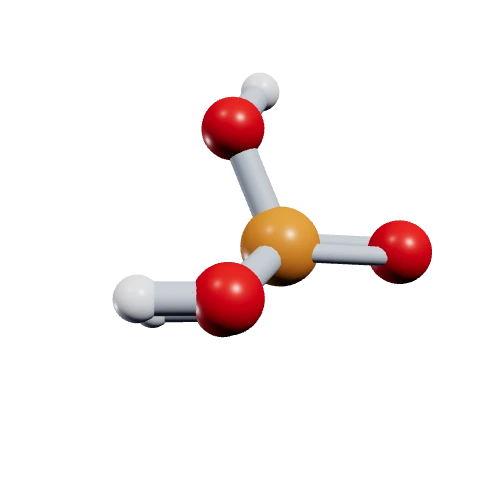


Search “how to remove rust” and you will be told to soak the part in vinegar. It works — slowly, and only on light rust. But vinegar is just one weak acid in a field of five very different chemistries, and for most real rust problems it is the worst of the bunch. This guide ranks the five acids people actually reach for — white vinegar, citric, oxalic, phosphoric and muriatic (hydrochloric) acid — by how they attack rust, how fast they work, how much they damage the bare metal underneath, and what they cost per job.
There is no single “best” answer, and any guide that gives you one is selling something. The right acid depends on whether you are saving a delicate tool or stripping a trailer frame, whether the surface will touch food, and whether you want the rust simply gone or actively converted into a protective layer. Here is how each one really behaves.
How do acids actually remove rust?
Acids remove rust by one of three distinct chemical routes — dissolution, chelation, or conversion — and which route an acid uses matters more than how “strong” it is. Rust is hydrated iron(III) oxide (Fe2O3·nH2O), a flaky, porous layer that keeps growing because it does not seal the metal beneath it. An acid has to break that oxide down faster than it attacks the healthy steel.

Dissolution is the brute-force route: the acid donates protons that react with iron oxide and carry the iron away as a dissolved salt. Strong acids like hydrochloric do this fast — but once the rust is gone, they keep right on dissolving the clean steel. Chelation is smarter: molecules like oxalate and citrate wrap around iron ions and lift them out of the oxide, with far less appetite for the base metal. Conversion is different again: phosphoric acid reacts with rust to form ferric phosphate, a stable, inert, paint-ready layer that actually protects the steel instead of stripping it bare.

Rust also self-propagates, which is why it never seems to stop on its own. Because the oxide layer is porous rather than sealed, moisture and oxygen wick straight through it to the steel below and grow more rust from underneath — unlike the tight, protective oxide (a patina) that forms on aluminum or stainless. That is the whole problem an acid has to solve: get into that porous layer, lift the iron out, and then leave the surface in a state that will not immediately start the cycle over again. Acids that strip the metal completely bare (muriatic) hand you a surface that flash-rusts within hours; acids that convert or passivate (phosphoric) buy you time.
Does vinegar really remove rust?
Vinegar removes light rust, but slowly, and it is the weakest option on this list. Household white vinegar is roughly 5% acetic acid — a weak acid that nibbles at rust over hours to days rather than minutes. For a lightly rusted bolt left to soak overnight, it works fine and it is about as safe and cheap as rust removal gets. For anything heavier, you will be waiting a long time and scrubbing a lot.
The honest upgrade is concentration. Our 30% concentrated vinegar is six times the strength of the grocery bottle, so it does the same job faster and is still fully biodegradable — a genuinely “green” choice when you want to avoid stronger mineral acids. If you go this route, dilute it to a working strength and follow a vinegar dilution guide so you are not guessing. For the chemistry of why “vinegar” and “acetic acid” are not interchangeable terms, see our acetic acid vs. vinegar guide.
Two tricks make vinegar punch harder if you are committed to it: warm the solution (chelation and acid attack both speed up with temperature) and scrub the part with a brush or steel wool between soaks to knock off the loosened oxide so fresh acid can reach the metal. A pinch of salt is sometimes added to boost conductivity, but it also accelerates attack on the bare steel — so rinse and protect promptly afterward either way.
Is citric acid a good rust remover?
Citric acid is the best gentle, food-safe rust remover — it works mainly by chelation, grabbing iron ions without aggressively etching the steel. It is non-toxic, biodegradable, and the only acid here you can safely use on items that touch food, which is why it is the standard for descaling kettles, coffee makers and cookware. Our 25% citric acid solution dilutes down to a roughly 10% working bath that clears light-to-moderate rust in a few hours.
The trade-off is speed: citric is slower than oxalic or the mineral acids, and very heavy rust can outlast a single bath. Its sweet spot is tools, hardware, cookware and anything delicate where you would rather go slow than risk pitting the metal. If you have used it to descale an espresso machine, you already know how forgiving it is.
Heat and agitation help citric a lot — a warm bath with occasional stirring can roughly halve the soak time. It also does double duty on the limescale that often accompanies rust in kettles, boilers and bathroom hardware, dissolving calcium and iron deposits in the same bath. Because it chelates rather than simply dissolving, a citric bath keeps working across several small parts before it tires out, which makes it economical for batches of hardware.
Why do restorers swear by oxalic acid?
Oxalic acid is the most effective rust remover that still respects the base metal — it is a strong acid and an aggressive iron-selective chelator, so it strips rust quickly while leaving clean steel largely alone. That combination is why it is the long-standing favorite of furniture restorers, deck refinishers and tool collectors. A 5–10% solution made from our ACS Grade oxalic acid will clear moderate rust in well under an hour and brighten the metal as it goes.
It is also the classic wood brightener: oxalic acid removes the black iron-tannin stains that bleed out of nails and screws in old lumber, which is its other career entirely — see our oxalic acid wood guide. The catch is toxicity: oxalic acid is genuinely poisonous if ingested and irritating to skin and lungs, so gloves, goggles and ventilation are not optional.
One underrated advantage of oxalic is that it ships as a dry solid, not a liquid. That means a far longer shelf life, cheaper freight, and the ability to mix exactly the working strength you need on the day — a 5% bath for delicate work or a 10% bath for stubborn rust — from the same bag. Dissolve it in warm (not boiling) water until clear, then use within a day or two for best results, since dissolved oxalate slowly loses punch as it loads up with iron.
Why do the pros use phosphoric acid?
Phosphoric acid is the only option here that converts rust instead of merely dissolving it — it reacts with iron oxide to form ferric phosphate, a stable blue-black layer that is inert, primer-ready and actively resists flash rust. That is why it is the backbone of commercial “rust converters” and metal-prep products, and why our 30% solution is literally named The Ultimate Rust Remover.

For anything you intend to paint — a frame, a panel, a fabricated part — phosphoric is the smart pick, because it solves rust removal and paint prep in a single step and the surface will not re-rust while you fetch the primer. It is slower than muriatic on thick scale and pricier than vinegar, but it is the most “set it up right and walk away” of the five. For the full method, see our phosphoric acid rust-removal guide.
A practical note on application: for flat or submerged parts, a liquid bath is ideal, but for vertical panels and large surfaces a phosphoric gel clings where a liquid would run off. Either way, the converted blue-black layer is a primer base, not a finished coating — wipe off the white phosphate residue once it dries, then prime and paint reasonably soon, because the protection it offers is measured in days, not months, if the part is left bare and exposed to weather.
Is muriatic (hydrochloric) acid too aggressive?
Muriatic acid is the fastest rust remover here — and the one most likely to ruin your part if you walk away. Muriatic acid is simply dilute hydrochloric acid; our 15% Technical Grade dissolves heavy rust and scale by brute-force dissolution in minutes. The problem is that it does not stop at the rust: it keeps attacking the clean steel, it off-gasses irritating fumes, and the stripped surface flash-rusts within hours unless you neutralize and protect it immediately.
It earns its place for heavy, deep rust and combined rust-and-mineral-scale jobs where speed matters and the surface will be coated right after — the same reason it shows up in acid selection for metal finishing. Treat it as the power tool of the group: fastest results, least margin for error.
There is one job muriatic is genuinely wrong for: high-strength steel fasteners and springs. Strong acids can drive hydrogen into hardened steel and cause embrittlement, so for critical high-strength hardware, reach for chelating oxalic or citric instead. Storage matters too — hydrochloric fumes corrode nearby tools and electronics, so keep it sealed, away from metal shelving, and never decant it into a container that previously held bleach.
So which rust remover should you use?
Match the acid to the job, not to a leaderboard — the table below maps the five contenders to the situations where each genuinely wins.
| Your situation | Best pick | Why |
|---|---|---|
| Light surface rust on tools/hardware | Citric 10% (or vinegar) | Gentle, cheap, low risk of pitting |
| Heavy rust, want the metal clean & bright | Oxalic 5–10% | Fast, iron-selective, kind to base steel |
| You will prime & paint the part | Phosphoric 30% | Converts rust to paint-ready iron phosphate |
| Food-contact items / cookware | Citric (food grade) | Non-toxic, biodegradable, food-safe |
| Fastest possible / rust + mineral scale | Muriatic (HCl) 15% | Brute force — but neutralize & protect fast |
| Whole car body or large volume | Phosphoric / multi-tank process | Convert + protect at scale |
| Iron stains in wood (decks, furniture) | Oxalic | Classic wood brightener for tannin/iron stains |
The overall ranking
Whichever you choose, we stock it at the right concentration in pack sizes from a single quart to bulk totes:
 Converts · paint-readyPhosphoric Acid 30%See sizes & pricesShop →
 Best all-roundOxalic Acid (ACS)See sizes & pricesShop →
 Food-safe · gentleCitric Acid 25%See sizes & pricesShop →
 Fastest · heavy rustMuriatic / HCl 15%See sizes & pricesShop →
 Greenest · light rust30% VinegarSee sizes & pricesShop →
How much does each rust remover cost per job?
Cost per job depends on working strength, not the sticker price — a concentrate that dilutes 5:1 is cheaper in use than a ready-to-use bottle that costs less per gallon. The figures below use our current live pricing and typical working dilutions to estimate the cost of mixing roughly one gallon of working solution.
| Acid | Our pack (live price) | Typical working strength | Approx. cost / working gallon |
|---|---|---|---|
| White vinegar (grocery) | ~$4 / gal | 5% (use as-is) | ~$4 |
| 30% Vinegar (ours) | $36 / gal | dilute ~1:5 | ~$6 (6× grocery strength) |
| Citric Acid 25% Solution | $42 / gal | dilute to ~10% | ~$17 |
| Oxalic Acid (ACS, solid) | $32 / 2 lb | ~5% solution | ~$7 |
| Phosphoric Acid 30% | $44.69 / gal | use ~as-is | ~$45 (also protects) |
| Muriatic / HCl 15% Technical | $22.39 / gal | dilute to ~5–7% | ~$8 |
The takeaway: oxalic (from solid) and diluted muriatic give you the most rust-removing power per dollar; phosphoric costs more per gallon but bundles paint-prep into the price; and grocery vinegar is cheapest of all but you pay in time. For very large jobs like a whole vehicle, the math changes again — see the 3-tank car-dipping process.
How do you use rust-removing acids safely?
Every acid here is safe to use with three basic habits: protect yourself, never mix products, and neutralize when you are done. Wear nitrile gloves and splash goggles, work outdoors or with strong ventilation (especially with muriatic), and keep baking soda nearby to neutralize spills and spent solution before disposal.
The single most important rule is never mix acids with each other or with bleach or ammonia. Acid plus bleach releases toxic chlorine gas. Use one labeled container per acid, add acid to water (never water to acid) when diluting, and when the part is clean, rinse it, neutralize with a baking-soda solution, dry it, and protect it immediately — freshly stripped steel will flash-rust within hours.
Containers matter more than people expect. Use glass, HDPE or polypropylene — never a metal bucket, which the acid will attack, and never an unlabeled jug that could be mistaken for a drink. Store acids cool, sealed and separated from bleach, ammonia and each other, and keep concentrates out of reach of children and pets. When you are finished, dilute and neutralize spent solution with baking soda until it stops fizzing before it goes down any drain, and check your local rules for iron-laden waste.
Have a rust job you are not sure how to tackle? Our product specialists help customers match the right acid and concentration to the surface every day — reach out and we will point you to the right option and pack size.
Related: Phosphoric Acid: From Cola to EV Batteries — Uses, Grades & Rust Removal — see exactly where phosphoric acid lands when you rank it against oxalic, citric, and muriatic for rust.
References & Authoritative Sources
Primary sources consulted for this article. Regulatory and physical-property figures above are drawn from these references.
- Oxalic acid (CAS 144-62-7) — compound summary — PubChem, National Center for Biotechnology Information. Accessed 2026-09-01.
- Phosphoric acid (CAS 7664-38-2) — compound summary — PubChem, National Center for Biotechnology Information. Accessed 2026-09-01.
- Citric acid (CAS 77-92-9) — compound summary — PubChem, National Center for Biotechnology Information. Accessed 2026-09-01.
- Hydrochloric acid (CAS 7647-01-0) — compound summary — PubChem, National Center for Biotechnology Information. Accessed 2026-09-01.
- Acetic acid — thermochemical and phase data — NIST Chemistry WebBook, SRD 69. Accessed 2026-09-01.
Key numbers and sources
| Fact | Value | Source |
|---|---|---|
| Oxalic acid pKa | 1.25 | See article text |
| Acetic acid in vinegar pKa | 4.76 | See article text |
| Household white vinegar concentration | 5% acetic acid | See article text |
| Concentrated vinegar strength | 30% | See article text |
| Citric acid solution concentration | 25% citric acid solution dilutes down to a roughly 10% working bath | See article text |
| Oxalic acid solution concentration for rust removal | 5–10% solution made from our ACS Grade oxalic acid | See article text |
| Phosphoric acid solution concentration | 30% solution | See article text |
| Muriatic acid solution concentration | 15% Technical Grade | See article text |
Related: Why the USS Abraham Lincoln Rusted Above the Waterline and Not Below It — the 286-day carrier that put the splash zone on every front page, and why the rust sits above the waterline and not below it.
Related: How Is Citric Acid Made? The 1917 Mold Discovery That Replaced Lemons — how the citric acid in this ranking is made, from a pan of mold in 1917 to about 99% of world supply today.
Frequently asked questions
Does vinegar remove rust permanently?
Vinegar (5% acetic acid) removes light rust given enough soaking time, but it is the weakest option and very slow on heavy rust. Once the rust is gone, the bare steel will rust again unless you dry and protect it, so vinegar removal is not permanent on its own.
What is the fastest rust remover?
Muriatic (hydrochloric) acid is the fastest, dissolving heavy rust in minutes. The trade-off is that it is aggressive on the base metal, off-gasses fumes, and the surface flash-rusts within hours unless you neutralize and protect it immediately.
Which rust remover will not damage the base metal?
Oxalic and citric acid are the most metal-friendly because they work largely by chelation — grabbing iron ions out of the rust without aggressively etching clean steel. Phosphoric acid is also gentle and leaves a protective coating. Strong dissolution acids like muriatic attack the base metal if left too long.
Is citric acid or vinegar better for rust?
Citric acid is generally the better rust remover: it works by chelation, is still food-safe and biodegradable, and clears rust faster than 5% vinegar. Vinegar is cheaper and slightly milder, but slower and weaker.
Does phosphoric acid stop rust from coming back?
Yes — phosphoric acid converts rust into ferric phosphate, a stable, inert, blue-black layer that resists flash rust and is ready to prime and paint. That is why it is the preferred choice whenever the part will be coated afterward.
Is muriatic acid safe to use on rusty tools?
It can be, but it is the least forgiving option. Use 15% or weaker, work outdoors or with strong ventilation, watch the part closely, and neutralize and protect the steel immediately after — muriatic keeps attacking clean metal and the surface flash-rusts quickly.
How do you neutralize acid after removing rust?
Rinse the part with water, then wash it with a baking-soda (sodium bicarbonate) solution to neutralize any remaining acid, rinse again, dry thoroughly, and apply oil, primer or paint immediately to prevent flash rust. Neutralize spent solution with baking soda before disposal.
Can you reuse rust-remover acid solution?
To a point. The solution weakens as it loads up with dissolved iron, so it works more slowly on each subsequent part and eventually needs replacing. Chelating acids like oxalic and citric tend to have a usable working life across several small jobs.
Related Chemical Collections
About the author
Andre Taki
This article is for informational purposes only.


