



Super glue is built to do one thing very fast: turn from a liquid into a hard plastic the moment it touches a trace of moisture. Your skin is covered in moisture, so it bonds there in seconds. Getting it off is the slow part, and most of the internet’s quick fixes promise a speed that the glue makers themselves do not.
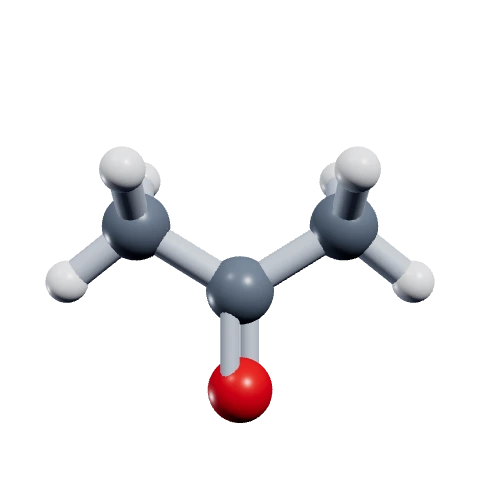
This guide explains what cured super glue actually is, what dissolves it and what only loosens it, the official first-aid steps for skin, eyes and lips, and which surfaces acetone will rescue and which it will ruin. We sell the solvent at the center of it, Acetone Technical Grade and Acetone ACS Grade, so we have also been careful to say where acetone is the wrong answer.
Last reviewed 9 November 2026 against the sources cited below. This is a practical cleaning and chemistry guide, not medical, legal or regulatory advice. If glue is in an eye, the mouth or a wound, contact a medical professional or Poison Help at 1-800-222-1222. How we researched it is set out at the end.
What is super glue, and why does it stick to skin so fast?
Super glue is ethyl cyanoacrylate, a liquid monomer that hardens into a rigid plastic when it touches moisture. Loctite’s data sheet lists its base simply as “Ethyl cyanoacrylate”, and the safety data sheets for Gorilla Super Glue and Krazy Glue list the same compound as the main ingredient. Related cyanoacrylates, butyl and octyl, are the ones used in medical skin adhesives; household super glue is the ethyl version.
The chemistry explains the speed. A 2018 review in the journal Molecules, written with a Henkel adhesives scientist, puts it plainly: “Rapid anionic polymerization on exposure to surface moisture is responsible for instant adhesion.” The monomer is set off by water and weak bases, and almost every surface carries a thin film of water. Skin carries more than most, which is why Loctite’s safety sheet warns that the glue “bonds skin in seconds”. The glue also gives off heat as it sets. With a large drop, that heat can burn.

Loctite rates the bond as handleable in 15 to 30 seconds, says to leave it undisturbed for at least 10 minutes, and gives a full cure time of 12 to 24 hours, all depending on temperature, humidity and how much glue was used. Once cured, the glue is, in Loctite’s words, a “Non-flammable, brittle solid”. That is the thing you are trying to remove.
Good news first. Poison Control states that “Super glue is not toxic once it is dry.” A fingertip stuck to a mug is an annoyance, not a poisoning. The exceptions are eyes, the mouth, large hot drops and wounds, covered below.
Does acetone dissolve super glue?
Acetone softens cured super glue and slowly dissolves it, but it does not make a hard bead vanish in seconds. The clearest evidence comes from the glue’s own maker. Henkel’s data sheet for Loctite Super Glue Liquid says: “Clean up uncured residue with acetone. Scrape away cured adhesive using a sharp-edged tool.” In other words, acetone is the clean-up solvent for wet glue, and cured glue is a soak-and-scrape job.
The chemistry backs that up. Cured ethyl cyanoacrylate does go into acetone as a solution; researchers have stored it that way in the lab. Permabond, another cyanoacrylate maker, describes the practical version: on a nonporous surface, “one might soak the area in acetone and then scrape the adhesive off.” Thin smears give way sooner. Thick drops need repeated soaking.
The dedicated removers are slower still. Loctite Glue Remover is based on propylene carbonate, and its directions say to cover the glue with it and “Leave for several hours or preferably overnight.” Henkel’s industrial remover, a nitromethane blend, says thick beads “will take between 15 and 30 minutes and will require reapplication”. Nitromethane is a hobby and industrial debonder, flammable and suspected of causing cancer, and it is not something we suggest using at home.
What actually works on cured super glue
| Method | What it does | Where the evidence stands |
|---|---|---|
| Acetone soak + scrape | Softens and slowly dissolves | Henkel uses it for uncured glue and after heat debonding; Permabond soaks and scrapes. No source gives a dissolving time. |
| Propylene carbonate remover gel | Softens over hours | Loctite Glue Remover: several hours or overnight. Not for paint, varnish, ABS or fabric. |
| Warm soapy water soak | Loosens slowly | First step in every official skin guide. Cyanoacrylate breaks down faster in basic (alkaline) water. |
| Oil or petroleum jelly | Loosens on skin | Poison Control and Ontario Poison Centre list it for skin, especially tender areas. |
| Rubbing alcohol soak | Loosens on skin, slowly | Poison Control lists it as a soak. No source says it dissolves cured glue. |
| Vinegar | No evidence on its own | Queensland Health says adding it to soapy water “can also be of some benefit”. Nothing shows it dissolves the glue. |
| WD-40, toothpaste, butter | Unproven | We found no primary evidence for any of them on cured super glue. |
Sources: Henkel/Loctite data sheets, Permabond, Poison Control, Ontario Poison Centre, Queensland Health. See the source list below.
Is nail polish remover the same thing? Only if the label says acetone. Many nail polish removers are sold as “acetone-free” and use ethyl acetate instead, which is a weaker solvent for this job. Poison Control is careful to say acetone is found in “some nail polish removers”. Check the ingredients before you count on it.
The short version: acetone is the strongest solvent for super glue that most people can buy, but it works by soaking and softening, not instantly. It is also highly flammable, so handle it with care. Patience and a scraper do as much of the work as the solvent.
How do you get super glue off your skin?
Soak the area in warm soapy water, then roll or peel the skin apart slowly, and never pull. Every official source agrees on that order. Loctite’s safety sheet says: “Do not pull bonded skin apart. Soak in warm soapy water. Gently peel apart using a blunt instrument.” Queensland Health adds that “a rotational motion is much more effective than pulling, which can tear the skin.”
Super glue on fingers or hands (intact skin only)
- Don’t pull. Pulling bonded skin apart can tear it. Stop and get warm water ready instead.
- Soak in warm soapy water. Keep the area under the water for several minutes. Water and soap slowly loosen the bond from the edges.
- Roll, don’t pull. Work the skin apart with a rolling or peeling motion, helped by a blunt edge such as a spoon handle. Loctite suggests rubbing cooking oil into the bond and gently working the fingers back and forth.
- Use acetone only on intact skin of the fingers or hands. Dab a little acetone on a stubborn patch with a fingertip, wait, and roll the edge again. Poison Control lists acetone, a rubbing alcohol soak and oils as options, and warns: “It can take hours for these treatments to work.”
- Wash and moisturize. Acetone strips the skin’s oils, so wash with soap and water afterwards and use a rich hand cream. Leftover film usually wears off over a few days as the skin renews.
Do not use acetone on sensitive skin, near the eyes, nose or mouth, or on cuts. Queensland Health says acetone and other solvents “should not be used on sensitive skin or near open wounds.”
Oil is the gentler choice on tender skin. The Ontario Poison Centre notes that “Mineral oil, vegetable oil or petroleum jelly aids in the removal of cyanoacrylates from tender skin areas”, and that a small patch of dried glue can simply be left to wear off. Do not reach for a blade or sandpaper on skin. If a large drop felt hot or left a burn, or the skin is broken, have it looked at by a medical professional.
One more thing to skip: using super glue on a cut. Queensland Health warns that household super glue “is not a safe substitute” for a medical skin adhesive and may cause burning and infection of the wound.
What if super glue gets in your eye or on your lips?
If glue is in an eye, do not force the eye open and do not put any solvent near it; rinse with water and get medical help. Poison Control is direct: “Do not force the eye open.” It advises rinsing the eye with water for 15 minutes and calling Poison Help at 1-800-222-1222. The Ontario Poison Centre adds: “If eyelids are stuck together, do not use alcohol, acetone or any other chemical near the eye.”
Eyes: no acetone, no prying, no trimming lashes yourself. Poison Control notes it may take several days for the bond to loosen and the eye to open on its own. Moorfields Eye Hospital, an NHS trust, says: “Generally, the best treatment we recommend is to simply give it time for the glue to loosen.” Get the eye checked, because glue can scratch the surface of the eye.
For lips, Loctite’s safety sheet says to apply warm water and let saliva do the work, then “Peel or roll lips apart. Do not pull lips apart with direct opposing force.” Poison Control says it may take hours to a couple of days for saliva to loosen the glue. Never use acetone in or around the mouth, and Queensland Health advises seeing a doctor or dentist if glue is bonded to the teeth or gums.
How do you remove super glue from glass, metal and ceramic?
On hard, nonporous surfaces that tolerate solvents, soak the cured glue in acetone and scrape it away. Glass, bare metal and glazed ceramic are the easy cases. The Canadian Conservation Institute says stronger solvents “such as acetone can also be used without risk” on glass, and Loctite recommends its own remover for “glass, metal, ceramic, stone”.
- Chip off what you can. Cured super glue is brittle. A plastic scraper, or a razor blade held flat on flat glass, will lift much of a thick drop before any solvent goes on.
- Soak it. Once the glue has fully hardened, wet a small pad of paper towel with acetone, lay it on the glue, and cover it with a piece of plastic or foil so the acetone does not evaporate in seconds. Leave it for 5 to 10 minutes. This is our practical suggestion, not a tested time.
- Scrape and repeat. Lift the softened glue with the scraper. Re-soak anything that stays hard. Thick beads may take several rounds.
- Wash. Wipe the surface with soapy water and dry it.
Work in good ventilation, away from any flame or pilot light, and use the smallest amount of acetone that does the job. Lab glassware and parts that must be residue-free are where Acetone ACS Grade earns its place, because ACS-grade acetone is held to a very low evaporation residue.
Which surfaces will acetone ruin?
Acetone attacks many common plastics, paints and finishes, so the surface often matters more than the glue. Acrylic sheet makers warn that acetone “will likely cause the surface of the acrylic to craze”, sometimes days or weeks later. Covestro says acetone swells its Makrolon polycarbonate and lists nail varnish remover as incompatible. Plastics resistance charts rate ketones like acetone as poor on ABS, polystyrene and PVC. Even Loctite’s gentler propylene carbonate remover carries the warning “Do not use on painted or varnished surfaces.”

| Surface | Acetone? | What to do instead |
|---|---|---|
| Glass, glazed ceramic | Yes | Soak and scrape. Razor blade only on flat glass. |
| Bare metal | Yes | Soak and scrape, then wash and dry. |
| Polyethylene, polypropylene, nylon | Usually | Charts rate ketones good on these. Keep contact short. |
| Acrylic, Plexiglas | No | Crazing can appear days later. Use warm soapy water, patience and careful scraping. |
| Polycarbonate, eyeglass lenses | No | Acetone swells polycarbonate. For glasses, see your optician. |
| ABS, polystyrene, PVC | No | Ketones rate poor on all three. Try warm soapy water and gentle scraping. |
| Phone and laptop screens | No | Apple advises against solvents and acetone on displays. Ask the maker or a repair shop. |
| Car paint, clear coat | Avoid | We found no maker data showing acetone is safe on clear coat. Use a product made for automotive finishes, or ask a body shop. |
| Varnished or lacquered wood | Avoid | Acetone can strip many wood finishes. Test the underside first, or scrape gently. |
| Stone, laminate, leather | Test first | We found no reliable data. Test a hidden spot, or skip solvents on leather. |
The rule of thumb is simple. If the surface is glass, metal or glazed ceramic, acetone is your friend. If it is a clear plastic, anything painted, or anything you cannot replace, reach for patience before solvent. The same logic runs through our guide to removing sticker residue, where the surface decides the solvent.
How do you get super glue out of clothes and fabric?
Let the glue cure fully, test the fabric for acetone damage on a hidden seam, then dab acetone on the spot and work the softened glue out. The test matters because acetone “dissolves acetate fibers readily”, according to the Drycleaning & Laundry Institute, and many garment linings are acetate. Its advice is to test a sample from an unexposed area first; if the fabric dissolves or loses color, acetone cannot be used.
Never wipe wet super glue with a cotton rag, cotton ball or tissue. Loctite’s safety data sheet warns: “Avoid contact with fabric or paper goods. Contact with these materials may cause rapid polymerization which can generate smoke and strong irritating vapors, and cause thermal burns.” Doctors have reported a child burned through a cotton shirt by spilled nail glue. If a large amount spills on clothing you are wearing, take the garment off if you can, or flood it with cold water.
For a dried spot on a cotton or polyester garment that passed the test, lay the fabric face down on a folded towel, dab acetone on the back of the spot, wait a few minutes, and gently work the softened glue loose with a blunt edge. Repeat, then wash the garment as usual. Dyes can still bleed, which is why the hidden-seam test comes first. For delicate, acetate or dry-clean-only items, take them to a dry cleaner and tell them what the stain is.
Is Gorilla Glue the same as super glue?
No. Original Gorilla Glue is a polyurethane adhesive, while Gorilla Super Glue is a cyanoacrylate. Gorilla says so itself: “Original Gorilla Glue is a polyurethane adhesive, which behaves differently from super glue (cyanoacrylate).” For Original Gorilla Glue on skin, Gorilla advises wiping wet glue off with a dry cloth, then washing with a gritty soap, and says cured glue may take several days to wear off. It specifically says: “We do not recommend using any kind of alcohol, acetone, or other solvent.”
Gorilla Super Glue and Krazy Glue are both ethyl cyanoacrylate according to their safety data sheets, so the super glue advice in this guide applies to them. Check the label before you pick a method.
Does heat remove super glue?
Heat weakens super glue, but it does not melt it like hot glue. Cured ethyl cyanoacrylate is a glassy solid with a glass transition of about 150 °C (302 °F), and it starts to break down near that temperature rather than flowing. Henkel’s industrial heat-debonding method heats the bond line to 135 °C (275 °F) and separates the parts while hot. Loctite’s consumer glue is rated for service only “Up to 180°F (82°C)”.
So a hair dryer can weaken a bond on a heat-tolerant metal or ceramic part, but it will not reach a true debonding temperature. Heated super glue also gives off irritating fumes. Never heat glue on skin, never heat plastic you care about, and never use heat anywhere near acetone vapor.
How do you use acetone safely?
Acetone is a highly flammable solvent, so use small amounts in a ventilated room, away from flames, sparks and pilot lights. NIOSH classifies it as a Class IB flammable liquid, with a flash point around 0 °F (−18 °C); manufacturer safety sheets give values down to about −20 °C (−4 °F). Its vapor is flammable between about 2.5% and 12.8% in air. NIOSH’s recommended exposure limit is 250 ppm over a working day.
Glove rating for acetone (Ansell chemical resistance guide, breakthrough time)
Source: Ansell Chemical Resistance Guide, 8th edition. Breakthrough time is not the same as safe wear time.
The glove question trips people up. Loctite recommends nitrile gloves for applying super glue, and that advice is right for the glue. But Ansell rates nitrile as not recommended for acetone, while butyl rubber lasts more than eight hours. For a quick dab on a scraper, gloves matter little; for soaking parts or cleaning large areas, wear butyl. We compared glove materials in more depth in our report on nitrile glove resistance to acetone.
Acetone also defats the skin, which can cause dryness or cracking with repeated contact, so wash and moisturize after use. Store it in its original closed container, away from heat. Its CAS number is 67-64-1. If someone swallows it, or feels unwell after breathing a lot of vapor, call Poison Help at 1-800-222-1222.
Which acetone should you buy for glue removal?
For removing super glue at home or in a shop, Acetone Technical Grade does the job. Choose Acetone ACS Grade when residue matters: cleaning lab glassware, optics, electronics or precision parts after debonding. ACS-grade acetone is specified at 99.5% minimum assay with a very low evaporation residue, so it leaves less behind when it dries.
Both grades come from a 1-pint bottle up to drums and 330-gallon totes. For more on how acetone compares with its close cousin, read MEK vs acetone: which solvent do you need, and for a wider tour of what acetone does around the home and shop, see our acetone essentials guide. If you are on the other side of the problem and want plastic parts to bond permanently, our piece on solvent-welding plastic with MEK covers it, and our ACS acetone guide explains the grade in detail.
How we researched this
We read the sources below on 9 November 2026. Glue chemistry, cure times, heat limits and removal instructions come from Henkel’s Loctite technical and safety data sheets and a 2018 Molecules review of cyanoacrylate polymerization. Skin, eye and lip first aid is relayed from Poison Control, the Ontario Poison Centre, Queensland Health and Moorfields Eye Hospital, quoted rather than paraphrased where the wording matters. Surface compatibility comes from plastics makers, the Canadian Conservation Institute and the Drycleaning & Laundry Institute; glove data from Ansell; acetone limits from NIOSH and the ILO/WHO chemical safety card. Where we could not find a primary source, for example on car clear coat, lens coatings and leather, we say so. Soak times in the hard-surface method are our practical suggestion, not test results. The photographs in this article are illustrations, not test results.
Sources
- Loctite Super Glue Liquid, Technical Data Sheet, Henkel (2023)
- Loctite Super Glue, Safety Data Sheet, Henkel (2015)
- Loctite Super Glue Liquid, Material Safety Data Sheet, Henkel (2012)
- Loctite Glue Remover, Technical Data Sheet, Henkel (2025)
- Loctite SF 768, Technical Data Sheet, Henkel (2015)
- Loctite 417, Technical Data Sheet, Henkel (2008)
- Duffy, Zetterlund and Aldabbagh, Radical Polymerization of Alkyl 2-Cyanoacrylates, Molecules 23, 465 (2018)
- Super Glue, Poison Control (National Capital Poison Center)
- Super glue, Ontario Poison Centre
- Super glue, Queensland Government (Health)
- Superglue injury, Moorfields Eye Hospital NHS Foundation Trust
- Clayman, Billington and Cruse, Full-thickness Pediatric Burn following Reaction between Cyanoacrylate Nail Adhesive and Cotton Shirt, Journal of Cutaneous and Aesthetic Surgery (2020)
- Adhesive Removal, Gorilla Glue Company
- How to Remove Gorilla Glue from Skin, Gorilla Glue Company
- Gorilla Super Glue, Safety Data Sheet, Gorilla Glue Company (2015)
- Adhesive removal, Permabond
- Acetone, Drycleaning & Laundry Institute (2021)
- Polycast acrylic cleaning bulletin, Spartech
- Makrolon: the chemical resistance, Covestro (2016)
- Cleaning glass and acrylic display cases, Canadian Conservation Institute
- Chemical Resistance Chart of Plastics, Professional Plastics
- How to clean your Apple products, Apple
- Ansell Chemical Resistance Guide, 8th edition, Ansell
- Acetone, NIOSH Pocket Guide to Chemical Hazards, CDC / NIOSH
- International Chemical Safety Card 0087: Acetone, ILO / WHO
Frequently asked questions
What is the fastest way to get super glue off skin?
Soak the area in warm soapy water for several minutes, then roll or peel the skin apart gently instead of pulling. On intact fingers, a little acetone or an oil can help loosen what is left. Poison Control warns that it can take hours, so patience is part of the method.
Does acetone dissolve super glue?
Acetone softens and slowly dissolves cured super glue, but not instantly. Henkel tells users to clean up uncured glue with acetone and to scrape away cured glue, so on a hard drop, soak with acetone and scrape, then repeat.
Will nail polish remover remove super glue?
Only if it contains acetone. Many nail polish removers are acetone-free and use ethyl acetate, which is a weaker solvent for super glue. Check the ingredient list before relying on it.
Can I use acetone if super glue is in my eye?
No. Never put acetone, alcohol or any other chemical near the eye, and do not force the eye open. Rinse with water, call Poison Help at 1-800-222-1222, and get medical care. The bond usually loosens on its own over several days.
Does vinegar remove super glue?
We found no evidence that vinegar dissolves cured super glue. Queensland Health says adding vinegar to warm soapy water may be of some benefit on skin, but the soapy water and time do most of the work.
How do you get super glue off plastic without damaging it?
Start with warm soapy water and careful scraping with a plastic edge. Acetone crazes acrylic and attacks polycarbonate, ABS, polystyrene and PVC, so only use it on plastics such as polyethylene or polypropylene, and test a hidden spot first.
How do you remove super glue from clothes?
Let the glue harden, test acetone on a hidden seam because it dissolves acetate fabric, then dab acetone on the back of the spot and work the softened glue out before washing. Take delicate or acetate garments to a dry cleaner.
Why did super glue get hot on my shirt?
Super glue gives off heat as it sets, and cotton and other cellulose fibers make it set very quickly. Loctite warns that contact with fabric or paper can generate smoke and cause thermal burns. Flood a large spill with cold water instead of wiping it.
Is Gorilla Glue removed the same way as super glue?
Not Original Gorilla Glue, which is a polyurethane. Gorilla advises against acetone or other solvents on skin for it and suggests a dry cloth, gritty soap and time. Gorilla Super Glue is a cyanoacrylate, so the super glue methods apply.
Is dried super glue toxic?
Poison Control states that super glue is not toxic once it is dry. The real risks are eye and mouth contact, heat burns from large drops, and damage from pulling bonded skin apart.
Related Chemical Collections
About the author
Andre Taki
This article is for informational purposes only.


