Product Overview
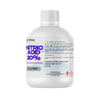
Nitric Acid 20% is a highly corrosive, aqueous solution of nitric acid (CAS 7697-37-2, formula HNO3, molecular weight 63.013) that serves as a critical reagent across various industrial sectors. Alliance Chemical provides this standard dilution as part of our comprehensive range of industrial acids to support critical processes that require a controlled, moderate-strength mineral acid without the extreme reactivity associated with concentrated or fuming grades. Our product is manufactured under strict quality standards to ensure consistency, providing reliable performance in chemical synthesis, cleaning, and surface treatment applications. As an industrial chemical distributor, we ensure that every batch of this acid meets rigorous specifications for concentration and purity.
This 20% concentration is widely utilized in metal processing, agricultural formulations, and specialized cleaning operations where stronger concentrations of nitric acid would be too aggressive or cause unwanted substrate degradation. The pale yellow to reddish brown liquid has a characteristic choking odor and behaves as a strong monobasic acid and a powerful oxidizing agent. Proper handling of this material requires a thorough understanding of its physical and chemical properties. Alliance Chemical offers this product in various packaging options to accommodate both bench-scale testing and large-scale industrial operations — verifying that this Nitric Acid 20% solution meets the operational demands of your facility.
Why This Grade
When selecting Nitric Acid 20% for your facility, understanding the grade tolerance is vital for process control. This specific concentration represents a standard technical dilution designed for operations that require precise chemical activity without the hazards of manual dilution from 67% or 70% concentrates. While an official compendial grade is not applicable here, maintaining a consistent 20% assay ensures that reactions proceed at predictable rates. In industries like electronics or precision metal finishing, a deviation of even a few percentage points can lead to incomplete oxide removal or, conversely, excessive substrate etching.
Using an incorrect concentration or an unverified grade can lead to severe failure modes. If a weaker concentration is accidentally substituted, surface passivation or scale removal might fail, leaving contaminants that ruin subsequent coating or plating steps. On the other hand, using a more concentrated acid can cause runaway exothermic reactions, generate toxic nitrogen dioxide fumes, or permanently damage expensive stainless steel equipment. Our standardized Nitric Acid 20% eliminates the variable risks associated with in-house dilution, such as localized overheating or contamination from low-quality process water, ensuring a reliable feed for your process lines.
Chemical Profile
- CAS Number
- 7697-37-2
- Chemical Formula
- HNO3
- Molecular Weight
- 63.013 g/mol
- Boiling Point
- 181 °F at 760 mmHg (NIOSH, 2024)
- Melting Point
- -44 °F (NIOSH, 2024)
- Specific Gravity
- 1.5 at 77 °F (NIOSH, 2024) - Denser than water; will sink
- Appearance
- Nitric acid, other than red fuming appears as a pale yellow to reddish brown liquid with reddish brown vapors and a suffocating odor. Very toxic by inhalation. Corrosive to metals or tissue. Accelerates the burning of combustible material and may cause ignition of combustible materials upon contact. Prolonged exposure to low concentrations or short term exposure to high concentrations may result in adverse health effects. Density 12 lb / gal.
- Solubility
- Miscible (NIOSH, 2024)
- UN Number
- UN2031
- Hazard Class
- Class 8
- Packing Group
- II
- Proper Shipping Name
- Nitric acid, other than red fuming, with less than 65 percent nitric acid
- GHS Signal Word
- Danger
Values sourced from Alliance Chemical's canonical chemistry registry. Certificate of Analysis (COA) per lot.
Industrial Applications
- **Metal Finishing and Passivation:** Used to clean and passivate stainless steel surfaces by removing free iron and restoring the protective oxide layer in metal finishing and aerospace applications.
- **Industrial Equipment Cleaning:** Acts as a descaling agent in dairy, food, and beverage processing plants to remove inorganic mineral scale from piping and process vessels.
- **Chemical Synthesis:** Serves as a key reagent in the synthesis of various nitrates, agricultural formulations, and intermediate compounds across manufacturing sectors.
- **pH Adjustment and Water Treatment:** Utilized in industrial wastewater systems to neutralize alkaline waste streams and adjust pH levels for subsequent chemical precipitation.
- **Photo-Engraving and Etching:** Employed in the electronics and printing industries to etch brass, copper, and bronze plates with high precision and control.
Hazmat & Shipping
Nitric Acid 20% is classified as a hazardous material for transport and must be handled in strict accordance with Department of Transportation (DOT) regulations. It is shipped under the proper shipping name **Nitric acid, other than red fuming, with less than 65 percent nitric acid**, identified by **UN2031**, **Hazard Class 8** (Corrosive), and belongs to **Packing Group II**. The signal word for this chemical is **Danger**. Since the authoritative safety data designates no GHS pictograms in the hazard profile, we rely on the specific precautionary and hazard statements (including H272, H314, and H330) to guide safe logistics and handling.
Due to its corrosive and oxidizing nature, compliance with transport safety protocols is critical. All shipments must utilize certified DOT-compliant containers to prevent accidental release or exposure during transit. Personnel involved in receiving and unloading this material must wear appropriate personal protective equipment (PPE) as specified by the GHS hazard codes. This includes chemical-resistant splash goggles, full face shields, heavy-duty neoprene or butyl rubber gloves, and acid-resistant aprons or suits. Emergency eyewash stations and safety showers must be readily accessible in the unloading area to mitigate risks associated with accidental contact or spills.
Handling & Storage
Store Nitric Acid 20% in a cool, dry, well-ventilated area, ideally between 50°F and 80°F, away from direct sunlight and sources of heat or ignition. This material is highly incompatible with organic compounds, bases, active metals, reducing agents, and combustible materials. Contact with these substances can cause rapid decomposition or fire. Always use compatible storage vessels constructed from materials such as high-density polyethylene (HDPE), fluoropolymers, or specially passivated stainless steel. Ensure containers remain tightly closed when not in use, and construct secondary containment dikes capable of holding the entire volume of the storage tank to prevent environmental contamination in the event of a leak.
Order & Documentation
Alliance Chemical is committed to providing comprehensive support for your chemical procurement needs. We supply a high-quality product backed by transparent documentation to ensure your facility remains compliant with all safety and quality regulations. A Certificate of Analysis (COA) is available upon request for every batch, and a comprehensive Safety Data Sheet (SDS) is provided with every order to guide your team in safe handling practices. For bulk inquiries or custom packaging solutions, please contact our logistics team. Please Request a Quote to discuss your specific requirements or Download the SDS for immediate safety guidelines.
Why Buy from Alliance Chemical
Since 1997, Alliance Chemical has supplied premium industrial chemicals from Taylor, Texas under CAGE Code 1LT50, with a COA and SDS included on every order. For industrial use only.