Product Overview
Methyl n-Amyl Ketone (MNAK) — also known as 2-Heptanone — is a clear, colorless ketone solvent with a penetrating fruity odor. It sits in the C7 ketone range: heavier and slower-evaporating than shorter-chain ketones, which gives it noticeably higher solvency for resins, coatings and extraction workflows. This technical grade MNAK is offered in pack sizes from quarts through 55-gallon drums, serving bench-scale trials and full-production coating lines alike. It ships as a Class 3 flammable liquid (UN1110, PG III) and Alliance Chemical handles the hazmat documentation on every outbound order.
Why This Grade
The technical designation signals that this MNAK is procured through a supply chain targeting industrial process use. For coating formulators, that means reliable dissolution of high-solids resins without unexpected residue. For extraction work, it means a solvent whose lot-to-lot consistency directly affects output quality. If your application is general degreasing or parts cleaning and your process is less sensitive to trace-level variation, a technical or industrial grade may be sufficient — and more economical. Choose technical grade when your process specification calls for it or when downstream results depend on solvent consistency.
Chemical Profile
MNAK is a clear, colorless liquid with the molecular formula C7H14O and a molecular weight of 114.19 g/mol (CAS 110-43-0). It carries a penetrating fruity odor characteristic of the longer-chain methyl ketones. At a density of 0.82 — roughly 6.8 lb per gallon — MNAK is less dense than water and will float on a water surface. Solubility in water is low at 0.4%, which is relevant for liquid-liquid extraction workflows where minimal aqueous crossover matters. Vapor pressure sits at 3 mmHg at ambient conditions, placing MNAK in the moderate-volatility range: slow enough to give coatings adequate open time, fast enough to flash off during bake cycles. The flash point is 126 °F, classifying it as a Class 3 flammable liquid for transport. Vapors are heavier than air and can accumulate in low-lying spaces — a practical concern in enclosed work areas.
Industrial Applications
MNAK is a workhorse industrial solvent. Its combination of high solvency, moderate evaporation rate and low water solubility makes it useful across several process categories:
-
Solvent for paints and coatings.MNAK dissolves a broad range of film-forming resins — alkyds, acrylics, vinyls and epoxies. Its slower evaporation compared to MEK or acetone gives wet coatings a longer open time, reducing brush marks and improving flow-out in spray applications. Coating formulators value it for high-solids systems where strong solvency at moderate volatility is the design target.
-
Extraction solvent.The 0.4% water solubility means MNAK partitions cleanly in liquid-liquid extraction setups. It can pull target compounds from aqueous feeds with minimal solvent loss to the water phase — a direct cost and efficiency advantage in technical and process-chemistry extraction trains.
-
Intermediate in organic synthesis.MNAK serves as a C7 ketone building block in the synthesis of larger organic molecules. Its reactivity at the carbonyl site and its stability under moderate conditions make it a practical intermediate in multi-step synthesis routes.
-
Industrial cleaning agent.For removing grease, oils and resinous deposits from machinery and tooling, MNAK offers strong solvency without the extreme volatility of lighter solvents. It stays wet on the surface long enough to dissolve heavy residues before evaporating.
Handling & Storage
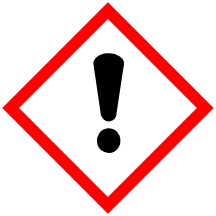
Signal word: Warning(per the product's GHS classification). MNAK carries four hazard statements, all per the product's GHS classification:
- H226 — Flammable liquid and vapour
- H302 — Harmful if swallowed
- H332 — Harmful if inhaled
- H336 — May cause drowsiness or dizziness
Store in a cool, dry, well-ventilated area away from heat sources, sparks and open flame. HDPE or glass containers are appropriate for storage. Keep MNAK separated from strong oxidizers and strong acids to prevent hazardous reactions. Operators should wear chemical-resistant gloves and splash-proof goggles at minimum. The H336 statement — drowsiness or dizziness — means that prolonged inhalation in a confined or poorly ventilated space can cause central nervous system depression. Work with adequate ventilation or use respiratory protection when vapor concentrations may exceed occupational limits. Vapors are heavier than air and will settle into pits, sumps and floor-level spaces.
Hazmat & Shipping
MNAK is a regulated hazardous material for transport. The governing classification:
-
UN Number:UN1110 (per 49 CFR 172.101)
-
Hazard Class:3 — Flammable Liquid (per 49 CFR 172.101)
-
Packing Group:III (per 49 CFR 172.101)
-
Proper Shipping Name:N-AMYL METHYL KETONE (per 49 CFR 172.101)
Alliance Chemical holds USDOT Registration #2188383 and ships hazmat daily from our Taylor, TX warehouse. Every outbound shipment of this product carries the required shipping papers, markings and labeling for a Class 3 PG III flammable liquid.
Documentation
A Safety Data Sheet (SDS) ships with every order, available in English, Spanish, French and Japanese. A lot-specific Certificate of Analysis (COA) is provided for traceability and incoming QC. A Technical Data Sheet (TDS) is also available on request for specification review.
Why Buy from Alliance Chemical
This MNAK is available to order in quarts, gallons, 5-gallon pails and 55-gallon drums — with SDS, COA and TDS documentation for every lot shipped. Alliance Chemical has served over 55,000 customers since 1998, operating from our warehouse at 204 S Edmond St, Taylor, Texas 76574. Shipping and handling guidance on this page is reviewed by Andre Taki, DOT Hazmat Specialist.