Product Overview
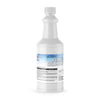
Alliance Chemical provides high-quality Ferric Chloride 40% solution, an essential industrial chemical designed for demanding process environments. Formulated with a molecular formula of Cl3Fe and a molecular weight of 162.20, this dense, orange to brown-black liquid solution is utilized heavily in industrial water management and specialized manufacturing. The concentration is maintained precisely at 40% to ensure consistency and reliable dosing in high-volume applications. This chemical solution exhibits high density and is heavier than water, ensuring proper mixing and settling behaviors when introduced into aqueous treatment processes.
Beyond industrial water treatment, Ferric Chloride 40% is highly valued as a high-performance etching agent in the electronics industry for engraving printed circuit boards (PCBs) and other metallic surfaces. Its corrosive nature makes it highly effective at dissolving unwanted copper from clad laminates, leaving behind clean, precise conductive pathways. We offer this solution in various sizes, which can be viewed in our water treatment chemicals collection. This product is supplied with a commitment to quality and traceability, ensuring that your manufacturing facility or municipal treatment operation receives a consistent and compliant product. We provide both small-scale packaging and bulk volumes to accommodate various operational demands.
Why This Grade
This Ferric Chloride solution is formulated specifically at a 40% concentration, which is the industry standard for stable liquid handling and efficient transport. Choosing a pre-diluted 40% solution instead of anhydrous solid Ferric Chloride eliminates the safety hazards and exothermic dissolution risks associated with mixing dry ferric salts with water on-site. The 40% concentration is carefully balanced to remain fully soluble under typical operating temperatures, preventing crystallization and clogging of chemical metering pumps, dosing lines, and spray nozzles during application.
Utilizing the incorrect concentration or an unverified grade can lead to severe system failure modes. In wastewater treatment, a concentration lower than 40% disrupts the stoichiometric ratio required for optimal coagulation, leading to incomplete flocculation, excessive chemical consumption, and elevated levels of suspended solids in the effluent. Conversely, attempting to use anhydrous solid or highly concentrated forms increases the risk of thermal runaway during dilution and rapid corrosion of processing equipment. For advanced etching applications, customers often pair this with solutions from our hydrochloric acid 37% product page. By standardizing on our 40% liquid solution, operators ensure predictable reaction rates, stable pH adjustment, and continuous, automated dosing without the maintenance overhead of dry chemical preparation.
Chemical Profile
- CAS Number
- 7705-08-0
- Chemical Formula
- Cl3Fe
- Molecular Weight
- 162.20 g/mol
- Boiling Point
- 599 °F at 760 mmHg (Decomposes) (NTP, 1992)
- Melting Point
- 583 °F (NTP, 1992)
- Specific Gravity
- 2.8 at 68 °F (anhydrous solid) (USCG, 1999) - Denser than water; will sink
- Appearance
- Ferric chloride is an orange to brown-black solid. It is slightly soluble in water. It is noncombustible. When wet it is corrosive to aluminum and most metals. Pick up and remove spilled solid before adding water. It is used to treat sewage, industrial waste, to purify water, as an etching agent for engraving circuit boards, and in the manufacture of other chemicals.
- Solubility
- 5 to 10 mg/mL at 68 °F (NTP, 1992)
- UN Number
- UN2582
- Hazard Class
- Class 8
- Packing Group
- III
- Proper Shipping Name
- Ferric chloride, solution
- GHS Signal Word
- Danger
Values sourced from Alliance Chemical's canonical chemistry registry. Certificate of Analysis (COA) per lot.
Industrial Applications
- Wastewater clarification and industrial effluent treatment, where it functions as an efficient primary coagulant and flocculant to remove suspended solids, phosphorus, and heavy metals from raw waste streams.
- Printed circuit board (PCB) etching in electronics manufacturing, where the solution serves as a reliable acidic etchant to dissolve copper from copper-clad laminates with high precision and minimal undercut.
- Sludge conditioning and dewatering, which improves the filtration and compaction of industrial sludges prior to disposal or further processing in mechanical belt presses or centrifuges.
- Industrial pigment and chemical manufacturing, acting as a catalyst or precursor in the synthesis of iron-based pigments, catalysts, and various specialty organic compounds.
- Metal surface treatment and pickling, where it prepares surfaces by removing scale, rust, and oxides from iron, steel, and other metals before coating, plating, or painting operations.
Hazmat & Shipping
Ferric Chloride 40% is classified as a hazardous material due to its corrosive properties. In accordance with DOT regulations, this product is classified and shipped as UN2582, Hazard Class 8, Packing Group III. The proper shipping name is Ferric chloride, solution. The signal word for this chemical is Danger. It is critical for all transport, logistics, and receiving personnel to recognize these designations to ensure compliant handling, storage, and emergency response procedures are maintained in accordance with federal and local hazmat transportation guidelines.
Handling this corrosive chemical requires stringent adherence to personal protective equipment (PPE) guidelines based on its GHS hazard classifications. Based on the documented hazard statements—including H302 (Harmful if swallowed), H314 (Causes severe skin burns and eye damage), and H318 (Causes serious eye damage)—operators must wear chemical-resistant gloves (such as nitrile or neoprene), a full face shield combined with splash-resistant safety goggles, and acid-resistant protective clothing or aprons. In areas where misting, splashing, or aerosols may occur, appropriate respiratory protection is required. Ensure that emergency eyewash stations and safety showers are readily accessible within the immediate handling area.
Handling & Storage
Ferric Chloride 40% must be stored in a cool, dry, well-ventilated area, away from direct sunlight and incompatible materials. The ideal storage temperature range should be maintained above its freezing point to prevent crystallization, typically between 50°F and 90°F. Because of its corrosive nature, especially when wet, it must not be stored in aluminum, copper, brass, or other active metals; instead, utilize compatible non-metallic containers constructed from high-density polyethylene (HDPE), polypropylene, fiberglass-reinforced plastic (FRP), or glass. Detailed compatibility and chemical safety procedures are outlined on our industrial manufacturing guidelines page. Keep containers tightly closed when not in use, and store away from strong bases, alkali materials, and strong oxidizing agents to prevent hazardous exothermic reactions.
Order & Documentation
Alliance Chemical provides complete traceability and technical support for all industrial customers. A detailed Certificate of Analysis (COA) is available upon request for every batch shipped, ensuring your quality control standards are consistently met. Additionally, a comprehensive Safety Data Sheet (SDS) is provided with every order to support safe handling practices and regulatory compliance within your facility. For custom volumes, bulk pricing, or packaging options, you can Request a Quote or Download the SDS directly from our online portal.
Why Buy from Alliance Chemical
Since 1997, Alliance Chemical has supplied premium industrial chemicals from Taylor, Texas under CAGE Code 1LT50, with a COA and SDS included on every order. For industrial use only.
Learn more about Ferric Chloride 40%