



Research
Researchers reported a hollow CdS@polydopamine nanoreactor that uses visible light to make hydrogen peroxide more efficiently, pointing to cleaner photocatalytic manufacturing routes.
Key Facts
- The work reported a hollow CdS@polydopamine nanoreactor that imitates two features of living cells.
- The findings were published in the Journal of the American Chemical Society.
- The research was led by Prof. LI Can at the Dalian Institute of Chemical Physics of the Chinese Academy of Sciences, with Prof. Jian Liu's team at Inner Mongolia University.
- The design uses a catechol/o-benzoquinone redox pair in the polydopamine shell as a proton relay to speed proton-coupled electron transfer.
- A nanoscale hollow cavity and porous shell help trap incoming photons and support reactant accumulation and molecular diffusion.
What Happened
Researchers reported a hollow CdS@polydopamine nanoreactor designed to mimic how living cells organize chemistry inside confined spaces. The findings were published in the Journal of the American Chemical Society and described as part of nanocell engineering.
The team was led by Prof. LI Can at the Dalian Institute of Chemical Physics of the Chinese Academy of Sciences, in collaboration with Prof. Jian Liu's team at Inner Mongolia University.
Why It Matters
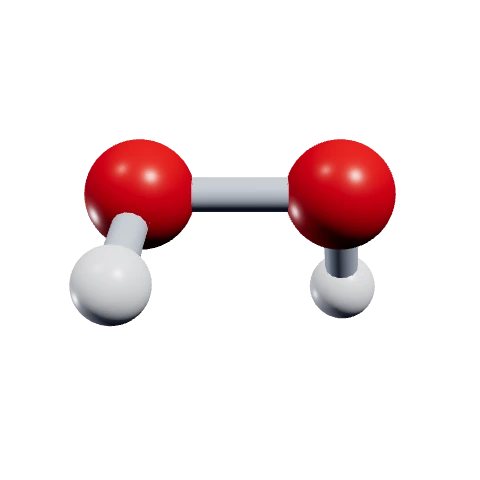
The report said the nanoreactor converts visible light into a more effective pathway for hydrogen peroxide production. For chemical manufacturers, that matters because hydrogen peroxide is a widely used oxidizer and any route that improves light-driven efficiency could be relevant to cleaner production concepts.
The structure also points to a broader trend: using biomimetic design to control how reactants move, accumulate, and react inside synthetic materials. That could influence how buyers and lab managers evaluate future photocatalysts, reactor components, and research-scale materials.
Key Details
The design combines two cell-like features:
- a dynamic catechol/o-benzoquinone redox pair in the polydopamine shell that acts as a proton relay;
- a compartmentalized hollow cavity with a porous shell that confines reactants and traps photons.
The report said the proton relay speeds proton-coupled electron transfer, a process in which proton and electron movement are linked. The hollow architecture also supports molecular diffusion while creating a confined reaction environment.
The authors described the system as a synthetic nanomaterial that reproduces some of the organized chemical functions seen in living cells.
What To Watch Next
For industrial users, the main question is whether this photocatalytic approach can be translated beyond lab-scale proof of concept into durable, scalable systems. The source does not provide manufacturing data, but the materials design suggests a line of research aimed at higher-efficiency light-driven chemistry.
Watch for follow-up work on stability, catalyst recovery, and whether the same biomimetic architecture can be adapted to other oxidation or peroxide-related processes.
Alliance's Take
For buyers and lab teams, this is best read as an early-stage photocatalysis signal rather than a near-term product announcement. If visible-light routes to hydrogen peroxide mature, they could affect interest in lower-energy oxidizer production methods and related R&D sourcing.
EHS and operations teams should note the research direction, not a process change. Any future scale-up would still need review for catalyst handling, light-reactor containment, peroxide management, and compatibility with existing oxidation workflows.
Related Products
Frequently asked questions
What did the researchers build?
They reported a hollow CdS@polydopamine nanoreactor designed to mimic cell-like compartmentalization and proton handling.
What does the nanoreactor produce?
The source says it makes hydrogen peroxide more efficiently using visible light.
Why should chemical users care?
It suggests a possible cleaner photocatalytic route for peroxide-related chemistry, but the report is still research-stage and does not provide scale-up data.
Sources
Related Chemical Collections
About the author
Andre Taki
This article is for informational purposes only.


