

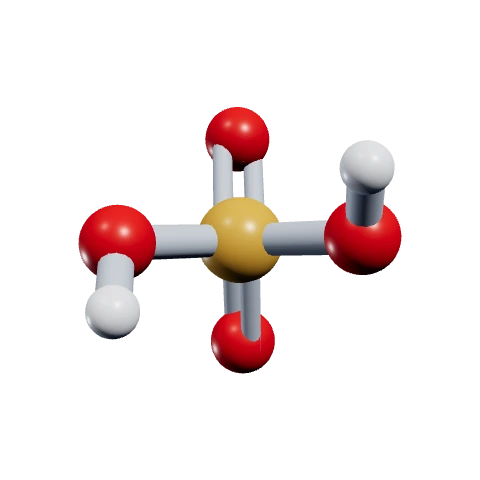


How Sulfuric Acid & Acetic Acid Power Lead-Acid Battery Recycling
Explore the chemical processes that make lead-acid batteries the most recycled consumer product in the world.
The Role of Battery Acid in Lead-Acid Battery Recycling
Lead-acid batteries are the most recycled consumer product in the world. The first step in this closed-loop process involves safely managing the spent battery acid. Battery acid is a 37% concentration of sulfuric acid (CAS 7664-93-9) mixed with deionized water. When a spent battery arrives at a recycling facility, operators puncture the casing and drain this acidic electrolyte. The recovered battery acid is highly corrosive and contains dissolved heavy metals, primarily lead particulates, which must be separated before further processing.
Once drained, facilities have two primary pathways for the recovered sulfuric acid. The first option is filtration and reconstitution. Operators filter out the lead particulates and adjust the acid's specific gravity by adding fresh Sulfuric Acid 37% - Battery Acid. This reconstituted electrolyte can then be used in new battery manufacturing. The second option is neutralization. Facilities treat the spent acid with an alkaline agent, converting it into water and a sulfate salt for safe disposal or secondary market sale.
Understanding the physical properties of battery acid is essential for plant operators designing these recovery systems. Sulfuric acid at a 37% concentration has a molecular weight of 98.08 g/mol. It features a boiling point of 337°C and a melting point of 10°C. It is a clear, colorless liquid that is fully miscible with water and many organic solvents. Because it is non-flammable, the primary hazards involve its corrosivity rather than fire risk.
Alliance Chemical stocks high-purity Sulfuric Acid 37% - Battery Acid for facilities that need to replenish their electrolyte volumes. Using technical-grade acid ensures that no unwanted trace metals or chlorides are introduced into the newly formed battery cells. Proper management of the initial battery acid extraction sets the stage for the subsequent lead smelting or hydrometallurgical recovery phases.
Desulfurization: Preparing Lead Paste for Recovery
After draining the battery acid, the battery casing is crushed. The crushed material is separated into three streams: plastic (polypropylene), metallic lead grids, and lead paste. The lead paste consists of lead dioxide, lead oxide, and lead sulfate. Before this paste can be efficiently smelted or leached, it must undergo desulfurization. Desulfurization removes the sulfur component from the lead sulfate, preventing the release of sulfur dioxide gas during later high-temperature processing.
To achieve desulfurization, plant operators mix the lead paste with an alkaline solution. Sodium Hydroxide 50% Membrane Grade (Caustic Soda, Lye) is frequently used for this reaction. When the lead paste reacts with the sodium hydroxide, the lead sulfate converts into lead hydroxide or lead oxide, leaving behind a soluble sodium sulfate solution. This liquid is then filtered away from the solid lead compounds, preparing the paste for the next extraction phase.
Sodium Hydroxide 50% is a clear, caustic liquid with a molecular weight of 39.997 g/mol. It has an extremely high boiling point of 1388°C and a melting point of 323°C. It offers complete water solubility, making it easy to dilute to the specific concentration required for the desulfurization tanks. By utilizing a membrane-grade product, facilities avoid introducing chloride impurities that are common in lower-grade diaphragm cell caustic soda.
The resulting sodium sulfate solution is not treated as waste. Instead, it is pumped to a crystallization unit. Here, the water is evaporated, leaving behind high-purity sodium sulfate crystals. These crystals are sold to the detergent and glass manufacturing industries. By effectively utilizing Sodium Hydroxide 50% in the desulfurization stage, battery recyclers maximize their resource recovery and minimize hazardous byproducts. Alliance Chemical supplies bulk quantities of this essential reagent to keep continuous recycling lines operational.
Hydrometallurgical Leaching with Acetic Acid and Hydrogen Peroxide
Traditional lead recycling relies on pyrometallurgy, which involves smelting the desulfurized lead paste in high-temperature furnaces. Hydrometallurgical recycling is gaining traction as a cleaner, more energy-efficient alternative. This liquid-based process uses chemical leaching to dissolve the lead compounds at low temperatures. Acetic Acid Glacial and Hydrogen Peroxide 3% Technical Grade are the primary reagents driving this innovative extraction method.
In the leaching reactor, the desulfurized lead paste is submerged in a dilute acetic acid solution. Acetic Acid Glacial (CAS 64-19-7) acts as the leaching agent, reacting with the lead oxide to form soluble lead acetate. Acetic acid has a molecular weight of 60.05 g/mol, a boiling point of 118°C (244.4°F), and a melting point of 16°C (60.8°F). It is a clear, colorless liquid that is highly water-soluble, allowing operators to easily control the concentration of the leaching bath.
While acetic acid effectively dissolves lead oxide, it struggles to break down lead dioxide. This is where Hydrogen Peroxide 3% Technical Grade (CAS 7722-84-1) enters the process. Hydrogen peroxide acts as a reducing agent. When added to the leaching tank, it reduces the insoluble lead dioxide into lead oxide, which the acetic acid can then readily dissolve. Hydrogen peroxide has a molecular weight of 34.015 g/mol and a boiling point of 150°C (302°F).
The combination of these two chemicals ensures maximum lead extraction from the paste. The resulting lead acetate solution is then filtered to remove any remaining insoluble impurities. Alliance Chemical provides both Acetic Acid Glacial Technical and Acetic Acid Glacial ACS Grade, alongside Hydrogen Peroxide 3%, supporting facilities transitioning to these advanced hydrometallurgical techniques. This method significantly reduces airborne lead emissions compared to traditional smelting.
Lead Recovery and Precursor Production
Once the lead paste has been fully dissolved into a lead acetate solution using acetic acid and hydrogen peroxide, the next phase is recovering the pure lead. The hydrometallurgical process allows for the direct production of high-purity lead compounds, such as lead oxide or lead carbonate, which can be immediately used to manufacture new battery pastes. This bypasses the need to cast metallic lead bullion and subsequently mill it into powder.
To precipitate the lead out of the acetate solution, operators introduce a precipitating agent. Depending on the desired end product, this could be sodium carbonate to produce lead carbonate, or a controlled application of Sodium Hydroxide 50% to precipitate lead hydroxide. When sodium hydroxide is used, the lead drops out of the solution as a solid, leaving behind sodium acetate in the liquid phase.
The solid lead precipitate is filtered, washed, and dried. If lead hydroxide or lead carbonate was formed, it is gently calcined (heated) to convert it into highly reactive lead oxide. This recovered lead oxide exhibits excellent electrochemical properties, often outperforming lead oxide generated through traditional pyrometallurgical milling. The high purity of the reagents used in the leaching phase directly impacts the quality of this final product.
Meanwhile, the remaining sodium acetate solution can be treated to regenerate the acetic acid. By adding a strong acid, such as the recovered battery acid (Sulfuric Acid 37%), the sodium acetate is converted back into acetic acid and sodium sulfate. The regenerated acetic acid is routed back to the leaching tanks, creating a highly efficient closed-loop chemical system. Alliance Chemical supports these complex recovery loops by supplying the foundational chemicals required to maintain system equilibrium.
Effluent Neutralization and Wastewater Treatment
Lead-acid battery recycling generates significant volumes of acidic wastewater. This effluent comes from washing the crushed plastic casings, scrubbing the exhaust gases from smelting furnaces, and managing the residual spent battery acid that cannot be reconstituted. Before any water can be discharged to a municipal treatment plant or reused within the facility, it must undergo rigorous neutralization and heavy metal precipitation.
Sodium Hydroxide 50% Membrane Grade is the industry standard for neutralizing these acidic waste streams. Operators dose the caustic soda into the wastewater holding tanks to raise the pH. As the pH increases, the free sulfuric acid is neutralized into water and dissolved sodium sulfate. The clear, caustic liquid form of Sodium Hydroxide 50% allows for precise automated dosing via pH-controlled pumps, preventing over-titration.
Raising the pH also serves a secondary, equally vital function: heavy metal precipitation. Any residual dissolved lead, antimony, or other trace metals present in the wastewater will precipitate out of solution as solid metal hydroxides when the pH reaches an alkaline state (typically between 8.5 and 10.0). These solid flocs are then removed using clarifiers and filter presses. Facilities must adhere to strict environmental guidelines regarding heavy metal discharge. The use of precise dosing equipment combined with high-quality Sodium Hydroxide 50% ensures compliance. The clarifiers used in this stage require careful monitoring of settling rates, which can be optimized by maintaining the correct pH set points.
The resulting filter cake is routed back to the smelting or leaching circuits for further recovery, ensuring no lead is lost to the environment. The neutralized, metal-free water is then safe for discharge or internal recycling. Using a high-quality neutralizer like the membrane-grade caustic soda supplied by Alliance Chemical ensures that no additional contaminants are introduced into the wastewater treatment system.
Chemical Handling, Storage, and Safety Protocols
Managing the chemicals required for lead-acid battery recycling demands strict adherence to safety and storage protocols. Sulfuric Acid 37%, Acetic Acid Glacial, Sodium Hydroxide 50%, and Hydrogen Peroxide 3% each present unique handling requirements that plant operators must respect to maintain a safe working environment.
Sulfuric Acid 37% (battery acid) is highly corrosive. While it is non-flammable, it reacts violently with water and alkaline substances. It must be stored in high-density polyethylene (HDPE) or lined steel tanks, away from organic materials and bases. Operators must wear full chemical-resistant suits, face shields, and heavy-duty gloves when performing maintenance on acid lines.
Acetic Acid Glacial requires careful temperature management. With a melting point of 16°C (60.8°F), it can freeze or crystallize in cool warehouses. Storage areas must be climate-controlled to keep the chemical in its clear, liquid form. Additionally, Acetic Acid Glacial has a flash point of 39°C (102.2°F), classifying it as a combustible liquid. It must be stored in grounded containers, isolated from strong oxidizers like hydrogen peroxide.
Sodium Hydroxide 50% is a powerful alkaline corrosive. It has a melting point of 323°C, but in its 50% aqueous solution form, it can begin to freeze at lower ambient temperatures. Heat tracing on pipes and insulated storage tanks are necessary to prevent blockages. When diluting caustic soda, operators must always add the chemical to water, never water to the chemical, to prevent dangerous exothermic boiling.
Hydrogen Peroxide 3% Technical Grade is a clear, colorless liquid that acts as an oxidizer. It has a boiling point of 150°C (302°F) and a melting point of -0.43°C (31.2°F). It must be stored in vented containers away from direct sunlight and combustible materials. Consult the linked SDS for complete hazard class and UN number information for all chemicals.
Sourcing Reagents for Battery Recycling Operations
The efficiency and profitability of a lead-acid battery recycling plant depend heavily on the reliable supply of high-purity chemical reagents. Interruptions in the supply chain for battery acid, caustic soda, or leaching acids can force costly shutdowns and disrupt the delicate chemical balance of hydrometallurgical recovery loops. Partnering with a dependable industrial chemical distributor is essential for continuous operation.
Alliance Chemical stocks a comprehensive portfolio of the chemicals required for both traditional pyrometallurgical and advanced hydrometallurgical battery recycling. We supply Sulfuric Acid 37% - Battery Acid for electrolyte reconstitution, ensuring that your facility has the exact concentration needed for new battery formation. For desulfurization and effluent treatment, our Sodium Hydroxide 50% Membrane Grade provides the high-purity alkalinity required without introducing unwanted chlorides.
For facilities pioneering liquid-based lead extraction, we ship Acetic Acid Glacial in both Technical and ACS grades. These clear, colorless liquids offer the precise solubility and reactivity needed to efficiently convert lead paste into lead acetate. Choosing between Technical and ACS grade depends on the specific stage of your recovery process. While Technical grade is highly effective for bulk leaching, ACS grade offers the stringent purity required for final analytical testing and specialized precursor synthesis. Paired with our Hydrogen Peroxide 3% Technical Grade, operators have the complete chemical package necessary to drive the reduction and leaching reactions.
Our team understands the logistical demands of the battery recycling industry. We provide these critical reagents in various packaging sizes, from 55-gallon drums to bulk totes, accommodating the specific volume requirements of your plant. By sourcing your chemicals through Alliance Chemical, you ensure that your facility receives consistent, high-quality products that meet the rigorous specifications of modern lead recovery processes.
| Chemical | CAS Number | Molecular Weight | Boiling Point | Melting Point |
|---|---|---|---|---|
| Sulfuric Acid 37% | 7664-93-9 | 98.08 g/mol | 337°C | 10°C |
| Acetic Acid Glacial | 64-19-7 | 60.05 g/mol | 118°C | 16°C |
| Sodium Hydroxide 50% | 1310-73-2 | 39.997 g/mol | 1388°C | 323°C |
| Hydrogen Peroxide 3% | 7722-84-1 | 34.015 g/mol | 150°C | -0.43°C |
| Process Stage | Primary Chemical Used | Function |
|---|---|---|
| Electrolyte Reconstitution | Sulfuric Acid 37% | Adjusts specific gravity for new battery formation. |
| Desulfurization | Sodium Hydroxide 50% | Converts lead sulfate to lead oxide and sodium sulfate. |
| Hydrometallurgical Leaching | Acetic Acid Glacial | Dissolves lead oxide into soluble lead acetate. |
| Reduction | Hydrogen Peroxide 3% | Reduces insoluble lead dioxide into leachable lead oxide. |
Frequently Asked Questions
What is the chemical composition of battery acid?
Battery acid is a solution of sulfuric acid and deionized water, typically at a 37% concentration. It has a molecular weight of 98.08 g/mol and a boiling point of 337°C.
How is battery acid neutralized during recycling?
Spent battery acid is neutralized using an alkaline agent, most commonly Sodium Hydroxide 50%. This reaction converts the corrosive acid into water and dissolved sodium sulfate.
Why is acetic acid used in lead battery recycling?
In hydrometallurgical recycling, Acetic Acid Glacial is used as a leaching agent. It reacts with lead oxide in the desulfurized battery paste to form a soluble lead acetate solution.
What role does hydrogen peroxide play in lead recovery?
Hydrogen Peroxide 3% acts as a reducing agent during the leaching phase. It reduces insoluble lead dioxide into lead oxide, allowing the acetic acid to fully dissolve the lead compounds.
Can spent battery acid be reused?
Yes. Facilities can filter the drained battery acid to remove lead particulates and then adjust its specific gravity by adding fresh Sulfuric Acid 37% for use in new batteries.
What is the boiling point of 37% battery acid?
Sulfuric Acid 37% has a boiling point of 337°C. It is a clear, colorless liquid that is fully miscible with water.
Alliance Chemical supplies high-purity Sulfuric Acid 37%, Acetic Acid Glacial, and Sodium Hydroxide 50% for industrial battery recycling operations. Browse our catalog to secure the reagents necessary for efficient lead recovery and effluent treatment.
Sulfuric Acid 37% - Battery AcidSodium Hydroxide 50% Membrane Grade (Caustic Soda, Lye)Hydrogen Peroxide 3% Technical GradeReferences & Authoritative Sources
Chemical identity, properties, and safety data sourced from the U.S. National Library of Medicine's PubChem database — the authoritative open-chemistry data resource maintained by the National Institutes of Health.
- PubChem CID 14798: Sodium Hydroxide 50% Membrane Grade (Caustic Soda, Lye) — National Center for Biotechnology Information, U.S. National Library of Medicine. CAS 1310-73-2.
- PubChem CID 784: Hydrogen Peroxide 3% Technical Grade — National Center for Biotechnology Information, U.S. National Library of Medicine. CAS 7722-84-1.
Related: Phosphoric Acid: From Cola to EV Batteries — Uses, Grades & Rust Removal — from cola to EV batteries: grades, rust chemistry, and the LFP battery story.
Related: Sulfuric Acid in Lithium-Ion Battery Recycling — the lithium-ion version of this recovery route.
Related: Sulfuric Acid Supply Crisis 2026: Why the King of Chemicals Is Getting Tighter — the 2026 sulfur supply shock and what it means for buyers.
Key numbers and sources
| Fact | Value | Source |
|---|---|---|
| Sulfuric acid formula | H₂SO₄ | pubchem.ncbi.nlm.nih.gov |
| Sulfuric acid CAS number | 7664-93-9 | pubchem.ncbi.nlm.nih.gov |
| Sulfuric acid molecular weight | 98.08 g/mol | pubchem.ncbi.nlm.nih.gov |
| Sulfuric acid boiling point | 337°C | pubchem.ncbi.nlm.nih.gov |
| Sulfuric acid melting point | 10°C | pubchem.ncbi.nlm.nih.gov |
| Acetic acid CAS number | 64-19-7 | pubchem.ncbi.nlm.nih.gov |
| Acetic acid molecular weight | 60.05 g/mol | pubchem.ncbi.nlm.nih.gov |
| Acetic acid melting point | 16°C | pubchem.ncbi.nlm.nih.gov |
Frequently asked questions
What is the chemical composition of battery acid?
Battery acid is a solution of sulfuric acid and deionized water, typically at a 37% concentration. It has a molecular weight of 98.08 g/mol and a boiling point of 337°C.
How is battery acid neutralized during recycling?
Spent battery acid is neutralized using an alkaline agent, most commonly Sodium Hydroxide 50%. This reaction converts the corrosive acid into water and dissolved sodium sulfate.
Why is acetic acid used in lead battery recycling?
In hydrometallurgical recycling, Acetic Acid Glacial is used as a leaching agent. It reacts with lead oxide in the desulfurized battery paste to form a soluble lead acetate solution.
What role does hydrogen peroxide play in lead recovery?
Hydrogen Peroxide 3% acts as a reducing agent during the leaching phase. It reduces insoluble lead dioxide into lead oxide, allowing the acetic acid to fully dissolve the lead compounds.
Can spent battery acid be reused?
Yes. Facilities can filter the drained battery acid to remove lead particulates and then adjust its specific gravity by adding fresh Sulfuric Acid 37% for use in new batteries.
What is the boiling point of 37% battery acid?
Sulfuric Acid 37% has a boiling point of 337°C. It is a clear, colorless liquid that is fully miscible with water.
Related Chemical Collections
About the author
Andre Taki
This article is for informational purposes only.


