

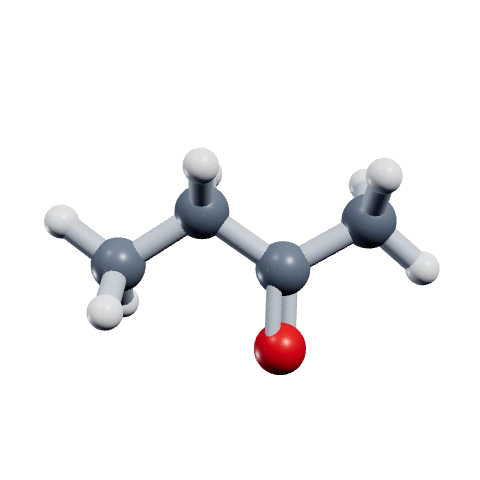


Every reel of recording tape ever made started as a brown slurry that smelled of ketone. The solvent was never meant to be heard. It was there to carry the oxide onto the film, hold the particles still while a magnet lined them up, and then leave. The story of how that slurry got onto the radio in 1948 runs through a singer who would not go live, an Army officer with two German machines in mail sacks, and a $50,000 check with nothing else in the envelope.
Why would Bing Crosby not broadcast live?
Bing Crosby refused to do his weekly network show live because a live show had to be performed twice, once for the East Coast and again for the West, and because he wanted to record, edit and be somewhere else on broadcast night. In the mid-1940s that was not how network radio worked. NBC would not allow it. The newly independent ABC, which needed a headline program after it was split off from NBC, would. The condition ABC set, according to the first-hand account of an engineer who later worked on Crosby's video-recorder team, was simple: he could pre-record, but the result had to sound as good as a live broadcast.
So the 1946-47 season of Philco Radio Time was recorded onto transcription discs, the lacquer-on-aluminum platters networks used for delayed broadcasts, edited by re-recording from disc to disc, and played back on air. It worked, and it did not work. Every generation of disc copying added surface noise, and the edits could be heard. The engineers around the show knew the sound was falling short of the condition ABC had set. The show that had been allowed to record because it would sound live was starting to sound recorded.
The problem was not the microphone or the performer. It was the storage medium. A disc stores sound as a physical groove, and every copy re-cuts the groove. What Crosby needed was a medium that could be copied and cut without audibly degrading. That medium already existed. It was just in Germany.
What came home from the war in mail sacks?
Two German Magnetophon tape recorders, shipped back to the United States in pieces over several months by John T. Mullin, a U.S. Army Signal Corps officer who had found them while investigating German electronics at the end of the war. Magnetic recording on steel wire and on paper tape had existed for decades, but the German machines recorded on a plastic tape coated with iron oxide and used a high-frequency bias technique that made the result sound, for the first time, like the original. Mullin rebuilt his two machines in California and demonstrated them to audio engineers in 1946 and 1947.
The demonstration reached Crosby's people in Hollywood, and Mullin was asked to make a test recording of the first show of the 1947-48 season. He had two recorders and a limited supply of German tape. The recording convinced the room. From that point the show was taped on Mullin's Magnetophons, edited by physically cutting and splicing the tape, and, because everyone worried the old German tape would break, transferred to transcription discs for the actual broadcast.
Two machines and a dwindling supply of captured tape are not a production system. The show needed American-built recorders and American-made tape, and it needed them before the next season. A small San Carlos company that had been making airborne motors and generators during the war, Ampex, had seen Mullin's machines and decided to build a broadcast recorder of its own.
What did the $50,000 check buy?

It bought the Ampex Model 200 into production. According to the first-hand account preserved by the Engineering and Technology History Wiki, Crosby's organisation, convinced that Ampex was the answer for the coming season, sent the company a check for $50,000 in an envelope with no cover letter. Ampex delivered the first two production Model 200 recorders in April 1948, in time to record and edit the remaining shows of the 1947-48 season. A 200 retailed at about $4,000, which was roughly the price of a house.
Tape had to follow the machines. Minnesota Mining and Manufacturing, 3M, had been making a black-oxide paper tape for a small consumer recorder, and it would not work on the German machine. 3M's research group developed a higher-output red-oxide tape on a plastic base for the new broadcast recorders, and by the 1948-49 season the show was on Ampex machines and 3M tape end to end, with no disc transfer at all. Network radio had quietly changed from a live medium to a recorded one, and within a few years the same company was working on recording television the same way.
The reel that came out of that season was a strip of plastic carrying a thin brown layer of iron oxide. Nobody on the broadcast ever thought about how the brown layer got there. That is the chemistry.
What is magnetic tape actually made of?
Magnetic tape is a plastic base film carrying a thin coating of magnetic particles, usually an iron oxide, held in a polymer binder. The particles do the recording, the binder holds them in place and gives the coating a smooth, tough surface that survives contact with the heads, and the base film carries the whole thing through the machine. The Society of Broadcast Engineers' handbook chapter on magnetic tape describes the standard construction: magnetic particles bound in a matrix of organic, polymeric binder, applied to the substrate from a dispersion in solvents.


Those three words, dispersion in solvents, are the reason a solvent company is telling this story. A dry powder of iron oxide cannot be spread on a film a few microns thick, and a binder resin cannot be spread on anything until it is dissolved. The recipe that makes tape possible is a liquid: oxide, binder, additives and a large volume of solvent, mixed until every particle is wetted and separated, coated on, and then dried until only the solids remain.
Ampex's own recipe is on the public record. A 1968 Ampex patent on magnetic recording media (US 3,404,997) gives the working dispersion by weight: 70 parts magnetic oxide, 7.3 parts carbon black, 13.1 parts additives, 12.1 parts methyl ethyl ketone and 48.3 parts toluene, with the binder added as resin solutions in the same toluene and MEK blend. The patent describes the total solvent blend as toluene to MEK at four to one, and it describes the last step of making the tape in five words: evaporating the solvent from the coated tape.
Why does tape need a solvent, and why MEK?
The solvent does four jobs in a tape dispersion, and MEK is chosen because it does two of them unusually well. The SBE handbook lists what a tape maker weighs when choosing solvents: chemical inertness, binder solubility and mix rheology, evaporation rate, availability, toxicity, ease of recovery, and cost. It then names the solvents that actually get used: tetrahydrofuran, methyl ethyl ketone, cyclohexanone, methyl isobutyl ketone and toluene. Four of those five are ketones or ethers, and the odd one out, toluene, is the diluent in the Ampex blend rather than the active solvent.
Job one: dissolve the binder
Tape binders of the Ampex era were vinyl chloride-vinyl acetate copolymers, sometimes cross-linked with urea-formaldehyde or, later, polyurethanes. A hydrocarbon like toluene swells these resins but dissolves them slowly and incompletely. A ketone dissolves them properly. MEK is a small, polar molecule with a carbonyl group that interacts strongly with the chlorine and acetate groups on the polymer chain, so a modest fraction of MEK in a mostly-toluene blend is enough to take the resin fully into solution. That is why the blend is four parts toluene to one part MEK rather than all toluene: the toluene is cheap volume, the MEK is the solvency.
Job two: control the drying
This is the part that makes tape different from paint. After the dispersion is coated onto the film, the wet coating passes through a magnetic field that lines the needle-shaped oxide particles up along the direction of tape travel. The particles have to be free to rotate while they are being aligned, and then they have to be locked in place before the coating dries, or they drift and the tape loses output. A blend of a fast solvent and a slow one does exactly that. MEK boils at 79.6 °C and has a vapor pressure of about 78 mmHg at 20 °C; toluene boils at 110.6 °C. The MEK flashes off first, the solids fraction of the coating jumps, and the viscosity climbs sharply, which freezes the oriented particles where they are. The toluene lingers, keeps the binder mobile long enough to relax the stresses that would otherwise crack or curl the coating, and leaves last.
The solvent blend is a timing device. The fast component, MEK, sets the moment the particles stop moving. The slow component, toluene, sets how gently the coating finishes drying. Change the ratio and you change the tape's output and its surface, which is why the 4:1 in the Ampex patent is a specification, not a suggestion.
Jobs three and four: rheology and recovery
The dispersion also has to be thin enough to coat evenly at speed and thick enough not to run, and the solvent sets that. And because a tape plant evaporates its entire solvent charge every shift, the solvent has to be worth recovering. Ketones condense cleanly from a dryer exhaust and can be distilled back to specification, which the SBE list captures under ease of recovery. That is an economic property as much as a chemical one, and it is one reason MEK stayed in the recipe for four decades after the Ampex 200.
Where does the solvent go?
It goes up the dryer stack, and for most of the history of tape it went into the air. When the U.S. EPA wrote its national emission standard for magnetic tape manufacturing under the Clean Air Act amendments of 1990, it listed the solvents the industry was releasing: methyl ethyl ketone, toluene, methyl isobutyl ketone, toluene diisocyanate, ethylene glycol, methanol, xylenes, ethyl benzene and acetaldehyde, and it noted that the solvents used to the greatest extent were MEK, toluene and MIBK. The standard forced capture and control of those emissions, which in practice meant the solvent-recovery systems that ketone chemistry had always made possible.
MEK's own regulatory status then changed. On 19 December 2005 EPA published a final rule removing methyl ethyl ketone from the Clean Air Act list of hazardous air pollutants (70 FR 75047), concluding after review that emissions of MEK from industrial sources could not reasonably be anticipated to cause the health or environmental effects the list is meant to address. Two things did not change. MEK is still a volatile organic compound for air-permitting purposes, because it is not on the exempt-VOC list in 40 CFR 51.100(s), and it is still an extremely flammable liquid. The delisting removed a label. It did not change the molecule.
Do not read the HAP delisting as a safety downgrade. A flash point of about -3 °C (26 °F) means MEK gives off an ignitable vapor at any temperature you will ever store it at, and the vapor is heavier than air. The exposure limits are unchanged: OSHA PEL 200 ppm as an 8-hour time-weighted average, NIOSH REL 200 ppm TWA and 300 ppm short-term, IDLH 3,000 ppm.
What does the tape story mean if you buy MEK today?
Nobody is buying MEK for reel-to-reel tape anymore, but the properties that put it in the Ampex recipe are exactly the properties people buy it for now: strong solvency for vinyl, acrylic and nitrocellulose resins, fast and clean evaporation, easy recovery, and a blend behaviour that lets a formulator set drying time by ratio rather than by chemistry. The same reasoning appears in vinyl and lacquer coatings, in adhesives, in printing inks, in cleaning and surface prep before painting, and in the solvent-welding of ABS and PVC, which our LEGO solvent-welding guide and 3D-print finishing guide cover in detail.
Three practical consequences follow from the chemistry above.
- Fast evaporation is the feature and the hazard. The property that locked the oxide particles in place is the property that fills a poorly ventilated room with vapor. Keep containers closed, bond and ground when transferring from drums, and use the vapor pressure, not the smell, to judge exposure. MEK's odor threshold is well below its exposure limits, so smelling it is not the same as being overexposed, but it is a reason to check ventilation.
- Blends are formulations. If a process specification calls for MEK and you substitute acetone because it is cheaper, you have changed the drying curve, not just the price. Acetone boils at 56 °C and leaves faster still, which can flash-dry a coating before it levels. Our MEK versus acetone comparison works through when the substitution is fine and when it is not.
- Grade follows the job. Coating and adhesive formulation, where water content and non-volatile residue change the result, is where the ACS Reagent Grade earns its price. Cleaning, thinning and surface preparation are Technical Grade work. Both are the same molecule; the difference is what the certificate promises about what else is in the can.
Methyl ethyl ketone: the numbers behind the story
Identity and physical data from PubChem (compound 6569), the U.S. National Library of Medicine's compound database, with NTP and USCG experimental values as recorded there. Transport classification from the U.S. hazardous materials table.
| Property | Value | Why it mattered on the coating line |
|---|---|---|
| IUPAC name / formula | butan-2-one, C4H8O, MW 72.11 | Small polar ketone: strong solvency for vinyl copolymer binders |
| CAS number | 78-93-3 | Same identity in every grade |
| Boiling point | 79.6 °C (175.3 °F) at 760 mmHg | About 31 °C below toluene: the fast half of the blend |
| Vapor pressure | 77.5 mmHg at 20 °C (68 °F) | Drives the early viscosity jump that locks oriented particles |
| Flash point | about -3 °C (26 °F) | Ignitable vapor at every practical storage temperature |
| Autoignition temperature | 516 °C (961 °F) | Dryer ovens run far below this, but sources of ignition must still be excluded |
| Density | 0.806 at 20 °C (floats on water) | Light, easily condensed and recovered from dryer exhaust |
| Water solubility | miscible in practical terms (over 100 mg/mL) | Picks up moisture from air; matters for reagent-grade work |
| Transport | UN1193, Class 3, Packing Group II | Flammable liquid, ground shipping |
| Exposure limits | OSHA PEL 200 ppm TWA; NIOSH REL 200 ppm TWA, 300 ppm ST; IDLH 3,000 ppm | Unchanged by the 2005 HAP delisting |
Extremely flammable liquid and vapor (H225). Store in closed, grounded containers away from heat and ignition sources, use in ventilated areas, and keep the SDS at hand. The GHS classification also carries serious eye irritation (H319) and drowsiness or dizziness from vapor (H336).
References & Authoritative Sources
Historical claims are drawn from a first-hand account preserved by the IEEE's history wiki and from the trade press; the tape recipe is quoted from the Ampex patent; chemical data from PubChem and NIOSH.
- First-Hand: Bing Crosby and the Recording Revolution — Engineering and Technology History Wiki (IEEE). Source for the ABC condition, the transcription-disc problem, Mullin's Magnetophons, the $50,000 check and 3M's tape development.
- 1948 Ampex Model 200A Tape Recorder — Mix magazine. First production units delivered April 1948; price about $4,000.
- US 3,404,997, Magnetic recording media — Ampex Corporation, granted 8 October 1968. Working dispersion by weight (oxide 70, carbon black 7.3, additives 13.1, MEK 12.1, toluene 48.3) and the 4:1 toluene to MEK solvent blend.
- Magnetic Tape (Chapter 8.3), Robert H. Perry — Society of Broadcast Engineers handbook. Tape construction, solvent-selection criteria and the list of solvents used in tape manufacture.
- Magnetic Tape Manufacturing Operations: NESHAP — U.S. Environmental Protection Agency. Solvents used in the industry; MEK, toluene and MIBK used to the greatest extent.
- List of Hazardous Air Pollutants: removal of methyl ethyl ketone, 70 FR 75047 — Federal Register, 19 December 2005.
- 40 CFR 51.100(s), definition of volatile organic compounds — Electronic Code of Federal Regulations. MEK is not among the exempt compounds.
- PubChem CID 6569: Methyl Ethyl Ketone (butan-2-one) — National Center for Biotechnology Information, U.S. National Library of Medicine. Identity, boiling point, flash point, vapor pressure, density, autoignition temperature.
- PubChem CID 1140: Toluene — boiling point 110.6 °C, used for the blend comparison.
- NIOSH Pocket Guide to Chemical Hazards: 2-Butanone — Centers for Disease Control and Prevention. OSHA PEL, NIOSH REL and IDLH values.
Methyl ethyl ketone, both grades, in stock
Technical Grade for cleaning, thinning, surface preparation and solvent welding. ACS Reagent Grade for formulation, analytical work and anywhere the certificate has to say what is not in the can. Quart to drum, from Taylor, Texas.
Frequently asked questions
Why did Bing Crosby refuse to broadcast live?
A live network show had to be performed twice for the two coasts and left no room to edit. NBC would not let him record; ABC would, on the condition that a recorded show sounded as good as a live one. Transcription discs failed that test and magnetic tape passed it, which is why his 1947-48 season moved to tape.
What was the first American tape recorder?
The Ampex Model 200, a broadcast reel-to-reel recorder developed after Jack Mullin demonstrated two German Magnetophons he had shipped home from the war. Ampex delivered the first two production units in April 1948, funded in part by a $50,000 check from Bing Crosby's organisation.
What is magnetic tape made of?
A plastic base film coated with magnetic particles, usually an iron oxide, held in a polymer binder. The coating is applied as a dispersion of oxide, binder and additives in solvent, oriented in a magnetic field while wet, and dried so only the solids remain.
Why was methyl ethyl ketone used to make magnetic tape?
It dissolves the vinyl copolymer binders properly, it evaporates quickly, and it is easy to recover. Ampex's own patent gives a working dispersion of 70 parts oxide, 12.1 parts MEK and 48.3 parts toluene by weight, about four to one toluene to MEK, with the fast-evaporating MEK setting the moment the oriented oxide particles lock in place.
Is MEK still a hazardous air pollutant?
No. EPA removed methyl ethyl ketone from the Clean Air Act hazardous air pollutant list on 19 December 2005 (70 FR 75047). It remains a volatile organic compound for air-permitting purposes because it is not on the exempt list in 40 CFR 51.100(s), and it remains an extremely flammable liquid.
What is the flash point and boiling point of MEK?
About -3 °C (26 °F) flash point and 79.6 °C (175.3 °F) boiling point at atmospheric pressure, per the experimental values recorded in PubChem. The vapor is heavier than air and the liquid floats on water.
What is the difference between Technical Grade and ACS Reagent Grade MEK?
The molecule is the same. ACS Reagent Grade is certified against the American Chemical Society specification for water content and non-volatile residue and carries a lot-specific certificate of analysis, which matters in formulation and analytical work. Technical Grade is the right choice for cleaning, thinning, surface preparation and solvent welding.
Do you provide a Certificate of Analysis with MEK?
Yes. Ask and we will send the lot-specific certificate of analysis at no charge. A safety data sheet ships with every order.
Related Chemical Collections
About the author
Andre Taki
This article is for informational purposes only.


