Product Overview
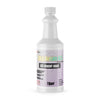
Alliance Chemical offers premium Ethyl Acetate ACS, a high-purity solvent characterized by its clear, colorless appearance and its distinctive fruity, pineapple-like odor. This volatile organic compound has the chemical formula C4H8O2 and a molecular weight of 88.11 — making it a highly effective and versatile solvent in multiple industrial processes, which you can browse in our esters collection. As a direct Texas chemical supplier, we deliver this product in multiple packaging configurations, ranging from quart bottles up to one-gallon cases. This ensures that industrial clients can procure the exact volume required for their chemical operations without unnecessary overhead or supply constraints.
Due to its moderate polarity and low toxicity compared to chlorinated solvents, Ethyl Acetate ACS serves as a primary vehicle in various extraction, dilution, and formulation processes. Its rapid evaporation rate and clean drying characteristics make it highly favored in the coatings and adhesives sectors, where precise solvent evaporation profiles are necessary to achieve optimal film formation. Whether utilized as a process solvent in laboratory settings or in bulk industrial formulation, our ethyl acetate provides reliable performance, stability, and chemical consistency across all batches, facilitating predictable outcomes in every application.
Why This Grade
Selecting the ACS grade of ethyl acetate is critical for industrial applications where strict purity criteria must be maintained to prevent chemical interference. This grade is manufactured to comply with the American Chemical Society specifications, which strictly limit trace metal impurities, free acid content, and water contamination. In sensitive analytical and synthetic chemical reactions, even minute concentrations of free acids or water can degrade reactant stability, deactivate catalysts, or shift reaction equilibria. By sourcing ACS grade, users ensure that their processes remain free from these critical failure modes.
Using a lower technical grade in place of ACS-specified solvent can introduce unwanted residue and moisture, leading to poor adhesion in polymer formulations or phase separation in complex solvent mixtures. Water contamination in non-polar mixtures can cause turbidity or precipitate active ingredients, which compromises the quality of the final product. For high-precision chromatography, synthetic processes, and standard reference preparations, the ACS grade is indispensable for maintaining analytical repeatability and process integrity. Relying on lower purity grades often results in product failure, requiring costly rework and process downtime.
Chemical Profile
- CAS Number
- 141-78-6
- Chemical Formula
- C4H8O2
- Molecular Weight
- 88.11 g/mol
- Boiling Point
- 171 °F at 760 mmHg (NTP, 1992)
- Melting Point
- -118.5 °F (NTP, 1992)
- Flash Point
- 24 °F (NTP, 1992)
- Specific Gravity
- 0.902 at 68 °F (USCG, 1999) - Less dense than water; will float
- Appearance
- Ethyl acetate appears as a clear colorless liquid with a fruity odor. Flash point 24 °F. Less dense than water. Vapors heavier than air.
- Solubility
- 50 to 100 mg/mL at 70 °F (NTP, 1992)
- UN Number
- UN1173
- Hazard Class
- Class 3
- Packing Group
- II
- Proper Shipping Name
- Ethyl acetate
- GHS Signal Word
- Danger
Values sourced from Alliance Chemical's canonical chemistry registry. Certificate of Analysis (COA) per lot.
Industrial Applications
- Formulation of high-performance surface coatings, lacquers, and varnishes where its rapid evaporation rate allows for quick, uniform drying and smooth finish characteristics.
- Industrial adhesive manufacturing, serving as a powerful solvent that dissolves polymers and resins to ensure optimal viscosity, bond strength, and shelf life.
- Process solvent in organic synthesis and laboratory extractions, where its moderate polarity makes it ideal for separating organic compounds from aqueous phases.
- Diluent and carrier solvent in the production of printing inks and packaging materials, facilitating proper ink transfer and clean, residue-free drying.
- Equipment maintenance and industrial surface cleaning, effectively dissolving grease, oils, and resinous residues from precision metal parts and application tools.
Hazmat & Shipping
Ethyl Acetate ACS is classified as a hazardous material for transport and is fully regulated under Department of Transportation regulations. This chemical is shipped under the identifier UN1173, with a Hazard Class 3 indicating it is a highly flammable liquid. It is assigned to Packing Group II, representing a medium danger level, and carries the proper shipping name Ethyl acetate. The designated signal word for this substance is Danger, reflecting its physical and health hazards. Alliance Chemical ensures all packaging, labeling, and documentation comply strictly with DOT and international shipping standards for hazardous materials.
In accordance with its GHS hazard classifications, including the hazard statements H225 (highly flammable liquid and vapor) and H319 (causes serious eye irritation), appropriate personal protective equipment must be worn during handling. Personnel should utilize chemical splash goggles, flame-resistant clothing, and organic vapor respirators when handling open containers. The hazard statement H336 indicates that vapor exposure may cause drowsiness or dizziness, requiring adequate local exhaust ventilation in all work areas. To protect skin from potential irritation or defatting, which is associated with statement EUH066, wear solvent-resistant gloves such as butyl or nitrile rubber during transfer operations.
Handling & Storage
Safe handling of Ethyl Acetate ACS requires storage in a cool, dry, and well-ventilated facility, ideally away from direct sunlight and at temperatures below 86 °F. Because it is highly flammable, all ignition sources, including open flames, sparks, and static electricity, must be strictly eliminated. Grounding and bonding of all transfer equipment is necessary to prevent static discharge. The solvent is compatible with stainless steel, aluminum, and high-density polyethylene (HDPE) containers, but it will degrade many common plastics and rubbers. Avoid contact with incompatible materials, such as strong oxidizing agents, strong acids, and strong bases, to prevent hazardous chemical reactions.
Order & Documentation
As a professional industrial chemical distributor, Alliance Chemical provides full technical support for our chemical inventory. A Certificate of Analysis (COA) is available upon request for all product lots, and a Safety Data Sheet (SDS) is provided with every order to ensure safe workplace integration and regulatory compliance. For pricing on bulk quantities or special packaging, you can Request a Quote or Order Online directly from our distribution facility. You can also Download the SDS for your safety documentation files.
Why Buy from Alliance Chemical
Since 1997, Alliance Chemical has supplied premium industrial chemicals from Taylor, Texas under CAGE Code 1LT50, with a COA and SDS included on every order. For industrial use only.