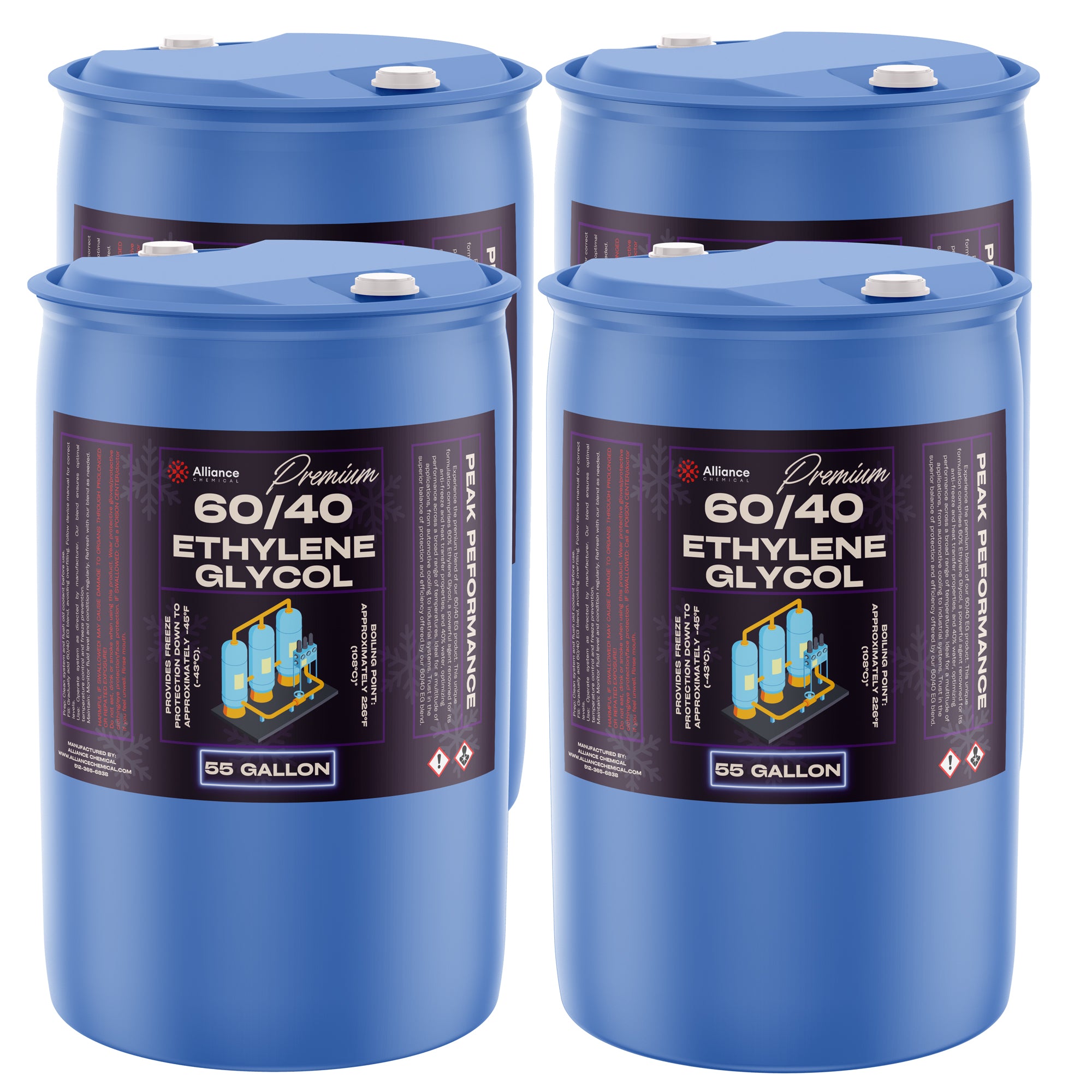
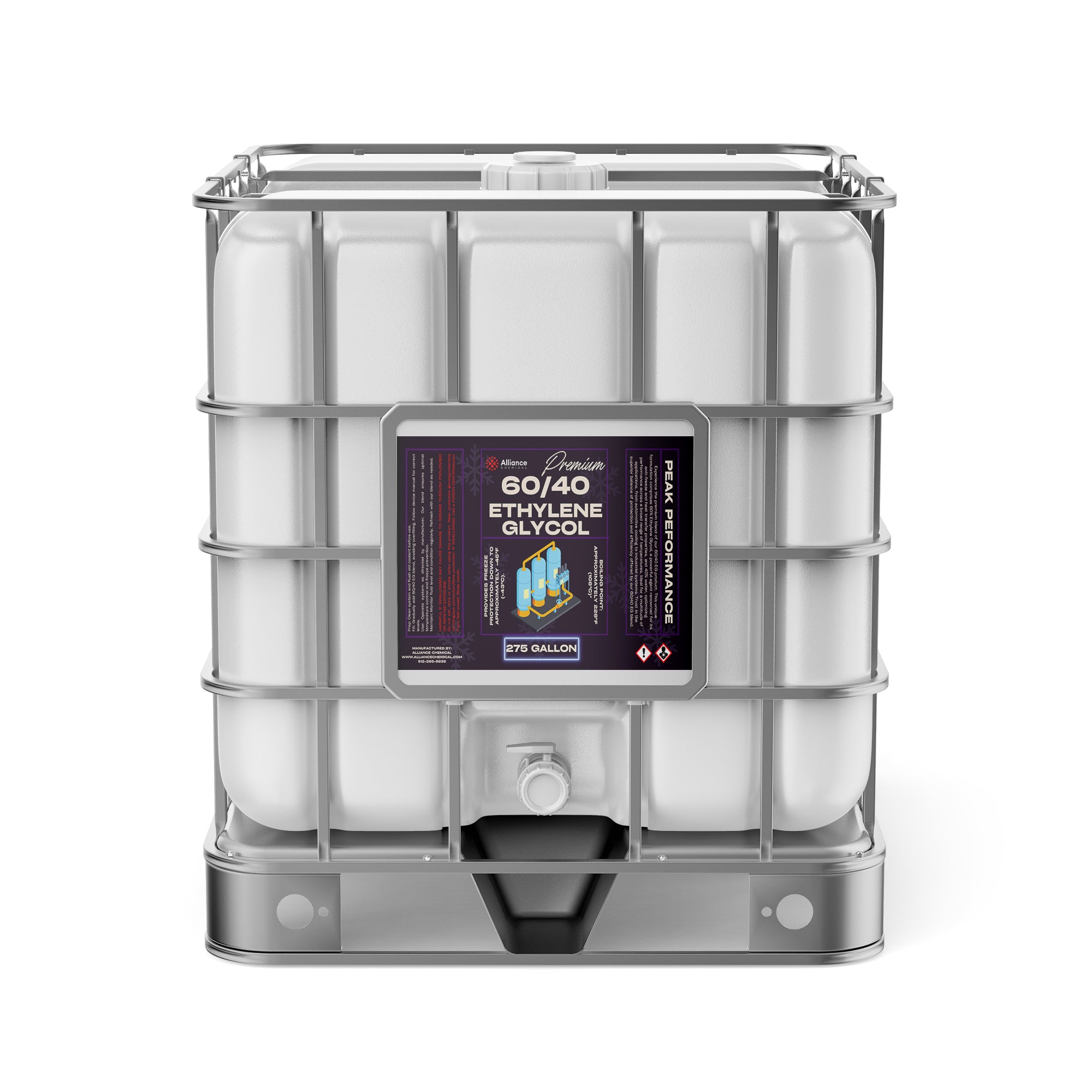
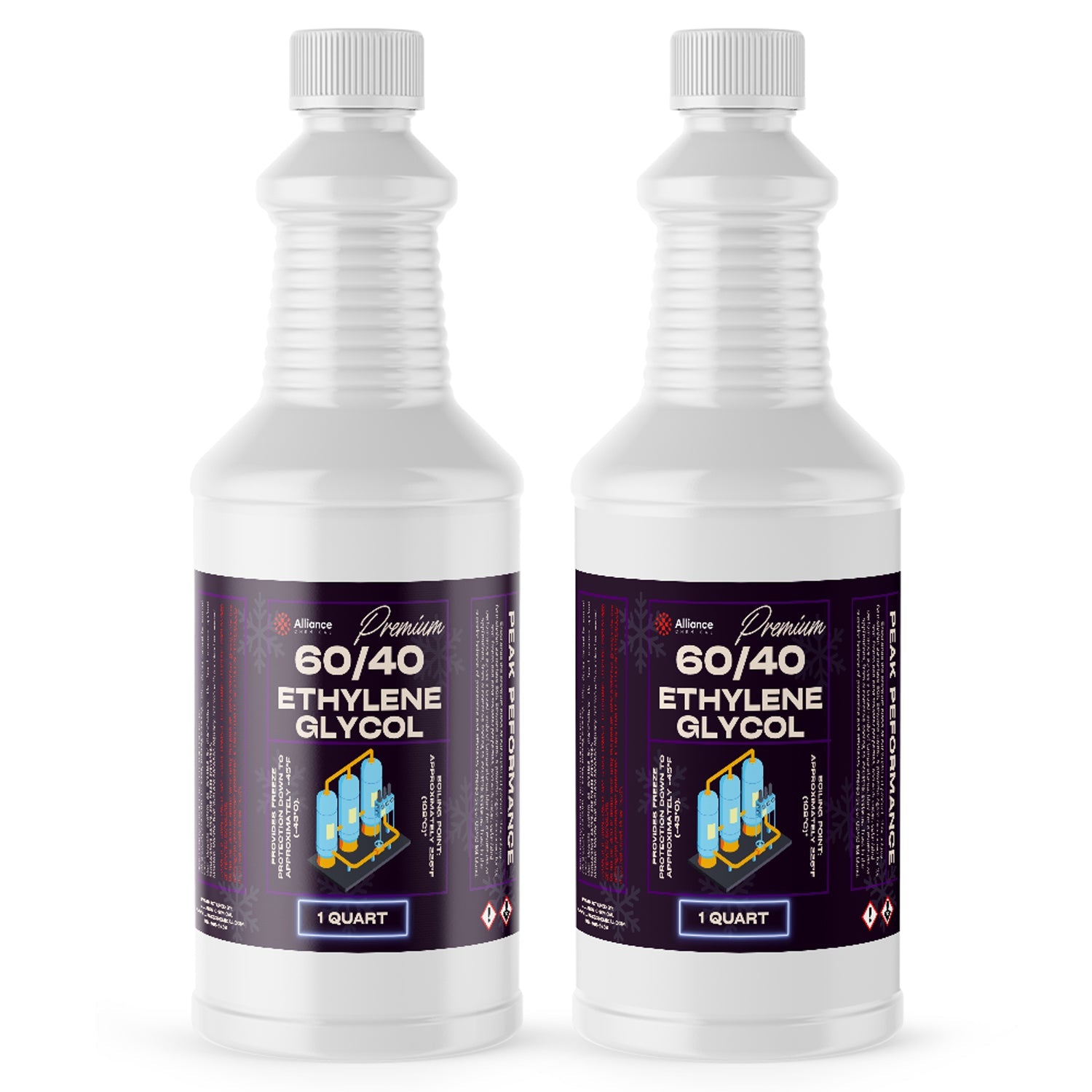
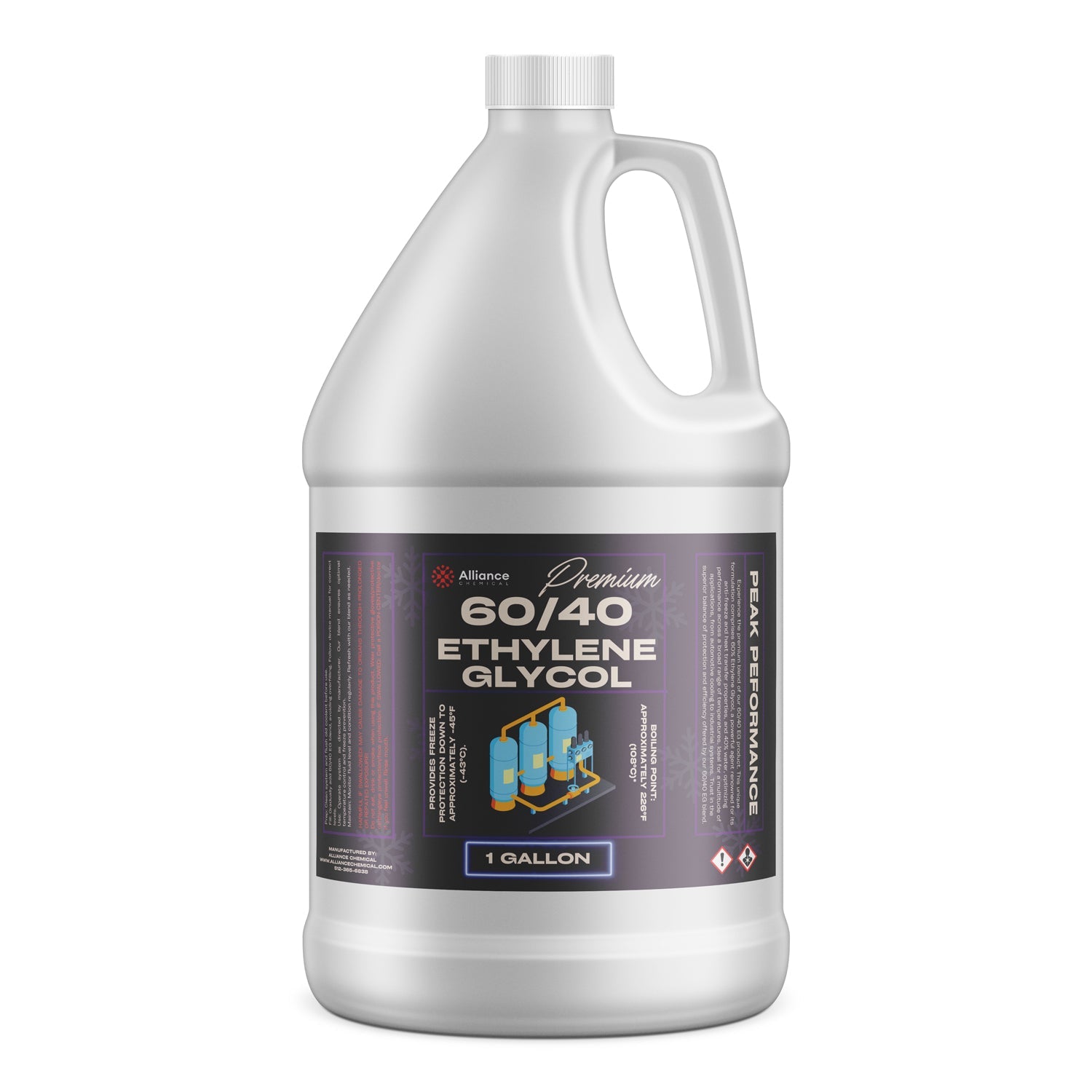
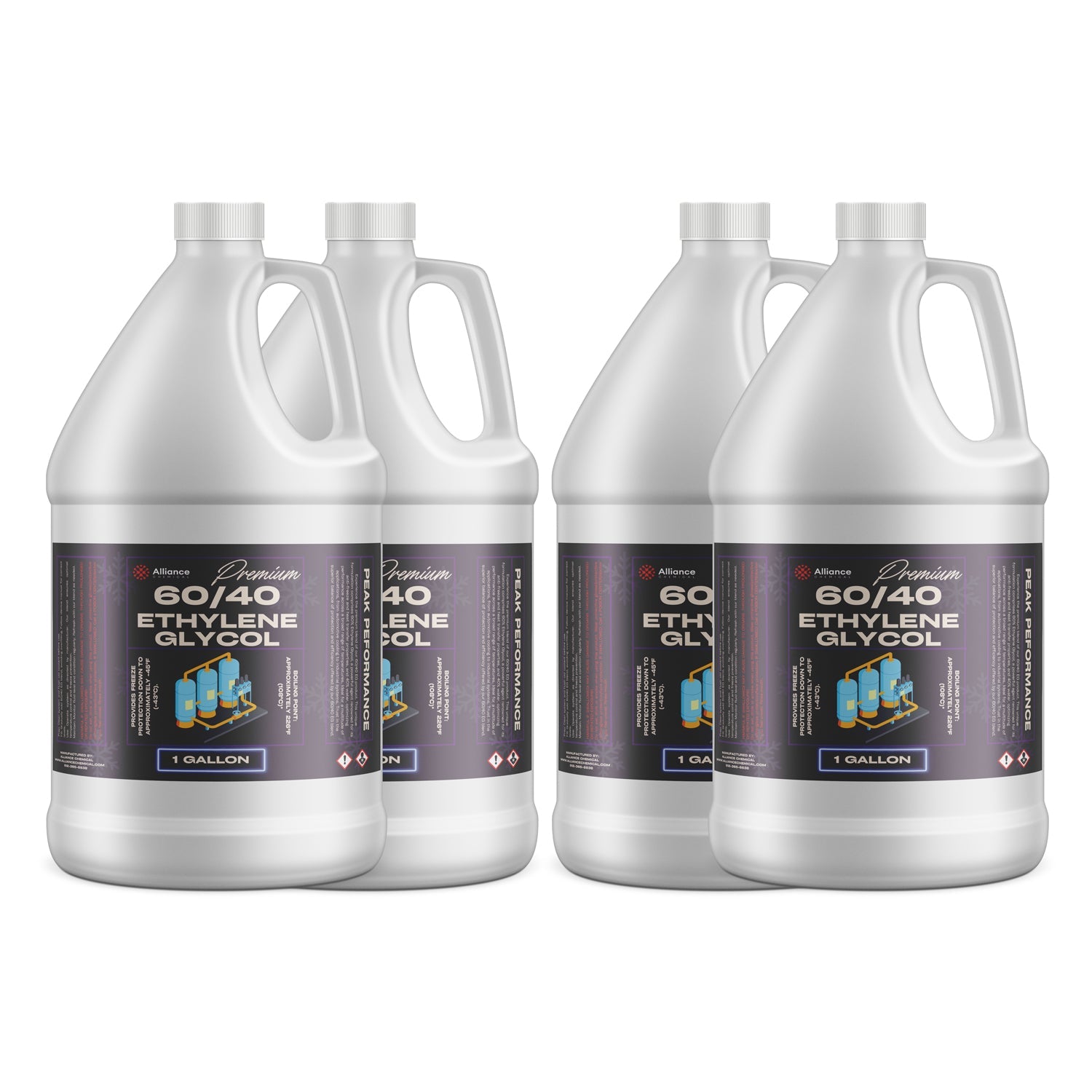
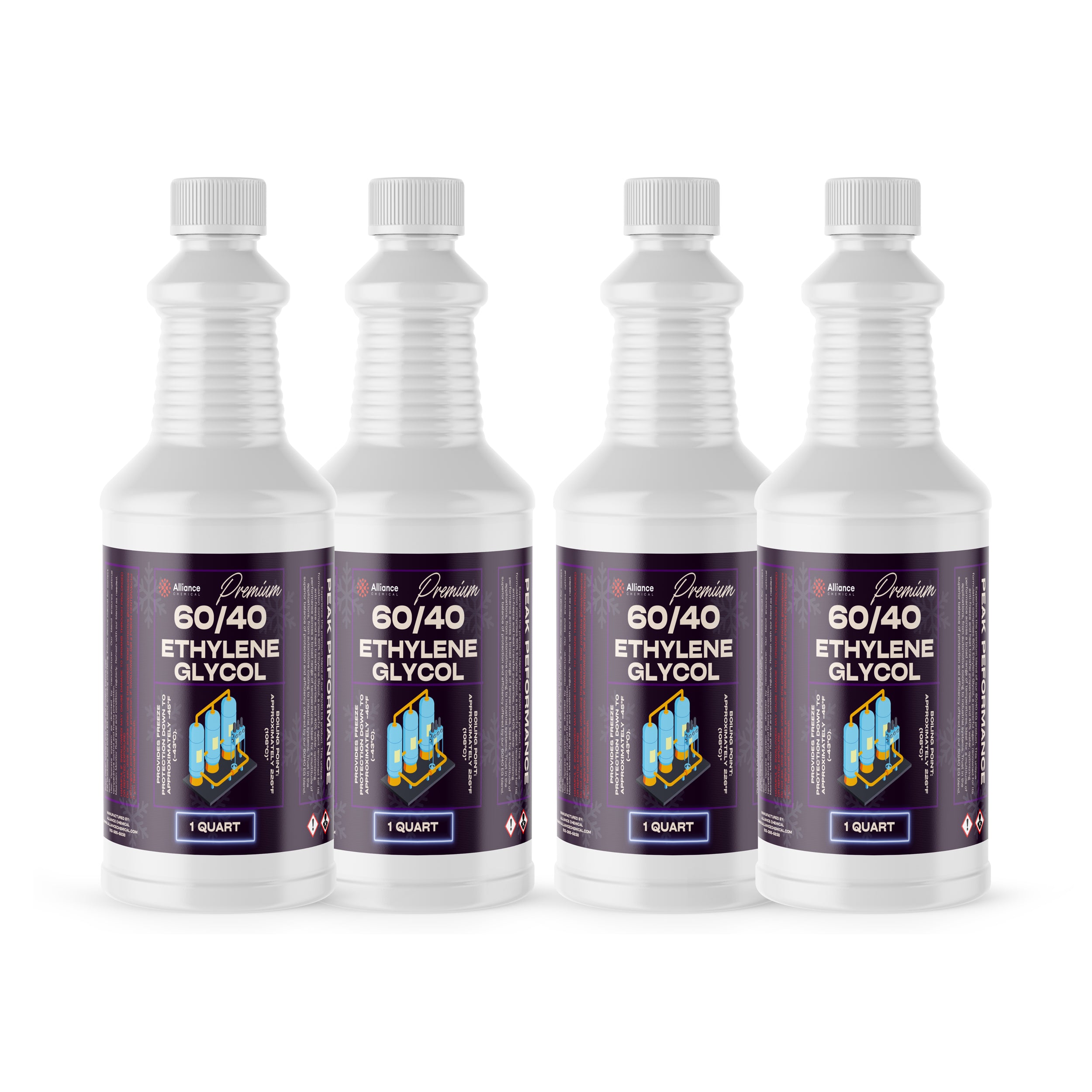
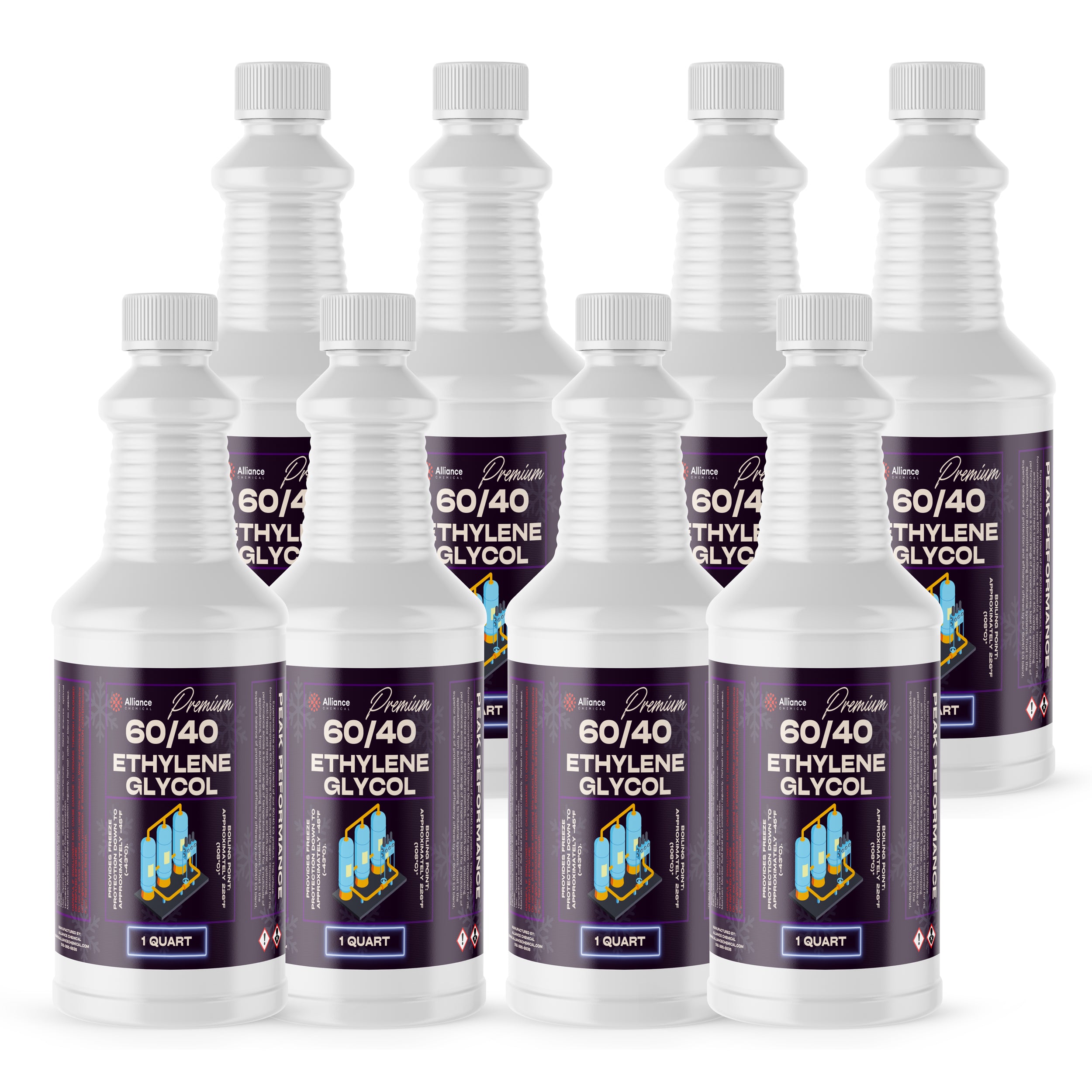
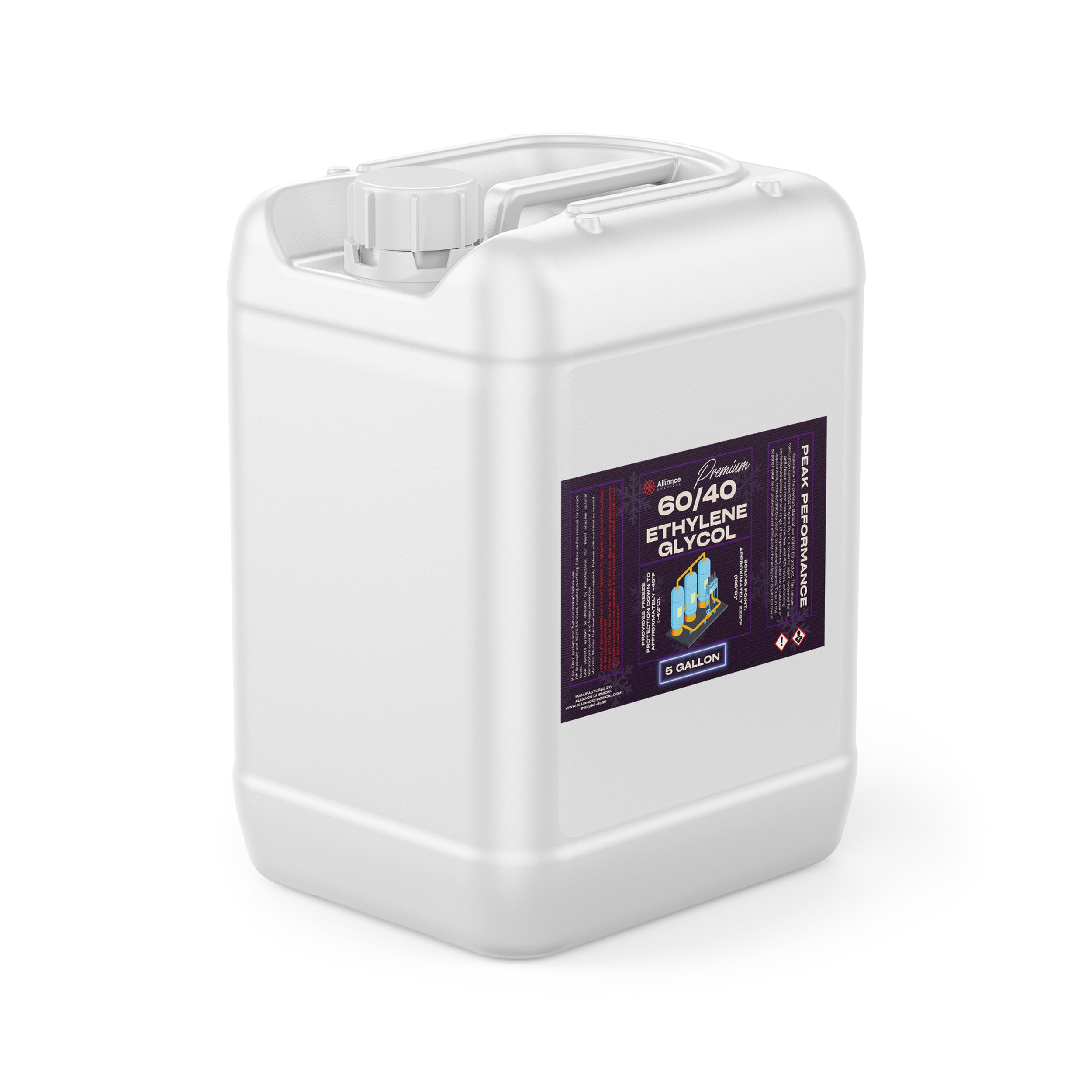
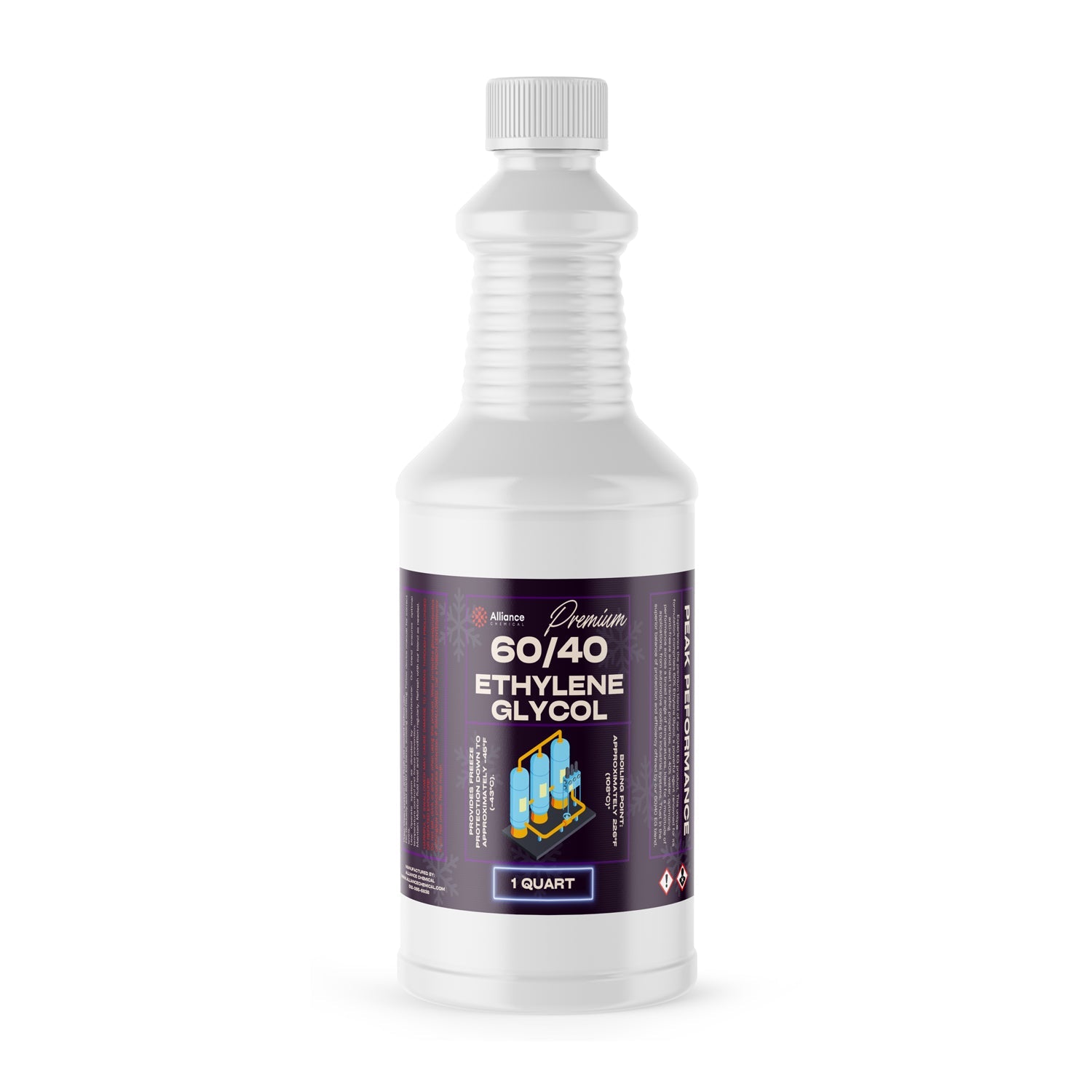
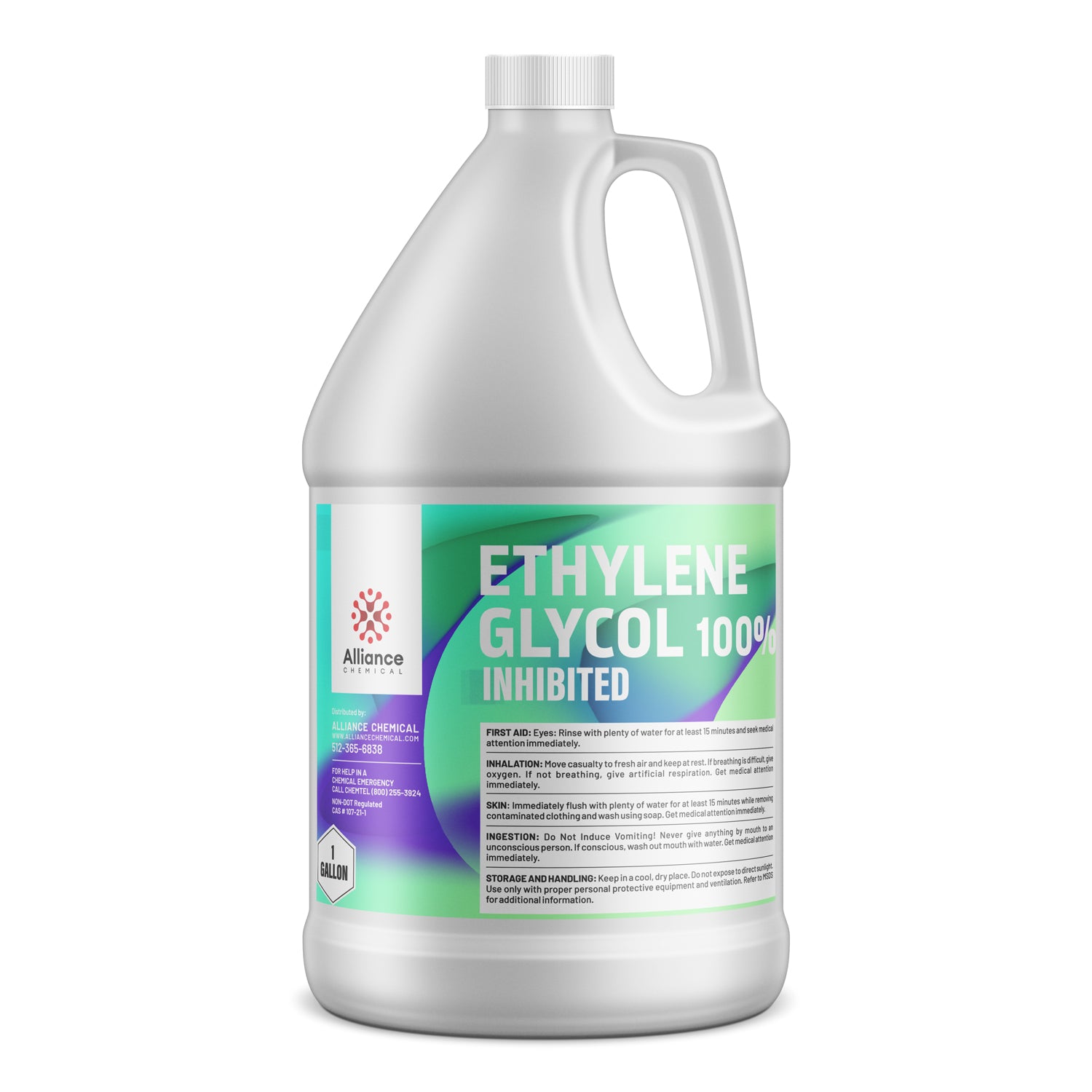
Ethylene Glycol 60/40

Category : Glycols

$22.00
Quantity
Size:
Variation:
  • $22.00
    Delivery every
    $20.90
  • $36.00
    Delivery every
    $34.20
  • $55.00
    Delivery every
    $52.25
  • $78.00
    Delivery every
    $74.10
  • $45.00
    Delivery every
    $42.75
  • $80.00
    Delivery every
    $76.00
  • $130.00
    Delivery every
    $123.50
  • $4,000.00
    Delivery every
    $3,800.00
  • $130.00
    Delivery every
    $123.50
  • $470.00
    Delivery every
    $446.50
  • $3,800.00
    Delivery every
    $3,610.00
  • $350.00
    Delivery every
    $332.50
  • $795.00
    Delivery every
    $755.25
  • $3,000.00
    Delivery every
    $2,850.00
  • $3,700.00
    Delivery every
    $3,515.00
  • $4,440.00
    Delivery every
    $4,218.00
Other Grades & Concentrations

Available in other grades and concentrations:

Ethylene Glycol Semiconductor Grade
From $15.52
CAS: 107-21-1 C2H6O2
Ethylene Glycol Inhibited ACS Grade
From $26.00
CAS: 107-21-1 C2H6O2
Ethylene Glycol ACS Grade
From $22.94
CAS: 107-21-1 C2H6O2
100% Ethylene Glycol Inhibited
From $23.50
CAS: 107-21-1 C2H6O2
$22.00
Other Grades & Concentrations

Available in other grades and concentrations:

Ethylene Glycol Semiconductor Grade
From $15.52
CAS: 107-21-1 C2H6O2
Ethylene Glycol Inhibited ACS Grade
From $26.00
CAS: 107-21-1 C2H6O2
Ethylene Glycol ACS Grade
From $22.94
CAS: 107-21-1 C2H6O2
100% Ethylene Glycol Inhibited
From $23.50
CAS: 107-21-1 C2H6O2

Ethylene Glycol 60/40

$22.00

Quick Answer

What is Ethylene Glycol 60/40 used for, and what should buyers verify before ordering?

Ethylene Glycol 60/40 is supplied at 60-62% in Technical grade with UN 3082, DOT Class 9 . Buyers should confirm pack size, grade, SDS, COA needs, and freight requirements before purchase.

  • Assay: 60-62%
  • Grade: Technical
  • UN number: UN 3082
  • DOT class: 9
  • Documents: SDS and lot-specific COA support
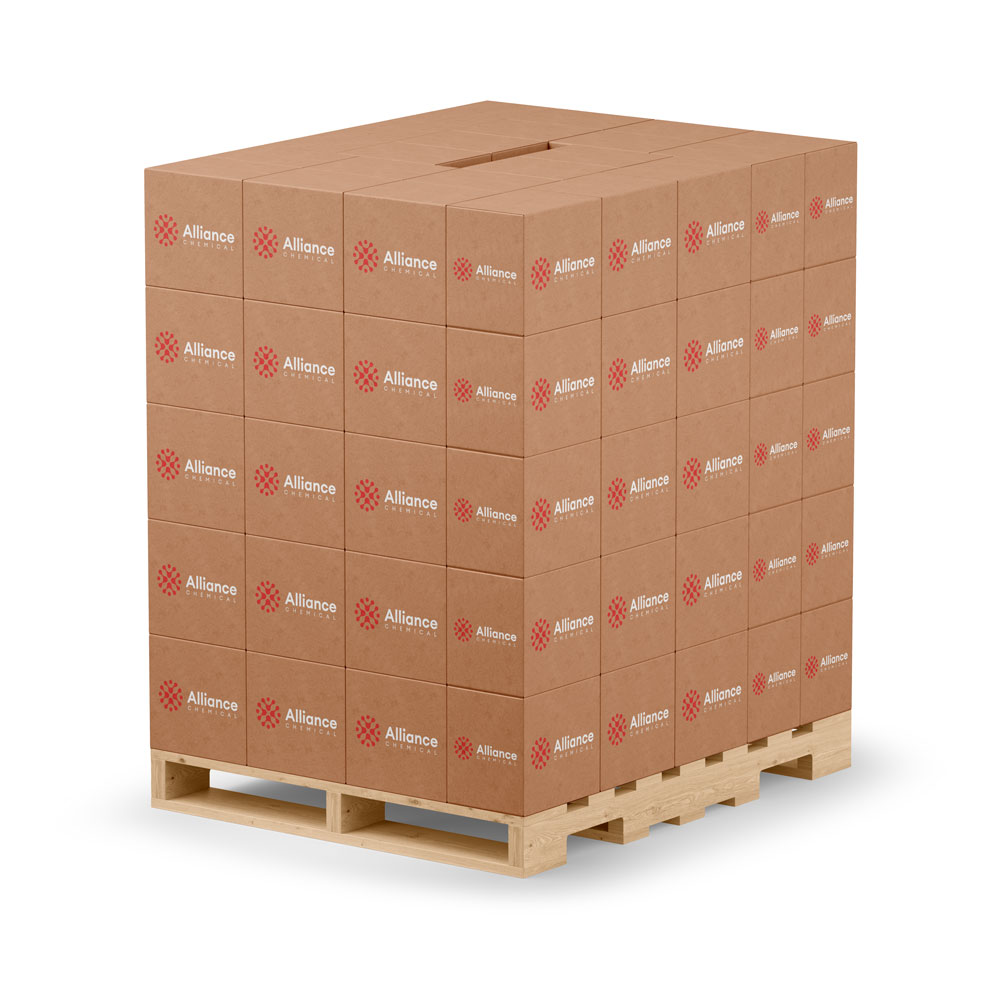
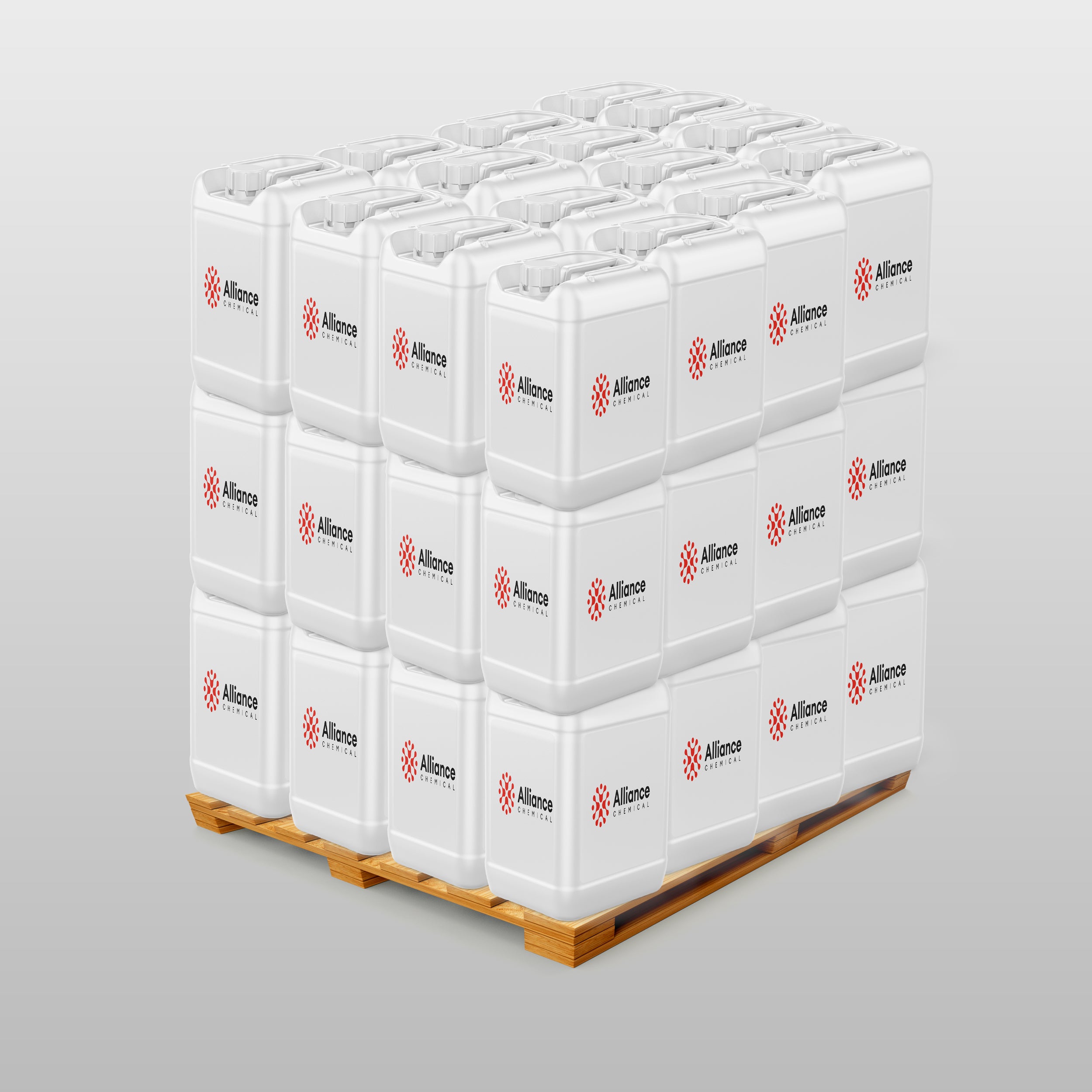
  • Shipping: UPS for small packs; LTL/FTL for pails, drums, totes, and bulk orders

Commercial Fulfillment Snapshot

Buy Ethylene Glycol 60/40 with faster decisions and fewer back-and-forth emails.

Ships from Taylor, Texas. In-stock orders placed before 1:00 PM CT (Mon-Thu) and before 12:00 PM CT (Fri) typically ship same business day. Order online 24/7.

Technical Documents

Lot-specific COA is issued per shipment batch.

Who Buys This
  • Automotive cooling system services
  • Industrial heat transfer operations
  • Aviation de-icing contractors
  • Chemical manufacturing facilities
  • Personal care product formulators
Purity / Grade Guide
  • Industrial & lab applications
  • COA-verified product quality ready-to-use
  • Verified purity, COA included
  • Suitable for commercial processes
Pack Sizes
  • 1 Quart: lab & small jobs
  • 1 Gallon: shop & maintenance
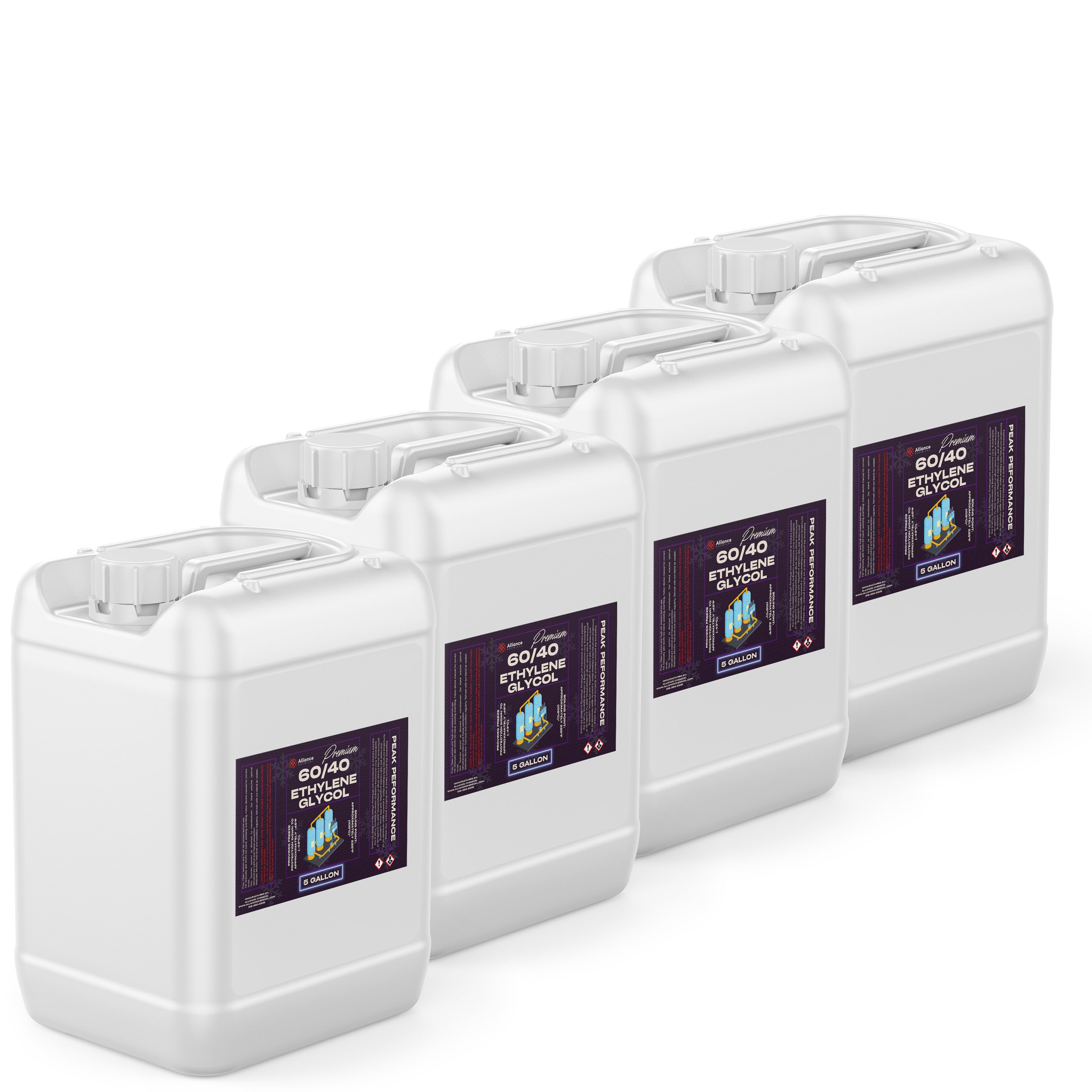
  • 5 Gallon: production & regular use
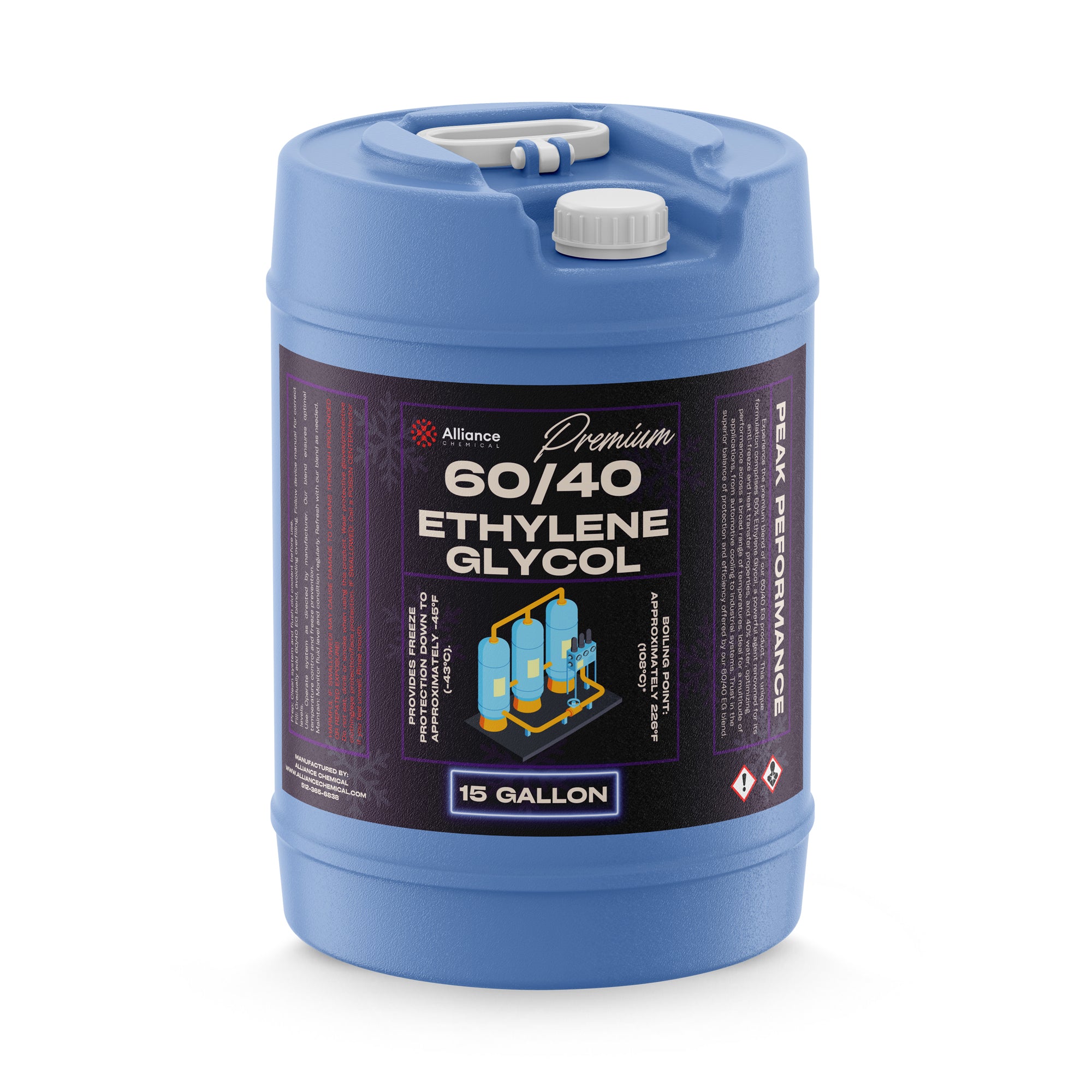
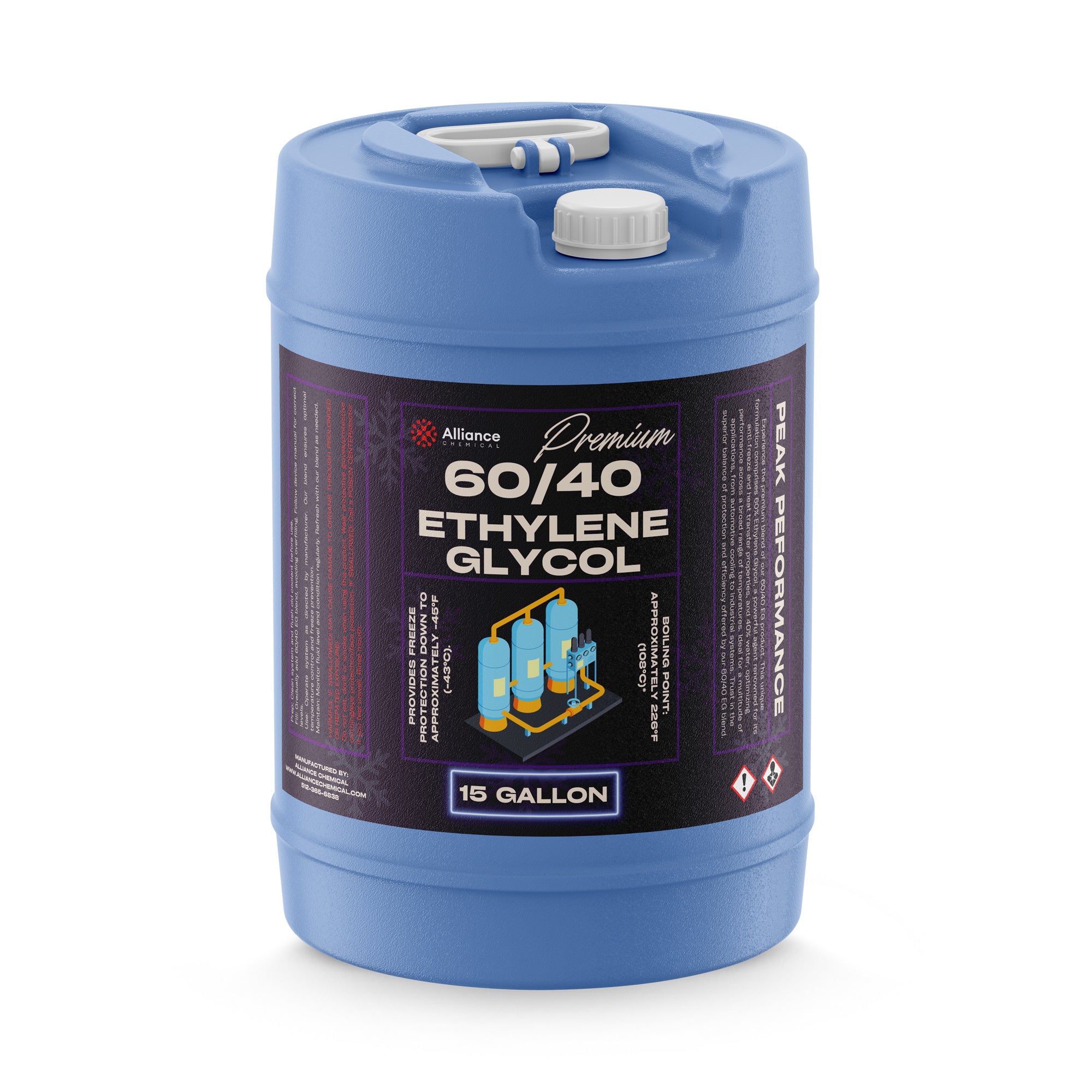
  • 15 Gallon: mid-volume operations
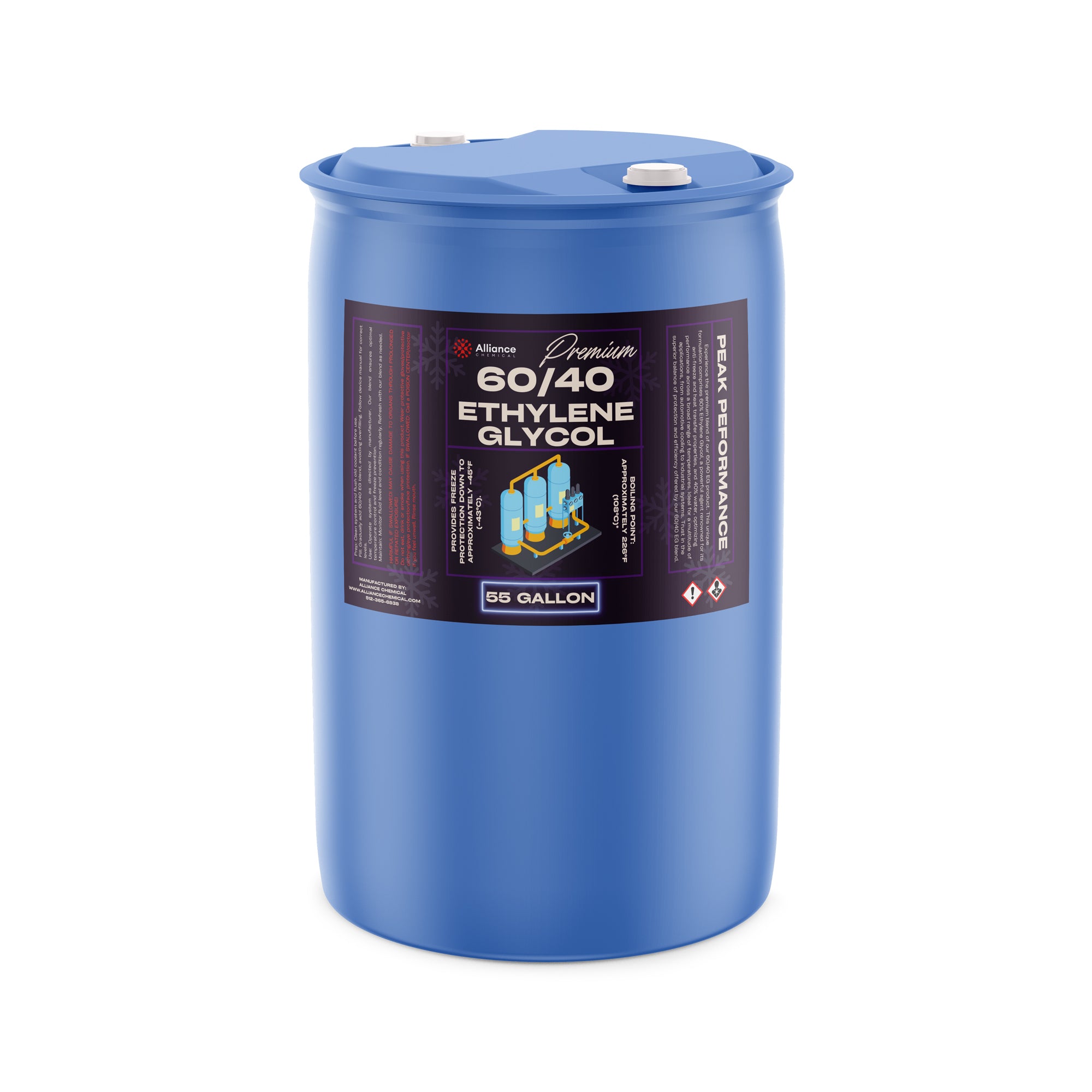
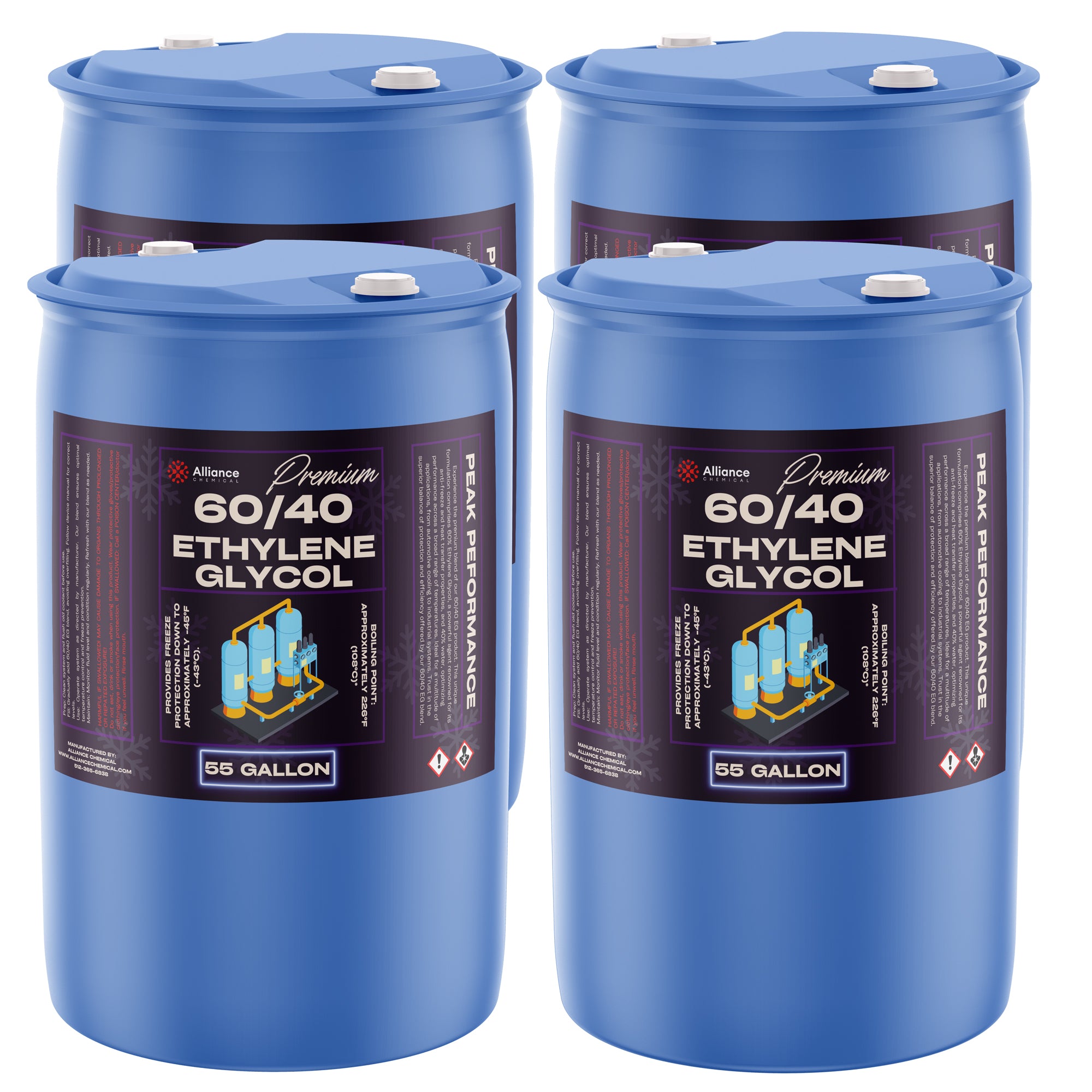
  • 55 Gallon: bulk drum
  • 275 Gallon: high-volume tote
  • 330 Gallon: max-volume tote
SDS / COA / TDS
  • UN 3082 Class 9 packaging
  • Complete SDS with every order
  • COA showing COA-verified product quality
  • Environmental hazmat documentation
Small Packs: UPS Ground nationwide for pints, quarts, and gallons.
LTL / FTL: ABF, SEFL, Saia, XPO, and partner carriers for pails, drums, totes, and full truckloads.
Support: Email or call for freight options, hazardous-material routing, and lead-time confirmation.

Why Ethylene Glycol 60/40

Ethylene Glycol 60/40 delivers near-maximum freeze point depression for water-based closed-loop infrastructure, defending critical systems from severe freezing in extreme industrial climates. Represented by the chemical formula C2H6O2 and CAS 107-21-1, this colorless, viscous liquid offers an exact 60 percent active concentration. This specific ratio pushes the freeze point down to approximately -60°F, representing the thermodynamic sweet spot before the freeze protection curve begins to rise again at higher concentrations. By sourcing a pre-mixed 60/40 solution, facility engineers maintain strict viscosity and heat transfer tolerances without the operational variables introduced by manual on-site dilution.Operators depend on this uninhibited blend to maintain reliable liquid state flow, preventing catastrophic pipe expansion and equipment failure during harsh winter cycles.

Best Applications for This Grade

  • Commonly applied in large-scale industrial HVAC closed-loop chillers operating in northern climates, where maintaining fluid mobility at extreme sub-zero temperatures is critical to continuous plant operations.
  • Commonly applied in heavy-duty diesel engines and stationary generator cooling systems. The precise 60 percent glycol fraction prevents engine block cracking during winter dormancy while supporting adequate heat dissipation during active combustion.
  • Commonly applied in exterior hydronic snow melting systems installed beneath industrial loading docks or concrete driveways, where maximum burst protection dictates fluid selection over less toxic biological alternatives.
  • Commonly applied in non-food process heating loops requiring a stable, thermally conductive medium that resists phase change under rapid temperature cycling and high operational demands.

When to Choose a Different Grade

  • If the facility operates in a moderate climate zone where extreme sub-zero protection is unnecessary, choose Ethylene Glycol 30/70 or Ethylene Glycol 50/50. Lower concentrations provide a higher specific heat capacity, allowing the fluid to absorb and release thermal energy more efficiently.
  • If the plumbing network features exposed cast iron, copper, or steel components requiring active chemical defense against oxidation and scaling, select 100% Ethylene Glycol Inhibited and dilute to the target ratio.
  • If the laboratory environment requires a pure reagent supporting standardized testing procedures or highly regulated chemical synthesis, choose Ethylene Glycol ACS Grade.
  • If the end product involves microchip fabrication or printed circuit board manufacturing where microscopic trace metals cause defects, select Ethylene Glycol Semiconductor Grade.
Property Value
Molecular Weight 62.07
Formula C2H6O2
Assay 60-62%
Grade Technical
Form Liquid
Solubility Miscible in water
Appearance Colorless, viscous liquid
Melting Point -12.9
Boiling Point 197.3
Specific Gravity 1.115
Industry Automotive, Industrial, Aviation, Chemical Manufacturing, Cosmetics

Frequently Asked Questions About Ethylene Glycol 60/40

What is Ethylene Glycol 60/40 and what is its chemical formula?
Ethylene Glycol 60/40 is a chemical compound with the molecular formula C2H6O2, registered under CAS Number 107-21-1 by the Chemical Abstracts Service (PubChem), with a molecular weight of 62.07 g/mol. Alliance Chemical supplies Ethylene Glycol 60/40 in Technical grade for laboratory, industrial, and commercial applications.
What are the physical properties of Ethylene Glycol 60/40?
According to the NIOSH Pocket Guide to Chemical Hazards, Ethylene Glycol 60/40 is supplied as a colorless, viscous liquid. It has a melting point of -13°C (8.6°F)°C, a boiling point of 197°C (386.6°F)°C. The specific gravity is 1.08 relative to water. Solubility: Soluble in water and alcohols.
What grade and purity of Ethylene Glycol 60/40 does Alliance Chemical offer?
Alliance Chemical offers Ethylene Glycol 60/40 in Technical grade with a purity assay of 60%. Every lot ships with a Certificate of Analysis (COA) and Safety Data Sheet (SDS) prepared in accordance with OSHA Hazard Communication Standard 29 CFR 1910.1200 and GHS Revision 7. Download SDS.
What are common industrial applications of Ethylene Glycol 60/40?
Ethylene Glycol 60/40 serves a wide range of sectors, including Industrial & Manufacturing.Alliance Chemical provides the documentation and quality certifications required for use in regulated environments.
What PPE is required when handling Ethylene Glycol 60/40?
OSHA-mandated PPE per 29 CFR 1910.132-138:Chemical-resistant gloves (nitrile/neoprene), safety goggles, lab coat, closed-toe chemical-resistant footwear. Emergency eyewash station and safety shower must be accessible within 10 seconds per ANSI Z358.1. Consult the SDS available from Alliance Chemical for complete PPE requirements.
What are the storage requirements for Ethylene Glycol 60/40?
Store perOSHA standards: Cool, dry, ventilated area. Temperature range:15-25°C. Segregate from:incompatible materials per SDS Section 10. Maximum storage:2-3 years unopened.
What is the emergency spill procedure for Ethylene Glycol 60/40?
Emergency response per EPA SPCC (40 CFR 112) and OSHA 29 CFR 1910.120: (1) Alert personnel, evacuate area to 50 feet. (2) Eliminate ignition sources if flammable. (3) Don PPE per SDS Section 8. (4) Stop leak if safe; use emergency shutoffs. (5) Contain with non-combustible absorbent materials, dike with sand/earth. (6)Absorb with vermiculite or commercial spill kits. (7) Collect in DOT-approved containers, label as hazardous waste. Check 40 CFR 302.4 for Reportable Quantity. Emergency: Chemtel 1-800-255-3924 (24/7). Non-emergency: Alliance Chemical 512-365-6838.
What is the DOT shipping classification for Ethylene Glycol 60/40?
DOT Classification per 49 CFR 172.101:UNUN3082, Hazard Class9, Packing GroupIII. Requires: Hazmat shipping papers (49 CFR 172.200), UN specification packaging (49 CFR 173), hazmat labels (172.400). Alliance Chemical ships all orders in DOT-compliant packaging with proper documentation.
How must Ethylene Glycol 60/40 waste be disposed?
Disposal per RCRA (40 CFR 261-265):Evaluate per 40 CFR 261. Generator requirements: EPA ID number required if >100 kg/month (40 CFR 262.12). Use EPA-permitted Treatment, Storage, Disposal Facility (TSDF). Never discharge to sewer without POTW written approval (40 CFR 403). Container disposal: Triple rinse (40 CFR 261.7), offer for reconditioning/recycling. State regulations may be more stringent — check with your local environmental agency. Consult the Alliance Chemical SDS for product-specific disposal guidance.
Does Alliance Chemical provide an SDS and COA for Ethylene Glycol 60/40?
Yes. Alliance Chemical provides a Safety Data Sheet (SDS) and Certificate of Analysis (COA) for every lot of Ethylene Glycol 60/40. The SDS is prepared in accordance with OSHA Hazard Communication Standard 29 CFR 1910.1200 and the Globally Harmonized System (GHS) Revision 7, covering all 16 required sections including hazard identification, first aid measures, firefighting measures, handling and storage, exposure controls, and regulatory information. The SDS is available for download directly from this product page. COAs are available upon request by contacting Alliance Chemical at 512-365-6838.