

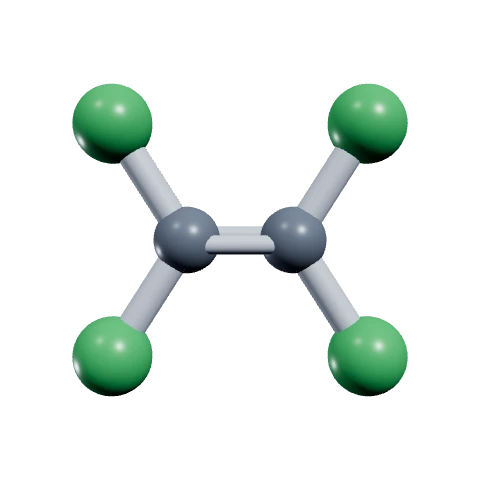


On 15 September 2026 a three-judge panel of the Fifth Circuit threw out EPA’s rule for methylene chloride, the paint-stripping solvent the agency had moved to ban for almost every use. The ruling was about methylene chloride. The reasoning was not. It goes to two choices EPA made in 2022 for a group of solvents at once, and one of them is perchloroethylene, the chlorinated solvent better known as PCE or perc.
The PCE rule is under challenge in the same circuit. That case was put on hold in March 2025 while EPA rewrites the rule, and the last reported order, in June 2026, extended the hold. A rewrite was already coming; what the court has now done is narrow the space EPA has to write in. This article sets out what the court decided, where the PCE record matches the record the court rejected, what has not changed, and the dates a PCE user should watch. Every figure is linked to its source at the end, and where we did our own arithmetic, we label it as ours.
What did the Fifth Circuit decide?
Direct answer: the court vacated the 2024 methylene chloride rule and the risk determination underneath it, sent the matter back to EPA, and rejected the Sierra Club’s separate petition arguing that the rule did not go far enough. It found errors of law and a lack of substantial evidence on three fronts.
First, one finding for the whole chemical is not allowed. In 2020 EPA had evaluated methylene chloride use by use and found some uses, including manufacture, did not pose an unreasonable risk. In November 2022 it replaced those findings with a single determination that the chemical as a whole posed one. The court read the statute’s verb “presents” as attaching to each activity, and concluded that “the TSCA required EPA to issue a separate risk determination for each condition of use that it considered.”
Second, protective equipment is a condition of use. The 2020 evaluation assumed workers wore the protective equipment OSHA already requires. The 2022 revision dropped that assumption. The court held that TSCA requires EPA to account for PPE where the evidence shows it is used, noting that “PPE dramatically reduces workers’ exposure through respirators that protect the respiratory tract”, and found EPA’s reasons for the reversal unsupported.
Third, a ban has to be necessary, not merely cautious. EPA had justified prohibiting most uses partly because it doubted users could meet its new limits. The court wrote that “EPA cannot simply ban a chemical substance whenever it is “uncertain” whether a risk will remain reasonable.” It also faulted the agency for not weighing the cost and practicality of alternatives, and found that its exposure limits were not built on the best available science.
| Holding | What EPA did for methylene chloride | What the court said TSCA requires |
|---|---|---|
| Risk determination | One “whole chemical” finding (November 2022), replacing use-by-use findings | A separate determination for each condition of use |
| Protective equipment | Assumed workers do not wear PPE | Count PPE as a condition of use where evidence shows it is used |
| Choice of remedy | Near-total prohibition, partly because compliance was uncertain | Regulate only “to the extent necessary” to remove the risk found |
| Alternatives | Looked mainly at substitute chemicals that do the same job | Weigh technical and economic feasibility, including cost and productivity |
| Exposure limits | 2 ppm over 8 hours; 16 ppm over 15 minutes | Limits grounded in the best available science (OSHA’s are 25 ppm and 125 ppm) |
Why is PCE the next file on the desk?
Direct answer: because EPA made the same two choices for PCE, in the same year, and the PCE rule is being challenged in the same court, where the methylene chloride decision is binding precedent.
In June and July 2022 EPA proposed revising the risk determinations for several solvents it had evaluated in 2020, methylene chloride and PCE among them. The PCE revision was finalised on 14 December 2022 (87 FR 76481). Its summary reads: “EPA determined that PCE, as a whole chemical substance, presents an unreasonable risk of injury to health when evaluated under its conditions of use.” The next sentence: “this revised risk determination does not reflect an assumption that workers always appropriately wear personal protective equipment (PPE).”
Those are the two moves the court has now rejected for methylene chloride. The December 2024 PCE rule (89 FR 103560) rests on that 2022 determination; its own preamble says so.

| Point | Methylene chloride | Perchloroethylene (PCE) |
|---|---|---|
| Revised risk determination | November 2022, whole chemical | December 2022 (87 FR 76481), whole chemical |
| PPE assumed? | No | No |
| Final rule | 89 FR 39254, 8 May 2024 | 89 FR 103560, 18 December 2024 |
| EPA 8-hour limit | 2 ppm | 0.14 ppm |
| OSHA 8-hour limit | 25 ppm | 100 ppm |
| Ratio, OSHA to EPA (our arithmetic) | 12.5 to 1 | About 714 to 1 |
| Court challenge | East Fork Enterprises v. EPA, No. 24-60227 | FabriClean Supply v. EPA, No. 25-60006 |
| Status, 15 October 2026 | Rule vacated 15 September 2026; rehearing window open | Stayed from 12 March 2025; stay last reported extended 22 June 2026 |
The gap between the two agencies’ limits is wider for PCE than it was for methylene chloride. The PCE rule itself describes its exposure limit as “significantly lower than the OSHA PEL of 100 ppm (8-hr TWA)”, and notes the industrial hygiene guideline from ACGIH sits at 25 ppm. One hundred divided by 0.14 is about 714, which is our arithmetic, not a number EPA publishes.
What has not changed for PCE users?
Direct answer: the PCE rule is still in force as published, as amended by the July 2026 compliance-date extension. The ruling changes the odds of what the rule will look like later, not what it says today.
Three facts hold as of 15 October 2026:
- The PCE rule has not been vacated. No court has ruled on it, and EPA has not withdrawn it. The case was stayed in March 2025; according to a June 2026 update from Beveridge & Diamond, “On June 22, 2026, the court extended the stay for another 90 days.”
- EPA was already rewriting it. In July 2025 EPA asked for comment following “EPA’s subsequent determination that the PCE regulation under TSCA should be reconsidered through further rulemaking.” In its June 2026 motion, EPA told the court it expected to propose an amended rule in or around summer 2026 and finalise one in 2027. A search of the Federal Register on 15 October 2026 finds no PCE proposal yet.
- The 2027 compliance dates stand. The final rule of 28 July 2026 (91 FR 47145) moved the workplace deadlines for users outside the federal government to 2027. Those are the dates on the books.
| Workplace requirement (non-federal users) | Date now in the rule |
|---|---|
| Initial exposure monitoring | 21 June 2027 |
| Meet the 0.14 ppm exposure limit, regulated areas, respiratory protection | 20 September 2027 |
| Exposure control plan | 20 December 2027 |
For the detail on those dates, including the five-year look-back that lets older monitoring data count, see our article on EPA’s 2027 PCE compliance dates.
Which exposure limit numbers are in play?
Direct answer: EPA itself has put three PCE limits on the table: the 0.14 ppm it adopted, and 0.47 ppm and 0.50 ppm from an exposure-limit memo in its own rulemaking docket. OSHA’s 1971 limit of 100 ppm still applies alongside them.

When EPA asked for comment in July 2025, it named the alternatives directly. It asked whether a different limit “would be more appropriate to inform risk management”, and listed the acute non-cancer limit of 0.50 ppm and the lifetime cancer limit of 0.47 ppm as candidates. It also asked which uses could be handled under a workplace protection program instead of a prohibition. Both questions now meet a ruling that told EPA to count protective equipment and to regulate no further than necessary.
| PCE limit (8-hour time-weighted average) | ppm | Multiple of 0.14 ppm (our arithmetic) | Where it comes from |
|---|---|---|---|
| EPA existing chemical exposure limit (ECEL) | 0.14 | 1× | PCE final rule, December 2024 |
| EPA lifetime cancer exposure limit | 0.47 | About 3.4× | EPA memo, named in the July 2025 request for comment |
| EPA acute non-cancer exposure limit | 0.50 | About 3.6× | EPA memo, named in the July 2025 request for comment |
| ACGIH threshold limit value | 25 | About 179× | Cited in the PCE final rule |
| OSHA permissible exposure limit | 100 | About 714× | OSHA, 1971, as cited in the PCE final rule |
None of these is a prediction. EPA has not proposed a new PCE limit, and the court did not set one for methylene chloride; it sent the question back to the agency.
What dates should a PCE user watch?
Direct answer: the methylene chloride rehearing deadline on 30 October 2026, the court’s mandate about a week after that if no petition is filed, the next stay order in the PCE case, and EPA’s proposed PCE amendment.
| Date | What happens | Basis |
|---|---|---|
| 30 October 2026 | Last day for EPA or another party to petition for panel or en banc rehearing in East Fork | FRAP 40: 45 days when a US agency is a party |
| About 6 November 2026 | The mandate issues and the vacatur takes effect, if no rehearing petition is filed (our arithmetic) | FRAP 41(b): 7 days after the rehearing window closes |
| 14 December 2026 | Last day to petition the Supreme Court, if no rehearing petition is filed (a timely petition restarts this clock) | Supreme Court Rule 13: 90 days |
| Open | EPA’s proposed amendment to the PCE rule, and the next order on the FabriClean stay | EPA’s June 2026 motion, as reported |
| 21 June 2027 onward | PCE workplace compliance dates, unless amended | 91 FR 47145 |
What this means on a specification
Direct answer: nothing on a PCE order changes this month. Specify the grade, keep the safety data sheet with the drum, ask for the certificate for the lot you receive, and plan workplace compliance against the dates now in the rule.
| Line on the order | Why it matters now |
|---|---|
| Grade named in the product title | Technical grade and ACS reagent grade PCE are different products with different paperwork. Name the one your process or method calls for. |
| Safety data sheet on file | Your exposure monitoring and control plan start from the SDS for the material you actually use. |
| Certificate of analysis for your lot | Ask for the results for the lot you receive, not a typical sheet. We send it on request. |
| Monitoring records kept | Whatever limit EPA lands on, measured exposure data is what will show where a site stands. Data from the five years before 18 February 2025 may count toward initial monitoring. |
| Pack size matched to use | Smaller packs mean fewer opened containers on the floor between uses. |
This article describes a court ruling and a federal rule as published. It is not legal advice, and it does not say how the PCE case will come out. Alliance Chemical makes no claim about any buyer’s compliance position under the rule, and makes no claim about ours. For a decision about your own operation, read the rule and talk to your own counsel or industrial hygienist.
Common questions
Did the court strike down the PCE rule?
No. The 15 September 2026 decision vacated only the methylene chloride rule. The PCE rule is challenged in a separate Fifth Circuit case, FabriClean Supply v. EPA, which was stayed in March 2025 while EPA reconsiders the rule. The PCE rule remains in force as published and amended.
Why does a methylene chloride ruling matter for PCE?
EPA revised the PCE risk determination in December 2022 using the same two approaches the court rejected: one finding for the chemical as a whole, and no assumption that workers wear protective equipment. A published Fifth Circuit opinion binds later panels of that court, which will hear the PCE case.
What is the EPA exposure limit for PCE?
The December 2024 rule sets an existing chemical exposure limit of 0.14 parts per million as an 8-hour time-weighted average. OSHA’s limit, set in 1971, is 100 ppm. In July 2025 EPA asked for comment on whether limits of 0.47 ppm or 0.50 ppm from its own memo would be more appropriate.
When do the PCE workplace requirements take effect?
Under the July 2026 extension, users outside the federal government must complete initial monitoring by 21 June 2027, meet the exposure limit and related controls by 20 September 2027, and have an exposure control plan by 20 December 2027, unless EPA or a court changes the rule.
Can EPA still appeal the methylene chloride decision?
EPA or another party can petition the Fifth Circuit for rehearing by 30 October 2026, 45 days after judgment. If no petition is filed, the mandate issues about a week later, and a petition to the Supreme Court is due by 14 December 2026.
Is methylene chloride in the Alliance Chemical catalog?
No. Alliance Chemical lists perchloroethylene in Technical and ACS Grade, and this article is about what the methylene chloride ruling means for the PCE rule. Safety data sheets are on each product page, and a certificate of analysis for your lot is available on request.
References & Authoritative Sources
The ruling is quoted from the court’s published opinion. Rule text is quoted from the Federal Register through GovInfo. Case status is from the National Law Review update cited below and a Federal Register search on 15 October 2026. Our own arithmetic is labelled in the article.
- East Fork Enterprises, Inc. v. EPA, No. 24-60227 c/w No. 24-60256 — US Court of Appeals for the Fifth Circuit, opinion filed 15 September 2026 (Higginbotham, Jones and Southwick, Circuit Judges; opinion by Judge Jones). Holdings, quotations, and the methylene chloride and OSHA limits.
- Perchloroethylene (PCE); Revision to TSCA Risk Determination; Notice of Availability — EPA, 87 FR 76481, 14 December 2022. Whole-chemical determination; PPE not assumed.
- Perchloroethylene (PCE); Regulation Under TSCA (final rule) — EPA, 89 FR 103560, 18 December 2024. ECEL 0.14 ppm; OSHA PEL 100 ppm; ACGIH TLV 25 ppm.
- Perchloroethylene (PCE); Regulation Under TSCA; Request for Comment — EPA, 90 FR 35858, 30 July 2025. Reconsideration; alternative limits of 0.47 and 0.50 ppm.
- PCE and CTC; Regulation under TSCA; Compliance Date Extensions (final rule) — EPA, 91 FR 47145, 28 July 2026. 2027 compliance dates.
- TSCA Mid-Year Update: What Has Happened and What to Expect in 2026 and Thereafter — Beveridge & Diamond PC, National Law Review, 30 June 2026. FabriClean stay history and EPA’s stated timetable.
- Federal Rules of Appellate Procedure, Rule 40 — Legal Information Institute, Cornell Law School. 45-day rehearing period when a US agency is a party.
- Federal Rules of Appellate Procedure, Rule 41 — Legal Information Institute, Cornell Law School. Mandate issues 7 days after the rehearing period expires.
- Rules of the Supreme Court, Rule 13 — Legal Information Institute, Cornell Law School. 90 days to petition for certiorari.
What we stock


Need the paperwork for a PCE lot?
Tell us the grade and pack size you use. We will send the safety data sheet and the certificate of analysis for the lot you would receive.
Read the complete guide to perchloroethyleneKey numbers and sources
| Figure | Value | Source |
|---|---|---|
| Methylene chloride rule vacated | 15 September 2026 | East Fork v. EPA, No. 24-60227 |
| PCE whole-chemical risk determination | 14 December 2022 | 87 FR 76481 |
| PCE exposure limit (ECEL), 8-hour | 0.14 ppm | 89 FR 103560 |
| OSHA PCE limit, 8-hour | 100 ppm | 89 FR 103560 |
| OSHA limit as a multiple of the ECEL | About 714 | Our arithmetic |
| Alternative EPA PCE limits named for comment | 0.47 and 0.50 ppm | 90 FR 35858 |
| Methylene chloride limits, EPA vs OSHA, 8-hour | 2 vs 25 ppm | East Fork opinion |
| FabriClean case first stayed | 12 March 2025 | National Law Review, June 2026 |
| Rehearing deadline in East Fork | 30 October 2026 | FRAP 40; our arithmetic |
| First PCE workplace deadline | 21 June 2027 | 91 FR 47145 |
Related: EPA Moved the Chemical Spill-Plan Deadline to 2030. The Threshold Math Did Not Move — a different statute: EPA's October 2026 Clean Water Act spill-plan delay for bulk acids and caustics.
Frequently asked questions
Did the court strike down the PCE rule?
No. The 15 September 2026 decision vacated only the methylene chloride rule. The PCE rule is challenged in a separate Fifth Circuit case, FabriClean Supply v. EPA, which was stayed in March 2025 while EPA reconsiders the rule. The PCE rule remains in force as published and amended.
Why does a methylene chloride ruling matter for PCE?
EPA revised the PCE risk determination in December 2022 using the same two approaches the court rejected: one finding for the chemical as a whole, and no assumption that workers wear protective equipment. A published Fifth Circuit opinion binds later panels of that court, which will hear the PCE case.
What is the EPA exposure limit for PCE?
The December 2024 rule sets an existing chemical exposure limit of 0.14 parts per million as an 8-hour time-weighted average. OSHA's limit, set in 1971, is 100 ppm. In July 2025 EPA asked for comment on whether limits of 0.47 ppm or 0.50 ppm from its own memo would be more appropriate.
When do the PCE workplace requirements take effect?
Under the July 2026 extension, users outside the federal government must complete initial monitoring by 21 June 2027, meet the exposure limit and related controls by 20 September 2027, and have an exposure control plan by 20 December 2027, unless EPA or a court changes the rule.
Can EPA still appeal the methylene chloride decision?
EPA or another party can petition the Fifth Circuit for rehearing by 30 October 2026, 45 days after judgment. If no petition is filed, the mandate issues about a week later, and a petition to the Supreme Court is due by 14 December 2026.
Is methylene chloride in the Alliance Chemical catalog?
No. Alliance Chemical lists perchloroethylene in Technical and ACS Grade, and this article is about what the methylene chloride ruling means for the PCE rule. Safety data sheets are on each product page, and a certificate of analysis for your lot is available on request.
Related Chemical Collections
About the author
Andre Taki
This article is for informational purposes only.