Product Overview
Perchloroethylene ACS Grade — also known as tetrachloroethylene or PERC — is a clear, colorless, volatile chlorinated solvent designated under CAS 127-18-4. It is noncombustible and denser than water, which makes it effective in processes where gravity separation matters. Alliance Chemical offers this ACS Grade solvent in pack sizes from 1-quart bottles through 55-gallon drums, serving laboratories running analytical work and production floors operating vapor degreasers alike.
This product is classified for buyers who specify ACS Grade on purchase orders — a designation that distinguishes it from technical or industrial grades in procurement. If your process or quality system calls for ACS Grade solvent, this is the line item that matches that requirement.
Why This Grade
ACS Grade is a procurement-level designation that buyers in analytical laboratories, quality control departments, and extraction operations commonly specify. When a method or SOP calls for ACS Grade tetrachloroethylene, substituting a technical grade can introduce variability that affects reproducibility. The distinction matters most in analysis and extraction work, where solvent background can directly influence results.
For high-volume degreasing or cleaning operations where the tighter procurement specification is unnecessary, a technical grade may be more cost-effective. But when your lab notebook, customer spec sheet, or regulatory method names ACS Grade, that is what you need on the certificate.
Chemical Profile
Perchloroethylene is a chlorinated ethylene with the molecular formula C₂Cl₄ and a molecular weight of 165.8 g/mol. It appears as a clear, colorless liquid in its standard form, with a characteristic ether-like odor detectable at low concentrations. The liquid is notably dense — approximately 1.63 g/mL at 68 °F, or roughly 13.5 lb per gallon — and sinks in water rather than floating. It is practically insoluble in water (less than 0.1 mg/mL at 63 °F), which is partly why it works so well in phase-separation and extraction processes. Vapor pressure runs about 14 mmHg at 68 °F, making it moderately volatile at room temperature; adequate ventilation is necessary in any workspace where the solvent is used open. The liquid is noncombustible — a significant handling advantage over many organic solvents.
Industrial Applications
Perchloroethylene's high solvency power, noncombustibility, and density make it a workhorse in several industries:
-
Degreasing and metal cleaning. Vapor degreasing with tetrachloroethylene removes oils, greases, waxes, and machining fluids from metal parts. The solvent's density and low water solubility allow it to displace aqueous contaminants without leaving residue. Automotive, aerospace, and precision-machining shops rely on it where flammable solvents pose an unacceptable risk.
-
Dry cleaning. PERC remains the primary solvent in professional dry cleaning operations. It dissolves a wide range of organic soils from textiles without water damage, and its controlled volatility allows recovery and recycling in closed-loop machines.
-
Extraction solvent. In pharmaceutical and chemical processing, tetrachloroethylene serves as an extraction solvent where its density and immiscibility with water enable clean liquid–liquid separations. ACS Grade is specified when the purity of the extraction medium can affect the analytical characterization of the extract.
-
Analytical and laboratory use. Laboratories use ACS Grade perchloroethylene as a solvent for spectroscopic analysis, sample preparation, and reference standards. The grade designation aligns with procurement requirements where solvent background must be tightly controlled.
-
Chemical intermediate. Tetrachloroethylene is a feedstock in the production of fluorinated compounds and other specialty chemicals, where the starting-material specification can influence downstream reaction outcomes.
Handling & Storage
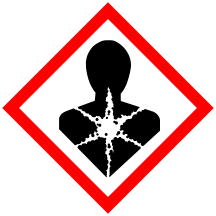
Perchloroethylene carries a Danger signal word (per the product's GHS classification). Operators must take its hazard profile seriously:
- H315 — Causes skin irritation (per the product's GHS classification)
- H317 — May cause an allergic skin reaction (per the product's GHS classification)
- H319 — Causes serious eye irritation (per the product's GHS classification)
- H336 — May cause drowsiness or dizziness (per the product's GHS classification)
- H351 — Suspected of causing cancer (per the product's GHS classification)
- H370 — Causes damage to organs (per the product's GHS classification)
- H373 — May cause damage to organs through prolonged or repeated exposure (per the product's GHS classification)
- H411 — Toxic to aquatic life with long lasting effects (per the product's GHS classification)
PPE: Chemical-resistant gloves (butyl rubber or laminate film — not latex or nitrile for prolonged contact), splash-proof safety goggles, and a lab coat or chemical-resistant apron. In areas without engineering controls, use a respirator with organic-vapor cartridges rated for chlorinated solvents.
Ventilation: Use only in well-ventilated areas or under a fume hood. Vapors are heavier than air and will collect at floor level and in low-lying spaces — monitor accordingly.
Storage: Keep containers tightly closed in a cool, dry, well-ventilated area away from heat sources and direct sunlight. Store away from strong oxidizers and strong bases. Use containers made of compatible materials such as HDPE or glass. Secondary containment is recommended given the product's aquatic toxicity classification.
Incompatibilities: Strong oxidizers, strong alkalis, chemically active metals (aluminum, barium, lithium). Avoid contact with these materials during storage and use.
Hazmat & Shipping
Perchloroethylene is regulated for transport. Every shipment from our Taylor, TX warehouse is classified, packaged, marked, and documented to DOT and IATA requirements. The governing classification:
-
UN Number: UN1897 (per 49 CFR 172.101)
-
Proper Shipping Name: TETRACHLOROETHYLENE (per 49 CFR 172.101)
-
Hazard Class: 6.1 (Toxic) (per 49 CFR 172.101)
-
Packing Group: III (per 49 CFR 172.101)
All hazmat shipping paperwork, labels, and markings are prepared by our DOT-trained warehouse team under the review of Andre Taki, DOT Hazmat Specialist. Shipping papers accompany every package as required.
Documentation
A Safety Data Sheet (SDS) ships with every order. SDS documents are available in English, Spanish, French, and Japanese. A Technical Data Sheet (TDS) is available on request for buyers who need detailed product specifications beyond what the SDS covers. Lot-specific Certificates of Analysis (COA) are available — request one at the time of order if your quality system requires incoming-material documentation tied to the specific lot received.
Why Buy from Alliance Chemical
This product ships as a Class 6.1 hazmat — UN1897, Packing Group III — and every outbound package is classified, labeled, and documented by our warehouse team in Taylor, TX under the review of Andre Taki, DOT Hazmat Specialist. Alliance Chemical holds USDOT registration #2188383 and has operated as a chemical distributor since 1998, serving over 55,000 customers across laboratory, industrial, and institutional channels. Whether you need a single quart for bench work or 55-gallon drums for a production degreaser, the order ships with correct hazmat paperwork and documentation from the same facility.
Related Reading
On 15 September 2026 the Fifth Circuit vacated EPA's methylene chloride rule (East Fork v. EPA), rejecting a whole-chemical risk finding and a no-PPE assumption. EPA's 2022 PCE risk determination made both moves; the PCE rule challenge is stayed in the same court, and the PCE rule (0.14 ppm, 2027 dates) has not been vacated. The Court Threw Out the Methylene Chloride Rule. The PCE Rule Was Built the Same Way.